Menu & categories

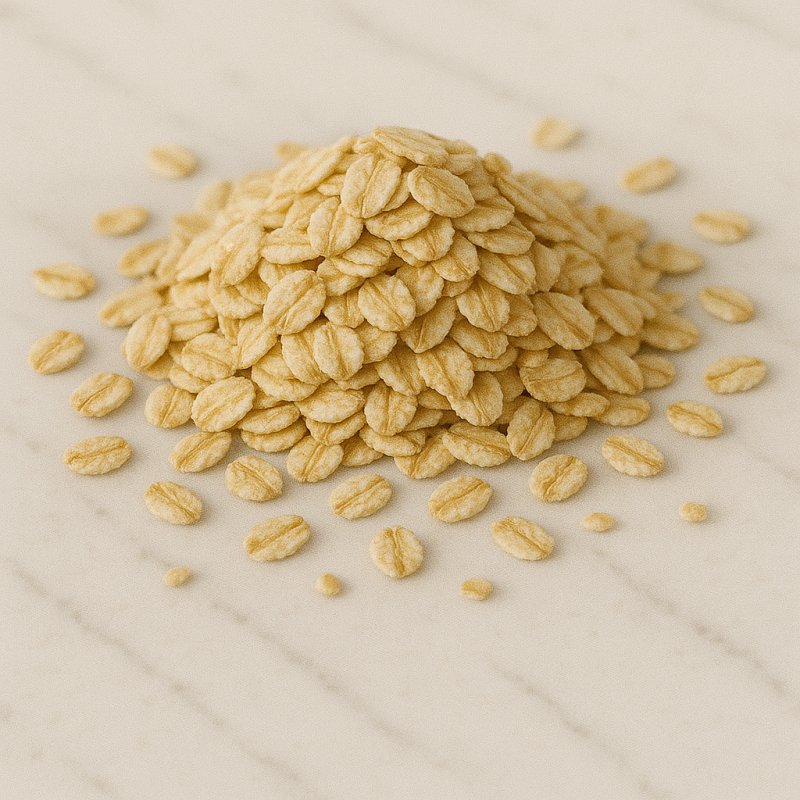
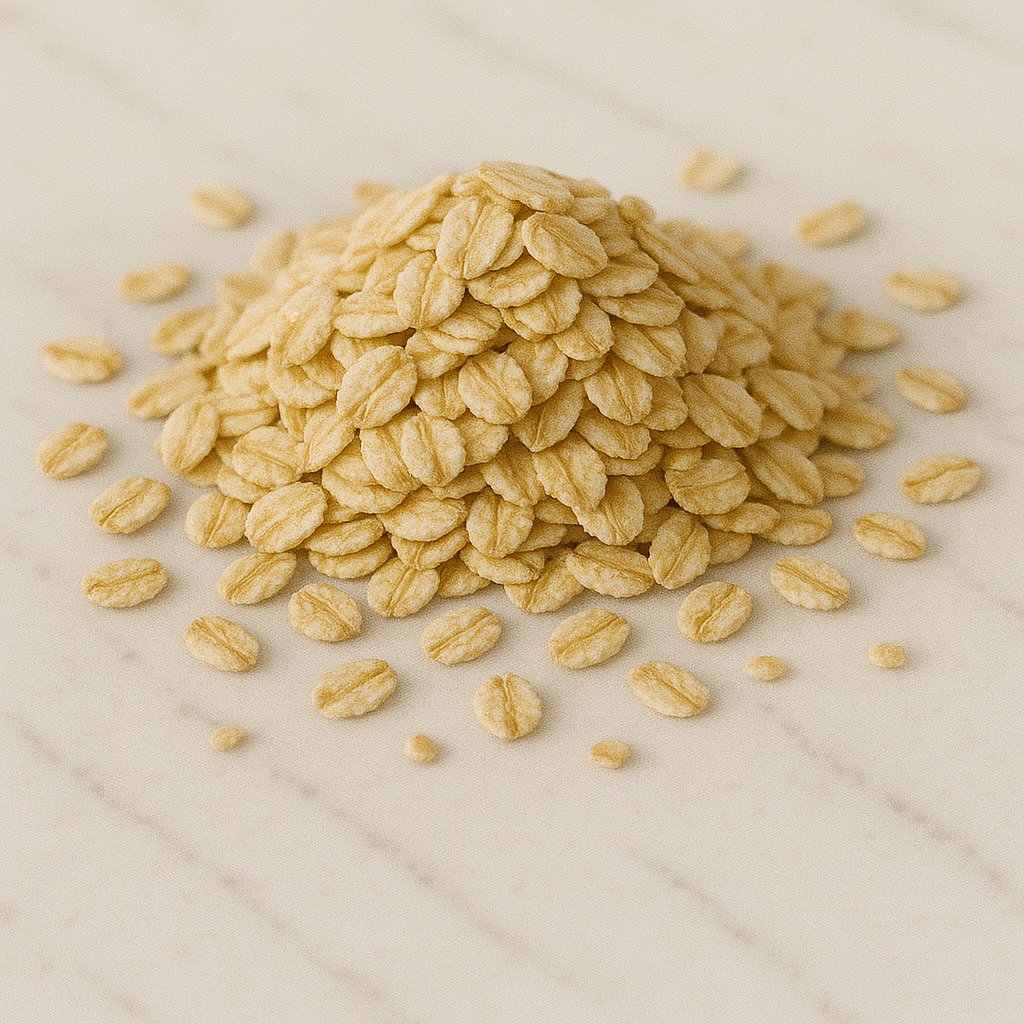
Oat flakes

Whole grain cereal flakes with high fiber and protein content

Wiki about oat flake Nutri-Score A Vegan Yes Gluten-free No Lactose-free Yes Nut-free Yes
NUTRITION / 100 g
370 kcal 13.5 g Protein 58.7 g Kohlenhydrate 7.0 g Fett

Introduction

A bowl of oat flakes
I have developed a small, almost ritual affection for rolled oats that goes far beyond breakfast. As a child porridge at home was rather practical, but at some point I discovered in a foreign kitchen how versatile this unassuming grain can be. A friend prepared overnight‑soaked oats with cinnamon, apple and a splash of maple syrup for me back then, and ever since each spoonful makes me think of warmth, steadiness and little kitchen experiments that make life nicer.

Oats are not only convenient, they are a true all‑rounder. They can serve as a base for porridge, are great in muesli bars, add body to smoothies and can even be used as a coating for fish or as a binder in vegetarian patties. I still remember an improvised dinner when I used oats instead of breadcrumbs and all the guests were enthusiastic. Such small kitchen revolutions show: oats are forgiving and encourage creative steps.

Nutritionally, rolled oats stand out for their fiber content, especially beta‑glucans, which can have positive effects on cholesterol and digestion. For someone who is often on the go they are a faithful companion — quick to prepare, filling and energizing. In my cupboard they are among the ingredients I always reach for when I have little time but still want something nourishing.

I also like the cultural variety surrounding oats. In some regions they are synonymous with cozy home cooking, in others part of traditional baked goods. A colleague raves about oatmeal cookies from his family's recipe, and I like how this grain connects generations and memories. Whoever rediscovers rolled oats quickly finds personal favorite variants — with nuts, with fruit, savory with herbs or as a crunchy topping.

Tips summarized:

  • For porridge: vary the oat‑to‑liquid ratio to achieve the desired consistency.
  • As a baking ingredient: use coarse flakes for texture, fine flakes for binding.
  • For snacks: caramelize with honey or syrup before baking for crispiness.

Availability & types

Availability and types of rolled oats

Rolled oats are a widespread ingredient that can be bought almost everywhere. They come from the oat plant, which like many cereals grows in fields. Oats are mainly cultivated in cooler regions because the plant tolerates those conditions best. Major growing areas include countries such as Russia, Canada, the USA, Germany and Poland. You can imagine it like apples: some regions are particularly well suited, and therefore a lot of oats grow there.

When you want to buy rolled oats, you will find different types and variants in the supermarket. These differ mainly by how the oat kernels were processed. Here are the main variants, simply explained:

  • Whole grain oats: these are oats where the whole oat kernel was used – the outer layers and the core. They are very nutritious and contain a lot of fiber. You can imagine them like a whole piece of bread, only crushed.
  • Light or fine oats: these flakes are processed to be thinner and finer. Therefore they cook faster and are soft in porridge. They are often more pleasant for babies or people who prefer a soft texture.
  • Coarse oats: these are thicker and take longer to cook. They have more bite, meaning they remain somewhat firmer when eaten. Some people like that because it feels better while eating.
  • Scottish oats: this variety is ground more into a fine meal so the porridge becomes particularly creamy. You can imagine something between coarse muesli and fine porridge.
  • Instant or quick‑cook oats: these flakes are precooked and then dried. Therefore only a few minutes or hot water are enough and they are ready. This is practical when you need speed, but they can sometimes be softer and less firm.
  • Oat groats (coarse or steel‑cut): here the kernels are only cut, not rolled. They look like small pieces and take longer to cook. They somewhat resemble rice or barley in appearance.
There are also oat products with special additives or treatments:

  • Organic oats: in cultivation no chemical fertilizers or pesticides were used. This can be better for the environment.
  • Gluten‑free oats: oats themselves do not contain gluten like wheat, but they are often processed in facilities where gluten‑containing cereals are present. Therefore some oats are manufactured specifically to avoid contamination with gluten – important for people with gluten intolerance.
  • Peeled or coated variants: sometimes flakes are additionally toasted or mixed with fruit, nuts or sugar. This makes them tastier but often contains more sugar.
Rolled oats are easy to find in supermarkets, health food stores and online. They are usually packaged in cardboard or plastic packages, often in different sizes. For storage airtight containers are suitable so the flakes stay fresh and no moisture gets in. Overall rolled oats are versatile, available in many variants and suitable for many dishes – from breakfast porridge to baked goods or as a coating.
Details & nutrition

Property Value
Unit g
Calories per 100 370
Protein per 100 13.5
Carbohydrates per 100 58.7
Sugar per 100 0.9
Fat per 100 7.0
Saturated fat per 100 1.3
Monounsaturated fat 2.5
Polyunsaturated fat 3.2
Fiber per 100 10.0
Vitamin C (mg) per 100 0
Vitamin D (IU) per 100 0
Calcium (mg) per 100 54
Iron (mg) per 100 4.3
Nutri-Score A
CO₂ footprint 0.9
Origin Europe
Gluten-free No
Lactose-free Yes
Nut-free Yes
Vegan Yes
Note Nutritional values per 100 g of dry oat flakes, whole grain, standard quality.

Technical & scientific information

Rolled oats are crushed and rolled kernels of oat (Avena sativa) and are among the most common cereal products worldwide. The whole oat kernel consists of the outer hull (not edible), the endosperm, the embryo (germ) and the aleurone layer. Rolled oats are produced by removing the hulls and subsequently steaming, rolling or cutting the hulled kernels; this processing affects texture, water uptake behavior and storage stability.

Chemical composition and nutrients
Rolled oats are characterized by a relatively high proportion of complex carbohydrates, nutrient‑rich fats and proteins. The carbohydrate content is usually around 60–70% of the dry matter and consists mainly of starch as well as soluble and insoluble fibers. A characteristic fiber is beta‑glucan, a soluble polysaccharide fraction that can be present at 3–8% in the raw material. Protein contents of oats are higher than in many other cereals, typically between 12 and 17%; the proteins contain a relatively favorable amino acid composition with a higher lysine content.

The fat content is elevated at about 5–10% compared to wheat and consists mainly of polyunsaturated fatty acids (e.g. linoleic acid) as well as monounsaturated fatty acids. Oats also contain micronutrients such as B‑vitamin complexes (e.g. B1, B5), vitamin E, minerals (e.g. manganese, phosphorus, magnesium, iron, zinc) and secondary plant compounds like phenols and avenanthramides which have antioxidant properties.

Processing methods
Depending on the degree of rolling and processing one roughly distinguishes between steel‑cut oats (oat groats), instant oats, hearty (rolled) or fine flakes. Steel‑cut oats are merely chopped, not rolled, and therefore retain longer cooking times. Hearty flakes (rolled oats) are produced by steaming and subsequently rolling thicker kernels, while fine flakes are rolled thinner and swell more quickly. Instant products are usually cut finer and partly precooked, which makes them faster to prepare but with less structure and somewhat altered nutrient availability.

Physical and techno‑functional properties
Steaming before rolling denatures enzymes, reduces lipase activity and thus improves shelf life and flavor. The swelling capacity of the flakes is determined by starch roughness and fiber content; beta‑glucan contributes significantly to the viscosity of foamed or hydrated oat products. In technological applications rolled oats are used for their water‑binding and emulsifying properties in baked goods, mueslis, baby foods and meat alternative products.

Health aspects
The soluble fiber beta‑glucan is well researched and is associated with positive effects on lipid metabolism; regular consumption can lower LDL cholesterol and thus improve cardiovascular risk factors. Oats can also lower the glycemic index of meals, which attenuates postprandial blood sugar spikes. Avenanthramides have antioxidant and inflammation‑modulating properties demonstrated experimentally. However, some people may be exposed to traces of gluten in oat products because oats are often grown near wheat or processed in the same facilities; pure, gluten‑free certified oats are tolerated by many celiac patients but should be evaluated individually.

Storage and shelf life
Due to the higher fat content, oat products are more susceptible to oxidative rancidity than other cereal flakes. Cool, dry storage and enzyme inactivation by steaming help extend shelf life. Milled oat products (e.g. oat flour) have a larger exposed surface for lipid oxidation and should be consumed more quickly or stored refrigerated.

Overall rolled oats are a nutrient‑rich, versatile food with favorable nutritional properties supported by specific components such as beta‑glucan and avenanthramides. The choice of processing form influences preparation time, texture and partly also the nutritional availability of individual components, so consumers can choose between steel‑cut, rolled or instant products depending on the intended use.

Wiki entry for: oat flake
Active now: 20 visitors of which 2 logged-in members in the last 5 minutes