Availability and types of rolled oats
Rolled oats are a widespread ingredient that can be bought almost everywhere. They come from the oat plant, which like many cereals grows in fields. Oats are mainly cultivated in cooler regions because the plant tolerates those conditions best. Major growing areas include countries such as Russia, Canada, the USA, Germany and Poland. You can imagine it like apples: some regions are particularly well suited, and therefore a lot of oats grow there.
When you want to buy rolled oats, you will find different types and variants in the supermarket. These differ mainly by how the oat kernels were processed. Here are the main variants, simply explained:
- Whole grain oats: these are oats where the whole oat kernel was used – the outer layers and the core. They are very nutritious and contain a lot of fiber. You can imagine them like a whole piece of bread, only crushed.
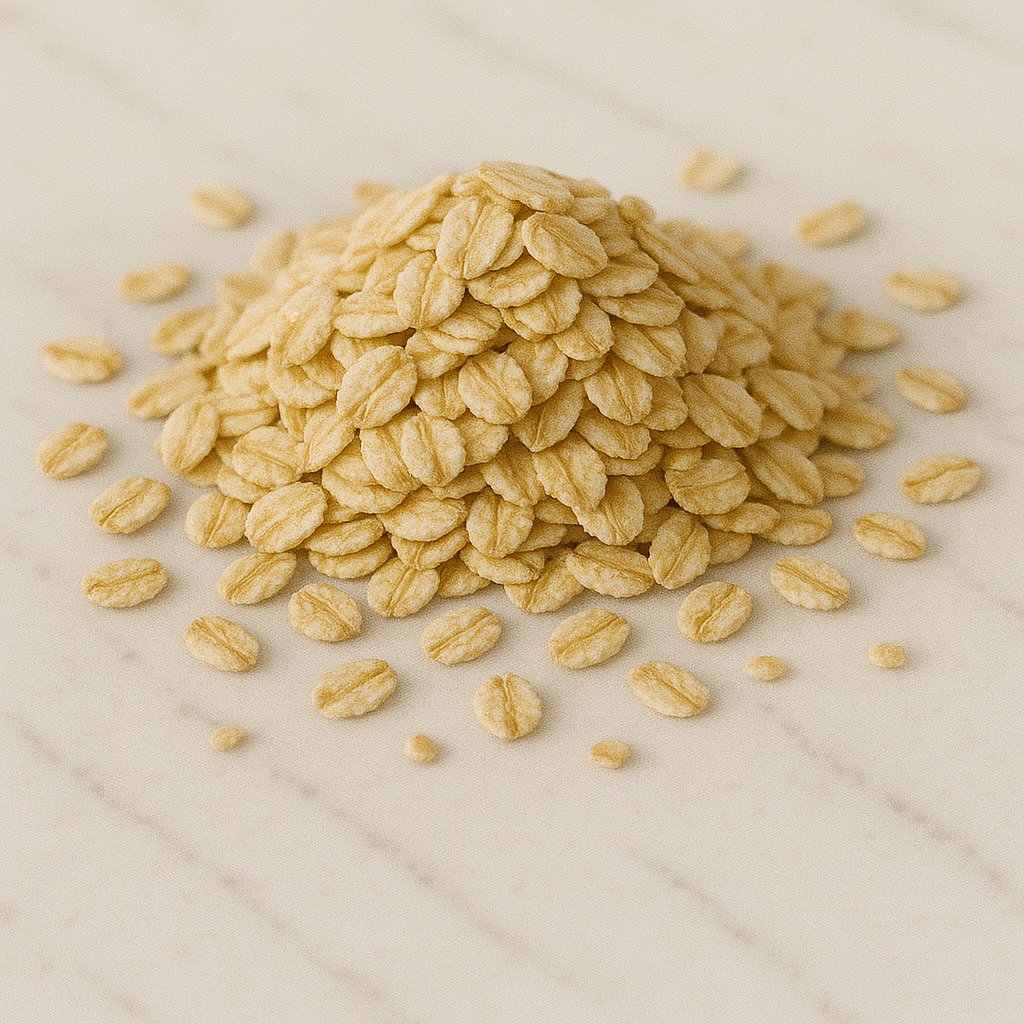
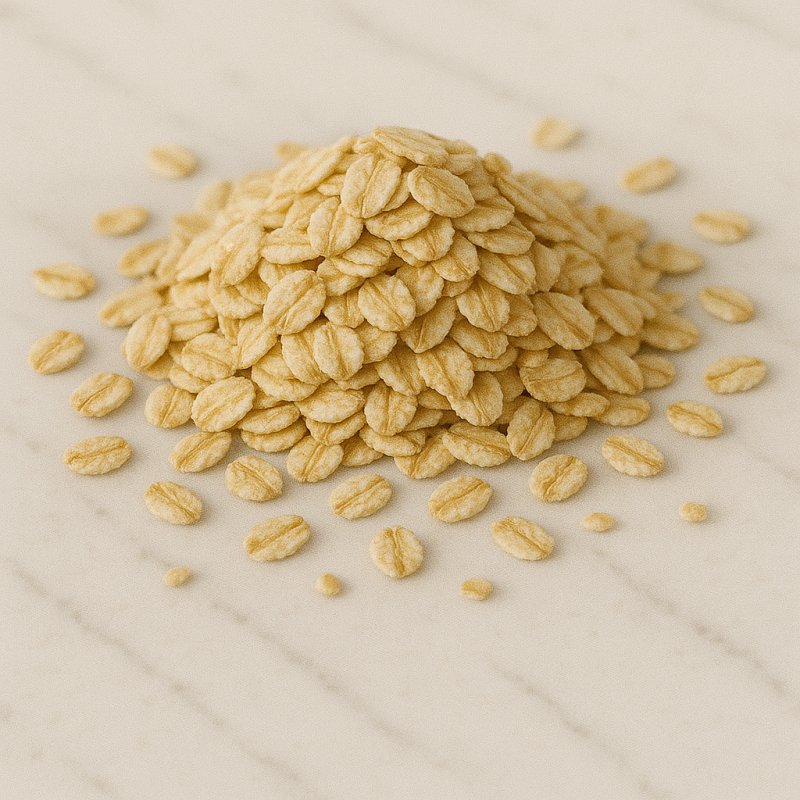
- Light or fine oats: these flakes are processed to be thinner and finer. Therefore they cook faster and are soft in porridge. They are often more pleasant for babies or people who prefer a soft texture.
- Coarse oats: these are thicker and take longer to cook. They have more bite, meaning they remain somewhat firmer when eaten. Some people like that because it feels better while eating.
- Scottish oats: this variety is ground more into a fine meal so the porridge becomes particularly creamy. You can imagine something between coarse muesli and fine porridge.
- Instant or quick‑cook oats: these flakes are precooked and then dried. Therefore only a few minutes or hot water are enough and they are ready. This is practical when you need speed, but they can sometimes be softer and less firm.
- Oat groats (coarse or steel‑cut): here the kernels are only cut, not rolled. They look like small pieces and take longer to cook. They somewhat resemble rice or barley in appearance.
There are also oat products with special additives or treatments:
- Organic oats: in cultivation no chemical fertilizers or pesticides were used. This can be better for the environment.
- Gluten‑free oats: oats themselves do not contain gluten like wheat, but they are often processed in facilities where gluten‑containing cereals are present. Therefore some oats are manufactured specifically to avoid contamination with gluten – important for people with gluten intolerance.
- Peeled or coated variants: sometimes flakes are additionally toasted or mixed with fruit, nuts or sugar. This makes them tastier but often contains more sugar.
Rolled oats are easy to find in supermarkets, health food stores and online. They are usually packaged in cardboard or plastic packages, often in different sizes. For storage airtight containers are suitable so the flakes stay fresh and no moisture gets in. Overall rolled oats are versatile, available in many variants and suitable for many dishes – from breakfast porridge to baked goods or as a coating.