Menu & categories

Nougat

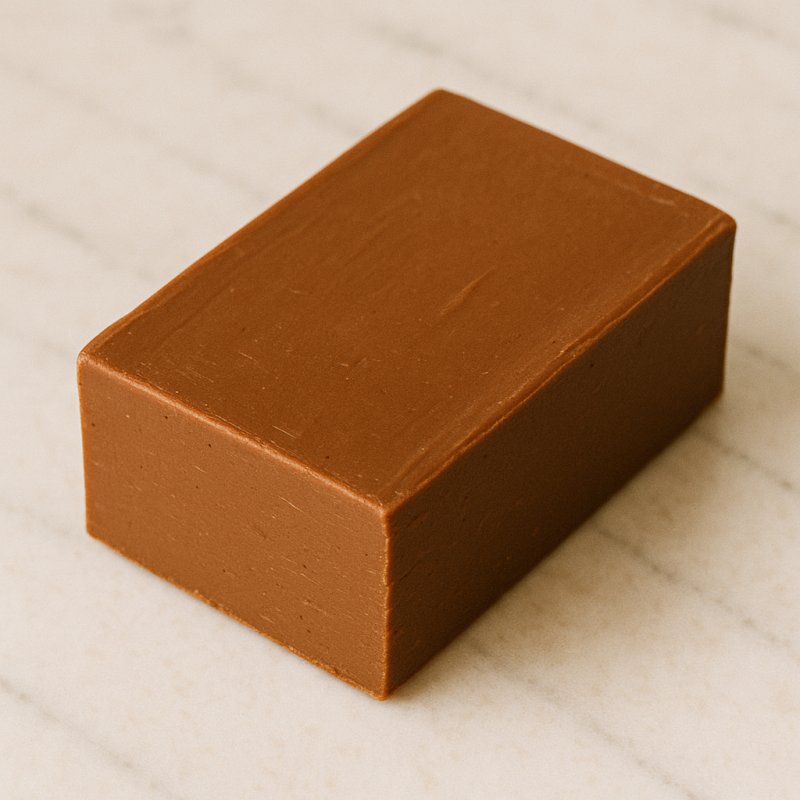
Sweet nut-cocoa mass with high sugar and fat content

Wiki about nougat Nutri-Score E Vegan No Gluten-free Yes Lactose-free No Nut-free No
NUTRITION / 100 g
520 kcal 8 g Protein 55 g Kohlenhydrate 30 g Fett

Introduction

Piece of nougat with hazelnuts on a plate
I still remember the first time I truly fell in love with nougat: it wasn't in an elegant confectionery, but at a small Christmas market, where despite the cold I treated myself to a piece of warm, soft nougat. The sweetness settled over my palate like a small comforting film and since then this ingredient has had something of a secret pleasure magic for me. Nougat is for me more than just an ingredient; it is a carrier of memories, a texture wonder and a surprisingly versatile component in the kitchen.

When I talk about nougat, I generally mean the two main types: the light, Spanish or Italian torrone‑like nougat based on honey and egg white, and the darker, chocolatey nougat based on hazelnuts or almonds that is often found in pralines and bars. Both variants, however, share the same ability to bind flavor and structure. Once I showed a friend how to make a simple nut‑nougat cream, and I will never forget his astonished face when it flowed silkily over the bread.

Culinarily, nougat impresses me with:

  • Texture contrasts: from tenderly melting to crunchy, depending on the nut content and processing.
  • Flavor depth: the combination of honey, roasted nuts and sometimes chocolate creates complex aromas.
  • Versatility: nougat works in desserts, as a spread, in baked goods or as a filling for pastries.
In my kitchen I like to experiment: a piece of dark nougat melted into hot espresso gives the drink a velvety nuttiness; in a simple pound cake nougat can work surprisingly elegantly by creating moist, aromatic inclusions. Sometimes I mix small nougat cubes into ice cream, and the guests' delight when crunchy nut pieces appear with each spoonful is priceless.

Nougat is also an ingredient with cultural footnotes: in some regions it is an essential part of festivities, in others an ubiquitous sweet. For me it remains an element that can be used both nostalgically and in a modern way — a bit like a familiar friend who always shows new facets. So the next time I hold a piece of nougat in my hand, I think of markets, lively cooking evenings and the small happiness that a single, well‑made ingredient can give.

Availability & types

Availability and types

Nougat is a popular sweet that can be found in many countries around the world. But nougat is not just one kind – there are different types and variants that differ in taste, ingredients and firmness. If you want to imagine nougat, think of a soft or crunchy piece that often contains nuts and sugar. Depending on how it is made, it can be more tender like chewing gum or hard and crunchy like brittle.

Origin and history briefly explained
Nougat has a long history and comes from various regions of Europe and the Middle East. The basic idea is old: mixing sugar or honey with nuts or egg white. Nougat has been known for many hundreds of years in Spain and Italy; in France there is a famous variant from Montélimar. You could say nougat is like a family recipe that is made slightly differently in many countries – similar to pancakes, which taste a little different everywhere.

Growing regions of the main ingredients
Nougat is usually made from ingredients such as almonds, hazelnuts or honey. These plants do not grow equally well everywhere. Here is a short overview:

  • Almonds: Grow particularly well in Mediterranean regions such as Spain, Italy or California. Almonds are the firm nuts that give nougat its nutty flavor.
  • Hazelnuts: Often come from Turkey, Italy or some regions of Europe. They are round and have a slightly sweet, nutty taste.
  • Honey: Is collected where there are many flowering plants and bees. Honey can taste different regionally – a meadow honey tastes different from a forest honey.
Available types and variants
There are two major families of nougat that you often find in stores:

  • White nougat (also called Torrone or Torró): It is usually soft and made from egg white, honey and lots of nuts. White nougat is often chewy and can contain large nut pieces – like a soft nut bread.
  • Brown or dark nougat (also known as 'Turrón de Jijona' or chocolate nougat): This often has caramel or chocolate notes. It can be firmer and is sometimes made with cocoa powder or melted chocolate.
Besides these main types there are many variants:

  • Nougat with whole nuts or only with nut pieces – some people like large nut chunks, others prefer finely ground nut meal.
  • Nougat coated in chocolate – this is very popular in bars or pralines.
  • Vegan nougat – here a plant‑based substitute is often used instead of egg white so that people who avoid animal products can also enjoy nougat.
  • Nougat with spices or fruits – e.g. cinnamon, orange or dried fruits, to make the flavor more exciting.
How easy is nougat to get?
Nougat is fairly easy to find in supermarkets, confectionery shops and markets, especially at Christmas time when many traditional varieties are offered. Bakeries and chocolatiers often sell high‑quality handmade nougat. If you are looking for special varieties, such as regional Montélimar nougat or vegan versions, you can often find them online or in specialty food shops.

In summary: nougat exists in many forms and flavors. Its main ingredients often come from warm countries around the Mediterranean or from regions with many bees. Whether soft, hard, chocolate‑coated or in a vegan version – there is a nougat variant to suit almost every taste.

Details & nutrition

Property Value
Unit g
Calories per 100 520
Protein per 100 8
Carbohydrates per 100 55
Sugar per 100 50
Fat per 100 30
Saturated fat per 100 8
Monounsaturated fat 17
Polyunsaturated fat 3
Fiber per 100 5
Vitamin C (mg) per 100 0
Vitamin D (IU) per 100 0
Calcium (mg) per 100 80
Iron (mg) per 100 2
Nutri-Score E
CO₂ footprint 3.5
Origin Europe
Gluten-free Yes
Lactose-free No
Nut-free No
Vegan No
Note Values refer to a typical nougat mass made of sugar, hazelnuts, cocoa and milk components; exact nutritional values may vary depending on the recipe.

Technical & scientific information

Nougat refers to a group of confections whose base consists of roasted nuts, sugar and often whipped egg white or honey. Historically there are several regional variants, from the soft‑airy Viennese or French 'nougat blanc' to the hard, caramelized 'nougat noir'. Industrially the term is also used for nut fillings that are processed into a spreadable mass with fats, milk powder and emulsifiers. The basic components and production principles differ by type, but they show common chemical‑physical properties.

Composition and ingredients
The main constituents of traditional nougat are:

  • Fats: Mostly from the included nuts (e.g. almonds, hazelnuts, pistachios) and possibly added vegetable oils or cocoa butter. These lipophilic components determine texture and flavor.
  • Proteins: Mainly from the nuts and, in white nougat types, from egg white. Proteins contribute to emulsion stability and foam formation.
  • Carbohydrates: Table sugar, glucose syrup or honey provide the sweet component and influence crystallization and moisture retention behavior.
  • Minerals and vitamins: Micronutrients present in nuts such as magnesium, copper, vitamin E and B vitamins are present to a limited extent in the final product.
  • Additives: Emulsifiers (e.g. lecithin), stabilizers and preservatives are used in industrial recipes to improve texture, shelf stability and processability.
Nutritional values
Nougat is energy‑dense: 100 g typically contain between 450 and 600 kcal, depending on the nut and fat content. Fat content is often between 25 and 40 g/100 g, proteins between 5 and 15 g/100 g and carbohydrates (of which sugars) often between 40 and 60 g/100 g. Given this nutritional profile, nougat is a concentrated calorie source with moderate protein and micronutrient content but a high proportion of saturated and monounsaturated fats depending on the nut and fat types used.

Processing methods
The manufacture of nougat involves several technically relevant steps:

  • Roasting the nuts: Thermal treatment develops Maillard reactions and pyrolysis products that intensify aroma. Roasting also reduces water content and alters the fat matrix.
  • Grinding and pasteurization: Ground nuts are processed into a fine paste; in industrial production a thermal treatment often takes place for microbiological safety.
  • Foam formation and sugar cooking (in white nougat): Egg white is whipped with cooked sugar, producing a stable foam; sugar concentration and final temperature determine texture and shelf life by affecting the water activity value.
  • Emulsification and conching (in creamy nougat): Mechanical mixing and temperature control create a homogeneous dispersion of fat, protein and carbohydrate; emulsifiers improve the blending of fat and water phases.
  • Molding and cooling: Controlled cooling prevents fat bloom and crystal growth that can negatively affect mouthfeel.
Physico‑chemical aspects
Key quality factors are water activity, the fat phase, the crystal structure of sugar and fat components, and protein‑fat interactions. Low water activity inhibits microbial spoilage, while excess free water can lead to sugar crystallization or mold. Emulsion stability depends on the particle size of the nut paste, fat content and the presence of emulsifiers.

Health aspects
Nougat provides nutrients from nuts, including monounsaturated fatty acids and antioxidants, but this is balanced by a high sugar and energy content. Nougat is contraindicated for people with nut allergies. High sugar consumption can contribute to metabolic problems. Consumed in moderation, nougat can be part of a varied diet, but functionally it should be regarded primarily as a treat.

Summary
Nougat is a versatile product with technically demanding production, whose parameters directly influence aroma, texture and shelf life. Chemically, nougat is a complex mixture of fats, proteins and sugars, whose physical properties are controlled by processing steps such as roasting, whipping, emulsifying and controlled cooling. Nutritionally, nougat is an energy‑dense delicacy with some positive nutrients from nuts, but also a relevant sugar and fat content, which suggests moderate consumption.

Wiki entry for: nougat
Active now: 11 visitors of which 2 logged-in members in the last 5 minutes