Menu & categories

Nougat

Sweet nut-cocoa cream with high sugar and fat content

Wiki about nougat Nutri-Score E Vegan No Gluten-free Yes Lactose-free No Nut-free No
NUTRITION / 100 g
550 kcal 7.0 g Protein 45.0 g Kohlenhydrate 38.0 g Fett

Introduction

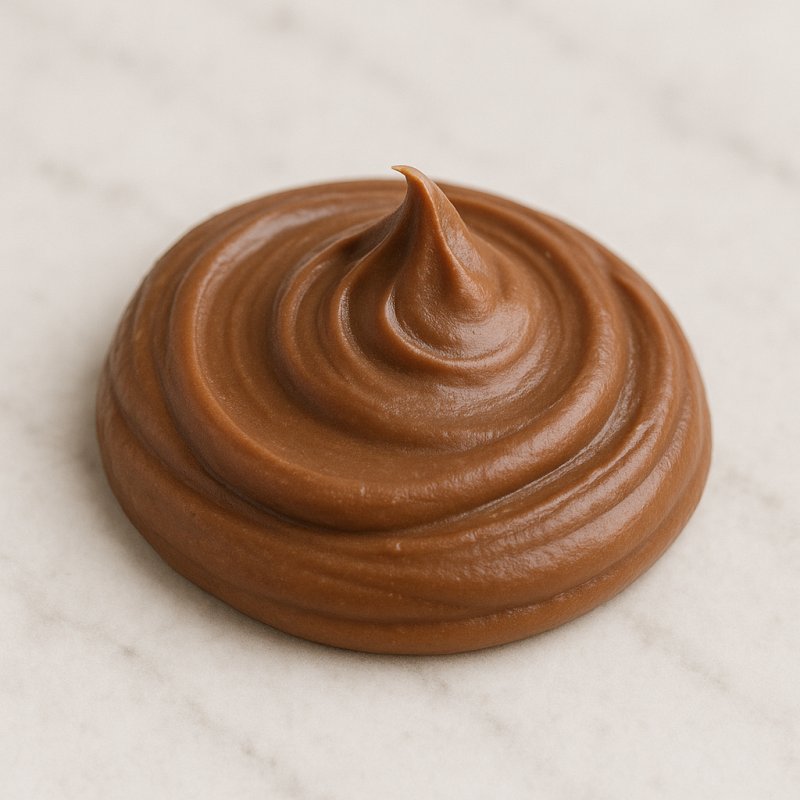
A piece of nougat with a smooth, brown surface
I still remember exactly the first spoonful of nougat I secretly pinched from the breakfast table as a child: a sticky, glossy mass among bits of hazelnut and chocolate that immediately changed my idea of sweets forever. Nougat is for me more than just an ingredient; it is a sensual accomplice in cakes, pralines and breakfast rituals. Every time I smell nougat, memories of cold Sundays and warm kitchens come up, of hands kneading dough, and of the soft crackle of baking paper.

When I talk about nougat, I do not just mean the common commercial cream made of sugar, nuts and chocolate, but the whole spectrum of this ingredient: from the delicately melting hazelnut-nougat cream to the firm, sliceable nougat used in pralines. On my travels I learned how differently nougat can be interpreted. A colleague once raved about a Moroccan almond nougat, while a friend from Italy insisted that only the local hazelnut delivered the true flavor.

What makes nougat special

  • Nougat combines texture and aroma in a unique way: crunchy nut pieces, creamy chocolate and lightly caramelized sugar.
  • The variety is large: there are light versions with almonds or pistachios and darker, more chocolatey interpretations.
  • Nougat is versatile: as a spread, cake filling, glaze or core in pralines.
I have experimented often: once I used nougat in a shortcrust pastry base for a simple tart — the result was so convincing that I have kept the recipe on little notes in my kitchen ever since. Other times I stirred nougat into warm vanilla sauce, which silenced even skeptical guests. For me the art is in using nougat deliberately so that it not only sweetens but balances dishes aromatically.

I'm happy to share practical tips: nougat can be tempered well but does not tolerate too high heat; in creams it needs patience when melting so that texture and flavor are preserved. When I plan a dessert I always ask myself: should nougat dominate or subtly support? Most of the time I choose balance.

In conclusion, nougat remains for me one of those ingredients that simply bring joy — whether in a small breakfast roll, in an elegant praline or in an improvised dessert after a long day. I love the contradictions in nougat: understated and yet powerful, familiar and yet variable. It is an invitation to be creative and to weave memories anew with every bite.

Availability & types

Availability and types of nougat

Nougat is a popular sweet found in many countries. If you want to imagine nougat, think of a soft mixture of sugar, honey, nuts and often chocolate — sometimes chewy, sometimes almost melting. Nougat originally comes from regions around the Mediterranean and the Middle East. Sweet nut mixtures were made there many hundreds of years ago. Today nougat is produced and offered almost everywhere, so it is easy to find in shops or bakeries.

Where does nougat come from?
Originally nougat comes from countries such as Italy, France and parts of the Middle East. In Italy there is a well-known variety called “torrone”, often eaten at festivals. In France “nougat” is also popular, especially the town of Montélimar is famous for it. Recipes have spread over time, which is why nougat is now also produced by manufacturers in Germany, Switzerland and other countries.

Growing areas of the main ingredients
Nougat usually consists of nuts, sugar or honey and sometimes chocolate. The nuts often come from specific regions:

  • Hazelnuts: many hazelnuts come from Turkey, Italy or Spain.
  • Almonds: almonds grow largely in Spain, California (USA) and parts of the Mediterranean.
  • Pistachios: these nuts often come from Iran, the USA or Turkey.
The sugar or honey that sweetens nougat is also produced worldwide. Honey is gathered where many flowers grow, and sugarcane or sugar beets grow in warm or temperate regions.

What types of nougat are there?
There are several well-known types of nougat that differ in taste and texture. Here are a few simple examples:

  • White nougat (Torrone): This is often chewy and contains whole nuts. It tastes sweet and is enjoyed at holidays. Sometimes it is very firm, almost like a soft candy.
  • Red or brown nougat: This variant often contains chocolate or caramel and is softer. Therefore it is easy to slice or even spread.
  • Cream nougat (hazelnut cream): This is a spreadable version, similar to nut-nougat cream. Children often know it as a spread for bread. It is very smooth and melts in the mouth.
  • Creamy praline nougat: In pralines you often find a small nougat core covered in chocolate. These are small, sweet and often very aromatic.
Why are there so many variants?
Nougat can be different because manufacturers use different nuts, amounts of sugar or chocolate. The way ingredients are mixed or how long they are heated also changes the consistency. Imagine making a pancake — depending on how much milk you use or how long you cook it, the pancake will be different. In the same way nougat changes through small tricks in production.

Where can you get nougat?
You can find nougat in the supermarket in different forms: bars, sticks, jars as a cream or in pralines. Bakeries and confectioners often make their own nougat varieties, especially at Christmas time. At markets or in specialty sweet shops you can sometimes discover special varieties from other countries.

In summary: nougat has its roots in the Mediterranean and the Middle East, is produced worldwide today, and there are many varieties — from firm, nutty pieces to creamy spreads. Which variant you like best you can easily find out by trying several.
Details & nutrition

Property Value
Unit g
Calories per 100 550
Protein per 100 7.0
Carbohydrates per 100 45.0
Sugar per 100 43.0
Fat per 100 38.0
Saturated fat per 100 9.0
Monounsaturated fat 21.0
Polyunsaturated fat 4.0
Fiber per 100 5.0
Vitamin C (mg) per 100 0
Vitamin D (IU) per 100 0
Calcium (mg) per 100 90
Iron (mg) per 100 3.0
Nutri-Score E
CO₂ footprint 5.0
Origin Europe
Gluten-free Yes
Lactose-free No
Nut-free No
Vegan No
Note Nougat is a sweet mass made from sugar, nuts (often hazelnuts) and usually milk components; depending on the recipe, other ingredients such as cocoa, vegetable oils or emulsifiers may be included.

Technical & scientific information

Nougat denotes a confectionery preparation based on sugar or honey, nuts and fats, which occurs in various regional variants. Botanically or chemically it is not a single substance, but a complex food mixture whose properties depend largely on the raw materials used and the manufacturing process. Historically the term derives from the Latin “nux” (nut); classic recipes contain almonds, hazelnuts or other tree kernels that are finely ground and combined with caramelized sugar and often with cocoa mass or chocolate.

Composition and ingredients
The central components of nougat are:

  • Mineral and organic carbohydrates: sucrose, glucose and fructose from sugar or honey form the energetic base and influence texture and crystallization behavior.
  • Fats: vegetable fats from nuts (mainly oleic acid, linoleic acid) as well as added cocoa butter or other fats provide texture, melting behavior and flavor.
  • Proteins: predominantly from nuts and possibly from added dairy components, proteins contribute to emulsification and structure.
  • Water and humectant components: water content as well as hygroscopic sugars and emulsifiers affect firmness, chewiness and storage stability.
  • Other components: cocoa mass, milk powder, lecithin, vanillin and preservative or antioxidant additives may be added.
Nutritional profile
The nutritional value of nougat varies by recipe, but typical values per 100 g are roughly 450–550 kcal (about 1900–2300 kJ), 20–30 g fat, 40–60 g carbohydrates (of which a high proportion are simple sugars) and 6–10 g protein. Micronutrients such as vitamin E, magnesium and copper are present in trace amounts from the nuts. Due to the high sugar and fat content, nougat is energy-dense and should be considered a treat in the diet.

Physico-chemical properties
The texture of nougat depends on sugar crystallization, the proportion of free and bound water molecules and the distribution of the fat phase and solid particles. When sugar is caramelized during heating or remains in syrup form, different glass states and crystal structures arise, ranging from soft-elastic to hard. Emulsifiers such as lecithin stabilize the fat-water interface and improve processability. The melting point of the fat phase influences the mouthfeel; cocoa butter provides a characteristic melt just below body temperature.

Manufacturing process
Industrial and artisanal production typically includes the following steps:

  • Caramelization or preparation of a syrup from sugar/honey.
  • Roasting and grinding the nuts to release oils and aromatic compounds.
  • Mixing the components with stirring at controlled temperature to obtain a homogeneous mass.
  • Conditioning and, if chocolate is present, conching to refine texture and flavor.
  • Shaping, cooling and packaging under protective atmosphere to extend shelf life.
Health aspects
Nougat provides quickly available energy, essential fatty acids and secondary plant compounds from nuts, such as phenolic antioxidants. At the same time high sugar and saturated fat contents should be considered, especially in recipes with additional cocoa butter or hydrogenated fats. For people with nut allergies nougat is often contraindicated. Risk of tooth decay, impact on blood sugar and potential weight gain are relevant with excessive consumption. High-quality variants with a high proportion of hazelnuts and lower sugar density offer nutritionally more favorable profiles.

Quality criteria and storage
Sensory criteria such as smell, taste, texture and appearance determine quality; microbiological risks are low provided water content remains low. Oxidation of fat components can lead to rancidity, which is why protection from light, oxygen and high temperatures is important. Cool, dry storage in airtight packaging extends freshness.

Overall nougat is a technologically versatile product whose macro- and microscopic properties can be specifically controlled by choice of raw materials and process management. Nutritional assessment depends strongly on composition: nut-rich nougat provides beneficial nutrients, while sugar-rich variants should primarily be classified as calorie-dense treats.

Wiki entry for: nougat
Active now: 18 visitors of which 2 logged-in members in the last 5 minutes