Menu & categories

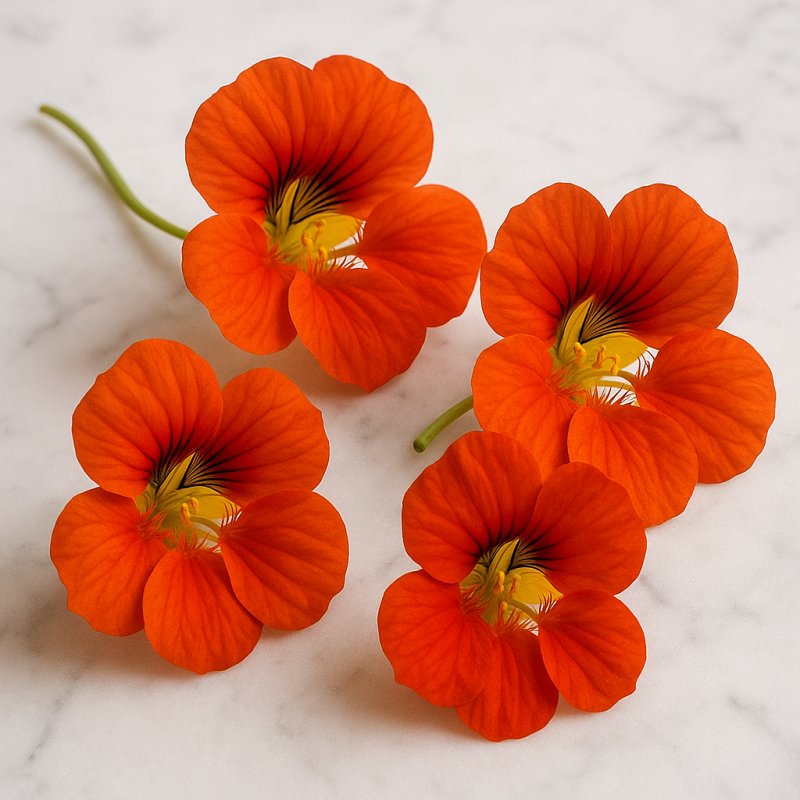
Nasturtium flowers

Edible flowers with a peppery taste

Wiki about nasturtium flower Nutri-Score A Vegan Yes Gluten-free Yes Lactose-free Yes Nut-free Yes
NUTRITION / 100 g
32 kcal 2.0 g Protein 6.0 g Kohlenhydrate 0.5 g Fett

Introduction

Nasturtium flowers on a plate
I still clearly remember the first warm spring days, when I was strolling through the market with a friend and we suddenly stopped at a stall with beautiful, bright orange flowers. “What kind of flowers are these?”, I asked curiously. “These are nasturtium flowers!”, the vendor replied with a radiant smile. These little wonders of nature would enrich my life forever.

Nasturtium flowers are not only a feast for the eyes but also a true taste experience. With their slightly sharp, peppery aroma they remind me of a mix of radish and a sweet, floral note. I still remember using them for the first time in a salad. The taste delighted me immediately, and I knew I wanted to use these little jewels more often in my dishes.

The use of nasturtium flowers in the kitchen is so varied that I could hardly give them up for any dish. They are not only edible but also extremely healthy. These flowers are rich in vitamin C, which makes them a valuable component of any diet. In addition, they have anti-inflammatory effects and even possess antibacterial properties. A colleague of mine, who is always on the lookout for new superfoods, told me that he even puts them in smoothies. I was skeptical at first, but after the first sip I was convinced: it really works!

  • Add to salads: The flowers make any salad an eye-catcher.
  • Food decoration: They give dishes a special touch.
  • Pickle in vinegar or oil: This way you can preserve the flavor.
I especially like surprising guests with a creative dish. Recently I prepared a simple pasta dish and sprinkled nasturtium flowers on top. The combination of the vivid color and the sharp flavor delighted everyone. Sometimes I wonder why I didn't think earlier to incorporate them into my dishes.

When I now think of nasturtium flowers, I feel inspired and motivated to create new recipes. These little flowers have not only enriched my cooking but also rekindled my passion for culinary arts. I can't wait to experiment even more with these wonderful ingredients and hope that I can encourage you to do the same.

Availability & types

Nasturtium flowers are not only pretty to look at but also a delicious ingredient in many dishes. They originate in Latin America and were already used by the indigenous peoples there. Today they are known in many parts of the world and are often grown in gardens and on balconies. Nasturtium belongs to the family of the Tropaeolaceae and is a popular plant in both the kitchen and the garden.

The availability of nasturtium flowers is year-round, especially if you grow them yourself. This plant is very easy to care for and can grow both in the garden and in pots on the balcony or windowsill. If you plant them yourself, you can usually harvest the flowers from May to October, depending on the weather and location.

Nasturtium flowers come in different varieties and colors. Some of the most popular varieties are:

  • Yellow nasturtium: These flowers are bright yellow and have a mild, slightly peppery taste.
  • Red nasturtium: This variety has striking red flowers and a more intense flavor.
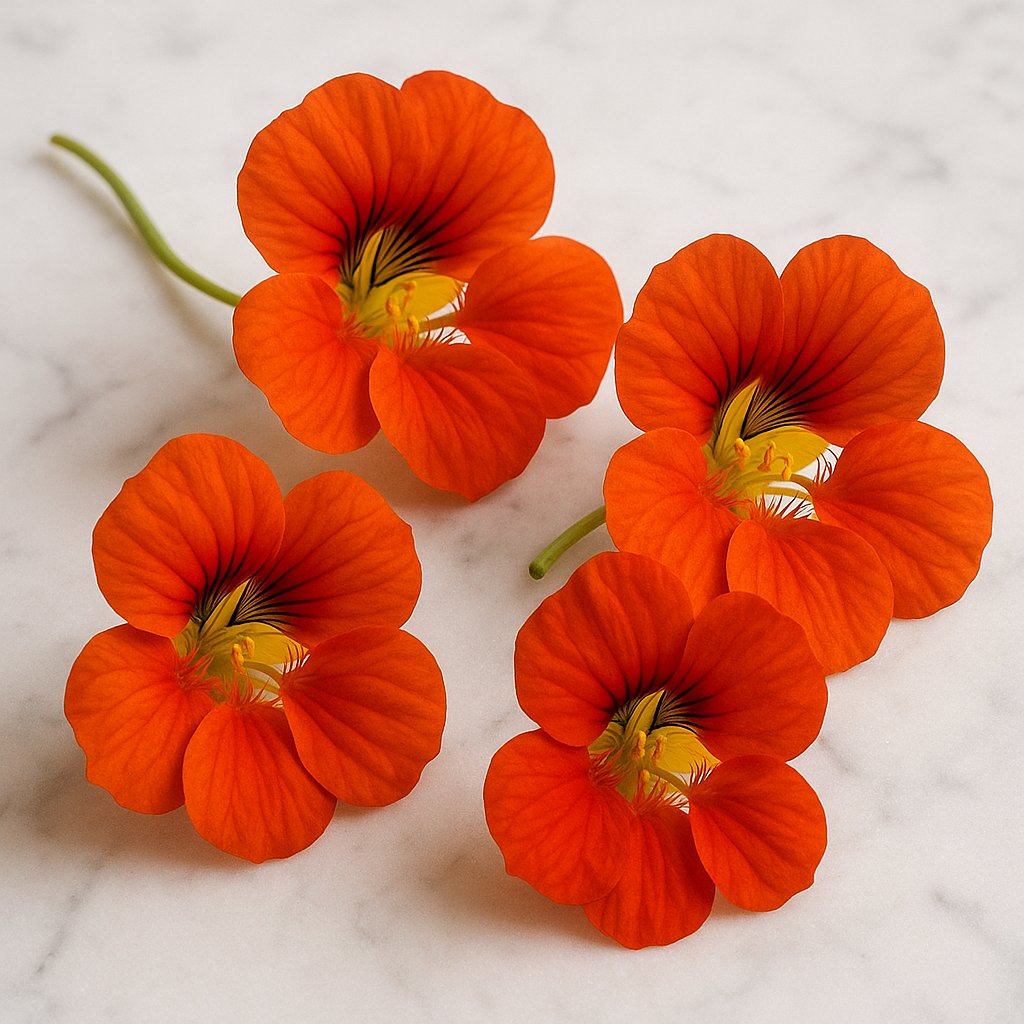
  • Orange nasturtium: The orange flowers are especially beautiful and also taste peppery.
  • Dwarf varieties: There are also compact varieties that are perfect for pots and require less space.
Each of these varieties has its own special taste and appearance, so you can choose according to your personal preference. So if, for example, you want to prepare a colorful salad platter, you can use different colors of nasturtium to make the dish more lively and inviting.

If you want to buy nasturtium flowers at the supermarket or farmers' market, it's important to pay attention to freshness. Fresh flowers are crisp and have a vibrant color. If they are wilted or brown, you should avoid buying them, as they will no longer be as tasty.

Another important point is that nasturtium, as an edible flower, is very versatile. You can use it for example in salads, on sandwiches or even as decoration on cakes. Their taste is a little like radishes, which makes them an exciting ingredient in many dishes. When preparing a dish, you can simply add the flowers fresh to give color and flavor.

In summary, nasturtium flowers are an exciting and healthy ingredient that offers many possibilities in the kitchen. They are easy to grow, available in different varieties and can enrich your dishes in a creative way. Whether you are an experienced cook or just starting to experiment with these pretty flowers, there is always something new to discover. So the next time you go to the garden or go shopping, don't forget to keep an eye out for nasturtium flowers — they could become your next favorite ingredient!
Details & nutrition

Property Value
Unit g
Calories per 100 32
Protein per 100 2.0
Carbohydrates per 100 6.0
Sugar per 100 1.0
Fat per 100 0.5
Saturated fat per 100 0.1
Monounsaturated fat 0.1
Polyunsaturated fat 0.1
Fiber per 100 1.5
Vitamin C (mg) per 100 100
Vitamin D (IU) per 100 0
Calcium (mg) per 100 100
Iron (mg) per 100 0.7
Nutri-Score A
CO₂ footprint 0.5
Origin Europe
Gluten-free Yes
Lactose-free Yes
Nut-free Yes
Vegan Yes
Note Nasturtium flowers are not only decorative but also healthy.

Technical & scientific information

The nasturtium flowers (Tropaeolum majus) are not only a popular element in garden culture but also a remarkable ingredient in the kitchen and in natural medicine. This plant belongs to the family Tropaeolaceae and is known for its bright, colorful flowers that can range from yellow through orange to red. Besides their decorative function, the flowers also have numerous nutritional and health benefits.

Chemical composition and constituents

Nasturtium flowers are rich in valuable constituents that make them a healthy addition to the diet. They contain, among other things:

  • Vitamins: Particularly high is the content of vitamin C, which is important for the immune system. In addition, the flowers are a good source of vitamin A and various B vitamins.
  • Minerals: The most important minerals include calcium, iron, magnesium and potassium, which are essential for numerous bodily functions.
  • Secondary plant compounds: These include glucosinolates, which are responsible for the pungent taste of the flowers and have antibacterial as well as anti-inflammatory properties.
Nutritional values

The nutritional values of nasturtium flowers are remarkably low, which makes them a low-calorie ingredient. Per 100 grams the flowers contain approximately:

  • Calories: 32 kcal
  • Protein: 2.1 g
  • Fat: 0.4 g
  • Carbohydrates: 7.4 g
  • Fiber: 2.0 g
Processing methods

Nasturtium flowers can be used fresh in salads, on sandwiches or as a decorative garnish for various dishes. They are edible and add not only visual appeal to food but also a spicy, peppery flavor. They also work well when pickled in oils or vinegars to intensify flavor. When preparing them it is important to handle the flowers gently to preserve their delicate structure and fresh taste.

Health aspects

The health benefits of nasturtium flowers are varied. Due to their high content of vitamin C and other antioxidants, they may help support the immune system and protect cells from oxidative stress. The glucosinolates not only have antibacterial but also antimicrobial properties that can be helpful in fighting infections. In addition, nasturtium has been used in traditional medicine to support the respiratory tract and to treat urinary tract infections. Its anti-inflammatory properties also make it of interest for research into chronic inflammation.

Scientific background

The use of nasturtium flowers in nutrition and natural medicine has a long tradition. Historically they were valued by indigenous peoples in South America.
Wiki entry for: nasturtium flower
Active now: 17 visitors of which 2 logged-in members in the last 5 minutes