Menu & categories

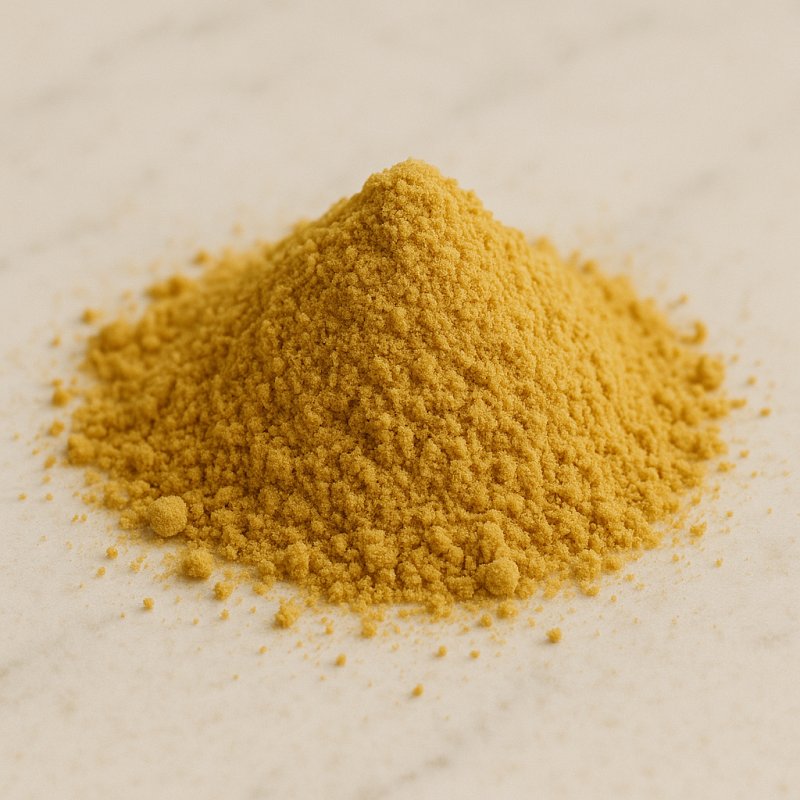
Mustard powder

Aromatic spice made from ground mustard seeds with a pronounced pungency.

Wiki about mustard powder Nutri-Score C Vegan Yes Gluten-free Yes Lactose-free Yes Nut-free Yes
NUTRITION / 100 g
508 kcal 26.0 g Protein 28.0 g Kohlenhydrate 36.0 g Fett

Introduction

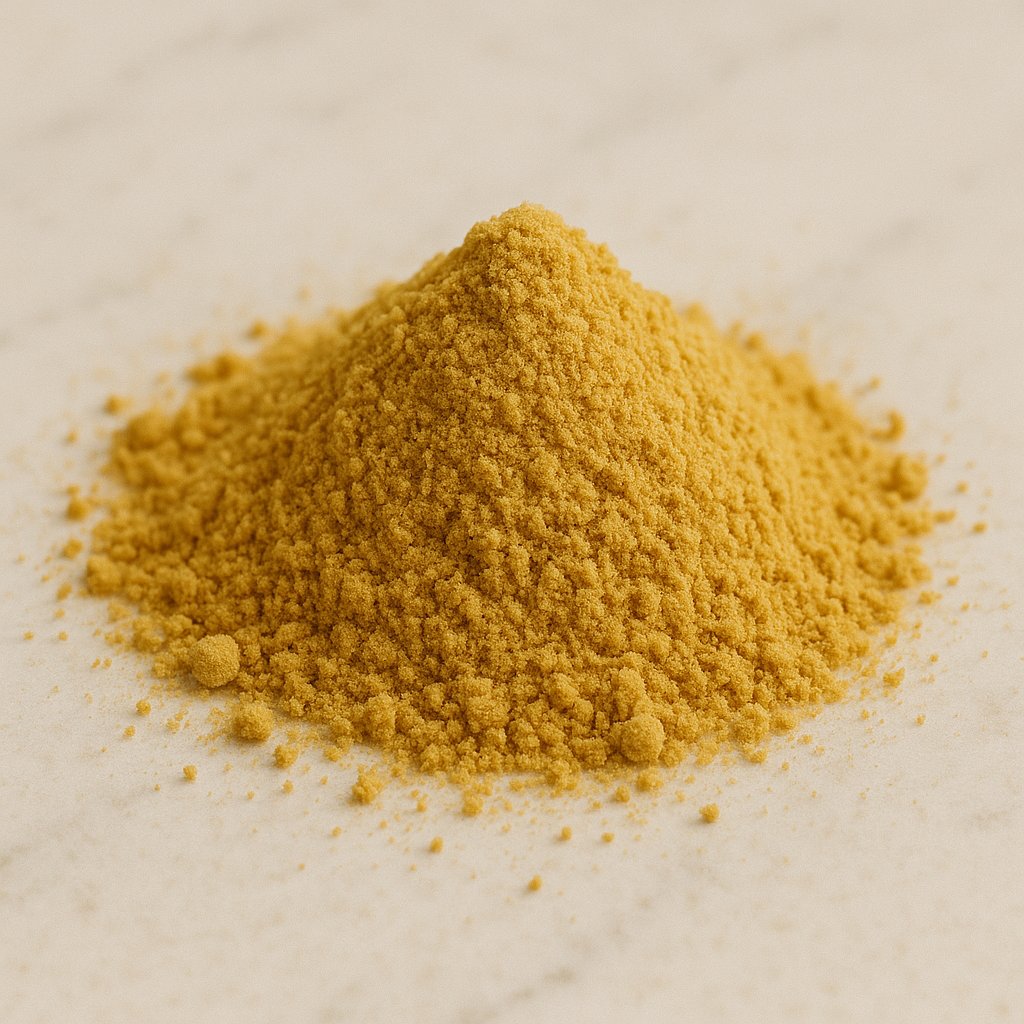
Bowl of mustard powder

I love mustard powder because it has that small, almost magical ability to give a dish character in an instant. I still remember the first time, standing in a tiny kitchen in a foreign town, experimenting with a spoonful of mustard powder; a colleague stirred in some water, winked and said, „Wait, it’s going to explode with flavor.“ He was right, and since then mustard powder has been a reliable companion in my pantry.

Mustard powder is made from ground mustard seeds and can range from mild to hot, depending on whether yellow, brown or black seeds were used. The special thing is the reaction with liquid: on contact volatile oils are released that provide that pleasantly sharp, short-lived heat. If you want to control the heat, mix the powder into cold water; for more pungency use hot water or add it late in cooking.

My favorite uses are varied and surprisingly simple. Mustard powder is excellent for:

  • Spice blends and dry rubs for meat.
  • Sauces, dips and dressings, because it emulsifies and binds.
  • Pickling and preserves, where it adds depth without dominating.
  • Batter or breading, to integrate a light heat.
A small pro tip: whisk mustard powder first with a little vinegar or water and let it sit for a few minutes before folding it in. This lets the full range of flavors develop and keeps the heat fresh. I always store my powder protected from light and dry, because freshly ground it tastes most intense.

What I particularly appreciate about mustard powder is its versatility and the ability to elevate even simple dishes. It asks little, gives back a lot, and is often the secret hero in my recipes when a dish needs that little „something“ extra.

Availability & types


Availability and types of mustard powder are quite diverse and easy to understand. Mustard powder is produced by grinding dried mustard seeds. These seeds grow on plants that belong to the same family as cabbage and rapeseed. You can think of the different mustard varieties like family members: they look similar but have different tastes.

Origin
Mustard seeds come from countries with temperate climates. The plants are usually called Sinapis or Brassica and have been cultivated for many hundreds of years. Some regions are especially known for their mustard plants because climate and soil are well suited. Important countries of origin include, for example, Canada, India, China as well as parts of Europe and the USA. Canada is a large producer of light seeds, while India often grows hotter varieties.

Growing areas
Mustard is grown in many parts of the world. It grows in fields similar to cereal crops. Farmers plant mustard where there is enough sun and not too much rain. In cooler regions seeds tend to mature lighter, in warmer areas the pungency can be stronger. Small farms in Asia, large fields in North America and many operations in Europe supply the seeds that are later ground.

Available types and variants
There are three main types of mustard seeds that you can buy as powder. Each has its own flavor:

  • Yellow/white mustard powder (from Sinapis alba): This is mild and slightly piquant. You can compare it to ordinary black pepper, but milder. Many ready mixes and classic mustards use this powder because it is well tolerated by most people.
  • Brown mustard powder (from Brassica juncea): This has more bite, so more heat. It is a bit reminiscent of hot horseradish, but with a different flavor. India often uses this variety for hot mustard sauces.
  • Black mustard powder (from Brassica nigra): Very strong and spicy. For people who like really bold flavors. It is sold less often because it is very intense.
Additionally, there are variants such as roasted mustard powder, which tastes nuttier, or stone-ground powder, which is coarser and more intense. You will also find blends: for example mustard powder mixed with turmeric for yellow mustard or with herbs and salt as a spice. Sometimes the pack reads “Mustard flour” or “mustard powder” – it’s the same thing.

Where to buy
Mustard powder is available in supermarkets, well-stocked spice shops, Asian or Indian markets, health-food stores and online. Some shops sell it in large bags (for commercial kitchens or preserving), others in small tins for home use. There are also organic options if you prefer the plants to have been grown without certain chemicals.

One last tip: mustard powder reacts with water and develops its flavor. At home you can experiment with different types to see how mild or hot your mustard will become. Mustard powder is therefore versatile, available in many variants and usually easy to find.
Details & nutrition

Property Value
Unit g
Calories per 100 508
Protein per 100 26.0
Carbohydrates per 100 28.0
Sugar per 100 6.0
Fat per 100 36.0
Saturated fat per 100 2.0
Monounsaturated fat 22.0
Polyunsaturated fat 12.0
Fiber per 100 12.0
Vitamin C (mg) per 100 7.0
Vitamin D (IU) per 100 0
Calcium (mg) per 100 266
Iron (mg) per 100 9.2
Nutri-Score C
CO₂ footprint 1.6 kg CO2e/kg
Origin Canada or India (depending on the batch)
Gluten-free Yes
Lactose-free Yes
Nut-free Yes
Vegan Yes
Note Spice with intense pungency; may contain traces of other allergens depending on the product.

Technical & scientific information


Mustard powder refers to the finely ground powder made from dried mustard seeds of various Brassicaceae species, commonly Sinapis alba (yellow mustard), Brassica juncea (brown mustard) or Brassica nigra (black mustard). It is used as a spice, condiment and raw material in manufacturing processes. Sensory properties range from mild to very pungent and depend on seed type, particle size and seed treatment.

Chemical composition
The characteristic pungency is produced by the enzymatic conversion of glucosinolates (in mustard mainly sinigrin and sinalbin) by the enzyme myrosinase, which is activated upon cell damage. This generates volatile isothiocyanates such as allyl isothiocyanate (AITC) and p‑hydroxybenzyl isothiocyanate, which are responsible for aroma and the pungent perception. Lipids in mustard powder consist mainly of unsaturated fatty acids, especially oleic, linoleic and α‑linolenic acids. Storage proteins belong to the classes of cruciferins and napins. Mustard powder also contains fiber as well as mineral nutrients and fat‑ and water‑soluble vitamins.

Nutritional values (typical per 100 g, rounded)

  • Energy: approx. 500–600 kcal
  • Protein: 20–30 g
  • Fat: 30–40 g (predominantly unsaturated)
  • Carbohydrates: 20–30 g
  • Fiber: 10–15 g
  • Minerals: notable amounts of calcium, magnesium, iron and phosphorus; traces of selenium
Processing methods
For production, seeds are cleaned, dried and mechanically milled. Variants arise from additional steps:

  • Raw milling: Preserves enzymatic activity and leads to the highest pungency when moistened.
  • Roasting: Reduces volatile isothiocyanates, shifts flavor toward nuttier notes and reduces pungency.
  • Defatting: Using solvents or pressing, fat content is reduced, which affects texture and shelf life.
  • Fine milling and sieving: Determine mouthfeel and blendability in products such as mustard pastes.
Stability and storage
Isothiocyanates are volatile and sensitive to light and heat; therefore mustard powder loses aroma and pungency over time. Airtight, light‑protected and cool storage prolongs quality. After mixing with water a maximum pungency develops which then decreases depending on pH and temperature.

Health aspects
Mustard powder contains bioactive compounds with demonstrated biological effects in laboratory and animal studies, including antimicrobial and antioxidant properties of isothiocyanates. In moderate amounts mustard powder is safe as a spice and can contribute to flavor variety. However, some possible adverse effects should be noted:

  • Allergies and skin irritation: Direct contact with concentrated powder can cause contact dermatitis.
  • Irritant effects: Isothiocyanates are mucous membrane irritants; contact with eyes or respiratory tract can cause discomfort.
  • Goitrogenic effect: Glucosinolates can, at very high intakes, affect thyroid function; usual culinary amounts are not problematic.
  • Erucic acid: Certain older Brassica varieties may contain elevated levels; modern breeding lines are generally low in erucic acid.
In summary, mustard powder is a technically versatile spice with a clearly defined chemical basis: the conversion of glucosinolates by myrosinase into isothiocyanates determines aroma and reactivity. Nutritional profile and functional properties make it valuable both in the kitchen and in industrial applications, while appropriate processing and storage are decisive for quality and safety.

Wiki entry for: mustard powder
Active now: 15 visitors of which 2 logged-in members in the last 5 minutes