Menu & categories

Mussels

Protein-rich seafood with low fat and high in minerals

Wiki about mussel Nutri-Score A Vegan No Gluten-free Yes Lactose-free Yes Nut-free Yes
NUTRITION / 100 g
86 kcal 12 g Protein 3 g Kohlenhydrate 2.2 g Fett

Introduction

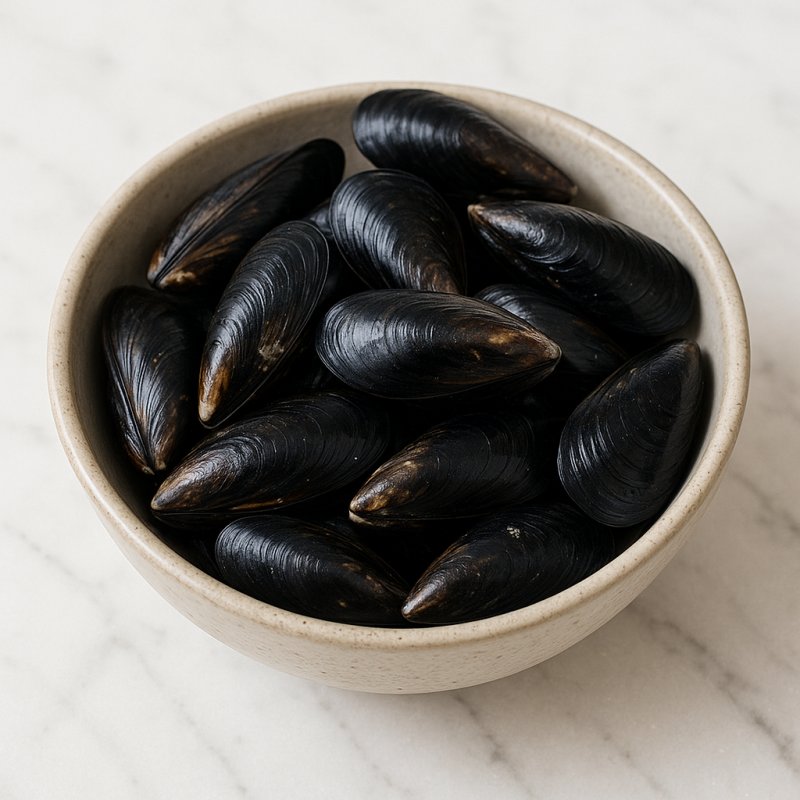
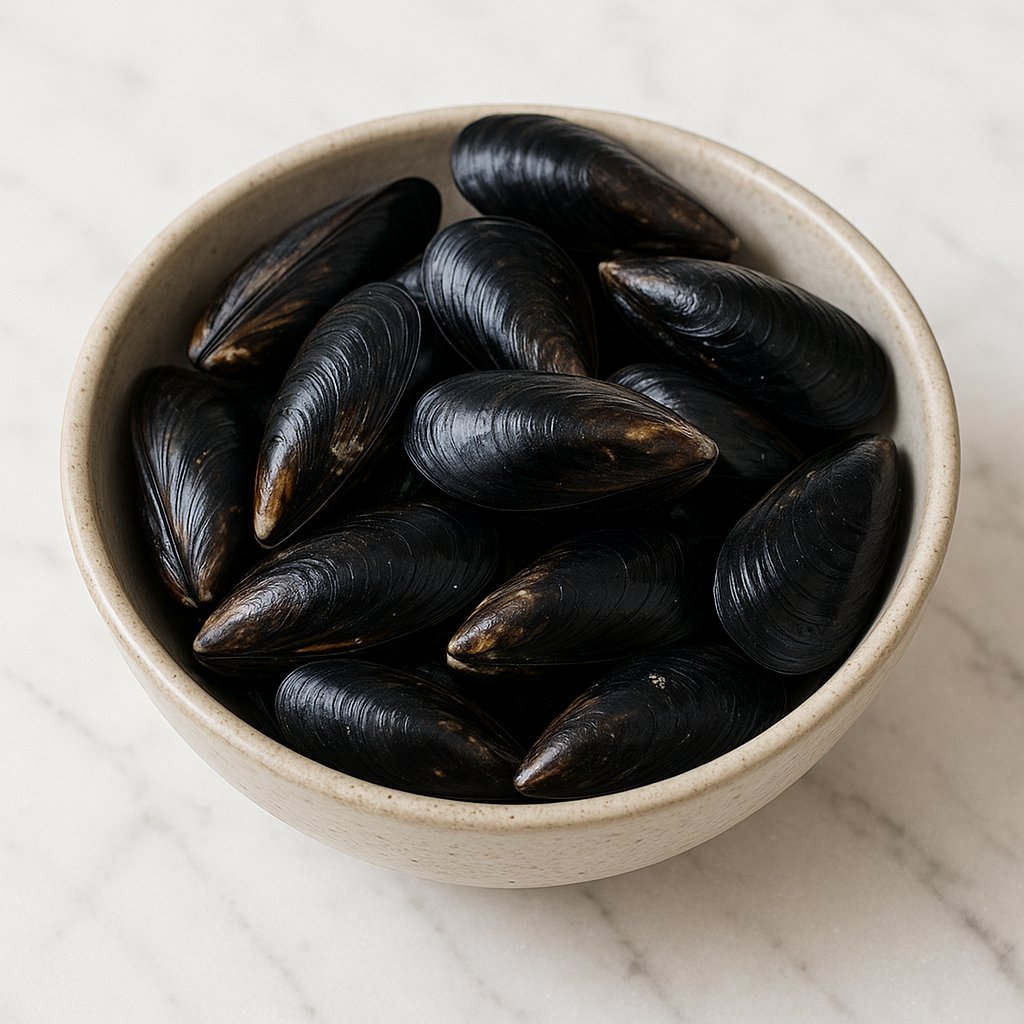
Fresh mussels in their black shells
I still remember my first real contact with mussels: a rainy evening on the coast, the scent of seaweed and a steaming pot from which a savory mist rose. A colleague of mine opened a mussel, smiled and said, "This is what a holiday tastes like." Since then they have meant sea air, conviviality and uncomplicated enjoyment to me.

Mussels are small sea creatures with a big impact in the kitchen. They can be prepared quickly and in many ways, which makes them ideal for spontaneous dinners. What I love about them is that they can be both rustic and elegant: a simple white-wine steam with herbs for the quick weeknight or a refined cream sauce for special evenings. The rule of thumb for preparation is: fresh, clean and not cooked too long – otherwise they become tough.

Practical things I always keep in mind I learned by trying and from small mishaps:

  • Freshness: A mussel that is open but alive will close when tapped; if one is open and stays open it should be discarded.
  • Cleaning: Brush, remove the beard (byssus) and rinse in cold water to get rid of sand.
  • Cooking: Steam briefly until the shells open; the opened ones are ready to eat.
I've also learned that mussels are more than just stars in the pot: they enrich soups, pastas and even salads. A friend once brought a Spanish variant with tomatoes and chorizo – an explosion of flavor that taught me how well they absorb strong flavors. In addition, they are surprisingly sustainable: farmed mussels need little feed, filter the water and have a comparatively low environmental footprint.

When I cook mussels today, it's usually with a glass of white wine within reach and a touch of curiosity: which combination will I try this time? With garlic and parsley, with coconut milk and curry paste or the classic mustard and cream? They are a small culinary chameleon that turns any invitation into a special experience.

Availability & types

Availability and types of mussels

Mussels are shellfish that can be bought in many supermarkets, fishmongers and markets. They mostly grow in the sea or coastal areas and are either harvested or farmed there. You can find them year-round, but in some months they are fresher or cheaper than others. A simple example: just as apples are often best and cheapest in autumn, mussels also have times when they are particularly easy to get.

Origin and farming areas

  • Europe: Many mussels come from countries such as Spain, France, the Netherlands and Ireland. On the Atlantic coast and in river mouths there are large mussel beds. There the water is often cool and nutrient-rich, which helps mussels grow.
  • North Sea and Baltic Sea: Mussels also come from the North Sea and the Baltic Sea. These regions are known for their clean coasts and traditional mussel fisheries.
  • Asia: In countries such as China and South Korea many mussels are also farmed. There are large mussel farms that produce for the world market.
How mussels are farmed (simply explained)

You can imagine the farming like a large garden in the water. Instead of plants, farmers hang nets or ropes into the sea, to which young mussels are attached. These mussels then hang like small pouches on the ropes and grow by filtering plankton (tiny organisms in the water). After several months or years they are harvested and sold.

Available varieties and types

  • Mussel (Mytilus edulis): This is the classic and most commonly sold mussel. It has a dark shell and tender flesh. You can buy it fresh, frozen or pre-cooked.
  • Green mussel: Some mussels have a greenish sheen on the outside of the shell. That does not mean they taste different; it is just a different coloration, similar to apples that can be green or red.
  • Farmed vs. wild mussels: - Farmed mussels come from mussel farms and often look very clean. They are raised under controlled conditions, similar to vegetables in a garden.
    - Wild mussels are collected from natural mussel beds. They may have a bit more sand or seaweed, but are often regarded as particularly "natural" in taste.
  • Preserved and frozen: If you do not want to eat fresh mussels immediately, they are also available canned or frozen. This is practical because it allows longer storage. In taste they are often similar, but fresh mussels usually taste best.
What is important when buying

  • Pay attention to a fresh smell: mussels should smell of the sea and not unpleasant.
  • Closed shells: If the shell is open, the mussel should close when tapped – this shows it is still alive.
  • Check origin: The packaging often states which country the mussels come from. This helps to know their origin.
In short: mussels are widespread and come from many parts of the world. There are different varieties – from the classic mussel to greenish-shining ones to farmed or wild variants. Whether fresh, frozen or canned, when buying a fresh smell and closed shells help to find good mussels.
Details & nutrition

Property Value
Unit g
Average weight per piece 25
Calories per 100 86
Protein per 100 12
Carbohydrates per 100 3
Sugar per 100 0
Fat per 100 2.2
Saturated fat per 100 0.5
Monounsaturated fat 0.4
Polyunsaturated fat 1.0
Fiber per 100 0
Vitamin C (mg) per 100 8
Vitamin D (IU) per 100 80
Calcium (mg) per 100 26
Iron (mg) per 100 3.9
Nutri-Score A
CO₂ footprint 2.0 kg CO2e/kg
Origin Wild-caught or farmed in coastal waters, especially the North Atlantic and the North Sea
Gluten-free Yes
Lactose-free Yes
Nut-free Yes
Vegan No
Note Nutritional values refer to cooked mussels without shell, unseasoned. Mussels are rich in high-quality protein, iodine, vitamin B12 and iron. People with a mussel allergy or certain pre-existing conditions (e.g., gout) should consult their doctor before consuming.

Technical & scientific information

Mussels (Mytilus spp.) are bivalve molluscs in the class Bivalvia that are common in coastal areas. Characteristic are the elongated-oval shells connected by a hinge area. Species such as Mytilus edulis and Mytilus galloprovincialis are economically important and are used worldwide in both fisheries and aquaculture. Mussels attach to hard substrates using a thread system, the byssus, and prefer to settle in intertidal to subtidal zones with temperate water temperatures.

Biochemical composition and nutritional values
The edible soft tissues of mussels are composed mainly of water (approx. 75–82 %), followed by protein (12–20 %), lipids (2–5 %) and carbohydrates (including glycogen, typically 1–3 %). The protein content is of high quality, as it contains all essential amino acids in favorable proportions. Mussels provide polyunsaturated fatty acids, especially omega‑3 fatty acids such as eicosapentaenoic acid (EPA) and docosahexaenoic acid (DHA), albeit at lower concentrations than fatty fish. The mineral composition is rich in iron, zinc, selenium and iodine, and they also contain B vitamins, particularly vitamin B12, as well as small amounts of vitamins A and E.

Physiology and metabolism
Mussels are filter-feeding organisms: they pump water through the gills and extract particles contained therein such as plankton, detritus and dissolved organic matter. This filtration process strongly determines the chemical composition of the mussels; nutrient uptake, fat content and accumulation of contaminants reflect the quality of the surrounding water. Mussels store energy mainly as glycogen in the foot and mantle region, which is used for reproduction and overwintering.

Processing and storage
For safe consumption mussels must be processed alive. Typical steps are:

  • Sorting and discarding open or damaged shells;
  • Washing to remove dirt and byssus threads;
  • Possible thawing of already frozen products under controlled conditions;
  • Heating by steaming, boiling or cooking, which denatures proteins and inactivates microorganisms.
For storage, cooling (0–4 °C) is crucial to slow spoilage. Mussels are sensitive to drying out and temperature fluctuations, which cause stress and reduce quality.

Food safety and contamination risks
As filter feeders mussels accumulate both beneficial and harmful substances. Risks include:

  • Bacterial contamination with E. coli or Vibrio species, especially when consumed raw or insufficiently heated;
  • Biotoxins such as paralytic shellfish poisoning (PSP) and amnesic shellfish poisoning (ASP), which can arise from algal blooms (Harmful Algal Blooms);
  • Heavy metals and organic pollutants, whose accumulation depends on environmental conditions and local sources of input.
Regular monitoring programs and closures of harvesting areas are common measures to reduce risks.

Health aspects
Regular consumption of mussels can be nutritionally beneficial: they provide high-quality protein, essential minerals and omega‑3 fatty acids at a relatively low calorie density. People with seafood allergies should avoid mussels, as they can trigger severe allergic reactions. Pregnant women and immunocompromised persons are advised to consider risks from biotoxins and bacterial contamination and to prefer heated products.

Sustainability and aquaculture
Mussel farming is often considered relatively environmentally friendly because it does not require additional feeding and can contribute to water clarification through filtration. However, impacts from high stocking densities, site selection and possible genetic mixing with wild populations must be considered. Environmental certifications and good management practices contribute to sustainable use.

Overall, mussels are a nutritionally valuable and ecologically interesting marine resource, whose quality and safety strongly depend on environmental conditions, harvesting practices and proper processing.

Wiki entry for: mussel
Active now: 17 visitors of which 2 logged-in members in the last 5 minutes