Availability and types of mussels
Mussels are shellfish that can be bought in many supermarkets, fishmongers and markets. They mostly grow in the sea or coastal areas and are either harvested or farmed there. You can find them year-round, but in some months they are fresher or cheaper than others. A simple example: just as apples are often best and cheapest in autumn, mussels also have times when they are particularly easy to get.
Origin and farming areas
- Europe: Many mussels come from countries such as Spain, France, the Netherlands and Ireland. On the Atlantic coast and in river mouths there are large mussel beds. There the water is often cool and nutrient-rich, which helps mussels grow.
- North Sea and Baltic Sea: Mussels also come from the North Sea and the Baltic Sea. These regions are known for their clean coasts and traditional mussel fisheries.
- Asia: In countries such as China and South Korea many mussels are also farmed. There are large mussel farms that produce for the world market.
How mussels are farmed (simply explained)
You can imagine the farming like a large garden in the water. Instead of plants, farmers hang nets or ropes into the sea, to which young mussels are attached. These mussels then hang like small pouches on the ropes and grow by filtering plankton (tiny organisms in the water). After several months or years they are harvested and sold.
Available varieties and types
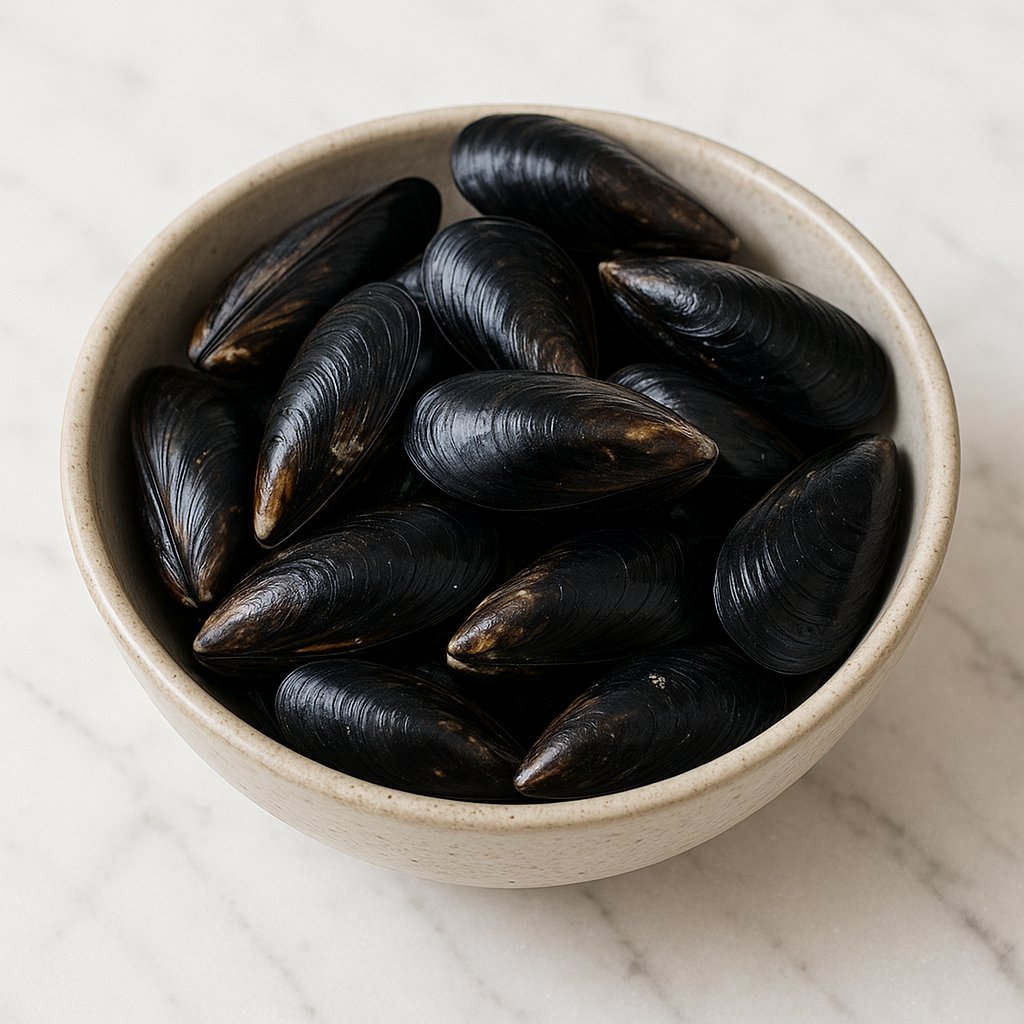
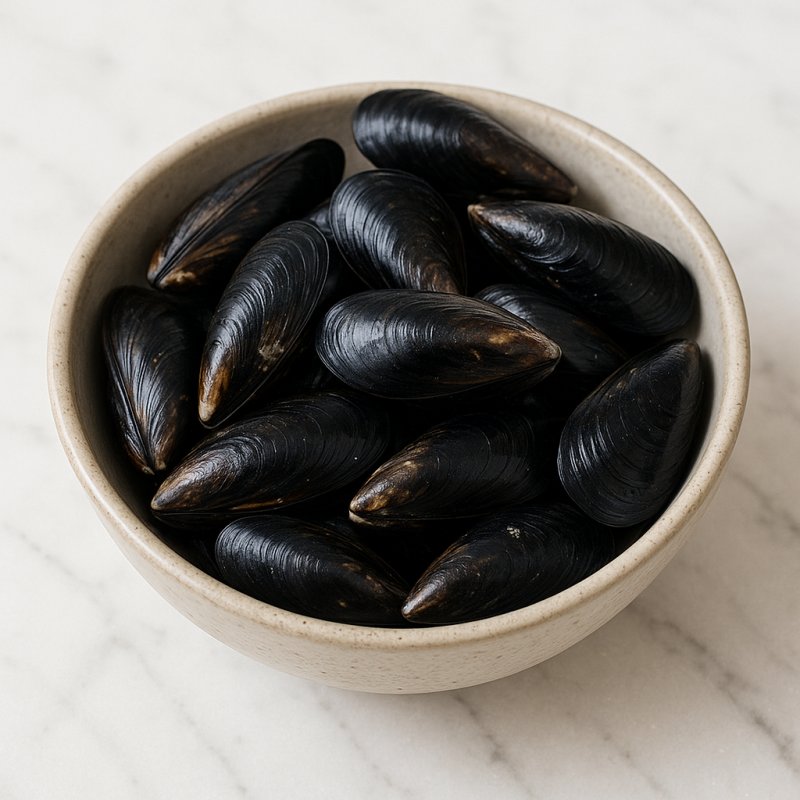
- Mussel (Mytilus edulis): This is the classic and most commonly sold mussel. It has a dark shell and tender flesh. You can buy it fresh, frozen or pre-cooked.
- Green mussel: Some mussels have a greenish sheen on the outside of the shell. That does not mean they taste different; it is just a different coloration, similar to apples that can be green or red.
- Farmed vs. wild mussels: - Farmed mussels come from mussel farms and often look very clean. They are raised under controlled conditions, similar to vegetables in a garden.
- Wild mussels are collected from natural mussel beds. They may have a bit more sand or seaweed, but are often regarded as particularly "natural" in taste. - Preserved and frozen: If you do not want to eat fresh mussels immediately, they are also available canned or frozen. This is practical because it allows longer storage. In taste they are often similar, but fresh mussels usually taste best.
What is important when buying
- Pay attention to a fresh smell: mussels should smell of the sea and not unpleasant.
- Closed shells: If the shell is open, the mussel should close when tapped – this shows it is still alive.
- Check origin: The packaging often states which country the mussels come from. This helps to know their origin.
In short: mussels are widespread and come from many parts of the world. There are different varieties – from the classic mussel to greenish-shining ones to farmed or wild variants. Whether fresh, frozen or canned, when buying a fresh smell and closed shells help to find good mussels.