Menu & categories

Mushroom soup

Creamy mushroom soup with a delicate mushroom flavor

Wiki about mushroom soup Nutri-Score B Vegan No Gluten-free No Lactose-free No Nut-free Yes
NUTRITION / 100 g
55 kcal 2.0 g Protein 4.5 g Kohlenhydrate 3.0 g Fett

Introduction

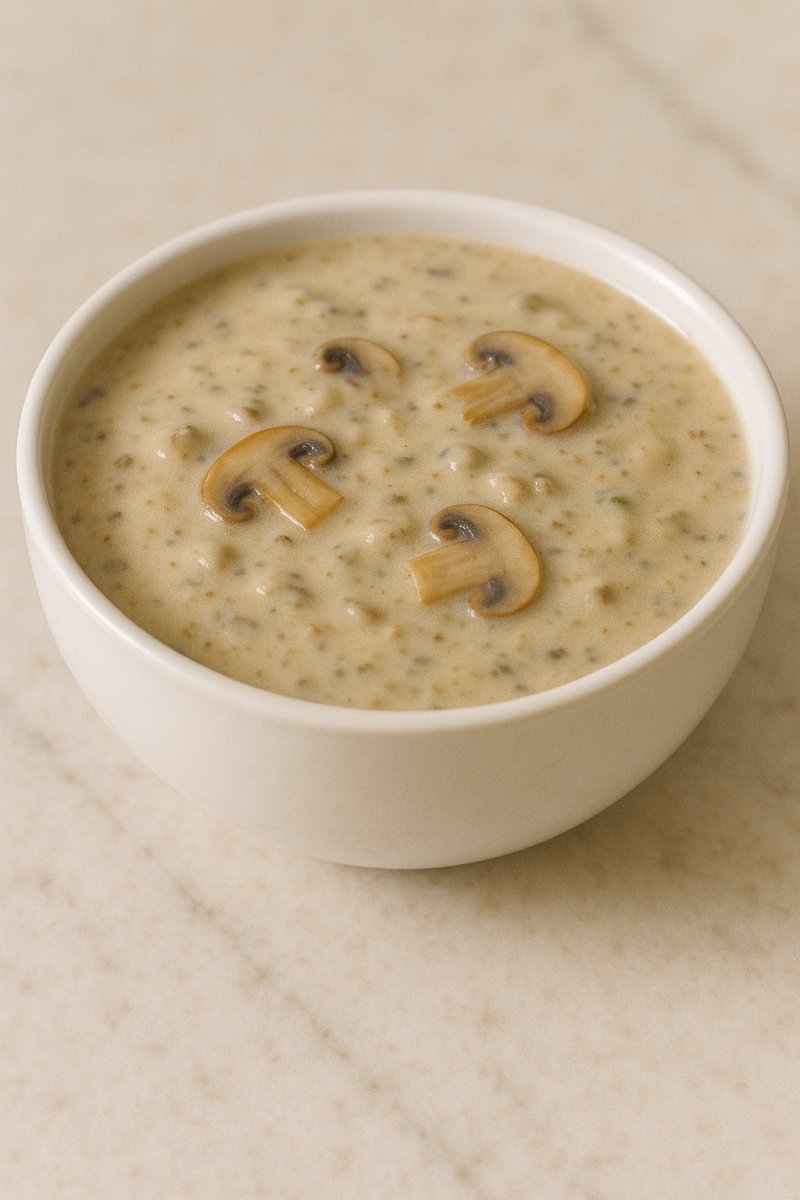
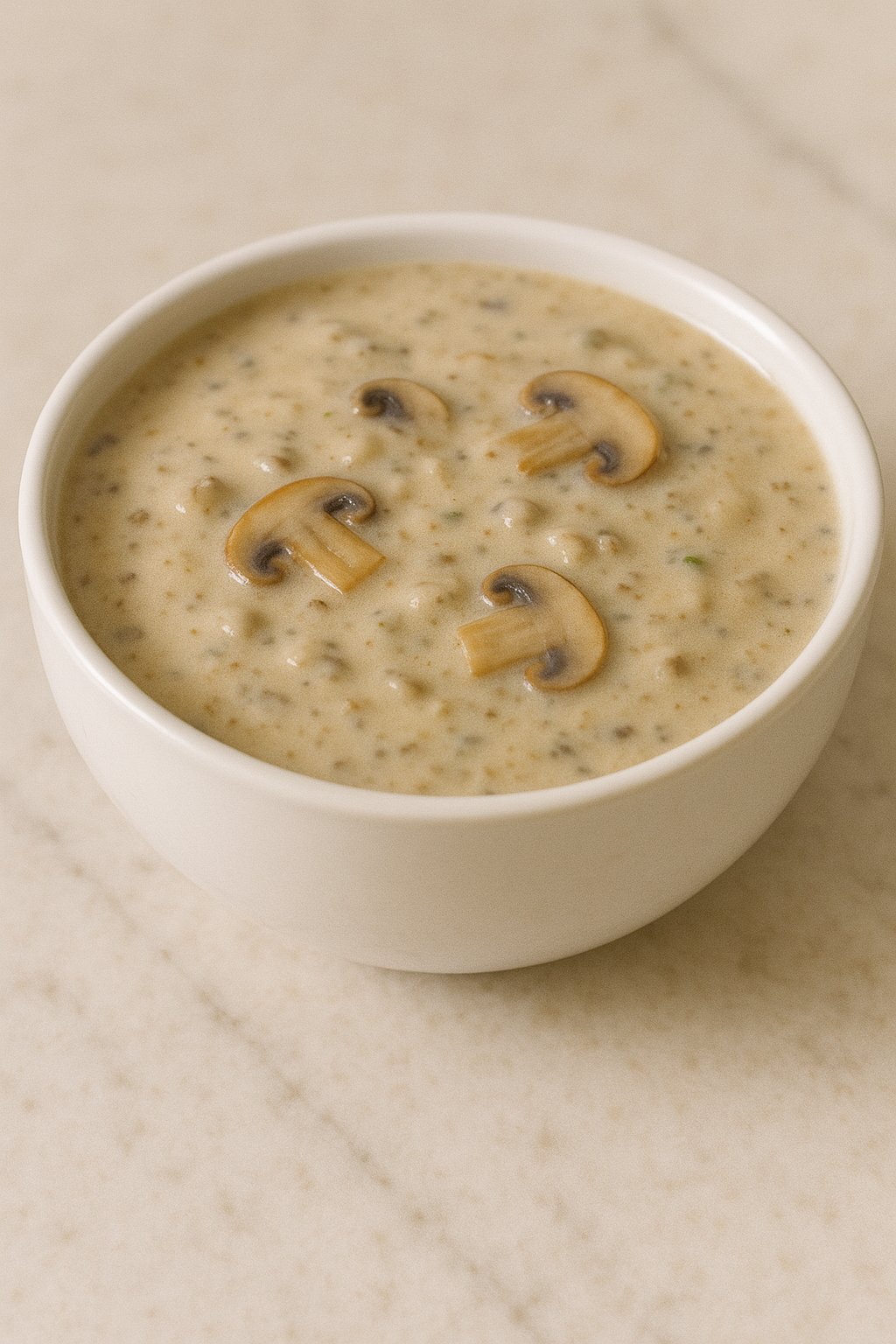
A bowl of creamy mushroom soup with pieces of mushrooms
I have a special relationship with mushroom soup that cannot be pinned down to a single taste, but rather to memories that resurface with the first spoonful. This soup was a secret comfort in my childhood on rainy afternoons, and even today the scent of sautéed mushrooms, shallots and a hint of thyme instantly brings a cozy feeling of home. Once I served it at a small house party, and a guest who was usually skeptical of cream soups said in awe: “This is more than soup, this is umami in liquid form.”

What I like about mushroom soup is the mix of simplicity and refinement. It doesn't need many ingredients, but it requires care: good mushrooms, a nutty brown roux or alternatively a splash of white wine, and, very importantly, seasoning in several stages. I still remember a kitchen trial with a friend who insisted on a vegan variant; we experimented with almond cream and roasted celery until the balance between creaminess and mushroom aroma was right. Such experiments show how adaptable the recipe is.

For me mushroom soup is more than a dish; it is a small lesson in technique and timing. The mushrooms must be sautéed dry so they gain color and concentration before being incorporated into the broth. The broth itself can simply be vegetable or chicken stock, depending on whether you want to serve it rustic or elegant. When pureeing I take care not to blend too long so the texture stays lively and does not become pasty.

When I have guests, I like to add small extras that surprise:

  • A few drops of truffle oil as a finish for special occasions.
  • Roasted mushroom slices as a crispy contrast.
  • Fresh herbs like parsley or chervil for sprinkling.
In the end mushroom soup is a versatile classic that works both in simple everyday cooking and on festive menus. It tells of seasons, personal preferences and small kitchen trials, and time and again I find in it the perfect combination of comforting warmth and purist flavour.

Availability & types

Availability and types

The ingredient mushroom soup is very easy to find in many countries. It often appears in two main forms on store shelves: as a ready-made can or packet (that is, a pre-prepared soup that only needs heating or mixing with water) and as a fresh variant where the soup itself is made from fresh mushrooms. Imagine: the ready-made soup is like a convenience meal that is quick, and the fresh soup is like when mum or dad chop the ingredients at home and cook them together.

Origin
The idea of mushroom soup comes from countries where mushrooms are widely grown and eaten. Mushrooms, meaning white or brown fungi, are primarily cultivated in Europe, North America and parts of Asia. Many recipes for mushroom soup originate in European cuisine, because mushrooms have long been popular there. The point is: the soup itself is not a standalone "plant", but a dish made from mushrooms (champignons), cream, broth and spices.

Growing regions
Mushrooms do not grow wild like apples on trees, but are often cultivated in large halls. Important places where mushrooms are grown include:

  • Europe – Countries such as France, the Netherlands and Poland produce a lot of mushrooms.
  • North America – The USA and Canada also have large mushroom farms.
  • Asia – Especially in China and other countries, mushroom cultivation is increasing.
Mushrooms are grown on a special substrate filled with nutrients. It's not complicated: you can imagine it like a garden inside a hall, only mushrooms grow there instead of carrots.

Available varieties and variants
Mushroom soup exists in various versions so every taste can find something. Here are the most common types, explained as if to a child:

  • Clear mushroom soup – This is a broth with small pieces of mushroom. It is light and does not taste so "creamy".
  • Creamy mushroom soup – This variant is thick and velvety, often made with cream or milk. You could say: it is like a cosy mushroom stew in a spoon.
  • Ready-made soups from cans or packets – Practical for a home lunch break: just heat or mix with hot water. They are quick, but sometimes contain more salt or additives.
  • Fresh soup – This is cooked at home from fresh mushrooms, onions, broth and maybe cream. It often tastes best because everything is really fresh.
  • Vegan or lactose-free variants – For people who do not consume dairy: here cream is replaced by plant milk or other ingredients so the soup still remains creamy.
  • Gourmet or mixed-mushroom soups – Some soups contain, in addition to champignons, other mushrooms like porcini or chanterelles. It is like a colourful mushroom salad, only as a soup.
In the shop you can therefore find very different mushroom soups: from the quick can to the luxurious creamy soup to the homemade fresh variant. If you read the label, you can see whether the soup is made from fresh mushrooms, mushroom powder or with a lot of cream. That way you can decide which soup suits you best – whether quick, light, particularly tasty or without dairy.
Details & nutrition

Property Value
Unit g
Calories per 100 55
Protein per 100 2.0
Carbohydrates per 100 4.5
Sugar per 100 1.5
Fat per 100 3.0
Saturated fat per 100 1.8
Monounsaturated fat 0.8
Polyunsaturated fat 0.4
Fiber per 100 0.6
Vitamin C (mg) per 100 1.0
Vitamin D (IU) per 100 20
Calcium (mg) per 100 20
Iron (mg) per 100 0.4
Nutri-Score B
CO₂ footprint 0.35
Origin Europe
Gluten-free No
Lactose-free No
Nut-free Yes
Vegan No
Note Values refer to a classic creamy mushroom soup based on milk or cream with a flour-based thickening.

Technical & scientific information

Mushroom soup refers to a prepared food based on edible mushrooms of the genus Agaricus, mostly Agaricus bisporus (button/cremini), processed to a liquid or creamy consistency. As an ingredient or finished product, mushroom soup combines the chemical and nutritional characteristics of the mushroom with typical processing ingredients such as water, fat, salt, flour or starch and, where applicable, dairy products and spices. Industrial as well as homemade production aims to extract and preserve plant proteins, dietary fibres and flavour compounds in a stable, storable emulsion or dispersion.

Chemical composition and nutrients
Mushrooms consist largely of water (approx. 85–92% in the fresh state). The dry matter is made up mainly of carbohydrates (predominantly polysaccharides such as chitin in the cell wall and beta-glucans), proteins (with a relatively balanced amino acid profile, but a lower total amount than in animal meat) and secondary plant compounds. Minerals such as potassium, phosphorus, iron and traces of selenium are present in notable amounts. B-complex vitamins, especially niacin (B3), pantothenic acid (B5) and riboflavin (B2), occur in mushrooms. Fatty acids are overall low, with a small proportion of unsaturated fatty acids.

Components relevant for soup
Free amino acids (e.g. glutamic acid), nucleotides (e.g. 5’-GMP and 5’-IMP) and volatile aroma and odor compounds are responsible for taste. During cooking these components are partly dissolved or released, which enhances the umami properties of the soup. Texture-forming substances such as beta-glucans and chitin influence viscosity and mouthfeel, while starch or flour are often added to standardize the consistency.

Processing methods
Domestic and industrial preparation comprises several steps: cleaning and cutting the mushrooms, sautéing or blanching for aroma formation, extraction by cooking in broth, mixing with thickeners and possibly emulsifiers, and sterilization or pasteurization for shelf life. Industrial processes use concentration, homogenization and thermal treatment to ensure stability, microbiological safety and uniform texture. Preservation can be achieved by heating in cans, aseptic filling or addition of acidulants and antioxidants.

Sensory properties and aroma
The aroma of mushroom soup arises from a complex of volatile compounds: alcohols, aldehydes, ketones, sulfides and heterocyclic compounds. Maillard reactions during browning promote additional roasted and caramel notes that deepen the flavour profile. Glutamate and 5’-nucleotides act synergistically and produce the taste sensation described as “umami”.

Health aspects
Mushrooms are low in calories and provide fibre, vitamins and minerals. Beta-glucans may have immunomodulating properties and positively affect gut health, although therapeutic effects are dose-dependent and vary with molecular structure. In sensitive individuals, raw or insufficiently heated mushroom material can be gastrointestinally irritating, so thorough heating is recommended. Allergic reactions to mushroom proteins are rare but possible. High-salt and high-fat preparations should be consumed in moderation to avoid increasing cardiovascular risks.

Food-chemical and regulatory notes
For industrially produced mushroom soups, labelling obligations for allergens and additives must be observed. Microbiological stability is ensured by appropriate heat treatment and packaging. Analyses for pesticide residues and heavy metals are also relevant, as mushrooms can accumulate metal ions.

In summary, mushroom soup is a nutrient-rich, water-based food whose technological properties depend on the biochemical components of the mushroom as well as the thickeners, fats and processing methods used. Sensory attributes, shelf life and health effects can be modulated by targeted process control and recipe design, so that products can be both organoleptically appealing and nutritionally favourable.

Wiki entry for: mushroom soup
Active now: 17 visitors of which 2 logged-in members in the last 5 minutes