Menu & categories

Muesli dry product

Cereal mix as a dry breakfast product

Wiki about muesli Nutri-Score C Vegan Yes Gluten-free No Lactose-free Yes Nut-free No
NUTRITION / 100 g
380 kcal 11 g Protein 65 g Kohlenhydrate 7 g Fett

Introduction

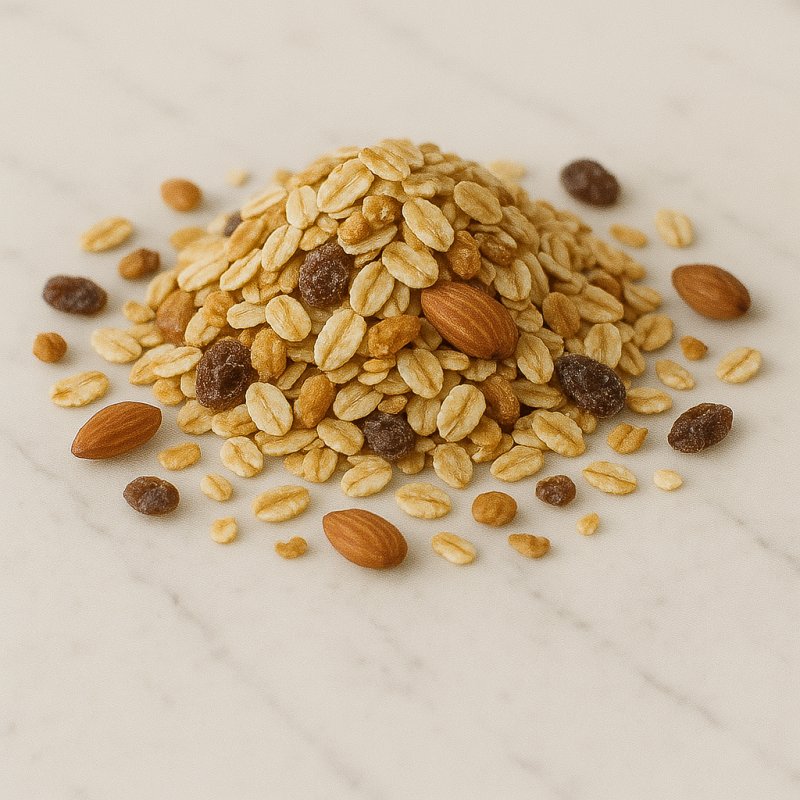
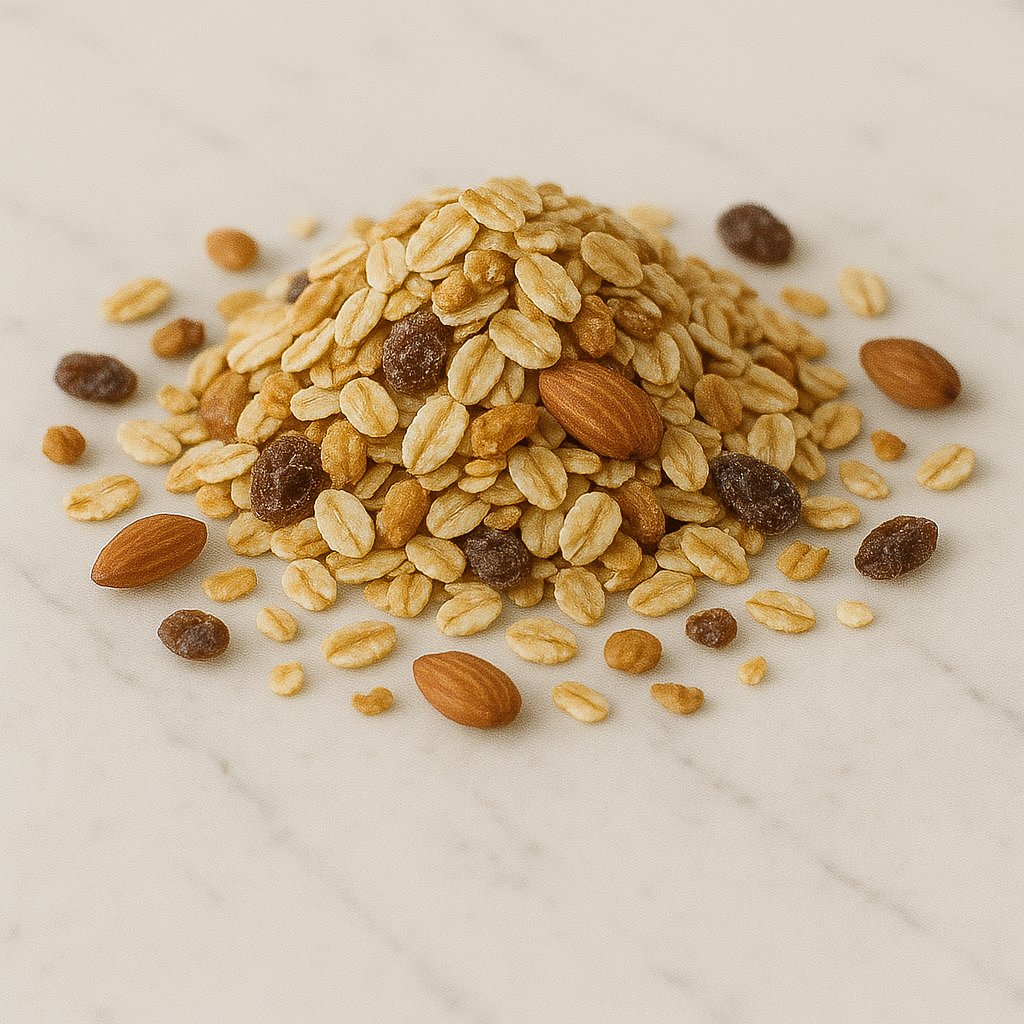
Bowl with dry muesli of oats and seeds
I remember exactly the first morning I realized how versatile a muesli dry product can be: a rain-soaked business trip, a small hotel breakfast buffet and a bowl that told more stories than the breakfast menu. Since then the flakes, nuts and dried fruits have been for me far more than just a quick start to the day — they are a small culinary world in bags and tins.

What makes muesli dry products special to me is their rawness and versatility. In the kitchen I can play with them: with yogurt they become a creamy breakfast, with milk they are familiar and comforting, with plant-based milk they turn into a light, modern classic. I learned early that texture decides. Crunchy nuts provide structure, crushed flax seeds add bite and oat flakes provide that cozy, slightly sticky base that holds every spoonful together.

A little trick a colleague once told me turns the dry product into a dessert: a few spoons of muesli sprinkled over warm fruit compote, briefly caramelized under the grill — and suddenly you are sitting with a secret delicacy that makes guests ask for more. Such anecdotes make clear that muesli is not just "breakfast" but an ingredient with character.

Important features I check when looking at the packaging:

  • Ingredient variety: oats, spelt, nuts, seeds, dried fruit.
  • Texture: mix of flakes, crunch and tender pieces.
  • Flavor balance: sweetness from fruit, bitterness from nuts, nutty depth from seeds.
  • Shelf life & storage: dry and airtight preserves the aroma longest.
I like to choose a product that surprises me when shopping: something with unusual seeds or dried exotic fruits that releases scent and curiosity at first opening. Sometimes I mix two varieties too, because one alone never covers all moods. And yes, I confess: there are days when I nibble my muesli as a snack from my hand — like a secret ritual between appointments.

To me the muesli dry product is an invitation to experiment, a small pantry full of possibilities and a constant source of comfort and surprise. It adapts to my daily life, whether a hectic morning, a creative afternoon or a sweet evening combination — and this adaptability is what makes it an indispensable ingredient in my kitchen.

Availability & types

Availability and types

Muesli as a dry product is easy to find in many countries. It consists of various dried ingredients such as oat flakes, nuts, seeds, dried fruit and sometimes small sweets. Because the ingredients often come from different regions, muesli is available in supermarkets, health food stores and even at petrol stations. You can buy it in large packs, small sample bags or portion packs — depending on how much you need.

Origin
The main ingredient of many mueslis is oats. Oats grow particularly well in cooler and wetter areas. Countries like Germany, Russia, Canada and parts of Scandinavia grow a lot of oats. Other cereals found in muesli are wheat, rye and barley. They often grow where the climate is a bit warmer. Nuts such as almonds or hazelnuts frequently come from warmer regions, for example the Mediterranean area or California. Dried fruits, like raisins, apricots or banana chips, come from countries with dry, warm summers, e.g. Turkey, Spain or South America.

Growing regions
- Oats: especially in northern and central European countries, Canada and Russia.
- Wheat/Rye/Barley: in many regions of the world, especially in Europe, North America and parts of Asia.
- Nuts: in the Mediterranean region (Spain, Italy), in Turkey and parts of the USA (California).
- Seeds (e.g. sunflower, flax): wherever there is enough sun and warmth; for example in Europe, the Americas and Asia.
- Dried fruits: from warm, dry regions such as Turkey, Spain, South America and California.

Available varieties and variants
Muesli comes in many different types — almost like ice cream with many flavors. Here are a few simple categories you often find in stores:

  • Basic muesli: consists mainly of oat flakes and maybe some seeds. It has a neutral taste, like an unseasoned bread that you can combine with anything.
  • Fruit muesli: contains dried fruit such as raisins, apple pieces or bananas. These mueslis taste sweeter and are popular with children.
  • Crunchy muesli / Granola: ingredients here are often baked with some oil and sugar to make them crunchy. It's like crispy bread in small pieces that crackles at breakfast.
  • Nut muesli: contains many nuts such as almonds, hazelnuts or walnuts. These mueslis are full of bite and provide a lot of energy.
  • Whole grain muesli: made from unprocessed cereals. It is particularly healthy and reminiscent of coarse, hearty bread.
  • Gluten-free variants: for people who do not tolerate gluten, there are mueslis made from oats (labeled gluten-free), rice, corn or pseudocereals like quinoa.
  • Organic muesli: the ingredients come from organic farming, i.e. without certain chemicals or pesticides.
  • Protein muesli: extra protein by adding soy flakes, nut butter or protein powder — often chosen by athletic people.
  • Mixes for children: with smaller, more colorful pieces or chocolate bits to make breakfast fun.
When you buy muesli, you can choose whether you want something simple, crunchy, fruity or healthy. The ingredients come from different parts of the world, but muesli is usually always easy to find — in many shops and often online. That way you quickly find the variety that tastes best to you or fits your eating habits.
Details & nutrition

Property Value
Unit g
Calories per 100 380
Protein per 100 11
Carbohydrates per 100 65
Sugar per 100 18
Fat per 100 7
Saturated fat per 100 1.2
Monounsaturated fat 2.2
Polyunsaturated fat 3.0
Fiber per 100 8
Vitamin C (mg) per 100 0
Vitamin D (IU) per 100 0
Calcium (mg) per 100 60
Iron (mg) per 100 4
Nutri-Score C
CO₂ footprint 1.2
Origin EU and non-EU
Gluten-free No
Lactose-free Yes
Nut-free No
Vegan Yes
Note Average values for a common slightly sweetened dry muesli product without added milk.

Technical & scientific information

Muesli dry product denotes a dry, usually granulated or flake-like mixture of various cereal components, seeds, nuts, dried fruits and possibly sweeteners, used as a base for breakfast dishes or snacks. As an industrially or artisanally produced dry product, muesli is characterized by low moisture content, long shelf life and variable composition. Typical basic components are oat flakes, wheat flakes, rye flakes or barley flakes; in addition, flax seeds, sunflower seeds, pumpkin seeds, almonds and raisins are commonly found.

Chemical composition and macronutrients
The composition of a muesli dry product varies widely but follows general patterns regarding macronutrients. Carbohydrates make up the largest share in most blends, with starch from cereal flakes and free sugars from dried fruits being relevant. Fiber, notably beta-glucans from oats as well as soluble and insoluble cellulose fractions, are characteristic components and contribute to satiety and gut health. Proteins come mainly from cereals and nuts; their amino acid profiles are often limited in lysine but can be complemented by pulses. Lipids originate primarily from nuts and seeds and consist predominantly of unsaturated fatty acids, including polyunsaturated omega-6 and omega-3 fatty acids (in flax seeds).

Vitamins, minerals and secondary plant compounds
Muesli dry products supply micronutrients such as vitamin E (especially in nuts), B vitamins (in wholegrain cereals), magnesium, iron, zinc and potassium. Dried fruits increase the content of potassium and secondary plant compounds like phenols and flavonoids. The levels of these micronutrients depend on the recipe and the proportion of whole grains and nuts.

Processing methods
Processing includes raw material selection, cleaning, dehulling, rolling (to form flakes), drying and possibly roasting or baking (for crunchy muesli). Drying to a water content typically below 10–12% inhibits microbial activity and enzymatic reactions. In industrial production binders or syrups are sometimes used to create crunchy structures; these thermal steps also affect Maillard reactions and thus aroma and browning. Packaging under protective atmosphere can delay oxidation of sensitive lipids.

Safety, shelf life and quality aspects
As a dry product, muesli is susceptible to light, heat and oxygen exposure, which can lead to lipid oxidation (rancidity) and loss of sensitive micronutrients. Moisture uptake promotes mold growth; therefore airtight packaging and dry storage are important. Another quality factor is the presence of undesired contaminants such as mycotoxins (e.g. aflatoxins in nuts or Fusarium toxins in cereals) and pesticide residues. Regular analyses of moisture, water activity, peroxide value and microbiological parameters are part of quality control.

Nutritional and health aspects
The high fiber content has positive effects on bowel function, blood sugar regulation and satiety. Oat-containing mueslis with beta-glucans can help lower LDL cholesterol. Unsaturated fatty acids provided by nuts and seeds support a favorable lipid profile. At the same time, added sugars or large amounts of dried fruit can significantly increase energy content; with regular consumption portion control and composition are important to avoid excessive calorie intake. Allergens such as gluten, nuts or sesame must be clearly declared.

Consumer guidance and uses
Muesli dry products are classically eaten with milk, yogurt or plant-based alternatives; they are also suitable for baking or as a topping for smoothie bowls. For nutritional applications it is relevant to know portion sizes, water-binding capacity and nutrient density. Customized recipes enable adaptation to specific dietary needs, such as protein enrichment, gluten-free variants or reduced sugar contents.

Overall, the muesli dry product is a versatile, nutrient-rich food whose nutritional value and shelf life critically depend on the choice of raw materials, the processing method and the packaging.

Wiki entry for: muesli
Active now: 24 visitors of which 2 logged-in members in the last 5 minutes