Menu & categories

Mousse

Lightly whipped, creamy, airy dessert based on milk and eggs

Wiki about mousse Nutri-Score D Vegan No Gluten-free Yes Lactose-free No Nut-free Yes
NUTRITION / 100 g
280 kcal 5.0 g Protein 25.0 g Kohlenhydrate 18.0 g Fett

Introduction

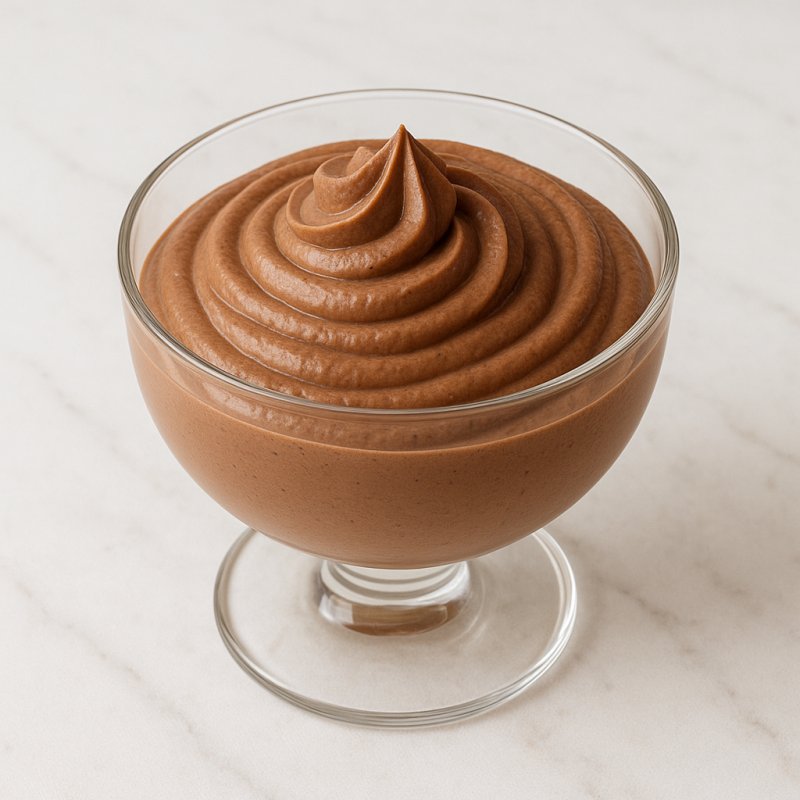
Bowl with airy mousse dessert
I still remember the first evening I served a mousse and everyone around the table suddenly went quiet. It wasn't a big show, just a simple spoon that made a soft whisper on first contact with the air before sliding into a cloud of flavor. This delicate consistency, somewhere between creamy and airy, makes the Mousse for me one of the most exciting ingredients in the kitchen.

When I think of mousse, I don't just picture the classic chocolate variant, but a whole world of culinary possibilities. Mousse can be sweet or savory, served cold or warm, and can be paired with fruits, herbs, spices, or even smoked fish. Once I offered a light goat-cheese mousse on toasted bread that at a small reception got more compliments than the most expensive salmon.

In terms of technique, I value balance: whip air into the egg whites, gently fold in the cream, find the right temperature and stabilizing ingredients. A colleague of mine once called it "cat-dance in the kitchen" — you have to work very sensitively so the mousse keeps its structure but remains airy enough to melt on the tongue. The ingredients are often simple, but the art lies in timing and gentleness in handling.

For special occasions I like to serve mousse in small glasses, with a hint of cinnamon, freshly grated lemon zest or crunchy nuts as a contrast. For everyday life I sometimes content myself with a dollop of fruit mousse with my coffee, which instantly makes an ordinary afternoon much nicer. It's the versatility that keeps fascinating me.

  • Sweet mousses: Chocolate, vanilla, fruit
  • Savory mousses: Fish, cheese, vegetables
  • Technique tips: Fold in air gently, proper chilling
In the end, mousse remains for me a small culinary wonder: unassuming in appearance, magnificent in mouthfeel and full of surprises — perfect for impressing guests or treating yourself to a pleasurable moment.

Availability & types

Availability and types of Mousse

What is mousse and where does it come from?
Mousse is a light, frothy food or dessert type created by incorporating air or steam into a cream to make it fluffy. Mousse is most commonly known as chocolate mousse or fruit mousse, but there are also savory variants like fish or vegetable mousses. The idea of making foods frothy and airy exists in many countries. The modern dessert form developed particularly in Europe, but similar techniques are found worldwide – so mousse is not a single “plant” or “fruit”, but a method of preparation.

Where can you get mousse?
Mousse is very easy to find. You can buy or try it in these places:

  • In supermarkets: ready-filled mousse cups, mostly chocolate, vanilla or yogurt.
  • Bakeries and patisseries: freshly made mousses in cakes or as dessert glasses.
  • Restaurants: especially as a light finish after a meal in fine dining menus.
  • Homemade: many recipes online or in cookbooks show how to make mousse at home.
Which types and variants exist?
Mousse comes in many different forms. Here are the most common, simply explained:

  • Sweet mousses: The best-known group. Examples:
    • Chocolate mousse – chocolatey and airy, like a chocolate cloud pillow.
    • Fruit mousse – made from pureed fruits like strawberry, mango or raspberry; tastes fresh and fruity.
    • Vanilla or caramel mousse – mild and creamy, often made with cream.
  • Savory mousses: Not sweet, served as starters or spreads:
    • Fish mousse – for example from salmon or tuna, often finely seasoned.
    • Vegetable or mushroom mousse – like a velvety dip from peas, eggplant or mushrooms.
  • Light mousses: With lots of air and little fat; feel particularly airy.
  • Firm mousses: Stabilized with gelatin or pectin so they keep their shape, e.g. in tarts.
  • Vegan/vegetarian variants: Without animal ingredients, often made with plant-based cream, aquafaba (chickpea water) or silken tofu instead of eggs and cream.
Why are there so many variants?
Mousse is like a blank canvas: you can use different ingredients, flavors and techniques. Some people prefer the classic combination of cream and eggs, others need a lactose-free or vegan version. Depending on which ingredients are available — chocolate from cocoa beans, fresh garden fruit or spices from distant countries — new flavor profiles emerge.

Practical notes on availability
Ready-made mousse is typically available year-round, especially in supermarkets. Fruit mousses are best when the fruits used are in season, because they will be fresher and more aromatic. In restaurants or bakeries the selection can vary by region: coastal areas more often offer fish mousses, fruit-growing regions more fruit mousses. Vegan variants are becoming increasingly common, so chances are good to find a mousse to suit almost any taste.

In summary: mousse is a versatile, frothy preparation available in sweet and savory versions as well as in traditional and modern, vegan or stabilized variants. You can find it in supermarkets, patisseries, restaurants or make it yourself — depending on which type and consistency you prefer.
Details & nutrition

Property Value
Unit g
Calories per 100 280
Protein per 100 5.0
Carbohydrates per 100 25.0
Sugar per 100 24.0
Fat per 100 18.0
Saturated fat per 100 11.0
Monounsaturated fat 5.0
Polyunsaturated fat 1.0
Fiber per 100 0.5
Vitamin C (mg) per 100 0.0
Vitamin D (IU) per 100 40
Calcium (mg) per 100 90
Iron (mg) per 100 0.6
Nutri-Score D
CO₂ footprint 2.5
Origin Varies depending on the ingredients used, typically Europe
Gluten-free Yes
Lactose-free No
Nut-free Yes
Vegan No
Note Nutritional values for a typical classic mousse made from cream, milk, sugar and eggs; recipe may vary depending on the variety (e.g., chocolate, fruit).

Technical & scientific information

Mousse refers in culinary terms to a lightly airy preparation that includes both sweet and savory variants. Technically, mousse is an emulsion and foam product: it consists of a liquid phase (e.g., milk, cream, egg yolk or fruit juice), a fat phase (often butter, cream or egg) and incorporated air that gives it its characteristic soft structure. The stability of this air-filled system relies on the formation of thin liquid films and a matrix of proteins, lipids or gelling agents that surround the trapped gas volumes and prevent collapse.

Chemical composition and ingredients
The basic components of a mousse are water, lipids, proteins, carbohydrates and, where applicable, thickening or gelling agents. In sweet mousses, cream (casein and whey proteins, milk fat), sugar (sucrose or invert syrup) and whole eggs or yolks (phospholipids such as lecithin, proteins) often predominate. Savory mousses can include additional proteins from fish, meat or vegetables as well as binding components like gelatin, agar-agar or pectin. Emulsifiers such as lecithin improve oil‑water distribution, while proteins and polysaccharides contribute to foam stability.

Physical and technological aspects
The texture of a mousse is created by mechanical action (whipping, stirring) that introduces air bubbles into the mass. Critical factors are the size and distribution of the air bubbles and the viscoelastic properties of the surrounding matrix. Small, evenly distributed bubbles lead to a fine, creamy texture; larger bubbles create coarse pores. Temperature plays an important role: refrigeration can solidify fats and thus stabilize the structure, while heating can lead to phase separation or fat melting. Thermal treatment of ingredients (e.g., pasteurizing egg yolks or cooking sugar) alters protein conformations and gelling properties and thus affects flavor, safety and shelf life.

Processing methods
Typical production steps are: preparing a flavored base (crème anglaise, fruit purée, reduced stock), adding a stabilizer (gelatin or plant-based alternatives), cooling to an appropriate temperature, mechanically folding in whipped cream or beaten egg whites and then portioning and chilling. Industrial processes use homogenization and controlled air incorporation (e.g., whipping systems), sometimes followed by cooling in molds or freeze-drying in specialized products. The choice of gelling agent affects texture and snap point; gelatin yields a more gel-like firmness, while agar or carrageenan enable smoother, heat-stable structures.

Nutritional and dietetic aspects
The nutritional profile of a mousse varies greatly with ingredients and preparation method. Traditional cream-based mousses are energy-dense and provide mainly fat (saturated and unsaturated fatty acids) as well as sugar and moderate amounts of proteins and minerals from milk or eggs. Fruit-based mousses contain carbohydrates from sugars but also vitamins and phytochemicals. Protein-rich mousses (e.g., from fish or poultry) can be formulated as higher-protein, lower-fat alternatives. Dietary adjustments are possible by replacing cream with low-fat dairy products, using sweeteners or using plant-based milk substitutes.

Food safety and health aspects
Hygienic preparation is important, especially for raw-egg-based mousses, because of the risk of Salmonella infection. Heat treatment of eggs (e.g., pasteurization) or use of pasteurized products reduces this risk. Spoilage can occur through microbial growth and fat oxidation; cooling and limited storage times are therefore recommended. Allergens such as milk, eggs, gelatin or nuts must be labeled. For people with lactose intolerance, milk-protein allergy or vegans there are specialized recipes using plant proteins, stabilizers and emulsifiers that can create similar textures.

Research and development
Current research focuses on tailored textures through protein modification, the use of micro- or nanoemulsions and the development of stable, reduced-fat formulations. Sensory analyses and rheological measurements are used to quantify foam stability, mouthfeel and melting behavior. Sustainable raw materials and allergen-free alternatives are also being investigated to make mousses accessible to a broader audience.

Overall, mousse is a versatile product with complex physico‑chemical properties, whose texture and stability are controlled by a finely tuned interplay of ingredients, mechanics and temperature. This combination of culinary technique and food science enables a wide range of flavor and nutrient profiles, adapted to sensory preferences and health requirements.

Wiki entry for: mousse
Active now: 11 visitors of which 2 logged-in members in the last 5 minutes