Menu & categories

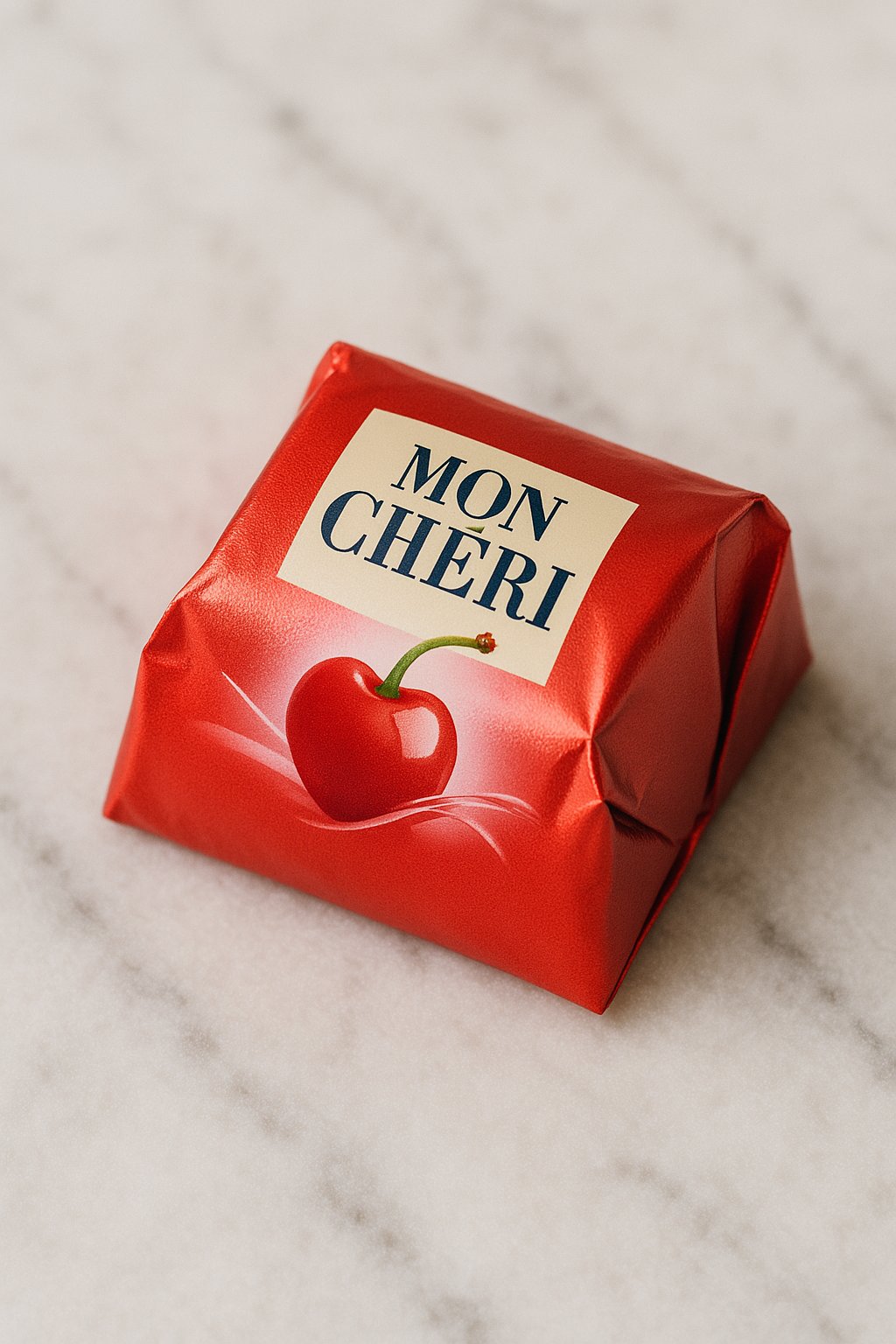
Mon Cherie

Pralines with cherry in liqueur filling and dark chocolate

Wiki about Mon Cherie Nutri-Score E Vegan No Gluten-free Yes Lactose-free Yes Nut-free Yes
NUTRITION / 100 g
450 kcal 3.5 g Protein 60 g Kohlenhydrate 18 g Fett

Introduction

Mon Cherie praline with opened chocolate shell and visible cherry filling
I remember exactly the first time I consciously tried "Mon Chéri": it was on a rainy afternoon in a small café where someone had carelessly placed a pack on the table and I could not resist the temptation. This praline with its dark, glossy shell, the liquid cherry core and the heart of liqueur has something playful and at the same time familiar. For me Mon Chéri is not just a sweet, but a small ritual that evokes memories of trips, gifts and shared moments.

The combination of dark chocolate, a juicy cherry and a touch of cherry liqueur seems surprisingly complex at the first bite. I often thought that such a simple sweet could not tell a story — until while tasting one I thought of a mild evening in a hotel bar, when a colleague of mine handed the praline like a little treasure before we went out. Such moments give the ingredient personality.

What particularly fascinates me about Mon Chéri is the balance between sweetness and depth. The dark chocolate surrounds a soft, almost liquid center that immediately activates all the senses when enjoyed. Once, while preparing a dessert plate for friends, I halved the pralines and was surprised to find that they work not only as a snack but also as a decorative element and a source of flavor in desserts.

  • Taste: a harmonious blend of dark chocolate, cherry and liqueur
  • Texture: firm coating, soft, liquid filling
  • Usage: on its own, as a dessert garnish or in baked creations
I recommend enjoying Mon Chéri with care: one piece, slowly, with mindful breaths and perhaps a cup of strong coffee. Many people associate the praline with small celebrations or as comfort on gloomy days. In conversations with friends I have often heard that they recognize the praline in memories of family celebrations. Such stories make the ingredient come alive.

In conclusion: Mon Chéri is more than a confectionery brand; it is a sensual experience that creates memories and brings joy in both simple and festive moments. I always keep a few of the shiny spheres in my cupboard — they are my little escape points from everyday life.

Availability & types

Availability and types of „Mon Cherie”

„Mon Cherie” is primarily known as a well-known praline brand of the Ferrero company. When the ingredient or product „Mon Cherie” is mentioned here, it usually refers to small chocolate pralines with a cherry and liqueur filling. I will explain below where these pralines come from, where their ingredients are grown or produced, which variants exist and how easy it is for you to obtain them — explained so that even a 12‑year‑old child can understand well.

Origin
„Mon Cherie” originates from Italy: the Ferrero company developed the praline and it was manufactured there in factories. The name „Mon Cherie” is French and roughly means "my beloved." The idea is to make a small, special piece of chocolate with an embedded cherry and a drop of liqueur — something enjoyed as a gift or on special occasions.

Growing regions and ingredient origins
The praline itself is not "grown" like a vegetable, but the important ingredients come from different places:

  • Cherries: The real cherries or cherry pieces are often supplied from regions where cherries grow, for example from southern Europe. Cherries grow on trees in plantations, similar to apples or oranges.
  • Chocolate: Cocoa beans, from which chocolate is made, grow in warm countries around the equator, for example in Africa and South America. The beans are harvested, dried and processed into chocolate.
  • Liqueur (cherry liqueur): The alcohol component comes from distilleries, where fruit and sugar are processed into liqueur. For „Mon Cherie” a mild cherry liqueur is used that provides the flavor.
Ferrero sources these ingredients from various suppliers. The pralines themselves are usually assembled and packaged in factories in Europe.

Available types and variants
Over time „Mon Cherie” has come in different shapes and packaging. Here are simple explanations of the most common types:

  • Classic Mon Chéri praline: A single chocolate ball with a whole cherry in liqueur. This is the most well-known version.
  • Mini or portion packs: Small bags or boxes with several pralines, convenient for sharing or as a small gift.
  • Gift packages: Nicer tins or boxes bought for holidays, for example at Christmas or Valentine's Day.
  • Alcohol-free variants: In some regions there are similar pralines without alcohol so that children or people who do not want alcohol can enjoy a comparable sweet.
  • Seasonal or limited editions: Sometimes there are special editions with different packaging or slightly altered taste — like trading cards or special designs for holidays.
How easy is it to get „Mon Cherie”?
„Mon Cherie” pralines are available in many supermarkets, confectionery shops and online stores. In large supermarkets you often find a box in the sweets aisle. Online shops deliver them to your home, which is convenient if your store doesn't have them at the moment. In some countries they are very widespread, in others rarer — that depends on how popular the product is there.

Summary
„Mon Cherie” is a chocolate praline with cherry and liqueur that originally comes from Italy. Ingredients like cherries and cocoa come from different regions where these plants grow. There is the classic variant, smaller packs, gift boxes, sometimes alcohol-free versions and seasonal special editions. You can find them in supermarkets, confectionery shops or online — so fairly easily, if you fancy a special chocolate.
Details & nutrition

Property Value
Unit g
Average weight per piece 10
Calories per 100 450
Protein per 100 3.5
Carbohydrates per 100 60
Sugar per 100 55
Fat per 100 18
Saturated fat per 100 11
Monounsaturated fat 5
Polyunsaturated fat 1
Fiber per 100 3
Vitamin C (mg) per 100 0
Vitamin D (IU) per 100 0
Calcium (mg) per 100 40
Iron (mg) per 100 2
Nutri-Score E
CO₂ footprint 4.5
Origin Italy/Germany (manufacturer Ferrero, depending on production site)
Gluten-free Yes
Lactose-free Yes
Nut-free Yes
Vegan No
Note Contains alcohol (cherry liqueur); not suitable for children, pregnant women, and persons who do not consume alcohol. Information may vary slightly depending on recipe and country.

Technical & scientific information

Mon Chérie originally refers to a confectionery praline of the Ferrero brand, composed of a combination of confectionery components. Understood as an ingredient, the term refers to a product that combines several components: a dark chocolate shell, a semi-liquid cherry filling based on liqueur, and a solid nougat or crunchy component. The composition varies slightly depending on the country of manufacture and the recipe, but the basic chemical-technical characteristics can be described systematically.

Chemical composition and ingredients: The individual components of a Mon Chérie praline contain typical food components:

  • Dark chocolate/chocolate shell: Fats (cocoa butter and possibly vegetable fats), cocoa dry matter (cocoa proteins, cocoa fibers), sugar, emulsifiers such as soy lecithin and flavorings. The cocoa components provide polyphenolic compounds (flavanols) that have antioxidant properties.
  • Cherry filling: Water, fruit components (cherry juice/pulp), sugar, acidulants (e.g. citric acid), thickeners (pectin or modified starch) and flavorings. Often the filling is partly liquid to syrupy and contains added liqueur (ethanol), which acts as a solvent for aromatic compounds and has a preservative effect.
  • Liqueur/alcohol component: Ethanol at a typical concentration regulated by the manufacturer. Alcohol serves as a flavor carrier and affects the solubility of lipophilic aromas. The presence of alcohol also alters microbiological stability.
  • Nougat/crunch (if present): Sugar, chopped nuts or nut pastes, cocoa powder, milk components (in milk nougat), emulsifiers and fats.
Nutritional profile: A single praline is energy-dense, as it contains considerable amounts of sugar and fat. Typical nutritional values per piece are in the range of about 40–60 kcal, although the exact energy content depends on size and recipe. Macronutrient-wise, the dominant components are:

  • Fats: Saturated and monounsaturated fatty acids from cocoa butter and possibly other vegetable fats.
  • Carbohydrates: Mainly sucrose plus fructose and glucose from fruit juices.
  • Alcohol: Present in small amounts per portion; the content is measured so that normal consumption is not expected to cause strong psychoactive effects, however alcohol may be relevant for children, pregnant women and people with alcohol problems.
Processing methods: Production combines confectionery and chocolate processing techniques. First, chocolate half-shells are produced by tempering to control cocoa butter crystallization (β‑V form) and to optimize gloss and snap. Afterwards the fruit filling is poured or extruded, requiring sealing techniques to prevent leakage. After filling, sealing with another chocolate layer and, if applicable, a tempering and cooling phase takes place. Packaging is carried out under locally controlled atmospheric conditions to limit moisture uptake and fat migration.

Health aspects: As a treat these pralines are harmless in moderation for healthy adults. Relevant aspects are:

  • Allergens: Common allergens are soy (lecithin), milk proteins (in milk variants), nuts (if crunch or traces present) and possibly gluten in additives.
  • Alcohol recommendations: Because of the ethanol content, infants, pregnant women and people with alcohol intolerances or disorders should avoid consumption.
  • Dental and metabolic health: The high sugar content promotes tooth decay and contributes to a positive energy balance and thus overweight if consumed excessively.
  • Bioactive ingredients: Cocoa-related polyphenols may have antioxidant effects, but these are offset by sugar and fat content and the small portion size.
Storage and shelf life: Mon Chérie pralines are temperature sensitive. Ideal storage conditions are cool (15–20 °C), dry and protected from light to avoid fat bloom, aroma loss and microbial spoilage of the fruit filling. Shelf life is extended by alcohol and sugar, but temperature fluctuations can impair texture and appearance.

Overall, Mon Chérie represents a technical food product that combines various functional ingredients to achieve desired sensory properties: crisp chocolate, aromatic, partly liquid fruit filling and harmonious sweetness. The production- and composition-related aspects determine nutritional value, shelf life and health relevance, so consumption is usually recommended in small amounts.

Wiki entry for: Mon Cherie
Active now: 11 visitors of which 2 logged-in members in the last 5 minutes