Menu & categories

Mirabelle plums

Sweet, aromatic stone fruits – perfect for desserts, jam and cakes.

Wiki about mirabelle Nutri-Score A Vegan Yes Gluten-free Yes Lactose-free Yes Nut-free Yes
NUTRITION / 100 g
63 kcal 0.7 g Protein 15.2 g Kohlenhydrate 0.2 g Fett

Introduction

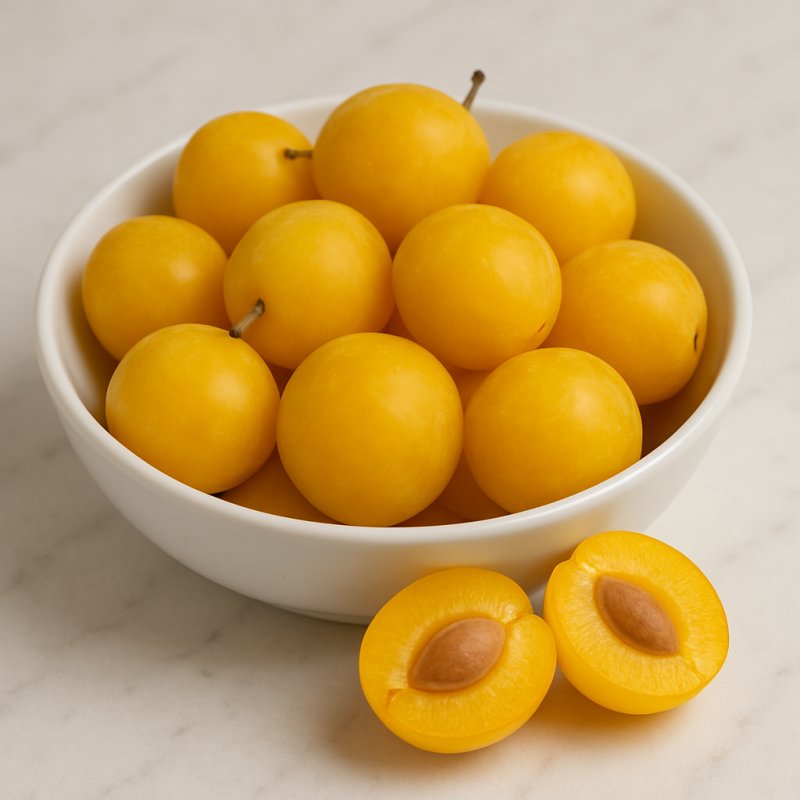
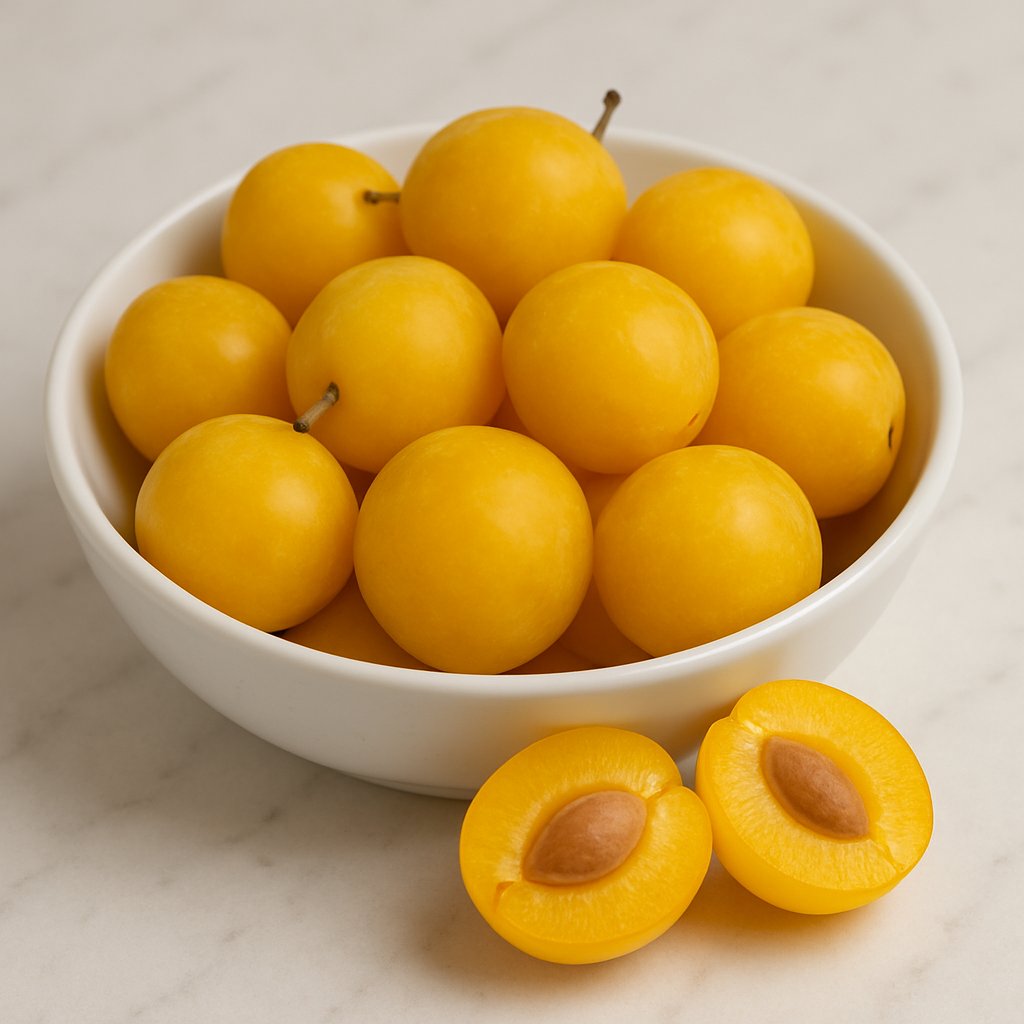
Fresh mirabelle plums
When I think of mirabelles, the scent of late summer immediately rises to my nose: a warm, honeyed note that evokes sunny orchards and smashed pie edges. I have a weakness for these small, golden fruits that look unassuming yet possess so much character. Once I bought a crate at a weekly market solely because the seller told me a particularly funny story about his grandmother, and suddenly the whole afternoon was saved.

Mirabelles are actually relatives of plums, often small, round and bright yellow to amber. They are especially popular in regions like Lorraine, where the fruit has even gained a geographic identity. In taste they are a successful mix of sweetness and fine acidity, which makes them ideal ingredients for cakes, preserves and distillates. A colleague of mine swears by mirabelle jam for breakfast, and I admit: I can hardly resist the scent when the jar is opened.

In the kitchen I like mirabelles because they are so versatile. They are easy to stone, break down pleasantly when heated and release their flavor well both raw and cooked. I remember a dinner where I caramelized them in a pan with butter and thyme; the dish became the conversation piece of the evening.

  • Fresh: eat as is, in fruit salads or on yogurt.
  • Cooked: as compote, chutney or cake filling.
  • Preserved: as jam or preserved in syrup.
  • Distilled: mirabelle eau‑de‑vie is a classic.
  • Practical tip: buy ripe but still firm; then refrigerate and consume within a few days.
Mirabelles are not only delicious, they also have a certain poetry: small, golden and full of surprises. On my next market visit I will surely reach for a crate again, and perhaps I will share one of those improvised desserts that turn out unexpectedly fantastic.

Availability & types


Availability and types of mirabelles

Mirabelles are small, usually golden‑yellow fruits that resemble small plums and taste very sweet. They originate from regions around the Mediterranean and western Asia, but have been cultivated across Europe for many centuries. Today mirabelles are particularly known from France (especially the Lorraine region) and from parts of Germany, Switzerland, Austria and parts of Eastern Europe such as Hungary or Poland. They are also found in home gardens in Britain and other countries.

When mirabelles are available
Fresh mirabelles are available only briefly each year: typically in late summer, from July to September depending on weather and region. Because they soften quickly, they are often sold directly from the tree at the weekly market, farm shop or stall. Outside this period mirabelles can be bought year‑round as jam, compote, juice, frozen fruit or dried.

Important growing regions

Well‑known varieties and differences
There is not just one “mirabelle” but several varieties and local types. Some are large and very sweet, others somewhat smaller and tarter. Well‑known names include Mirabelle de Lorraine (a highly valued type from France) or regional names like “Nancy” or “Metz”. These names often simply indicate where the variety is especially popular or was identified.

Processed types (variants)
Because fresh mirabelles are only available for a short time, there are many ways to preserve them. These are common, simple variants you can find year‑round:

In summary: fresh mirabelles are a taste of late summer and grow mainly in France and Central Europe. There are several varieties with small differences in flavor, and because the fresh fruit spoils quickly, mirabelles are often found processed as jam, compote, dried or frozen.
Details & nutrition

Property Value
Unit g
Average weight per piece 10
Calories per 100 63
Protein per 100 0.7
Carbohydrates per 100 15.2
Sugar per 100 13.0
Fat per 100 0.2
Saturated fat per 100 0.02
Monounsaturated fat 0.05
Polyunsaturated fat 0.09
Fiber per 100 1.7
Vitamin C (mg) per 100 5
Vitamin D (IU) per 100 0
Calcium (mg) per 100 6
Iron (mg) per 100 0.2
Nutri-Score A
CO₂ footprint 0.4 kg CO2e/kg
Origin Europe (e.g. France/Germany), seasonal
Gluten-free Yes
Lactose-free Yes
Nut-free Yes
Vegan Yes
Note Stone fruit; do not eat the pit. Typical season July to September.

Technical & scientific information

Mirabelles are small, yellow‑coloured plum‑like fruits of the Prunus genus, typically the cultivated form Prunus domestica. They are primarily used as table fruit, for jams and for distillation into fruit brandies. Botanically, mirabelles are stone fruits that bear a pit; their characteristic golden‑yellow to slightly reddish‑blushed skin and sweet‑aromatic flesh are breeding‑stabilized traits of various cultivars.

Chemical composition and macronutrients: Fresh mirabelles consist of approximately 85–88 % water. Per 100 g they typically provide around 40–50 kcal. The main carbohydrates are simple sugars (fructose, glucose) and the sugar alcohol sorbitol, which at non‑digestible amounts can have a mild laxative effect. Average nutritional values (approx. per 100 g): carbohydrates 10–12 g, of which sugars 8–10 g; fiber 1.2–2.0 g; protein 0.5–1.0 g; fat < 0.5 g.

Important micro‑ and phytochemicals:

Processing methods: Mirabelles are consumed fresh, processed into jams and jellies, cooked, dried or made into juice and purée. A traditional use is the production of mirabelle brandy (Eau‑de‑vie de Mirabelle): this involves alcoholic fermentation of the fruit mash followed by distillation. Peeling and pitting are common steps in the processing stream; the pits contain kernels with amygdalin, a cyanogenic glycoside that, if released and metabolized, can yield traces of hydrogen cyanide. Fruit flesh samples and commercially common products, however, normally do not contain harmful amounts.

Postharvest and storage: Mirabelles are climacteric fruits and continue to ripen after harvest; they produce ethylene and are therefore sensitive to mechanical damage. Cooling (2–4 °C) slows metabolism and microbial spoilage. Common disease problems during storage and cultivation include rotting fungi (e.g. Monilinia) and bacterial infections.

Health aspects: The high water content, fiber and the presence of vitamin C, carotenoids and polyphenols make mirabelles a nutrient‑rich addition to a balanced diet. Polyphenols and carotenoids contribute to antioxidant and potentially anti‑inflammatory effects. Because of sugar and sorbitol content, mirabelles should be consumed in moderation, especially by people with fructose/sorbitol intolerance or by diabetics. People with pollen allergies (birch pollen) may develop cross‑reactions (oral allergy syndrome).

In summary, mirabelles are small stone fruits with high water and sugar content, a characteristic profile of carotenoids, phenols and volatile aroma compounds, and specific processing traditions such as jam production and distillation. Their nutritional properties and microbiological requirements determine processing, storage and health assessment.

Wiki entry for: mirabelle
Active now: 11 visitors of which 2 logged-in members in the last 5 minutes