Availability and types of mirabelles
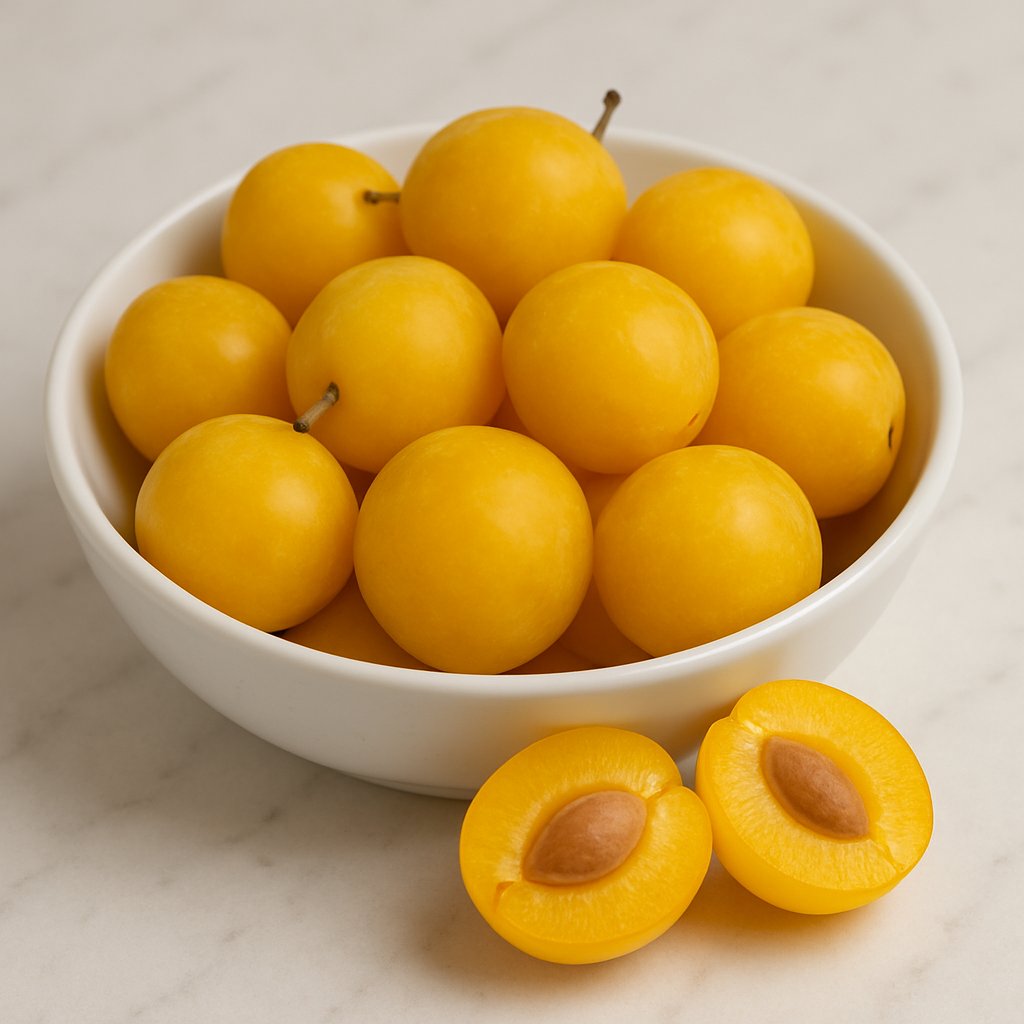
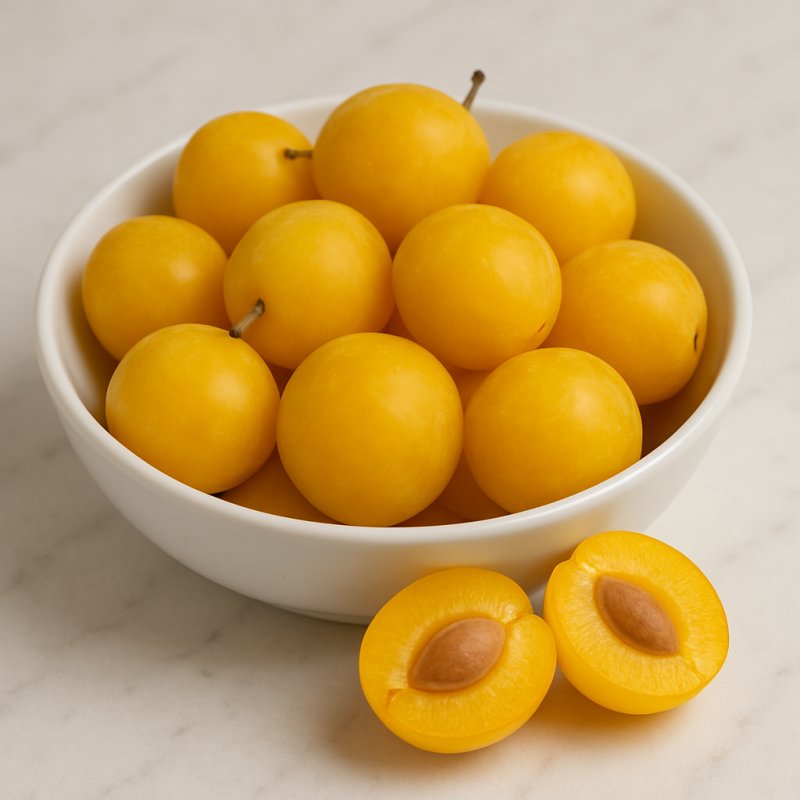
Mirabelles are small, usually golden‑yellow fruits that resemble small plums and taste very sweet. They originate from regions around the Mediterranean and western Asia, but have been cultivated across Europe for many centuries. Today mirabelles are particularly known from France (especially the Lorraine region) and from parts of Germany, Switzerland, Austria and parts of Eastern Europe such as Hungary or Poland. They are also found in home gardens in Britain and other countries.
When mirabelles are available
Fresh mirabelles are available only briefly each year: typically in late summer, from July to September depending on weather and region. Because they soften quickly, they are often sold directly from the tree at the weekly market, farm shop or stall. Outside this period mirabelles can be bought year‑round as jam, compote, juice, frozen fruit or dried.
Important growing regions
- France (Lorraine): mirabelles are very famous here; the variety “Mirabelle de Lorraine” is regarded as particularly aromatic.
- Germany: especially in the west and south (for example Rhineland‑Palatinate, Hesse, Baden‑Württemberg) there are many mirabelle trees, often in traditional orchards.
- Eastern Europe: countries like Hungary and Poland also grow many mirabelles, mainly for fresh consumption and processing.
- Home gardens everywhere: many villages and gardens have old mirabelle trees because they are easy to care for and need little space.
Well‑known varieties and differences
There is not just one “mirabelle” but several varieties and local types. Some are large and very sweet, others somewhat smaller and tarter. Well‑known names include Mirabelle de Lorraine (a highly valued type from France) or regional names like “Nancy” or “Metz”. These names often simply indicate where the variety is especially popular or was identified.
There is not just one “mirabelle” but several varieties and local types. Some are large and very sweet, others somewhat smaller and tarter. Well‑known names include Mirabelle de Lorraine (a highly valued type from France) or regional names like “Nancy” or “Metz”. These names often simply indicate where the variety is especially popular or was identified.
Processed types (variants)
Because fresh mirabelles are only available for a short time, there are many ways to preserve them. These are common, simple variants you can find year‑round:
Because fresh mirabelles are only available for a short time, there are many ways to preserve them. These are common, simple variants you can find year‑round:
- Jam/preserves: sweet, spreadable and long‑lasting.
- Compote/jars: whole fruits in syrup – good for cakes or as a dessert.
- Dried mirabelles: like raisins but from mirabelles; convenient as a snack.
- Frozen: freshly frozen fruit to use later for baking or smoothies.
- Spirits and liqueurs: mirabelles are also made into brandy or liqueur; these are alcoholic products for adult consumption only.
In summary: fresh mirabelles are a taste of late summer and grow mainly in France and Central Europe. There are several varieties with small differences in flavor, and because the fresh fruit spoils quickly, mirabelles are often found processed as jam, compote, dried or frozen.