Menu & categories

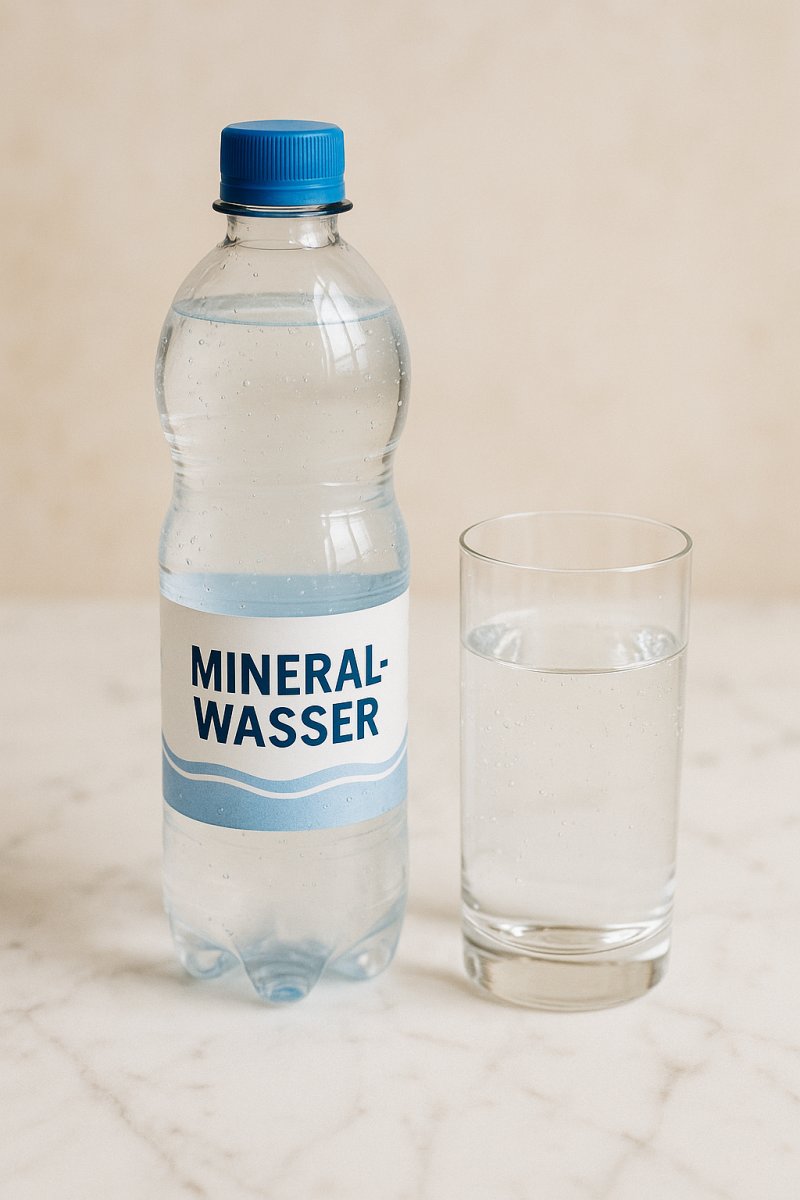
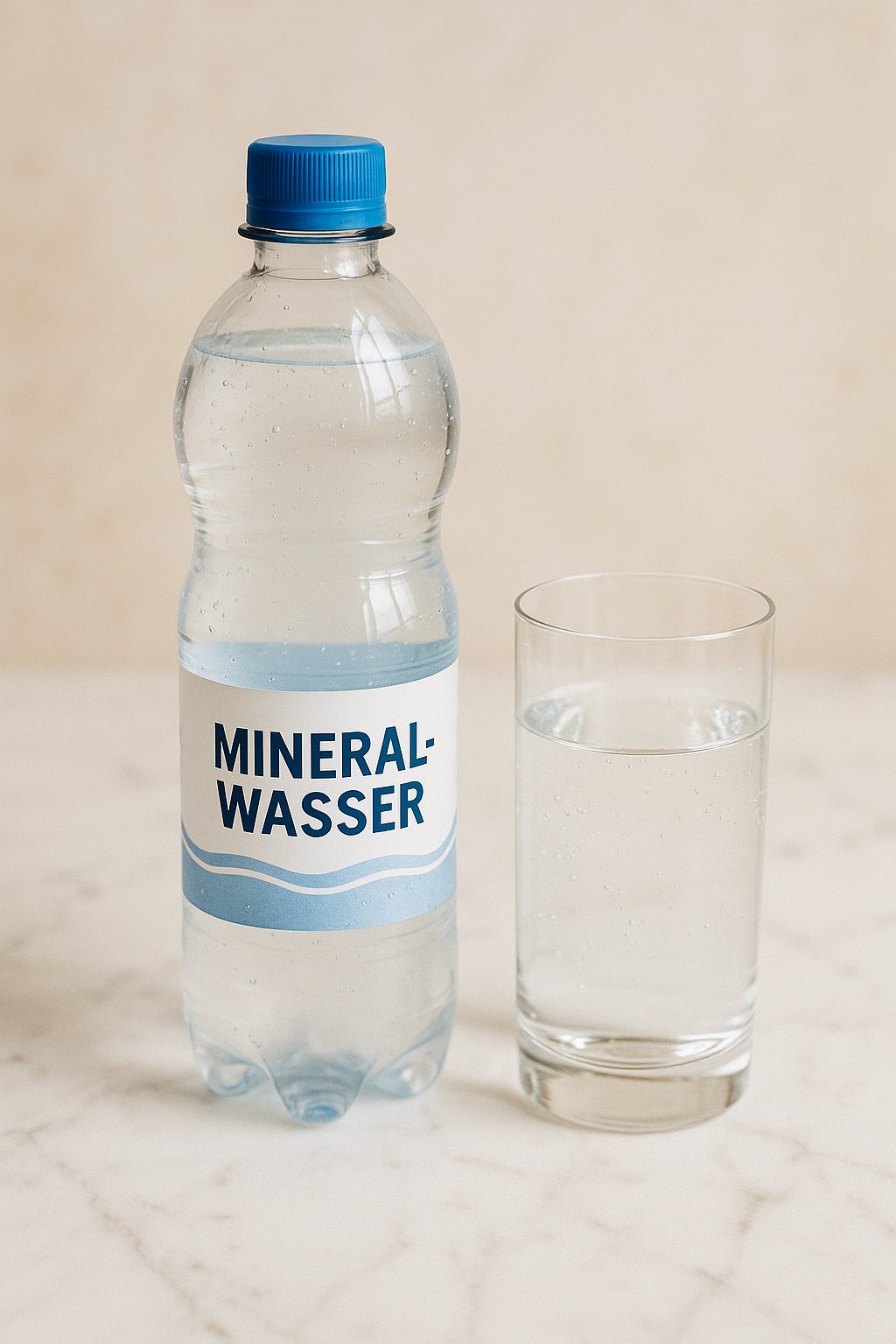
Mineral water

Calorie-free water with natural minerals.

Wiki about mineral water Nutri-Score A Vegan Yes Gluten-free Yes Lactose-free Yes Nut-free Yes
NUTRITION / 100 ml
0 kcal 0.0 g Protein 0.0 g Kohlenhydrate 0.0 g Fett

Introduction

A glass of sparkling mineral water
I still remember the day I first became aware that mineral water is more than just a boring bottle at the supermarket. I was standing at a small fountain in a mountain village, the scent of wet stone in the air, and an older woman handed me a glass of crystal-clear water. The moment was as simple as it was magical: one sip, and everything seemed a little clearer.

Since then mineral water has crossed my path everywhere – at dinners with friends, in restaurants, on picnics in the park. A colleague of mine insists on distinguishing different bottles by the way the bubbles form, as if he were a sommelier for fizz. I usually laugh, because those discussions show how much personality mineral water can have.

What fascinates me about mineral water is its connection to nature and regionality. It contains minerals such as calcium, magnesium or sodium, which vary depending on the source. Some sources are gentle and lightly sparkling, others produce strong bubbles that tickle the tongue and enhance flavors in food. These differences make it interesting to choose mineral water deliberately.

When I invite friends to taste, I like to explain the most important points:

  • Origin: natural spring or spring water with strong protection of origin.
  • Mineral content: influences taste and enjoyment.
  • Level of carbonation: still, lightly sparkling or highly carbonated.
In the kitchen I like to use mineral water as a companion to delicate dishes, for example to make fish seem more delicate or to achieve a certain crumb structure when baking bread. When grilling, a bottle with strong carbonation once gave me the perfect balance to a fatty piece of lamb.

In the end mineral water is for me a small everyday luxury: inconspicuous yet versatile, practical and sensual at the same time. It tells of landscapes, geology and people who protect springs. And every time I open a bottle, I look forward to that simple, refreshing promise.

Availability & types

Mineral water comes from the ground and is like a natural drinking fountain in a bottle. Rainwater percolates into the ground, often remains there for a long time and in the process takes up minerals from rock and soil. These minerals give the water a distinctive taste and can be, for example, calcium or magnesium. When the water then emerges again at a spring, it can be bottled as mineral water.

Origin
Mineral water always has a fixed place of origin: a spring or an underground deposit. Often these are areas with particular rocks or mountains where the water could “mature” for a long time. You can think of it like tea that steeps longer and therefore tastes different. In Germany and Europe well-known origin regions include the Alps, the Black Forest, the Eifel or the Harz. But there are also mineral waters from other countries, such as Italy or France. The bottle usually states the name of the spring or the region so you know where the water comes from.

Production areas (spring regions)
By “production areas” in this context is meant where the springs are located. These are often clean, nature-close areas like mountains or volcanic regions. These regions are important because nature there filters the water and enriches it with minerals. Therefore producers take care to protect the spring so that the water remains pure. You can compare it to an apple orchard: the cleaner the environment, the better the fruit — here it is the water.

Available types and variants
Mineral water comes in many variants. Here is a simple overview:

  • Still water: without carbon dioxide. It is mild in taste and suitable for meals or for children who do not like bubbles.
  • Medium: lightly sparkling, with little carbon dioxide — like a small pinch of fizz.
  • Sparkling (carbonated): with many bubbles, refreshing and tingly, like a carbonated drink.
  • Naturally carbonated: some sources bring carbon dioxide with them naturally; other producers deliberately add carbon dioxide. The bottle sometimes indicates whether the carbonation is natural.
  • Flavored: lightly flavored mineral water with fruit flavor (e.g. lemon or apple), often sugar-free — for people who like flavor but not too much sweetness.
  • Special mineralizations: waters with higher contents of certain minerals, such as calcium or magnesium. Such waters often have a somewhat stronger inherent taste.
  • Low-sodium/diet variants: for people who need to watch their sodium intake; labeled this way when the water contains very little salt.
Availability
Mineral water is very easy to obtain: in supermarkets, at gas stations, in restaurants, at folk festivals or at special vending machines. You can buy it in glass bottles or plastic bottles (PET); glass is often reused, plastic can be lighter to carry. In many cities today there are also refill stations, where you can refill your bottle — an environmentally friendly alternative.

In short: mineral water comes from specific natural sources, it is available in many taste and carbonation levels, and you can find it almost everywhere. The bottle states where it comes from and whether it has bubbles — so you can easily choose the water that tastes best to you.
Details & nutrition

Property Value
Unit ml
Calories per 100 0
Protein per 100 0.0
Carbohydrates per 100 0.0
Sugar per 100 0.0
Fat per 100 0.0
Saturated fat per 100 0.0
Monounsaturated fat 0.0
Polyunsaturated fat 0.0
Fiber per 100 0.0
Vitamin C (mg) per 100 0
Vitamin D (IU) per 100 0
Calcium (mg) per 100 15
Iron (mg) per 100 0.0
Nutri-Score A
CO₂ footprint 0.02 kg CO2e/100 ml
Origin Depending on the source (natural mineral spring)
Gluten-free Yes
Lactose-free Yes
Nut-free Yes
Vegan Yes
Note Mineral contents (e.g. calcium) vary depending on the source; values are typical averages.

Technical & scientific information


Mineral water is natural water obtained from underground sources and bottled. It is characterized by a constant chemical composition and certain geogenic minerals. Mineral water can be carbonated or still and is valued both as a thirst-quencher and for possible health effects due to its constituents.

Chemical composition and constituents. The most important inorganic components in mineral water are dissolved ions, typically reported in mg/L. The most common constituents include:

  • Calcium (Ca2+): contributes to water hardness and typically ranges from a few mg/L up to over 150 mg/L.
  • Magnesium (Mg2+): also a component of hardness and usually ranges between 1 and a few dozen mg/L.
  • Sodium (Na+) and Potassium (K+): electrolytes with sometimes wide ranges depending on geological origin.
  • Bicarbonate (HCO3−): significant for the pH and buffering properties of the water.
  • Chloride (Cl−) and Sulfate (SO4 2−): influence taste and osmotic properties.
  • Total dissolved solids (TDS): total mineralization, which can vary from very low (<50 mg/L) to highly mineralized (>1500 mg/L).
  • Trace elements such as iron, manganese, fluoride or silicon dioxide can occur in low concentrations and produce specific health effects or sensory properties.
Nutritional values and physiological relevance. Mineral water provides practically no calories, proteins, fats or carbohydrates. The nutritionally relevant effects arise from the minerals: calcium and magnesium can contribute to daily requirements; sodium-rich waters supply significant amounts of sodium, which should be considered in cases of hypertension. Fluoride at low concentrations has an anti-caries effect, while at higher concentrations there is a risk of fluorosis.

Processing methods and quality control. Typically, mineral water is bottled directly at the source to avoid contamination. Allowed physical treatment steps include filtration, removal of particles, elimination of unstable constituents and, if applicable, the addition of carbon dioxide originating from the same source. Chemical disinfection is not permitted for mineral water in many jurisdictions. Quality controls include microbiological tests, chemical analyses (ions, heavy metals, residues) and sensory examinations.

Health aspects. Mineral water is generally a safe drinking source and supports fluid intake. Specific health effects depend on the composition:

  • High sodium contents can affect blood pressure in salt-sensitive individuals.
  • Sulfate-rich waters can have a laxative effect and promote bowel activity.
  • Bicarbonate-rich waters can affect gastric acid neutralization and the acid-base balance.
  • Elevated nitrate or fluoride levels are critical from a health perspective and are subject to legal limits.
Scientific background. The mineralization of a water depends on the geology of the catchment area, the residence time underground and the dissolution processes with rocks and soils. Long-term hydrochemical stability makes mineral water interesting as a reference for geochemical studies. Sensory perception (taste, mouthfeel) is influenced by ion types, total mineral content and carbon dioxide.

In practice, one chooses mineral water according to desired mineralization and taste as well as health requirements. For most people mineral water is an uncomplicated source of fluids and minerals, while specific constituents should be considered in medical contexts.

Wiki entry for: mineral water
Active now: 15 visitors of which 2 logged-in members in the last 5 minutes