Availability and types of milk powder
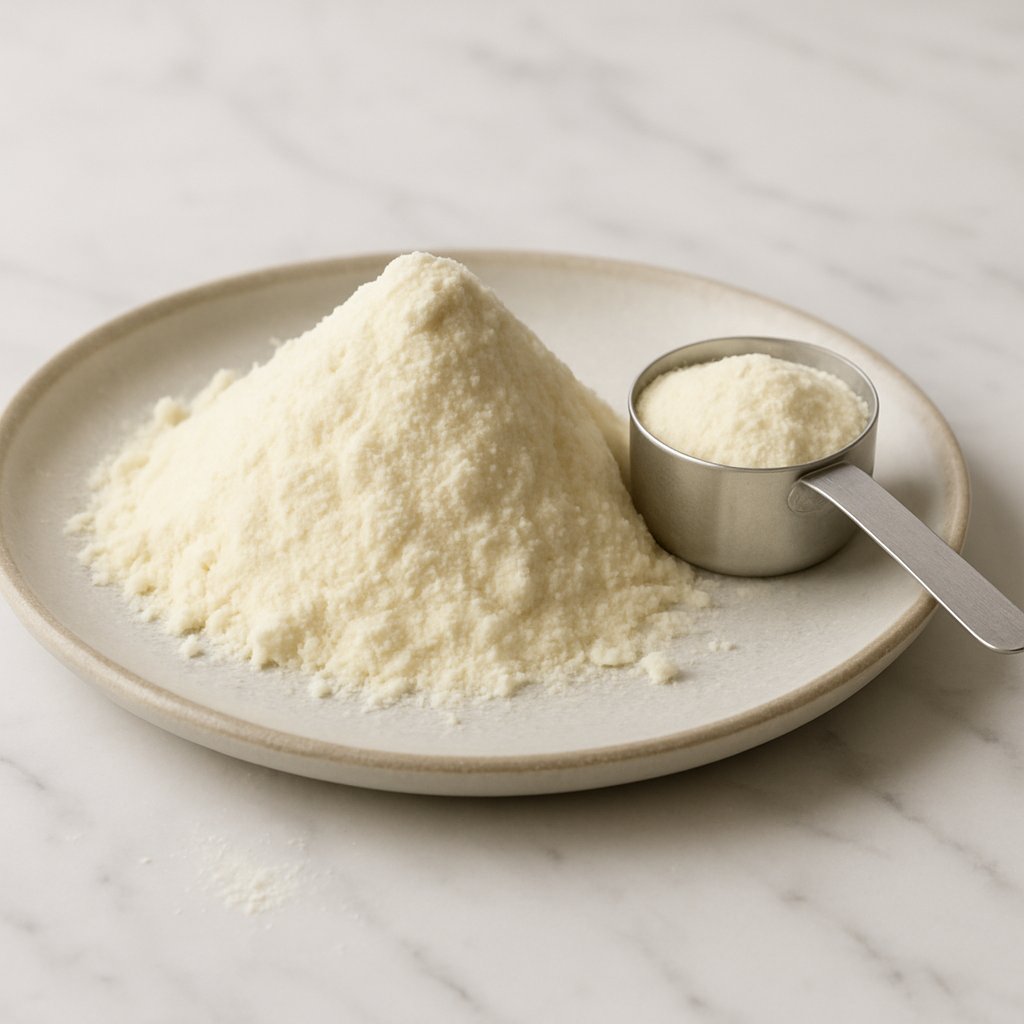
Milk powder is dried milk, that is, regular milk from which the water has been removed. That makes it long‑lasting and easy to store. You can find milk powder in many supermarkets, drugstores or online. It is especially practical in areas where fresh milk is hard to obtain, for example in remote villages or when camping. Because it is so light, it is also often used in relief packages or in countries with limited refrigeration options.
Origin
Milk powder usually comes from cows. The cows live on farms, and there the fresh milk is collected. The milk is then brought to factories where it is heated and dried. Sometimes milk powder is also made from the milk of goats or sheep, but that is rarer. You can imagine it like drying fresh herbs or fruit: when the water is gone, it lasts longer.
Milk powder usually comes from cows. The cows live on farms, and there the fresh milk is collected. The milk is then brought to factories where it is heated and dried. Sometimes milk powder is also made from the milk of goats or sheep, but that is rarer. You can imagine it like drying fresh herbs or fruit: when the water is gone, it lasts longer.
Growing areas / regions of origin
Although milk powder is not "grown" like vegetables, it still has typical regions that supply a lot of milk. Large milk producers are countries with a lot of pasture land, i.e. space for cows, for example:
Although milk powder is not "grown" like vegetables, it still has typical regions that supply a lot of milk. Large milk producers are countries with a lot of pasture land, i.e. space for cows, for example:
- Europe: Countries like Germany, France, the Netherlands and Ireland supply a lot of milk.
- North America: Especially the USA and Canada produce large quantities.
- Oceania: Australia and New Zealand are known for dairy products.
- Latin America and Asia: There are also many dairy farms here, especially in Brazil, India and China.
Where the cows are kept often depends on the climate and how much grass and water there is. In cooler, greener regions good pastures often grow, which is important for milk quality.
Available types and variants
Milk powder comes in several variants – depending on how much fat remains or whether it is intended for babies. The most important types are:
Milk powder comes in several variants – depending on how much fat remains or whether it is intended for babies. The most important types are:
- Whole milk powder: Contains almost all components of regular whole milk, including the fat. It tastes full and creamy, similar to fresh whole milk.
- Skimmed milk powder: Here the milk fat has been mostly removed. It is lighter and is often used when less fat is desired, for example in many baking recipes.
- Semi‑skimmed milk powder: Sits between whole and skimmed milk powder – some fat remains.
- Infant formula / special milk powders: For babies there are special powders that contain vitamins and nutrients so that infants get everything they need to grow. These products are carefully tested and manufactured differently than normal milk powder.
- Instant milk powder: This dissolves particularly easily in water – practical for quick use, for example for coffee or cocoa.
- Low‑fat variants and fortified types: Some milk powders have extra vitamins (like vitamin D) or minerals (like calcium) added to make them healthier.
How to imagine it
Imagine making apple chips from fresh apple juice: the water disappears and the result lasts longer. It's the same with milk powder. The differences in types are like different kinds of bread – whole‑grain bread is more substantial, toast is lighter. Depending on what you need (more fat, less fat, or special nutrients for babies), you choose the appropriate milk powder.
Imagine making apple chips from fresh apple juice: the water disappears and the result lasts longer. It's the same with milk powder. The differences in types are like different kinds of bread – whole‑grain bread is more substantial, toast is lighter. Depending on what you need (more fat, less fat, or special nutrients for babies), you choose the appropriate milk powder.
Overall, milk powder is therefore very versatile, easy to store and comes from many regions of the world. There are different types for different needs – from full and creamy to light and low‑fat – as well as special products for babies or for easy dissolution.