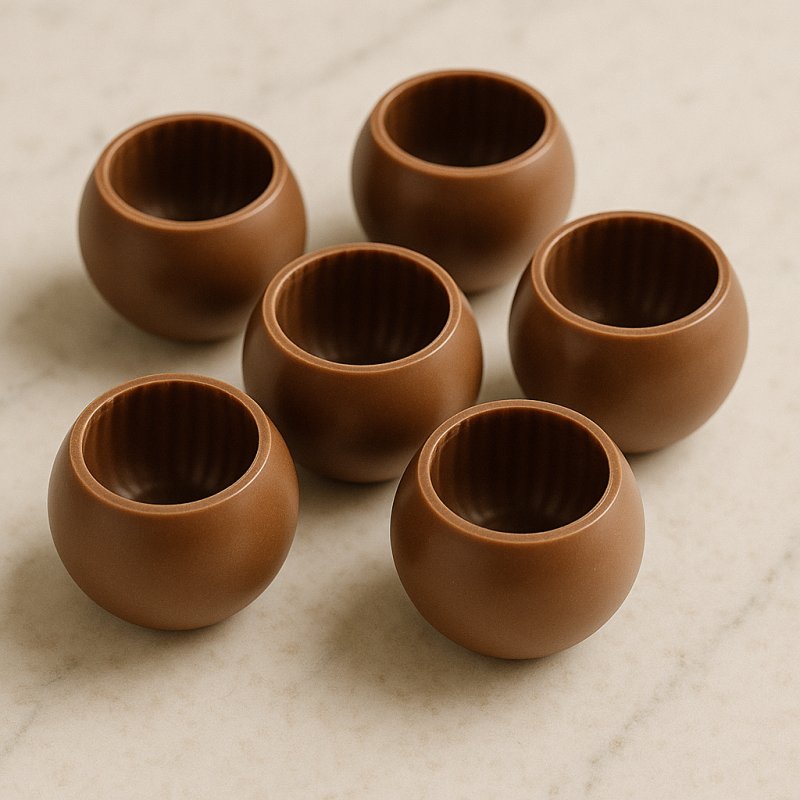
Availability and types of the ingredient milk chocolate praline shells are easy to understand if you compare them to something familiar: imagine small empty shells of milk chocolate, like little moulds you can fill at home. These shells are used in many bakeries, patisseries and at home. You can find them in various stores and online, similar to how you would buy baking moulds or ready-made praline shells.
Origin
The chocolate for the shells starts as the cocoa bean, which grows on plantations. Cocoa beans grow mainly in warm regions near the equator. Important growing areas include:
- West Africa (e.g. Ivory Coast, Ghana) – a large portion of the world's chocolate comes from there.
- South America (e.g. Ecuador, Brazil) – there are many different cocoa varieties here with distinct flavor notes.
- Asia (e.g. Indonesia) – many beans are also grown here.
The cocoa beans are harvested, dried and processed before they become milk chocolate in chocolate factories. These factories are often located in Europe, the Americas or Asia, depending on where the company is based. You can think of it like apples: the fruit comes from the farm, but the cake baking happens in the bakery.
Available varieties and options
Milk chocolate praline shells come in many shapes and finishes – here are some easy-to-understand examples:
Milk chocolate praline shells come in many shapes and finishes – here are some easy-to-understand examples:
- Sizes: Small (for single pralines), medium (for somewhat larger fillings), large (for very large pralines or creative fillings).
- Shapes: Round, egg-shaped, square, hearts or seasonal shapes like stars for Christmas or eggs for Easter.
- Chocolate quality: Some are made from finer couverture (chocolate that melts particularly well and has a nice shine), others from block chocolate or compound (cheaper and melts differently). Couverture is like a smooth ice cream, compound more like a popsicle – both are chocolate, but they feel slightly different.
- Surface: Shiny polished or matte, with gold or colorful decoration.
- Ready-made or for filling: Some shells are already decorated and filled, others are empty so pastry chefs can fill them themselves with ganache, praliné, liqueur or cream.
- Special variants: Organic or Fair-Trade chocolate (with certification), low-lactose or lactose-free alternatives, and in rare cases vegan shells that use plant-based ingredients instead of milk.
Where to buy them
You can get praline shells in specialist shops for baking and sugarcraft, from wholesalers for pastry chefs, in some well-stocked supermarkets and very easily online. Hobby bakers can often find small quantities in attractive packaging, while patisseries order larger boxes for professional use.
You can get praline shells in specialist shops for baking and sugarcraft, from wholesalers for pastry chefs, in some well-stocked supermarkets and very easily online. Hobby bakers can often find small quantities in attractive packaging, while patisseries order larger boxes for professional use.
In summary: milk chocolate praline shells are small empty chocolate shells whose cocoa beans come from tropical regions. They come in many sizes, shapes and qualities – from simple mass-produced items to high-quality, fair-trade variants – and can be easily found in specialist shops or online, just like baking moulds or muffin cups.
