Menu & categories

Salad mayonnaise

Creamy dressing for salads and sandwiches

Wiki about mayonnaise Nutri-Score D Vegan No Gluten-free Yes Lactose-free Yes Nut-free Yes
NUTRITION / 100 g
310 kcal 1.0 g Protein 6.0 g Kohlenhydrate 30.0 g Fett

Introduction

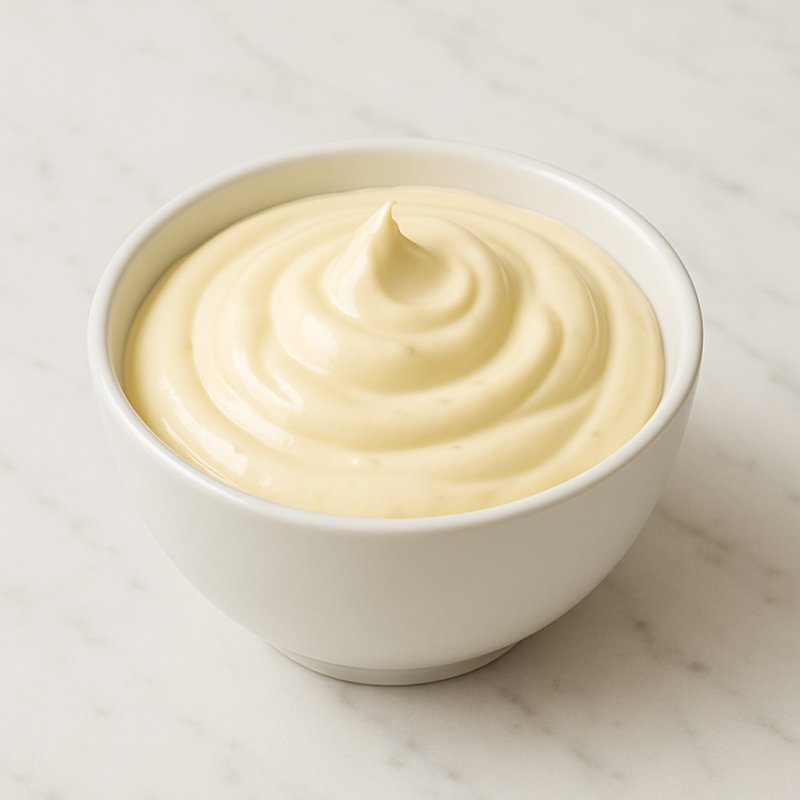
Spoon with salad mayonnaise
Salad mayonnaise is a familiar ingredient in many European kitchens, yet it is surprisingly often misunderstood. As a 35-year-old editor who enjoys testing recipe ideas both professionally and privately, I have learned over the years that this creamy base is much more than a mere binder for potato salad. It is a culinary all-rounder whose delicate acidity, mild seasoning and silky texture harmonize salads, sandwiches and cold dishes. In my editorial team we sometimes jokingly call it “the quiet heroine in the pantry.” And indeed: once you find a good salad mayonnaise, you keep reaching for it — not only in summer.

Unlike classic mayonnaise, salad mayonnaise is usually somewhat lighter and often more gently seasoned. It often contains fewer egg yolks, but a finely balanced combination of oil, vinegar or lemon juice, mustard and selected spices. This balanced ratio provides a creamy texture that does not weigh down but subtly caresses ingredients. A colleague of mine — an enthusiastic hobby cook who prefers minimalist ingredient lists — swears by it because it “brings flavors together without taking over.” This effect is particularly noticeable in potato or pasta salads, when the individual components come together into a coherent whole.

The question of which salad mayonnaise on the supermarket shelf is best regularly sparks lively discussions. In our editorial office we like to compare different brands and pay attention to aroma, mouthfeel and acid balance. Some variants emphasize citrus freshness, others rely on a creamy fullness with a slightly sweet note. For me the ideal salad mayonnaise is moderately acidic, finely seasoned and not too thick — it should be easy to fold in without dominating. I find products refined with wine vinegar or apple cider vinegar particularly interesting. They bring an elegant fruitiness that gently accompanies raw grated carrots, celery or fresh cucumbers.

If you want to try a homemade version, you can enjoy control over the ingredients. Fresh eggs, a neutral oil with a smooth texture, an aromatic vinegar, a pinch of sugar and good mustard are often enough. In my kitchen the combination with mild rapeseed oil has proven effective

Availability & types

Availability and types of salad mayonnaise

Salad mayonnaise is very popular in many countries, especially in Germany and Central Europe. It is a creamy, mild variant of the well-known mayonnaise and is often used for potato salad, pasta salad, egg salad or as a base for dressings. If you stand in front of the sauces shelf at the supermarket, you will generally find salad mayonnaise next to classic mayonnaise, remoulade and ketchup. It is easy to get year-round because manufacturers produce it continuously and not only in certain seasons. Especially around holidays and barbecue season in summer, it is available in many markets in larger quantities and in various pack sizes.

Origin and development
The idea of mayonnaise probably comes from the Mediterranean region, likely from France or Spain. In Germany a distinct direction developed: salad mayonnaise. It has a somewhat different taste and often less fat than classic mayonnaise. That makes it more pleasant for salads because it feels lighter and does not overshadow the other ingredients. Additionally, it has become customary in German kitchens to mix salad mayonnaise with yogurt, herbs or pickle juice to make it fresher and juicier.

Where to find salad mayonnaise?
Salad mayonnaise is available in various stores:

  • Supermarkets and discounters: wide selection of brands, private labels and different fat levels.
  • Delicatessens: often special varieties with high-quality oils or organic ingredients.
  • Online shops: convenient bulk packs, international brands and specialty variants.
  • Health food stores: organic and natural versions with free-range eggs or completely egg-free (vegan).
Typical pack sizes
Salad mayonnaise comes in tubes, squeeze bottles, jars and large buckets (for example for parties or clubs). Tubes are good for small households, while jars are practical if you make salads regularly. Squeeze bottles are clean and easy to dose.

Main types and variants
There are many variants of salad mayonnaise that differ in taste, ingredients and fat content
Details & nutrition

Property Value
Unit g
Average weight per piece 15
Calories per 100 310
Protein per 100 1.0
Carbohydrates per 100 6.0
Sugar per 100 3.0
Fat per 100 30.0
Saturated fat per 100 3.5
Monounsaturated fat 19.0
Polyunsaturated fat 7.0
Fiber per 100 0.0
Vitamin C (mg) per 100 0.0
Vitamin D (IU) per 100 0
Calcium (mg) per 100 15
Iron (mg) per 100 0.2
Nutri-Score D
CO₂ footprint 2.3 kg CO2e/kg
Origin EU
Gluten-free Yes
Lactose-free Yes
Nut-free Yes
Vegan No
Note Classic salad mayonnaise typically contains vegetable oil, water, egg yolk, vinegar, sugar, salt and spices; often with mustard or mustard flavor.

Technical & scientific information

Salad mayonnaise is an emulsified, spreadable and dressing-capable condiment that technologically belongs to oil-in-water emulsions and in Central Europe is defined as a standalone product category alongside classic mayonnaise. Unlike traditional mayonnaise, which according to food law guidelines usually has higher fat contents, salad mayonnaise is characterized by a reduced fat proportion and an adapted recipe with starches, hydrocolloids and acidulants to ensure a stable, creamy texture and sensory balance. It serves as a base for salads, spreads, delicatessen products and cold sauces and is used both industrially and in gastronomy.

Composition and raw materials: Typical formulations contain vegetable oils (e.g. rapeseed, sunflower or soy oil), water, egg products or egg yolk (in vegan variants replaced by plant proteins or starches), spirit vinegar or other acidulants (lactic acid, citric acid), sugar, salt, mustard and spice extracts. Thickeners such as modified starches, xanthan, guar gum or locust bean gum are used to stabilize and control viscosity. Emulsifiers — traditionally lecithins from egg yolk, alternatively plant lecithins — support the fine dispersion of oil droplets in the aqueous medium and increase emulsion stability.

Manufacturing technology: Production takes place in two phases. First the aqueous phase of water, acidulants, sugar, salt and hydrocolloids is homogenized under high shear. Then the oil phase with emulsifiers is incorporated under controlled shear energy. Industrially, high-pressure homogenizers or rotor-stator systems are used, which generate droplet sizes in the micrometer range and thus ensure creaminess, gloss and stability. Process parameters — temperature control (typical 10–25 °C for emulsification), pH (approx. 3.2–4.2) and shear level — are set to inhibit microbial growth, control protein denaturation and minimize phase separation. After emulsification a maturation phase follows in which viscosity and aroma develop

Wiki entry for: mayonnaise
Active now: 18 visitors of which 2 logged-in members in the last 5 minutes