Menu & categories

Marinated olives

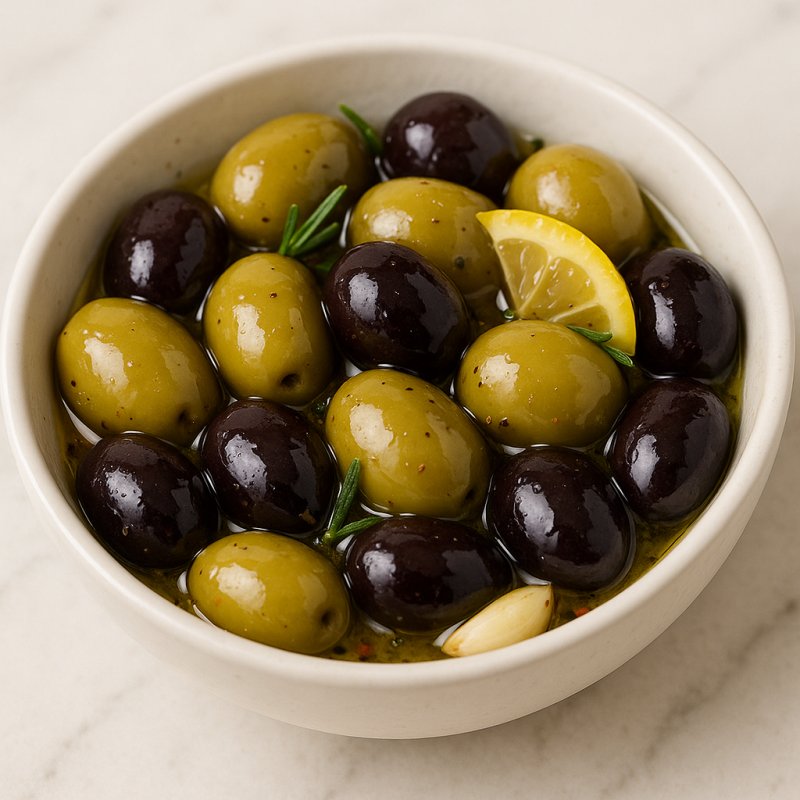
Spicy olives in an herb-oil marinade – perfect as a snack, topping, or antipasti.

Wiki about marinated olive Nutri-Score C Vegan Yes Gluten-free Yes Lactose-free Yes Nut-free Yes
NUTRITION / 100 g
145 kcal 1.1 g Protein 3.8 g Kohlenhydrate 15.3 g Fett

Introduction

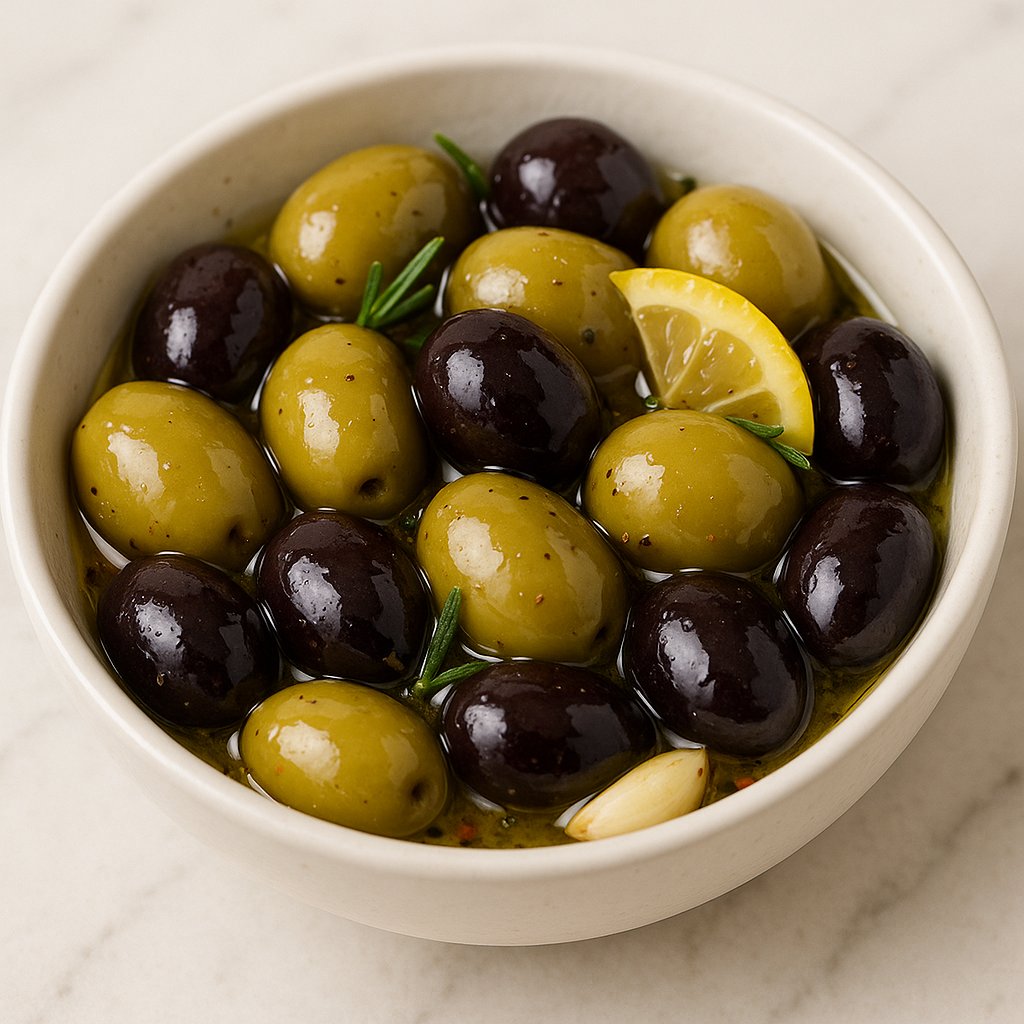
Marinated olives in a bowl
I still remember well the first bite of a marinated olive, which showed me how much personality a small fruit can have. A colleague had brought a jar back from holiday, and the scent of garlic, lemon peel and rosemary already filled the room. Since then marinated olives for me are not just a side dish, but a kind of flavor compass in the kitchen.

Marinated olives come in countless varieties: mild with lemon and thyme, spicy with chili, to deeply savory with balsamic and orange peel. Depending on the variety – Kalamata, Nyon, Cerignola – texture and intensity change, and that is exactly what makes tasting so exciting. Some olives need only an hour in oil, others only gain real depth after days.

I prefer to serve them at room temperature so the aromas can develop. A little trick a chef once told me: lightly heat the marinade before plating and drizzle it over the olives with freshly toasted fennel seeds. The aroma is immediate, and guests are always surprised how complex something so simple can taste.

  • Simple serving: bread, goat cheese and a dollop of honey — done.
  • For cooking: add to pasta, to fried fish or in a warm vegetable pan.
  • Storage: marinated olives keep for several weeks in the fridge as long as they are completely covered by oil.
I like to play with flavors: orange and lemon zest for freshness, cumin for warmth, or a splash of sherry vinegar for acidity. A colleague swears by rosemary and peppercorns because the marinade so especially flavors meat dishes. These little experiments make pickling a creative act.

In the end marinated olives are for me the perfect example of how little you need to achieve a lot: a jar, a few good ingredients and some patience. They are uncomplicated, versatile and always ready to make a meal more interesting.

Availability & types

Availability and types of the marinated olive

Olives are small fruits that grow mainly around the Mediterranean. You can imagine an olive like a small apple, just much denser and with a pit in the middle. When olives are marinated, they are placed in oil, vinegar or brine and seasoned with herbs or spices. This preserves them and gives them different flavor profiles.

Origin and growing regions: The best-known growing regions are in countries such as Spain, Italy, Greece, Turkey and Morocco. But olives also grow in California, Chile or Australia. Each place has its own climate and therefore its own taste. Spain, for example, is the largest producer of table olives (the ones you eat), Greece is famous for large, dark olives like Kalamata, and Italy has many small, aromatic varieties.

Available varieties and simple explanations: There are many varieties — some are green, others dark purple or black. Green usually means the olive was harvested earlier and is firmer and slightly more bitter. Dark olives are often riper, softer and milder.

  • Kalamata: large, elongated olives from Greece, often dark and fruity in taste.
  • Manzanilla: a Spanish variety, frequently green, sometimes with pits or pitted and stuffed.
  • Castelvetrano: Italian, very green, crunchy and mild — many children like this variety.
  • Gaeta and Nyon: small Italian or French olives, often intensely seasoned.
  • Picholine and Arbequina: smaller varieties with their own aroma, often popular as snacks.
Types of marinated olives: Marinated means the olives are immersed before sale in a mixture of oil, vinegar, brine and herbs. Simple types are:

  • Simply preserved (in brine): brine (water with salt) preserves the olive. That gives a more neutral taste.
  • Marinated in oil: olives in olive oil with herbs like rosemary, thyme or oregano — tastes rich and aromatic.
  • With garlic, lemon or chili: gives a spicy, fresh or hot flavor.
  • Stuffed: olives can be filled with pepper, almonds, cheese or anchovies — so every bite is different.
  • Pitted or with pit: some have the pit removed, which is convenient for eating.
Where to find them? You can find marinated olives year-round in supermarkets, delicatessens, weekly markets or online. Because they are preserved, they do not spoil as quickly and are therefore available year-round, even though the harvest takes place in autumn. Prices and quality can vary: cheap tins in the supermarket, slightly more expensive jars in delicatessens and very high-quality varieties at specialized retailers.

In summary: marinated olives come in many kinds and flavors, from different countries and in various packaging. They are easy to find, keep for a long time and can be used in many small dishes or as a snack — almost like a colorful, salty finger food supply.
Details & nutrition

Property Value
Unit g
Average weight per piece 4
Calories per 100 145
Protein per 100 1.1
Carbohydrates per 100 3.8
Sugar per 100 0.5
Fat per 100 15.3
Saturated fat per 100 2.2
Monounsaturated fat 10.7
Polyunsaturated fat 1.6
Fiber per 100 3.2
Vitamin C (mg) per 100 1.0
Vitamin D (IU) per 100 0
Calcium (mg) per 100 80
Iron (mg) per 100 3.3
Nutri-Score C
CO₂ footprint 0.18 kg CO2e/100 g
Origin Mediterranean region (e.g., Spain, Greece, Italy)
Gluten-free Yes
Lactose-free Yes
Nut-free Yes
Vegan Yes
Note Nutritional values can vary significantly depending on the marinade (oil content, herbs, brine).

Technical & scientific information

Marinated olive in food practice refers to olives preserved in brine or flavored oil, which after basic treatment are flavored and made shelf-stable. As a product group marinated olives belong to the so-called table olives; they are traditionally used in many cuisines as an appetizer, snack or ingredient. The sensory variety arises from the combination of cultivar, ripeness, debittering step and choice of marinade.

Chemical composition and constituents: The chemical composition depends strongly on variety and processing, but typical ranges per 100 g can be described. Olives contain a high proportion of fat, mainly as triglycerides with a high share of monounsaturated fatty acids such as oleic acid (C18:1). Other constituents are water, fiber, small amounts of protein and soluble carbohydrates, as well as secondary plant compounds.

  • Water: about 50–75 %
  • Fat: typically 10–25 % (in oil-marinated products the fat content can be considerably higher)
  • Fiber: 3–7 %
  • Protein: 0.5–2 %
  • Carbohydrates (including residual sugars): 1–4 %
  • Minerals: mainly sodium in high concentration due to brine, plus potassium, calcium and iron in smaller amounts
  • Polyphenols: oleuropein, hydroxytyrosol, tyrosol and secondary compounds like oleocanthal
Sodium content varies widely and is often between 500 and 2,500 mg/100 g, depending on the salt concentration used and the rinsing level. Energy content typically ranges from around 120 kcal/100 g for rinsed, water-rich olives to over 250 kcal/100 g for very oil-rich marinades.

Processing methods: Before marinating, olives always undergo debittering, because the fruit naturally contains bitter substances like oleuropein. Common procedures are:

  • Water leaching: repeated rinsing in water over weeks.
  • Caustic soda treatment (lye treatment): accelerates the cleavage of oleuropein by chemical hydrolysis.
  • Brine fermentation: lactic acid bacteria ferment sugars and change flavor and shelf life.
  • Dry salting or oil preservation: less frequently used, but result in different textures.
Actual marination takes place after debittering by immersing in combinations of olive oil, vinegar, brine, herbs (e.g. oregano, thyme), garlic, chili or citrus. Some producers use citric acid or ascorbic acid for color and oxidation control, others pack in pasteurized cans.

Biochemical processes: During debittering enzymes such as β‑glucosidases act, cleaving oleuropein into less bitter phenols like hydroxytyrosol. Fermentation processes by lactobacilli slightly lower pH and form organic acids that stabilize the microbiological balance. Oily marinades act as a physical barrier to oxygen and slow lipid oxidation.

Health aspects: Due to the high proportion of monounsaturated fatty acids and phenolic antioxidants, olives consumed in moderation can have positive effects on lipid profiles and inflammatory markers. At the same time, the high sodium content is a relevant risk factor for blood pressure and cardiovascular load with frequent or large portion consumption. Furthermore, processed products may contain additives such as sulfites, preservatives or flavorings, and hygienic storage is necessary because improperly conserved, low-acidity products can pose a microbial risk.

In summary, marinated olives are a nutrient-dense, flavorfully variable food with favorable nutrient profiles due to oleic acid and polyphenols, whose health benefits are however influenced by high salt content and processing. A conscious choice and measured consumption are advisable to utilize benefits and minimize risks.

Wiki entry for: marinated olive
Active now: 14 visitors of which 2 logged-in members in the last 5 minutes