Menu & categories

Margarine

Plant-based spread and baking fat

Wiki about margarine Nutri-Score D Vegan Yes Gluten-free Yes Lactose-free Yes Nut-free Yes
NUTRITION / 100 g
720 kcal 0.2 g Protein 0.5 g Kohlenhydrate 80 g Fett

Introduction

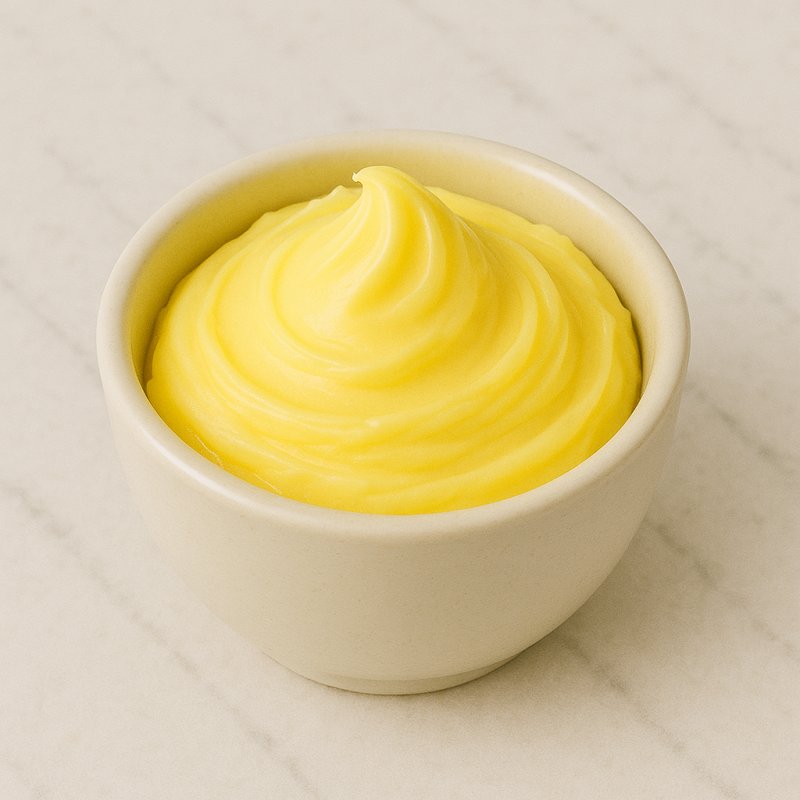
Margarine on a knife
Margarine has accompanied me since childhood – back then it sat next to the butter in my parents' fridge, today it appears in my own kitchen in various forms: classic, vegan, with plant oils rich in omega-3, or specially for baking. As a 35-year-old editor from Europe I have watched how the perception of this spread has changed: from a purely functional butter alternative to a conscious choice for baking, cooking and balanced eating. Margarine is now more than a substitute product; it is a versatile ingredient that reliably provides flavor, texture and stability in recipes.

Historically, margarine emerged in the 19th century as an inexpensive alternative to butter. Today it is mostly made from plant oils such as rapeseed, sunflower or palm oil, often complemented by water, emulsifiers, salt, flavorings and sometimes vitamins. The point is: the fat content varies. There are spreadable varieties for bread, firmer types for baking and special products for frying with higher heat stability. A colleague of mine, a trained pastry chef, swears by a baking margarine because it makes doughs predictable: “It melts evenly, shortcrusts become crisp and creams remain stable.” This reliability is especially valuable in professional kitchens.

At home margarine shows its strengths mainly in everyday cooking. For quick pasta sauces a knob of margarine gives shine and binding; in a loaf cake it brings lightness and an even crumb structure. I like that many varieties are lactose-free and vegan – convenient when friends with different diets visit. At the same time transparency is important: I check the nutritional information and the fats used. Modern margarines often aim for a balanced share of unsaturated fatty acids, and some are fortified with vitamin A and vitamin D. A neighbor told me he changed his breakfast habits to reduce saturated fat intake – for him margarine was an easy lever without sacrificing enjoyment.

In European cuisine margarine combines tradition and innovation. While

Availability & types

Availability and types of margarine

Margarine is very easy to obtain in many countries today. You can find it almost everywhere: in supermarkets, discount stores, health food shops and even small corner stores. The reason is that margarine has been a popular butter substitute for over 150 years and is used in a wide range of recipes – from a simple buttered slice of bread to baking cakes and biscuits. It is also often cheaper than butter, keeps longer in the fridge and is available in many varieties. All of this makes it practical and popular for families, schools, bakeries and restaurants.

Margarine was originally invented in the 19th century in France. At that time a cheap alternative to butter that did not spoil quickly was sought. The first varieties were made from animal fats and milk components. Today margarine is usually made from vegetable oils and fats, for example from sunflower, rapeseed, soy or palm oil. Therefore it is often vegan and lactose-free – but not always, because some varieties contain milk components for flavor. That's why it's worth checking the ingredient list.

There are many types of margarine on the shelves. To help you find your way, here is an overview with simple explanations:

  • Spreadable margarine: This type is soft and can be spread well directly from the fridge. It is often sold in tubs and has a mild, slightly buttery taste. Perfect for sandwiches or breakfast rolls.
  • Baking margarine: It is specially developed for baking. Baking margarine has a firmer consistency and behaves in dough similar to butter. This makes shortcrusts, cookies and cakes turn out evenly. Some baking margarines come wrapped in paper like blocks of butter.
  • Frying and cooking margarine: This variant is intended for frying and cooking. It splatters less in the pan and is often more heat-stable, so it does not burn as quickly at higher temperatures. Ideal for pancakes, vegetable stir-fries or scrambled eggs (if not cooking vegan).
  • Light margarine: In these versions the fat content is reduced, often by adding more water or yogurt/whey
Details & nutrition

Property Value
Unit g
Average weight per piece 10
Calories per 100 720
Protein per 100 0.2
Carbohydrates per 100 0.5
Sugar per 100 0.5
Fat per 100 80
Saturated fat per 100 25
Monounsaturated fat 40
Polyunsaturated fat 15
Fiber per 100 0
Vitamin C (mg) per 100 0
Vitamin D (IU) per 100 160
Calcium (mg) per 100 5
Iron (mg) per 100 0.1
Nutri-Score D
CO₂ footprint 2.3 kg CO2e/kg
Origin Europe
Gluten-free Yes
Lactose-free Yes
Nut-free Yes
Vegan Yes
Note Values refer to vegan spreadable margarine made with vegetable oils; vitamins may be added.

Technical & scientific information

Margarine is a spreadable, predominantly plant-based fat product developed as an alternative to butter. Chemically it is a water-in-oil emulsion, where a continuous fat phase stabilizes droplets of an aqueous phase. The fat-phase matrix consists of triacylglycerols with variable fatty acid composition; physical properties – melting point, crystal structure, consistency and oxidation stability – are tuned by selecting and processing different oils. Modern formulations use refined plant oil, higher-melting fat fractions and specific emulsifiers to achieve a fine, stable microstructure and a defined melting profile.

Raw material base and fatty acid profile: Common starting materials are rapeseed, sunflower, soybean, corn germ or palm oil and their fractions (e.g. palm stearin). Rapeseed oil provides a high share of monounsaturated oleic acid; sunflower and safflower oils are characterized by linoleic acid, while newer high-oleic varieties improve oxidation stability. Solid fractions with higher saturated fatty acid content are blended in for plasticity. The targeted combination determines texture, spreadability and nutritional profile, including the omega-3 content (e.g. alpha-linolenic acid) which can be increased with rapeseed or linseed oil.

Manufacturing process: Production includes several steps that require precise process control:

  • Oil refining: Degumming, neutralization, bleaching and deodorization remove free fatty acids, pigments, soaps and volatile flavor compounds. The goal is a neutral-tasting, oxidation-stable fat with a low peroxide value.
  • Fat blending and fractionation: Defined blends of liquid and solid fractions ensure the desired melting spectrum. Dry fractionation yields higher-melting crystalline fractions that increase structural strength.
  • Emulsification: The oil phase is mixed with an aqueous phase (W
Wiki entry for: margarine
Active now: 20 visitors of which 2 logged-in members in the last 5 minutes