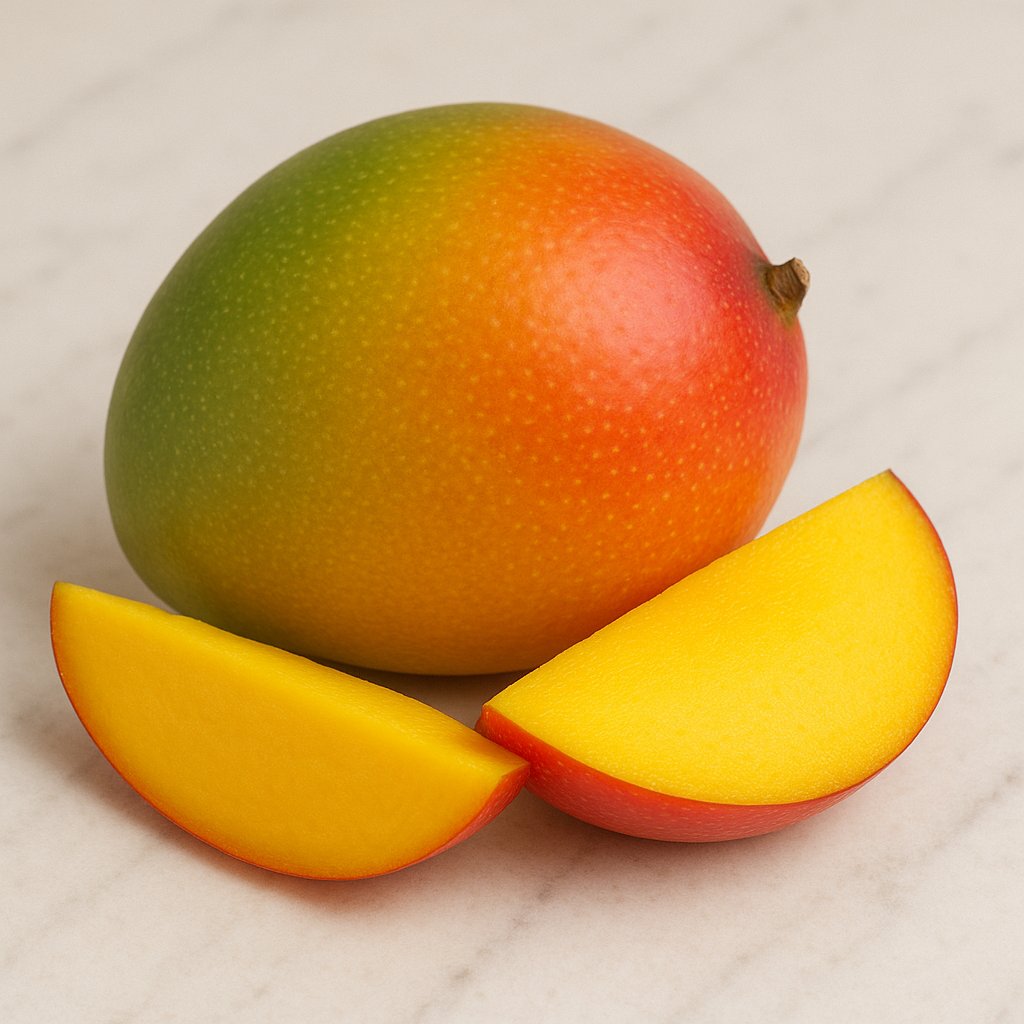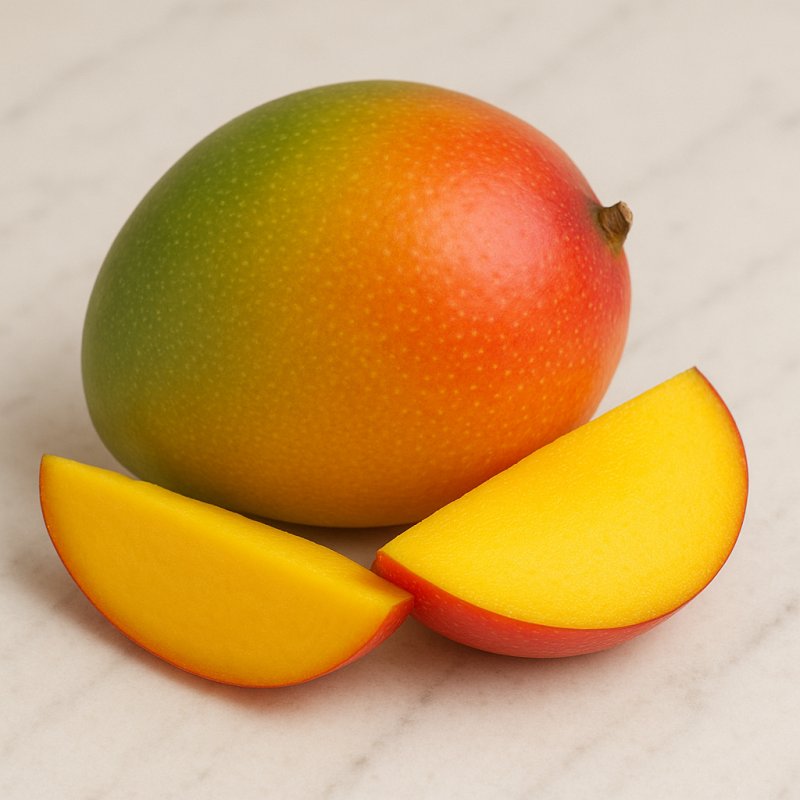
Availability and types of mango: Mango is a tropical fruit originally from South Asia. That means it has been native there for a very long time, especially in countries like India and Pakistan. Today mango is grown in many warm regions of the world. You can find it fresh in supermarkets, at weekly markets or as processed products like juice, puree or dried pieces.
Where mangoes are grown depends on the climate. Mango trees like warmth and no frost. Important growing regions include:
- South Asia: India, Pakistan, Bangladesh – there are very many different varieties here.
- Southeast Asia: Thailand, Philippines, Indonesia – many mangoes also grow there.
- Latin America: Mexico, Brazil, Peru – these countries export many fruits.
- Africa: Kenya, Ivory Coast – large mango plantations are found here as well.
- Australia: some regions grow mangoes for the local market.
There are hundreds of varieties. Here are some well-known types with short, easy-to-understand descriptions:
- Alphonso – very sweet and aromatic, often considered one of the best mangoes. Mostly from India.
- Tommy Atkins – widespread in trade, robust in transport, tastes good but can be more fibrous.
- Kent – juicy and not very fibrous, good for smoothies and desserts.
- Haden – good tasting, often shows red and yellow colors.
- Ataulfo (also called Honey or Champagne mango) – small, very sweet and almost fiberless.
- Keitt, Glenn, Palmer, Kesar, Chaunsa – further varieties differing in size, sweetness and texture.
Why are there so many varieties? Imagine mangoes have as many possibilities as apples: some are crisp, some soft; some very sweet, others somewhat tart. Breeders have developed different varieties over many years so some taste better, others travel better or keep longer.
Mangoes are available in several forms:
- Fresh: whole fruits, best and most flavorful in season.
- Frozen flesh or pieces: convenient for smoothies or baking because the fruit was harvested ripe and frozen.
- Canned: in syrup or their own juice – long shelf life and good for desserts.
- Puree and juice: often in jars or cartons, ideal for cooking or mixing.
- Dried: as snacks similar to dried fruit.
Buying tips: A ripe mango smells sweet at the stem end and yields slightly to gentle pressure – similar to a ripe kiwi. If it is hard, you can let it ripen at home. Mangoes that are already soft and very fragrant are usually very ripe and should be eaten soon. Whether fresh or processed, mangoes are versatile and bring tropical aroma to many dishes.