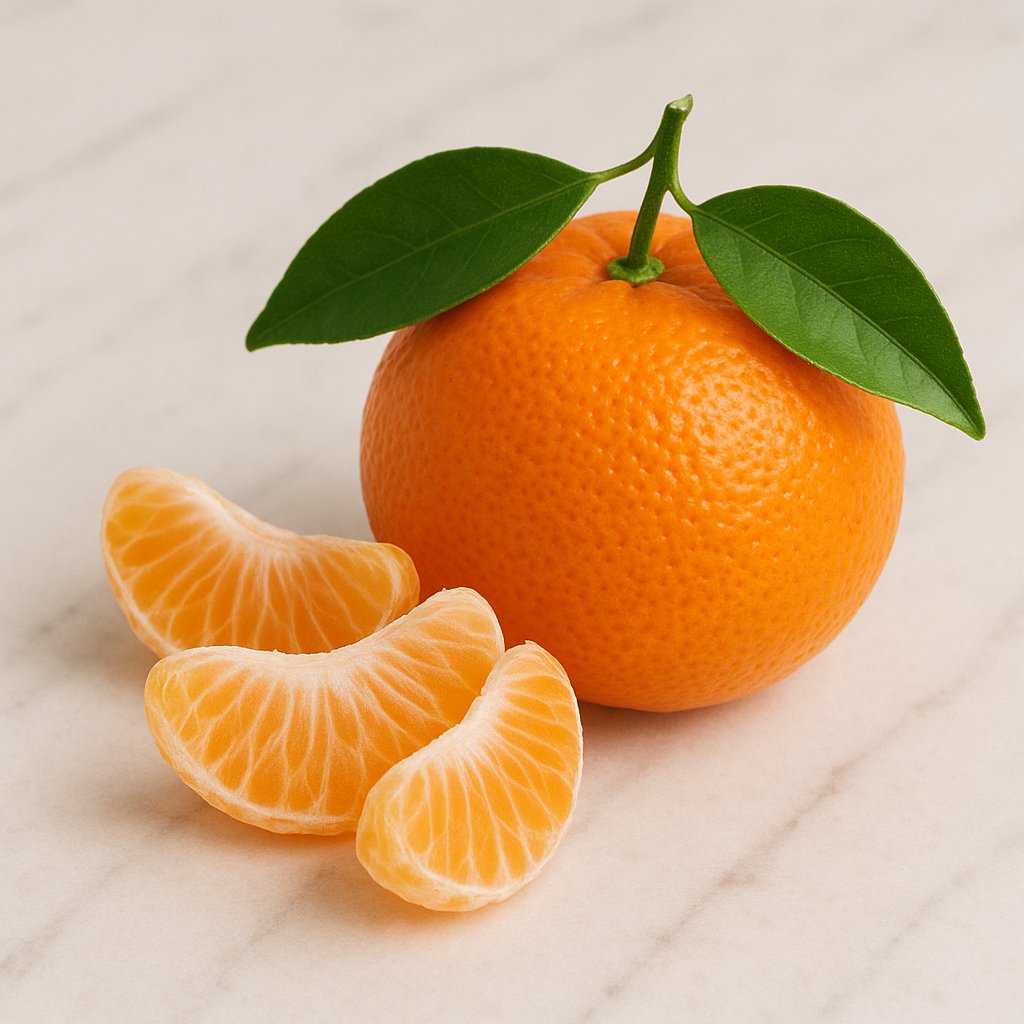
Availability and types of the mandarin
Mandarins are small, sweet citrus fruits originally from East Asia, where they were first cultivated many centuries ago. Today mandarins grow in many warm regions of the world. Because different countries harvest at different times, you can find mandarins in supermarkets almost year‑round — but the best time, when they are freshest and most aromatic, is usually autumn and winter.
Important growing regions
- China: The country with the largest quantity of mandarins. Many varieties originally come from there.
- Mediterranean (Spain, Italy, Morocco, Turkey): Very important for Europe. These countries supply many fresh fruits in autumn and winter.
- South Africa, Chile, Australia: Countries in the southern hemisphere that harvest when it is summer in Europe. This way mandarins reach shops throughout the year.
- USA (California and Florida): Also produce mandarins and specific varieties.
Why are they available almost all the time?
Imagine the Earth as a big stage with many growers harvesting mandarins in rotation. When the season in Spain ends, for example, South Africa or Chile supply the market. Worldwide trade ensures that mandarins are available in different seasons.
Imagine the Earth as a big stage with many growers harvesting mandarins in rotation. When the season in Spain ends, for example, South Africa or Chile supply the market. Worldwide trade ensures that mandarins are available in different seasons.
Popular varieties and types
- Clementine: Very sweet, almost seedless and easy to peel. For many children the clementine is the typical mandarin.
- Satsuma (also called Mikan): Very delicate skin, easy to peel and often seedless. Originally from Japan.
- Tangerine: A name sometimes used for various mandarins. The fruits are often aromatic and slightly tart.
- Tangelo (e.g. Minneola): A cross between mandarin and grapefruit or pomelo. It has a distinctive, slightly tart taste and a somewhat different shape.
- Tangor: A cross between mandarin and orange. Usually sweet and juicy.
- Kishu: Very small and sweet — almost like a candy mandarin, often nearly seedless.
- Other brand or club varieties (e.g. Orri, Nadorcott): Newer cultivars bred to be particularly sweet, juicy or long‑lasting.
What does “hybrid” or “cross” mean?
Sometimes two different citrus species are crossed to obtain new fruits. It's like bringing two flowers together and creating a new flower with traits of both. The result can be, for example, a sweeter taste or an easier‑to‑peel skin.
Sometimes two different citrus species are crossed to obtain new fruits. It's like bringing two flowers together and creating a new flower with traits of both. The result can be, for example, a sweeter taste or an easier‑to‑peel skin.
Forms, packaging and processing
Mandarins are sold fresh, sometimes in nets or small boxes. They are also available as juice, canned or dried. They taste best fresh, because then they are especially juicy and aromatic. When buying, look for firm fruits without bruises — this is a sign of good quality.
Mandarins are sold fresh, sometimes in nets or small boxes. They are also available as juice, canned or dried. They taste best fresh, because then they are especially juicy and aromatic. When buying, look for firm fruits without bruises — this is a sign of good quality.
In summary: mandarins originate from Asia, are now grown in many warm countries and thanks to staggered harvests are available almost year‑round. There are many varieties — from the very popular Clementine to the delicate Satsuma and special hybrids like Tangelo or Orri. Each variety has its own taste and characteristics, so there is something for everyone.