Menu & categories

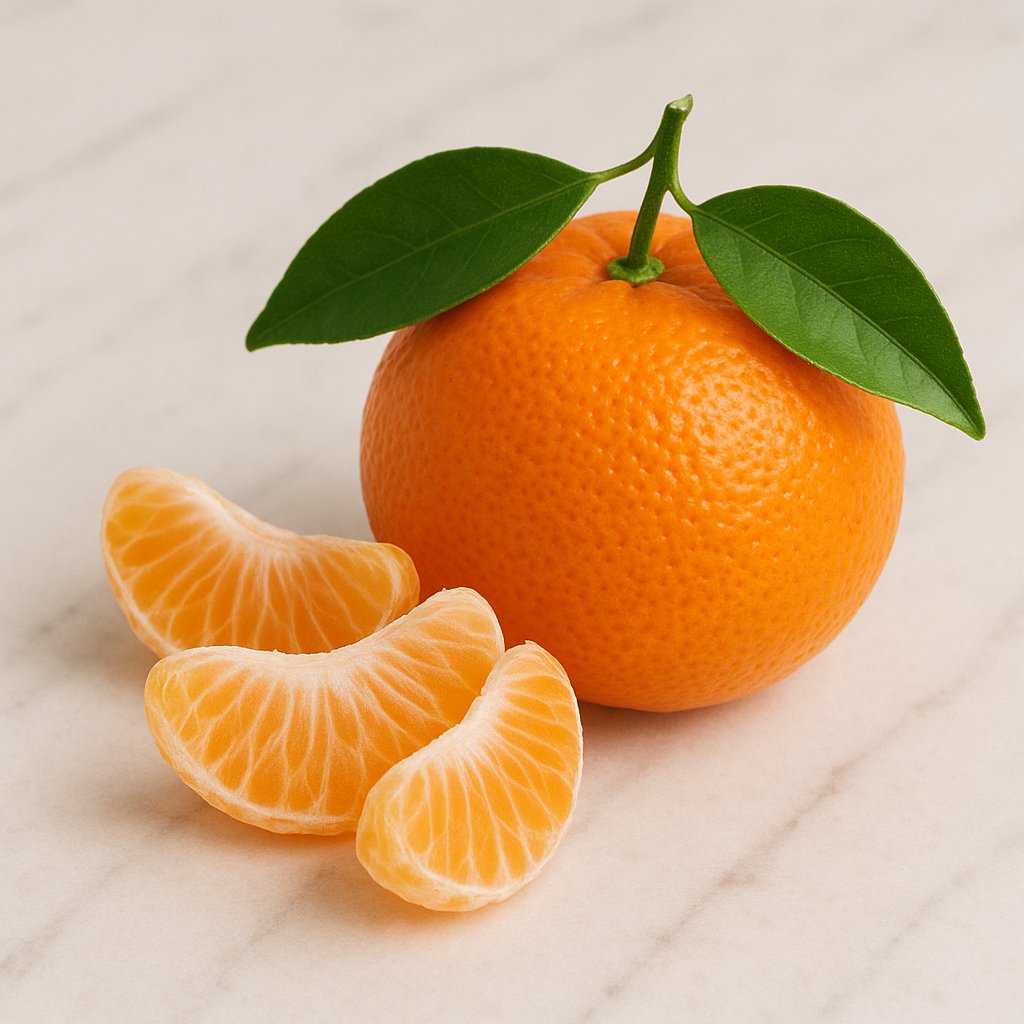
Mandarin

Sweet citrus fruit high in vitamin C – ideal as a snack.

Wiki about mandarin Nutri-Score A Vegan Yes Gluten-free Yes Lactose-free Yes Nut-free Yes
NUTRITION / 100 g
53 kcal 0.8 g Protein 13.3 g Kohlenhydrate 0.3 g Fett

Introduction

Juicy mandarins

I have a special relationship with the mandarin that is more than just a fruit in the fruit bowl. When I tear open the peel and that sweet‑fresh scent drifts into the kitchen, I immediately feel a little lighter. A colleague once brought a crate of mandarins to the office, and within minutes the afternoon turned into a small celebration of laughter, zest and sticky fingers. Those moments showed me how much such an unassuming ingredient can shape mood and togetherness.

Mandarins are for me the perfect bridge between sweet and tart, between dessert and salad. I remember one evening when I made an improvised starter: arugula, thinly shaved fennel and mandarin segments, drizzled with a touch of olive oil and a splash of balsamic. The result was so surprisingly fresh that I wanted to serve it immediately several times. Since then mandarins have been a secret kitchen helper for me.

What I particularly appreciate about mandarins:

  • They peel easily and are practical as an on‑the‑go snack.
  • The fine zests add aroma to dressings, baked goods and cocktails without dominating.
  • Different varieties offer the right nuance for every use, from honey‑sweet to slightly bitter.
In the kitchen I use mandarins both raw and cooked. A jar of candied mandarin halves quickly turns into an uncomplicated dessert. I like to grate the peel and freeze it in portions because it elevates many dishes. I also like to combine mandarins with spices like star anise or cinnamon, especially in the colder season when the scent of citrus and spices feels warm and homely.

Whether as a small energy boost between appointments or as a flavor surprise in a menu: the mandarin accompanies me through many everyday culinary scenes. It is down‑to‑earth and at the same time surprisingly versatile, and that is exactly what makes it a favorite ingredient I would hardly want to be without.

Availability & types


Availability and types of the mandarin

Mandarins are small, sweet citrus fruits originally from East Asia, where they were first cultivated many centuries ago. Today mandarins grow in many warm regions of the world. Because different countries harvest at different times, you can find mandarins in supermarkets almost year‑round — but the best time, when they are freshest and most aromatic, is usually autumn and winter.

Important growing regions

  • China: The country with the largest quantity of mandarins. Many varieties originally come from there.
  • Mediterranean (Spain, Italy, Morocco, Turkey): Very important for Europe. These countries supply many fresh fruits in autumn and winter.
  • South Africa, Chile, Australia: Countries in the southern hemisphere that harvest when it is summer in Europe. This way mandarins reach shops throughout the year.
  • USA (California and Florida): Also produce mandarins and specific varieties.
Why are they available almost all the time?
Imagine the Earth as a big stage with many growers harvesting mandarins in rotation. When the season in Spain ends, for example, South Africa or Chile supply the market. Worldwide trade ensures that mandarins are available in different seasons.

Popular varieties and types

  • Clementine: Very sweet, almost seedless and easy to peel. For many children the clementine is the typical mandarin.
  • Satsuma (also called Mikan): Very delicate skin, easy to peel and often seedless. Originally from Japan.
  • Tangerine: A name sometimes used for various mandarins. The fruits are often aromatic and slightly tart.
  • Tangelo (e.g. Minneola): A cross between mandarin and grapefruit or pomelo. It has a distinctive, slightly tart taste and a somewhat different shape.
  • Tangor: A cross between mandarin and orange. Usually sweet and juicy.
  • Kishu: Very small and sweet — almost like a candy mandarin, often nearly seedless.
  • Other brand or club varieties (e.g. Orri, Nadorcott): Newer cultivars bred to be particularly sweet, juicy or long‑lasting.
What does “hybrid” or “cross” mean?
Sometimes two different citrus species are crossed to obtain new fruits. It's like bringing two flowers together and creating a new flower with traits of both. The result can be, for example, a sweeter taste or an easier‑to‑peel skin.

Forms, packaging and processing
Mandarins are sold fresh, sometimes in nets or small boxes. They are also available as juice, canned or dried. They taste best fresh, because then they are especially juicy and aromatic. When buying, look for firm fruits without bruises — this is a sign of good quality.

In summary: mandarins originate from Asia, are now grown in many warm countries and thanks to staggered harvests are available almost year‑round. There are many varieties — from the very popular Clementine to the delicate Satsuma and special hybrids like Tangelo or Orri. Each variety has its own taste and characteristics, so there is something for everyone.
Details & nutrition

Property Value
Unit g
Average weight per piece 90
Calories per 100 53
Protein per 100 0.8
Carbohydrates per 100 13.3
Sugar per 100 10.6
Fat per 100 0.3
Saturated fat per 100 0.04
Monounsaturated fat 0.06
Polyunsaturated fat 0.08
Fiber per 100 1.8
Vitamin C (mg) per 100 26.7
Vitamin D (IU) per 100 0
Calcium (mg) per 100 37
Iron (mg) per 100 0.15
Nutri-Score A
CO₂ footprint 0.4
Origin Mediterranean region (e.g. Spain, Italy, Morocco)
Gluten-free Yes
Lactose-free Yes
Nut-free Yes
Vegan Yes
Note Seasonal product; nutritional values may vary slightly depending on variety and ripeness.

Technical & scientific information


Mandarin (often also referred to as Citrus reticulata and in numerous cultivars such as Clementine, Satsuma or Willowleaf) is a small citrus fruit with a thin, easy‑to‑peel rind. Botanically it belongs to the genus Citrus and is characterized by a sweet‑sour taste, orange flesh color and a multi‑segmented structure. Many mandarins grown today are the result of centuries of hybridization and selection, so genetic diversity is large and is expressed in different ripening times, peel firmness and aroma profiles.

Nutrient composition and macronutrients: Fresh mandarins consist mostly of water and provide about 50–55 kcal per 100 g. Carbohydrates are around 10–13 g, of which approximately 8–11 g come from simple sugars (fructose, glucose, sucrose). Protein and fat contents are low (both under 1 g/100 g). Fiber content is typically 1.5–2.5 g/100 g and consists mainly of soluble fibers such as pectin, which has technological and physiological relevance.

Vitamins and minerals: Mandarins are a significant source of vitamin C (ascorbic acid), with typical values around ca. 25–40 mg/100 g, and provitamin carotenoids (e.g. beta‑cryptoxanthin, beta‑carotene) that give the fruit its color. Mineral‑wise they provide mainly potassium (typical 150–170 mg/100 g) and smaller amounts of calcium and magnesium.

Secondary plant compounds and aroma: Chemically diagnostic are flavonoids, particularly hesperidin and other O‑glycosides, which have antioxidant and anti‑inflammatory modulating effects. The aromatic complexity arises from a mixture of essential oils in the peel, where limonene often constitutes the largest share (frequently 70–90 %), complemented by gamma‑terpinene, myrcene, linalool and other monoterpenes. These components determine scent and taste and are technologically important for distillates, flavorings and cosmetic applications.

Processing and preservation: Mandarins are eaten fresh, pressed for juice, candied, dried or made into jam. Industrial processes include cold pressing of the peel to obtain essential oils, enzymatic extraction of pectin and thermal concentration of juices. Pasteurization and filtration are often used for juice and concentrate to ensure microbiological stability. The sensitive fruit reacts to improper storage with chilling injury at too low temperatures, therefore postharvest cold logistics and controlled atmosphere are important parameters.

Health aspects: The high vitamin C content and flavonoids give mandarins antioxidant properties that can support oxidative defense. Fibers like pectin promote gut function and can moderately influence blood sugar and cholesterol. Because of the sugar content, people with impaired glucose tolerance should consider consumption in portions. Essential oils contain limonene, which in topical application can rarely cause skin sensitization. Unlike grapefruit juice, classic drug interactions with mandarins are less pronounced, yet interactions cannot be entirely excluded in the case of concentrated extract supplementation.

Summary: Mandarins are water‑rich citrus fruits with a balanced profile of vitamins, soluble fibers and secondary plant compounds such as flavonoids and essential oils. They have culinary and industrial importance and offer health benefits, particularly through vitamin C and pectin‑containing fibers, while providing moderate calories and sugars. Scientific work on varieties, storage and extraction techniques aims to preserve freshness, aroma and functional constituents as efficiently as possible.
Wiki entry for: mandarin
Active now: 18 visitors of which 2 logged-in members in the last 5 minutes