Menu & categories

Lemon zest

Aromatic lemon peel with essential oils and vitamin C

Wiki about lemon zest Nutri-Score A Vegan Yes Gluten-free Yes Lactose-free Yes Nut-free Yes
NUTRITION / 100 g
47 kcal 1.5 g Protein 16.0 g Kohlenhydrate 0.3 g Fett

Introduction

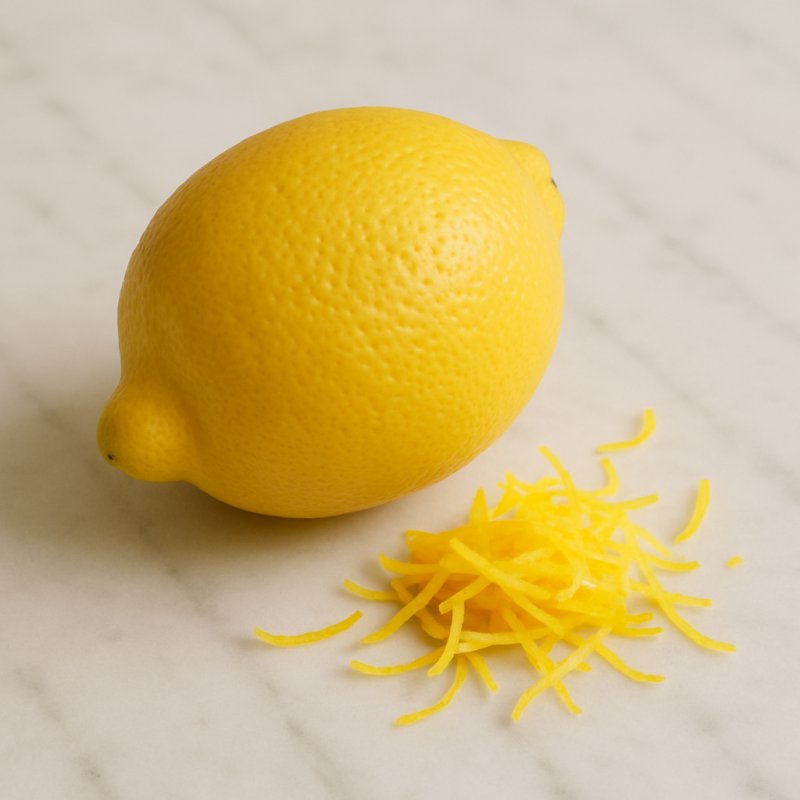
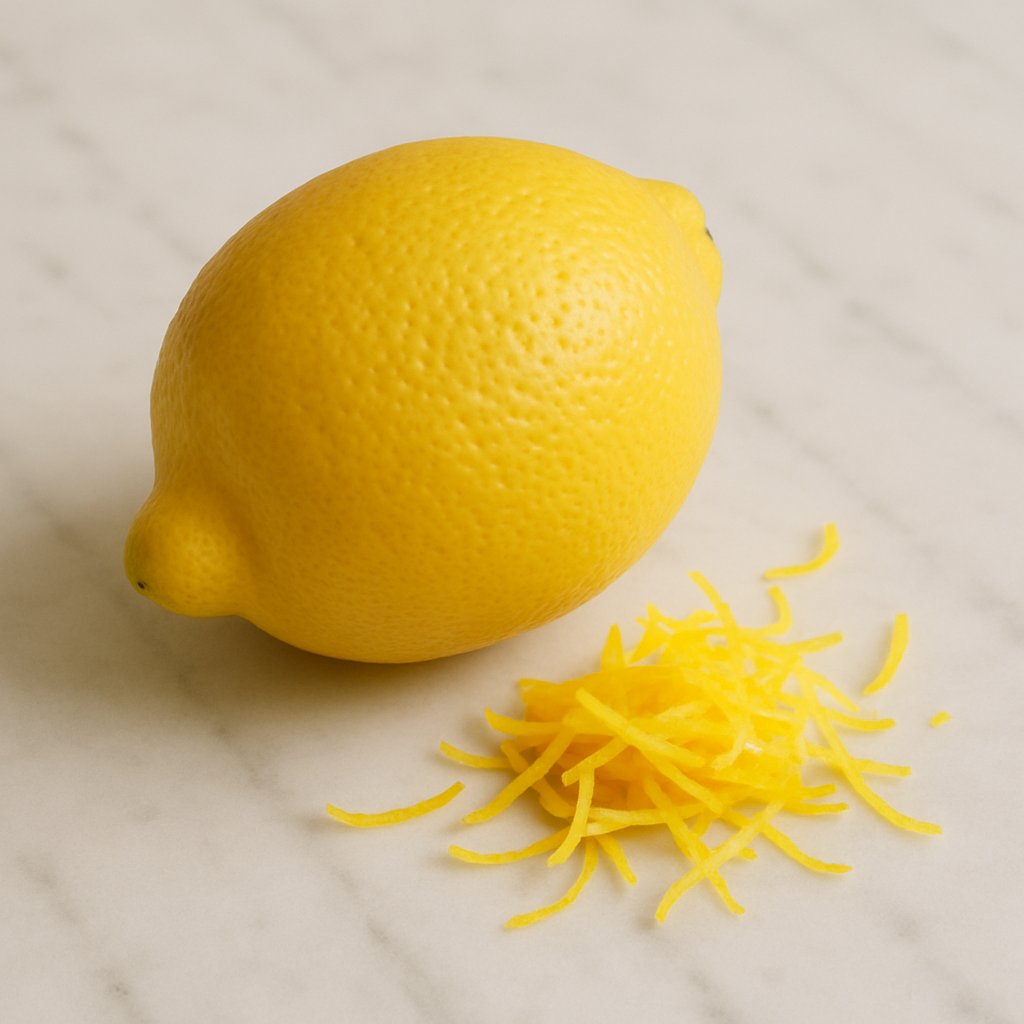
Fresh lemon peel from a yellow lemon
I have a secret passion for lemon peel, even though it often stands in the shadow of its juicy sister, the lemon half. To me the peel is more than just a remnant of flavor; it is a little fireworks display of essential oils that can transform dishes, drinks and even the mood of a room. I still remember a late afternoon at a market when a vendor sprinkled a freshly grated streak of peel over my salad and I spontaneously thought: Why haven't I always done this?

The peel brings an intense, fresh citrus note that is different from the tart juice. It is versatile in use:

  • In the kitchen: grated over fish, in desserts or in dressings it acts like a flavor enhancer without acidity.
  • In drinks: as a twist in cocktails or tea it lifts the aroma and provides delicate bitter‑sweet nuances.
  • Around the house: dried as a scent diffuser or preserved in sugar as a homemade gift.
One of my colleagues needed only a pinch of lemon peel to turn a boring yogurt dessert into a little highlight; afterwards she swore never to use pre‑grated supermarket peel again. Handling is simple: I prefer to grate the zest with a fine grater or cut long strips with a vegetable peeler, taking care not to get the bitter white pith. Organic lemons are my standard here because they carry fewer pesticides on the peel.

I love playing with flavors. Sometimes I caramelize small pieces of peel with sugar for cookies, other times I dry larger amounts in the oven at low temperature to make lemon sugar or small sachets later. A friend once gave me a recipe from her childhood where lemon peel was the secret ingredient in bread roll dough — the crust smelled so tempting that we baked several at once.

In short: lemon peel is a small, versatile universe. It requires little effort and rewards with big impact. Whether freshly grated, candied or dried — I always keep a few lemons in the fridge because I know their peel gives every dish instant personality.

Availability & types

Availability and types of lemon peel

Lemon peel is the outer, colored skin of the lemon. It is often bright yellow and contains many aromatic compounds that make dishes and drinks fresh and lemony. You can obtain lemon peel in different ways: fresh from the lemon, dried, as a powder or in preserved form. Each form has its advantages – fresh smells and tastes most intensely, dried lasts longer and powder is easy to dose.

Origin and growing regions
Lemons grow on trees that like warm climates. They originally come from Asia but are now grown wherever it is mild and sunny. Important growing regions include:

  • Mediterranean region (e.g. Italy, Spain, Greece): Many lemons are grown here because of warm summers and mild winters.
  • USA (especially California and Florida): These states have many plantations and supply large quantities of lemons.
  • South America (e.g. Argentina, Chile): Many lemons for export are grown there as well.
  • South Asia (India, Turkey): These regions also have substantial lemon cultivation, often for the local market.
Some lemons grow on large plantations, others on smaller farms. When you buy a lemon in a shop or at the market, it may come from distant countries or from the region, depending on what is in season.

Available varieties and variants of lemon peel
There are different lemon varieties, and each has a slightly different peel. Here are some common varieties you might want to know:

  • Eureka: A common supermarket variety. The peel is a strong yellow and good for grating (zesting).
  • Meyer lemon: This one is somewhat sweeter and more delicate than ordinary lemons. Its peel is thinner and has a finer aroma. Many people like it for desserts.
  • Verna and Femminello: These are Mediterranean varieties that are often particularly aromatic and rich in peel oils.
  • Organic and untreated lemons: These are important if you want to use the peel, because many conventional lemons are treated after harvest with waxes or other substances. This is less common for organic lemons.
Forms in which you can find lemon peel
Lemon peel is not only available fresh. Here are the usual forms:

  • Fresh zests: Small, thin strips or grated peel. Best made with a grater or zester.
  • Dried peel: Has less of the delicate aroma than fresh, but keeps long and is practical to take along.
  • Lemon peel powder: Ground dried peel, easy to dose, good for baking or muesli.
  • Preserved peel (e.g. candied): Sweet preserved peel, often used in sweets or baked goods.
  • Essential lemon oil: Very strong aroma, used sparingly, for example in perfumery or food.
A simple comparison: fresh lemon peel is like freshly picked herbs – bold and lively. Dried or powdered peel is like dried herbs – convenient and longer lasting but less intense.

If you want to use lemon peel, pay attention to its origin and whether the peel has been treated. For the best flavor, fresh untreated lemons are most suitable. This way you can be sure the lovely fresh lemon aroma from the peel makes it into your food or drink.
Details & nutrition

Property Value
Unit g
Calories per 100 47
Protein per 100 1.5
Carbohydrates per 100 16.0
Sugar per 100 4.0
Fat per 100 0.3
Saturated fat per 100 0.04
Monounsaturated fat 0.04
Polyunsaturated fat 0.14
Fiber per 100 10.0
Vitamin C (mg) per 100 130
Vitamin D (IU) per 100 0
Calcium (mg) per 100 130
Iron (mg) per 100 0.8
Nutri-Score A
CO₂ footprint 0.3
Origin Mediterranean region and subtropical growing areas
Gluten-free Yes
Lactose-free Yes
Nut-free Yes
Vegan Yes
Note Lemon zest is usually grated or cut into strips as a flavoring in sweet and savory dishes; when using, preferably use untreated organic lemons.

Technical & scientific information

Lemon peel refers to the outer layer of the fruit Citrus limon and includes both the colored outer skin (flavedo) and, in part, the underlying white layer (albedo). Botanically, the peel belongs to the pericarp and has a complex structure of epidermis, oil glands and spongy mesocarp. The surface is rich in small oil‑filled glands that are responsible for the characteristic aroma and many chemical properties.

Chemical composition and constituents
The chemical composition of lemon peel is diverse and varies with variety, ripeness, growing region and harvest time. The main constituents include:

  • Essential oils: Predominantly limonene (up to 70–85% of the oil fraction), followed by β‑pinene, γ‑terpinene, citral, linalool and other monoterpenes. These components determine smell and volatile bioactivity.
  • Flavonoids: Hesperidin, naringin, diosmin and other polymeric and glycosidic flavonoids with antioxidant properties.
  • Phenolic compounds: Various phenolic acids and polyphenols that contribute to antioxidant effects.
  • Dietary fiber: Mainly pectin and hemicelluloses in the albedo, which exhibit functional properties such as gel formation.
  • Vitamins and minerals: Vitamin C (ascorbic acid) in small amounts, traces of B‑vitamins as well as potassium, calcium and magnesium.
Nutritional values
Lemon peel is consumed in small amounts; energetically it is low in calories. Per 100 g lemon peels typically contain few calories (approx. 50–100 kcal, depending on water content), small amounts of protein and fat and a notable share of fiber, mainly soluble pectin. The bioavailability of nutrients in raw peel is reduced compared with extracts, since some compounds are bound in cell walls.

Processing methods
Lemon peel is processed in different ways depending on the intended use:

  • Grating/zesting: Mechanical removal of the outer peel for direct use in foods; this largely preserves the essential oils.
  • Drying: Air‑ or freeze‑drying reduces water content and preserves aroma in dried flakes or powder.
  • Distillation and cold pressing: Extraction of essential oils; cold pressing yields fruit oil high in limonene, while steam distillation gives different aromatic profiles.
  • Extraction: Solvent or supercritical CO2 extraction to obtain flavonoid‑ and polyphenol‑rich extracts.
  • Enzymatic treatment: Use of pectinases and other enzymes to release soluble fibers or to produce cell‑wall‑free extracts.
Health aspects
Lemon peel contains bioactive compounds with proven or potential health effects. Flavonoids and polyphenols act as antioxidants and may modulate inflammatory processes. Pectin from the peel has nutritional benefits such as effects on intestinal transit time and cholesterol binding in the gut. Essential oils are antimicrobial and are used in aromatherapy and food sanitation. However, peel can also contain pesticide residues; therefore it is advisable to use clean, preferably untreated fruit or to wash them thoroughly.

Safety and possible side effects
In typical culinary amounts lemon peel is generally considered safe. Concentrated extracts or essential oils can cause skin irritation or allergic reactions and are potentially toxic if taken orally at high doses. Limonene can oxidize on exposure to light and air, forming oxidation products that may be allergenic. People with sensitive digestion or known citrus allergies should exercise caution.

Applications
Uses range from culinary applications (flavoring baked goods, marinades, beverages) to cosmetic products (flavorings, scrubs, natural fragrances) and industrial fields (food flavorings, fragrance industry, natural remedies). Scientific research also investigates using lemon peel waste to obtain functional ingredients for use in dietary supplements, animal feed or biopolymers.

In summary, lemon peel is a chemically rich, versatile component of the fruit with pronounced aromatic, nutritional and technological properties. Its application, however, requires attention to residues, potential allergens and appropriate processing to safely and efficiently harness the desired bioactive effects.

Wiki entry for: lemon zest
Active now: 14 visitors of which 2 logged-in members in the last 5 minutes