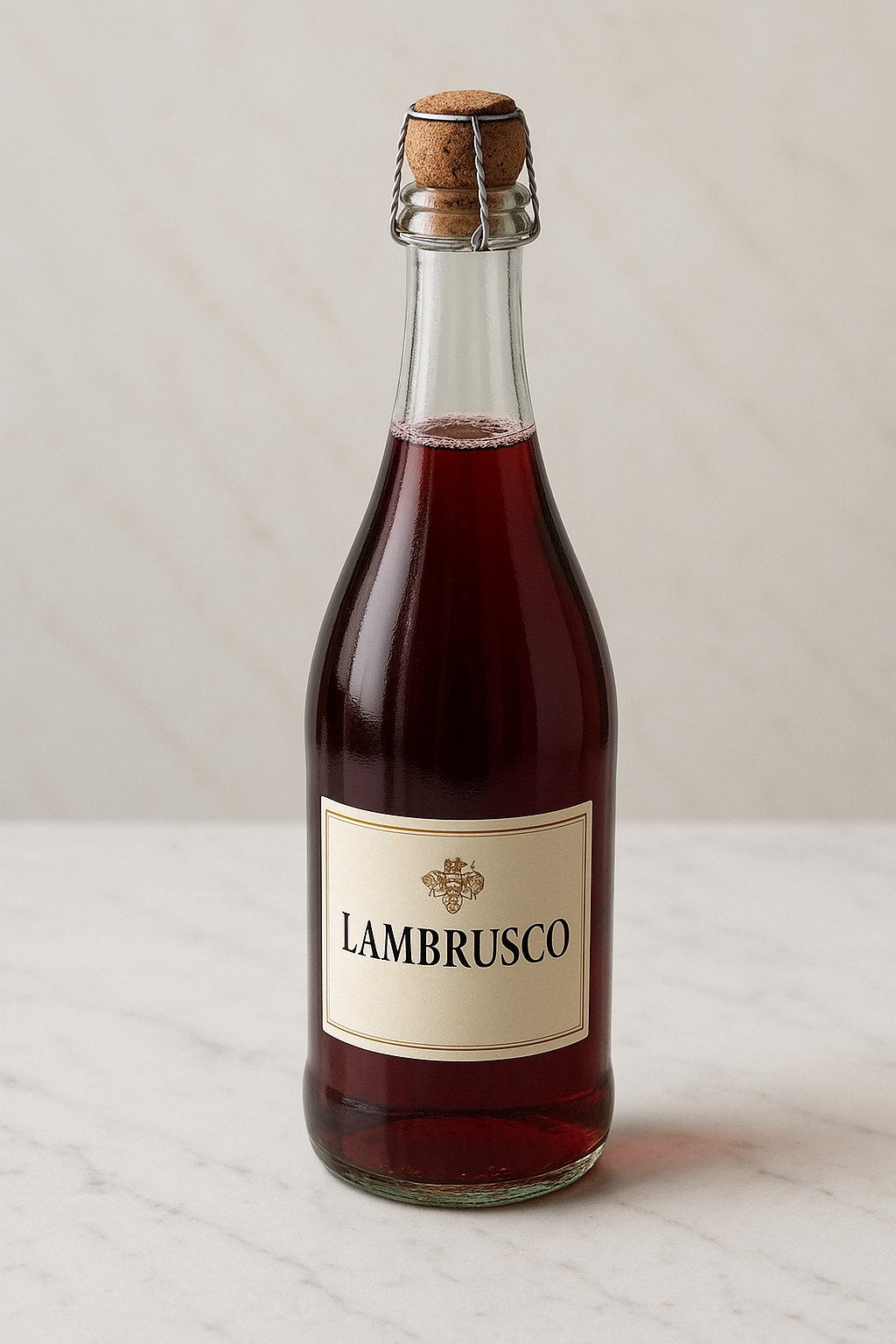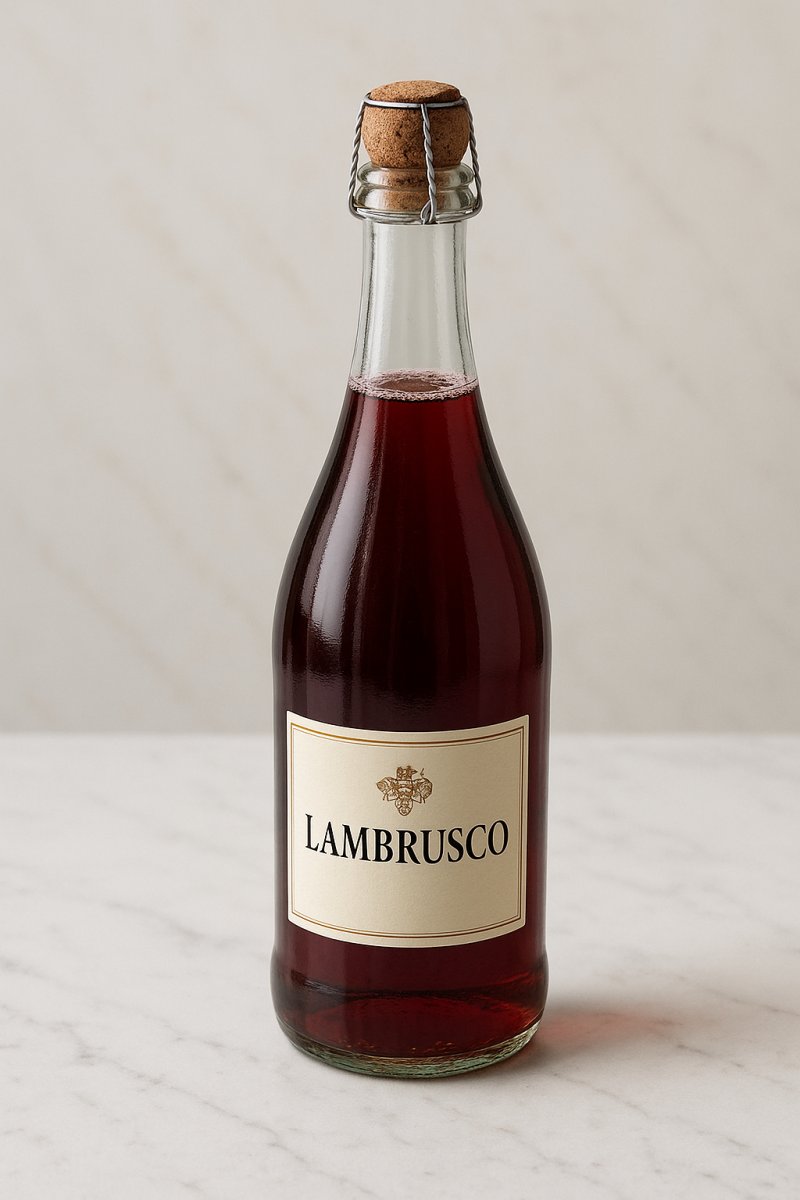
Lambrusco is the name for a group of wines that originally come from Italy. When you hear Lambrusco, you can imagine that it is often a slightly sparkling, fruity red wine – similar to a gentle lemonade, but for adults. Important to know: alcohol is not suitable for children. Adults enjoy Lambrusco with certain dishes or simply as a refreshing drink.
Origin
Lambrusco grows mainly in an area of northern Italy called Emilia-Romagna. A small part also comes from the neighboring province of Lombardy (near Mantua). These regions have hilly vineyards, warm days and cool nights — ideal for the grapes to develop sweet aromas and fresh acidity. You can think of it as a good compromise: lots of sun for flavor and cool air for freshness.
Lambrusco grows mainly in an area of northern Italy called Emilia-Romagna. A small part also comes from the neighboring province of Lombardy (near Mantua). These regions have hilly vineyards, warm days and cool nights — ideal for the grapes to develop sweet aromas and fresh acidity. You can think of it as a good compromise: lots of sun for flavor and cool air for freshness.
Growing areas
Famous places where Lambrusco is grown include:
Famous places where Lambrusco is grown include:
- Lambrusco di Sorbara – very aromatic and often lighter in color.
- Lambrusco Grasparossa di Castelvetro – more robust and often full-bodied.
- Lambrusco Salamino – round and fruity, a good everyday wine.
- Lambrusco Reggiano and Lambrusco Mantovano – further regional variants with their own characteristics.
Available types and variants
Lambrusco comes in different styles, and that's the exciting part — almost like different kinds of juice or lemonade:
Lambrusco comes in different styles, and that's the exciting part — almost like different kinds of juice or lemonade:
- Frizzante – lightly sparkling, small bubbles, very refreshing, like a gentle fizzy drink.
- Spumante – more fully sparkling, with stronger bubbles, similar to Champagne or sparkling wine.
- Still (tranquillo) – without sparkle, more like a regular red wine.
- Secco – dry, meaning little sugar; tastes more savory and pairs well with salty foods.
- Amabile – lightly sweet, not too much sugar, often pleasant for beginners.
- Dolce – sweet, reminiscent of dessert wines or sweet juices.
- Rosato – rosé variant, fruity and light.
- Bianco – rare white variant, not as common as the reds.
Availability
Lambrusco is available worldwide, but some varieties are more commonly found than others. In supermarkets and larger beverage stores there are often inexpensive bottles suitable for everyday use. In wine shops and online you can also find higher-quality or rare bottlings. Sometimes Lambrusco even comes in cans — practical for picnics or parties. Prices range from very cheap to somewhat pricier, depending on how elaborate the wine was made.
Lambrusco is available worldwide, but some varieties are more commonly found than others. In supermarkets and larger beverage stores there are often inexpensive bottles suitable for everyday use. In wine shops and online you can also find higher-quality or rare bottlings. Sometimes Lambrusco even comes in cans — practical for picnics or parties. Prices range from very cheap to somewhat pricier, depending on how elaborate the wine was made.
When and how to enjoy?
Lambrusco goes great with pizza, pasta, cheese or savory dishes because the wine's freshness balances the food. Lambrusco is not suitable for children; adults should handle it responsibly. If you want to know more about individual varieties, a look at the origin (e.g. di Sorbara) often tells you how the wine will taste.
Lambrusco goes great with pizza, pasta, cheese or savory dishes because the wine's freshness balances the food. Lambrusco is not suitable for children; adults should handle it responsibly. If you want to know more about individual varieties, a look at the origin (e.g. di Sorbara) often tells you how the wine will taste.
In summary: Lambrusco is a versatile family of wines from northern Italy with many types from sparkling to still, dry to sweet. It is easy to find on the market, from inexpensive everyday bottles to special bottles in wine shops. It is ideal to try with food or on warm days as a refreshing drink for adults.