Menu & categories

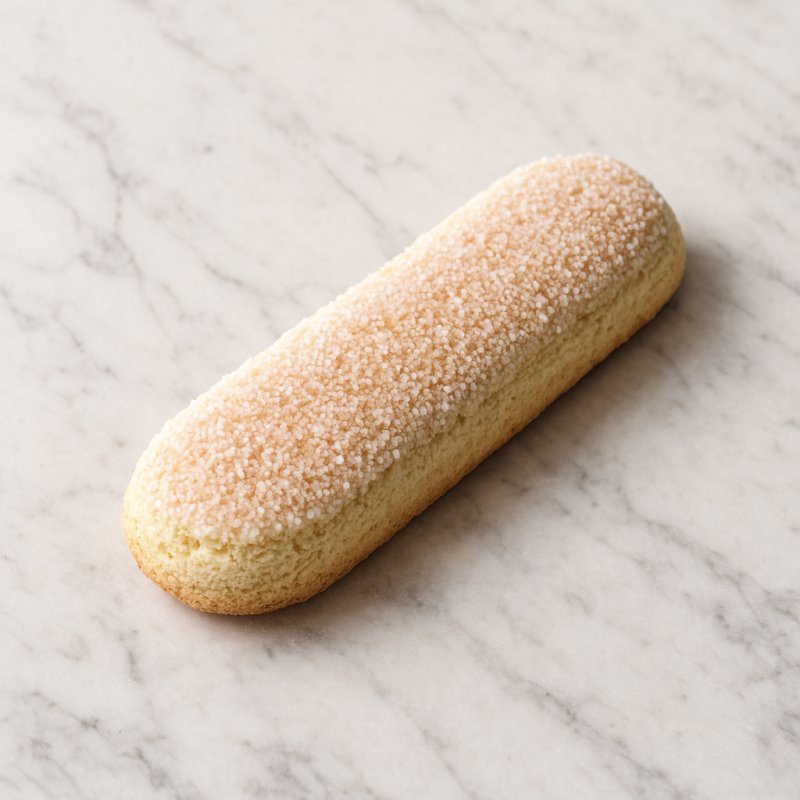
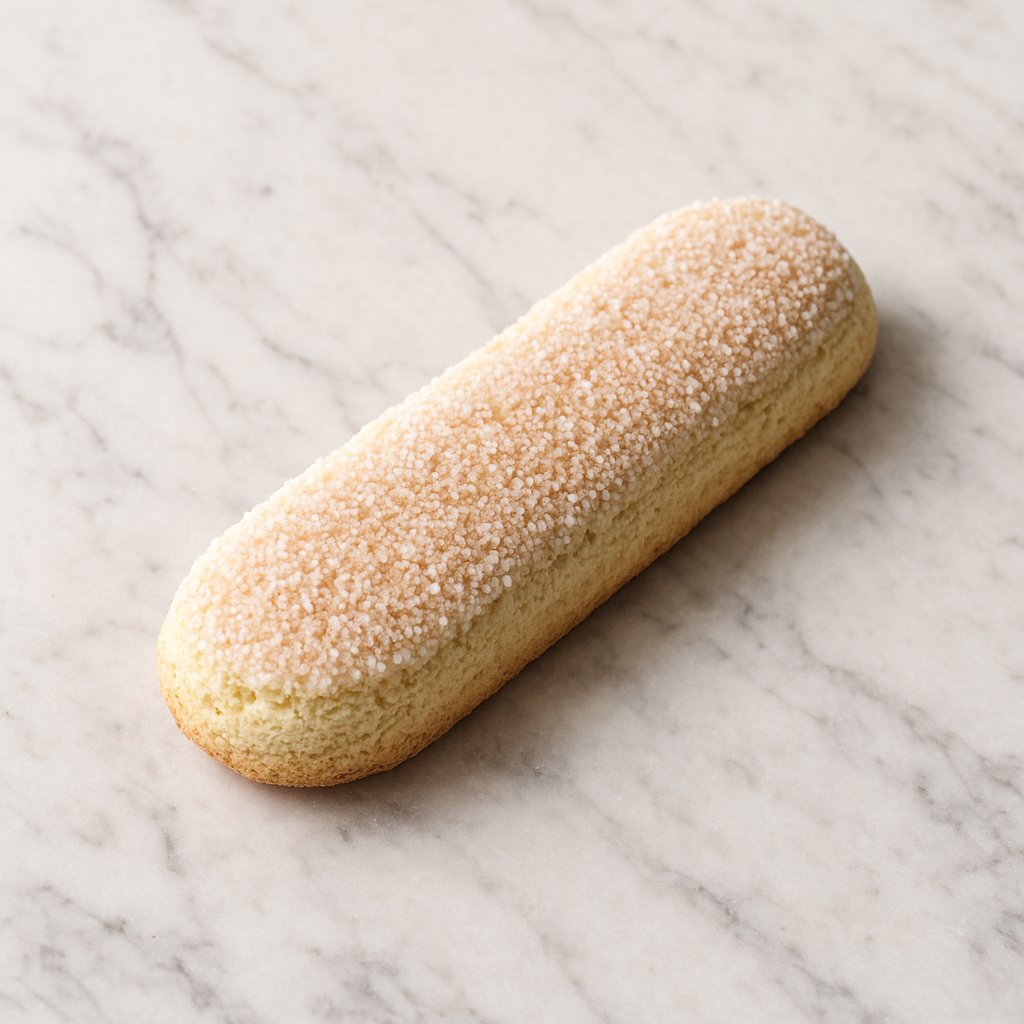
Ladyfingers

Light sponge biscuit, commonly used for desserts such as tiramisu

Wiki about ladyfinger Nutri-Score D Vegan No Gluten-free No Lactose-free No Nut-free Yes
NUTRITION / 100 g
380 kcal 8 g Protein 75 g Kohlenhydrate 4 g Fett

Introduction

Several ladyfingers placed side by side on a plate
I still remember the first ladyfinger I tried: moist from espresso, delicate and almost falling apart on the tongue, while I shared an improvised tiramisu with a friend. Since then this unassuming biscuit has never quite left me. Ladyfingers, often also known as Savoiardi, are for me the small, reliable ingredient that turns desserts and sweet treats eaten in between into something special.

What fascinates me about ladyfingers is their versatility. On the outside they are slightly crisp, inside fluffy and airy, and they absorb liquids without becoming soggy immediately — a property that makes them perfect for layered desserts. I loved them in classic recipes like tiramisu, but also in spontaneous creations when guests arrived surprised and I only had a glass of dessert wine and a few biscuits on hand.

A colleague of mine firmly believes that the art of a good tiramisu lies in the right biscuit. I learned to dip them in coffee occasionally, but not to leave them too long so the structure stays intact. Sometimes I replace espresso with fruit juices or liqueurs, depending on the character I want the dessert to have. For children's parties I lightly dusted the biscuit with cocoa and combined it with a layer of vanilla cream — a quick, always welcome treat.

In the kitchen I also appreciate the handy portioning: ladyfingers usually come in uniform size, so layers can be built cleanly. That saves time and provides a professional appearance. Kept in the cupboard they are a small lifeline when things need to be done quickly, because from a few ingredients and a few spoonfuls of combination often comes something that looks and tastes better than the hurried preparation would suggest.

In summary, ladyfingers for me are more than just a cookie. They are a flexible toolkit for sweet ideas, a carrier of shared memories and a faithful kitchen companion that transforms even simple desserts into something charming with minimal effort.

Availability & types

Availability and types of ladyfingers

Ladyfingers are light, elongated biscuits often used in desserts like tiramisu. They are available in many supermarkets, bakeries and online shops. You will usually find them in the baking aisle or with the cookies, sometimes also in international or Italian sections, because the Savoiardi version is very popular in Italy. If you live in a larger city, they are usually easy to obtain; in rural areas they may be somewhat rarer, but supermarkets and the internet also help there.

Origin
Ladyfingers originally come from Italy and are called Savoiardi there. The name "Löffelbiskuit" comes from the spoon-like shape and the fact that people used to use a spoon to shape the batter. The recipe idea is simple: eggs, sugar and flour are processed into an airy batter and then baked. The result is a dry, slightly crisp biscuit that can become a bit soft inside when it absorbs liquid – exactly what makes it ideal for desserts.

Growing regions and ingredients
Ladyfingers themselves do not of course grow on trees. They are made from basic ingredients that come from different places:

  • Flour: Mostly wheat flour. Wheat is grown in many countries, for example Germany, France, the USA and Russia.
  • Eggs: Come from chickens. Eggs are produced worldwide; quality and origin can vary by manufacturer.
  • Sugar: Is obtained from sugar beets (in Europe) or sugar cane (commonly in tropical countries).
  • Some brands add vanilla or lemon zest: These ingredients come from specific growing regions like Madagascar (vanilla) or lemon-growing areas.
Because ingredients can come from different countries, the exact origin varies by brand. The packaging usually states where the product was made and sometimes also where the ingredients came from.

Available varieties and options
Ladyfingers are available in several types so everyone can find something to their taste. Here are the most common variants:

  • Classic ladyfingers/Savoiardi: The typical variant, lightly sweet and airy. Perfect for tiramisu.
  • Wholegrain ladyfingers: Made from wholegrain flour; they are a bit darker and have more fiber. For people who prefer healthier options.
  • Sugar-free or reduced-sugar versions: For people who want to eat less sugar. The taste may be slightly different, but the shape and properties remain similar.
  • Gluten-free ladyfingers: For people with gluten intolerance. Instead of wheat flour, rice or corn flours are often used.
  • Flavored variants: With vanilla, lemon or chocolate. These give the biscuit an extra taste, good when you want to vary the dessert.
  • Smaller or thicker variants: Some brands offer smaller or thicker versions that better suit certain desserts or serve as a snack.
If you want to buy ladyfingers, you can check the packaging to see which variant it is – sometimes it also states if they are particularly crispy, extra airy or suited to special dietary needs. That way you can easily find the type that fits your recipe or taste.
Details & nutrition

Property Value
Unit g
Average weight per piece 8
Calories per 100 380
Protein per 100 8
Carbohydrates per 100 75
Sugar per 100 40
Fat per 100 4
Saturated fat per 100 1.2
Monounsaturated fat 1.5
Polyunsaturated fat 1.0
Fiber per 100 1.5
Vitamin C (mg) per 100 0
Vitamin D (IU) per 100 0
Calcium (mg) per 100 30
Iron (mg) per 100 1.5
Nutri-Score D
CO₂ footprint 2.1
Origin Europe
Gluten-free No
Lactose-free No
Nut-free Yes
Vegan No
Note Values are average values for commercial ladyfingers; recipes may vary by manufacturer.

Technical & scientific information

Ladyfingers are a light, porous baked product frequently used as an ingredient in desserts like tiramisu or as an accompaniment to coffee and tea. Technically they are a dry sponge dough formed into elongated, spoon-like shapes that obtain their characteristic texture and shelf stability through a combination of simple base ingredients and specific processing steps.

Composition and ingredients
The basic ingredients of ladyfingers are wheat flour (usually type 405), eggs (separated into yolks and whites), sugar and occasionally small amounts of vegetable fat or starch. Industrial variants may include additional leavening agents, emulsifiers (e.g. lecithins), preservatives or stabilizers to improve consistency and storage stability. Chemically, carbohydrates (mainly starch from flour and sucrose as crystalline sugar) and proteins from egg and flour dominate, with small lipid amounts from yolk or added fat.

Nutritional profile
The nutritional value of ladyfingers is characterized by a high share of rapidly available sugars and usable carbohydrates, with moderate protein content and low fat. Typical values per 100 g are roughly between 400–450 kcal, 70–80 g carbohydrates (with a high proportion of sucrose), 6–8 g protein and 6–10 g fat, depending on recipe and additives. Fiber content is low and micronutrients are mostly present in trace amounts; fat-soluble vitamins are minimal, while eggs contribute B vitamins.

Physicochemical properties and texture formation
The typical porous structure is produced by incorporating air into the egg whites during whipping. The egg white forms a protein network of albumins that is stabilized during baking by denaturation and cross-linking. Heat causes water evaporation and expansion of incorporated gases, causing the batter to foam. Emulsifiers in the yolk (lecithins) improve air distribution and influence pore fineness. Subsequent drying is crucial for a crisp exterior while retaining a tender crumb.

Manufacturing process
In artisanal production yolks are beaten with sugar until frothy, egg whites are whipped separately and folded in, then flour is gently incorporated. The batter is piped or spread on baking sheets and baked in elongated stick shapes. Industrial processes use controlled piping machines, standardized baking cycles and post-drying in convection ovens to achieve uniform moisture contents and shelf life. Post-treatments such as calendering or short-duration drying reduce water activity and inhibit microbial spoilage.

Shelf life and storage
Due to low moisture content and relatively low fat content, ladyfingers are relatively long-lasting if protected from moisture. An airtight package with a moisture barrier extends shelf life. At high ambient humidity the biscuits uptake moisture and lose crispness; with improper storage they may also absorb foreign odors.

Health aspects
From a nutritional standpoint ladyfingers are energy-dense and provide rapidly available carbohydrates, so consumption should be moderate. People with gluten intolerance must choose gluten-free alternatives, and those with egg allergies cannot consume them. Industrial products may contain traces of nuts or milk, so allergen labeling is relevant. Due to the high sugar content, ladyfingers are cariogenic from a dental perspective if proper oral hygiene is lacking.

Variants and applications
There are reduced-sugar or alternative sweetener versions, as well as gluten-free recipes based on rice flour or corn starch. In gastronomy ladyfingers serve as a structural component in layered desserts, as a carrier for creams or as a dry element in breadings. Their ability to absorb liquid while retaining shape makes them particularly suitable for layering with liqueurs or coffee.

In summary, ladyfingers are a technologically simple but functionally versatile baked product: their physical stability, long shelf life and specific moisture uptake properties are based on a finely balanced interplay of protein denaturation, sugar and starch structure and targeted drying. These properties explain their widespread use in sweets and allow numerous recipe variations, while dietary restrictions and product quality during storage and processing should be taken into account.

Wiki entry for: ladyfinger
Active now: 20 visitors of which 2 logged-in members in the last 5 minutes