Menu & categories

Kohlrabi

Crisp, mild and versatile

Wiki about kohlrabi Nutri-Score A Vegan Yes Gluten-free Yes Lactose-free Yes Nut-free Yes
NUTRITION / 100 g
27 kcal 1.7 g Protein 6.2 g Kohlenhydrate 0.1 g Fett

Introduction

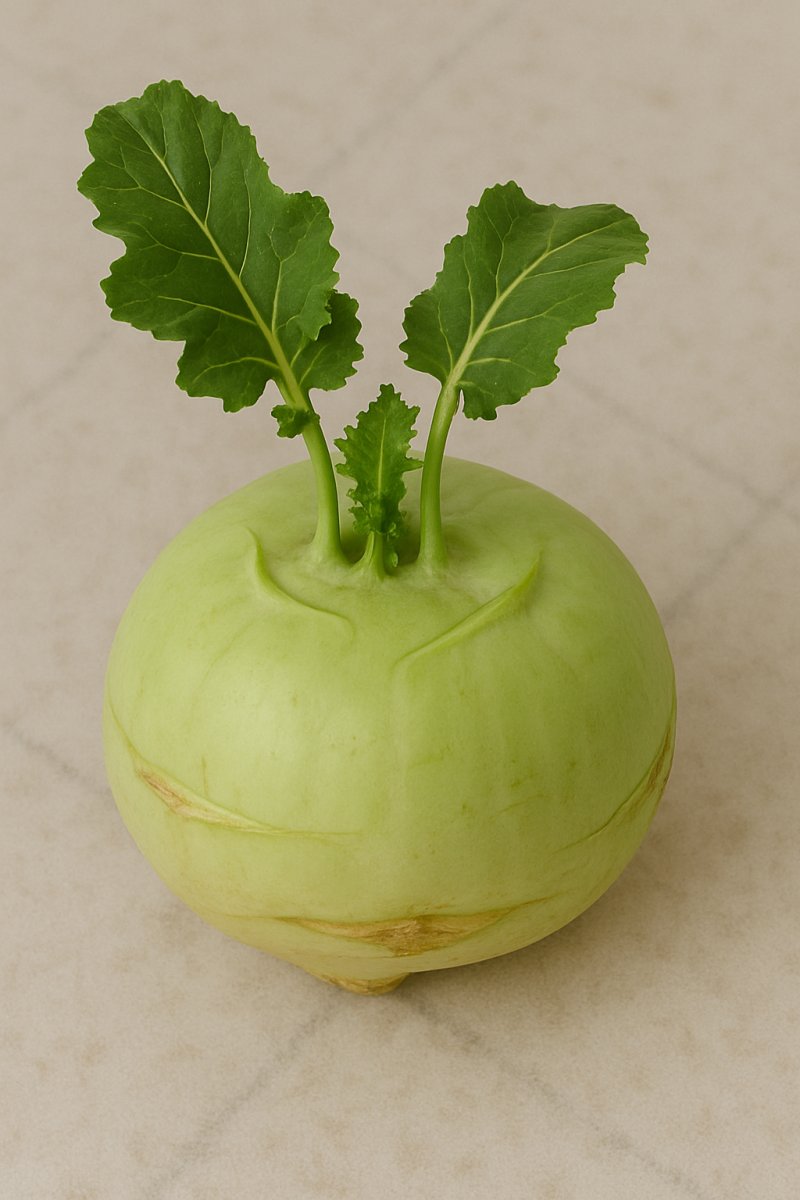
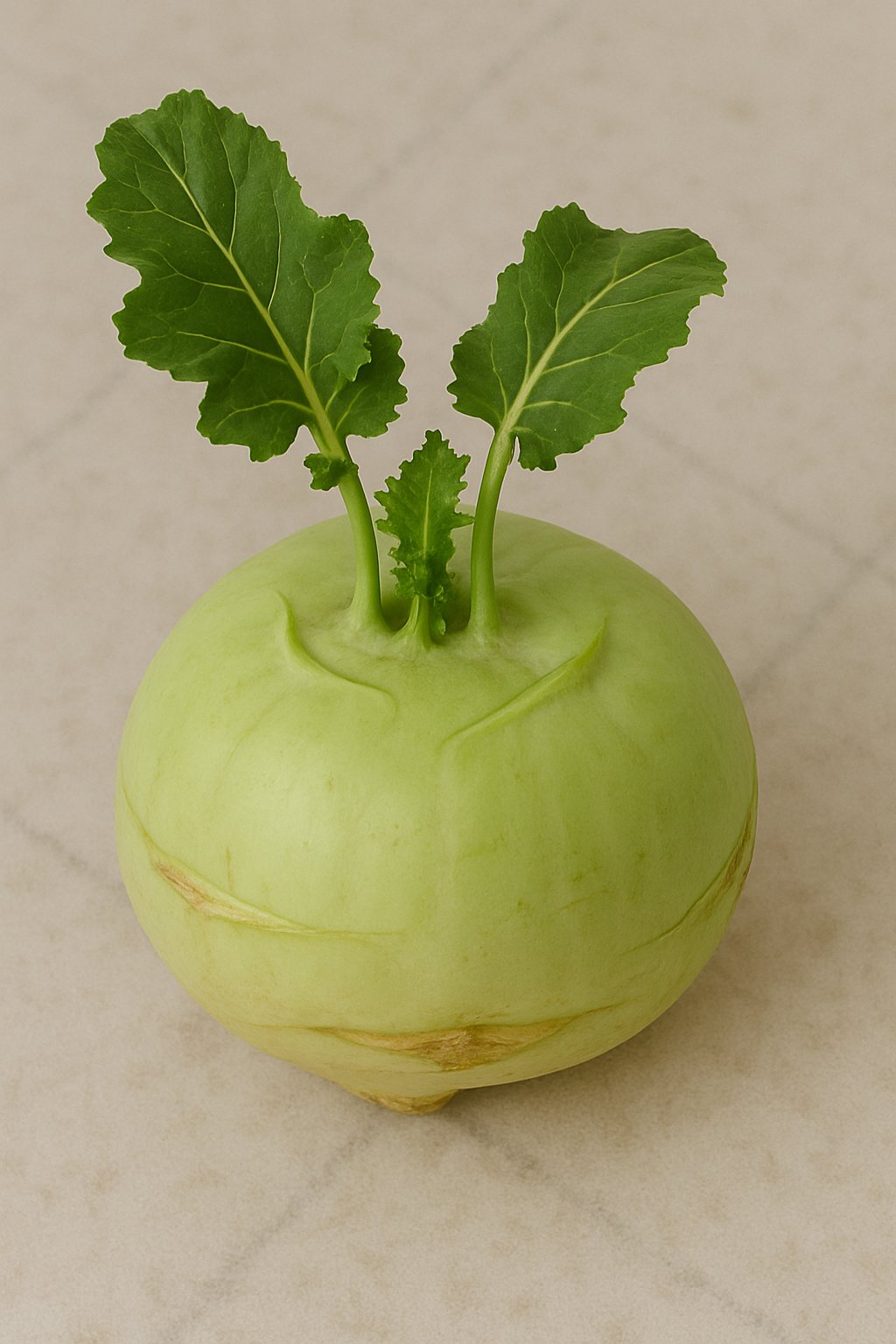
Fresh kohlrabi with leaves
Kohlrabi for me is more than just a vegetable variety – it is a small piece of European kitchen culture that was as naturally on the plate in my childhood as it is today in modern, creative recipes. As a 35-year-old editor who writes a lot about nutrition, regional ingredients and culinary trends, I keep encountering kohlrabi as a surprisingly versatile protagonist. It fits into simple everyday cooking as well as refined menus, with a lightness that few other vegetables convey so naturally.

Its appearance is striking: a round bulb, a thin skin in pale green or purple, juicy flesh that almost cracks when sliced. The taste is mildly sweet, with a hint of cabbage, but much more tender and fresh. I still remember the first time I cut it into sticks and tried it raw with a little lemon juice, salt and olive oil – a small revelation: crisp, cool and wonderfully uncomplicated. A colleague of mine swears by snacking on kohlrabi plain after sports because it is light, satiating and pleasantly refreshing.

In many European kitchens kohlrabi has a tradition. My grandmother used to prepare it classically in a light cream sauce, with nutmeg and a little parsley. A friend from northern Germany swears by kohlrabi as a vegetable side to meatballs, while acquaintances from Austria shave it into fine slices and briefly toss it in butter. From Poland I took away an anecdote: there kohlrabi is sometimes flavored with dill and served as a side to fish – a small detail that surprisingly affects the taste a lot.

What makes kohlrabi so popular? Besides its accessibility, it scores with impressive flexibility. Kohlrabi works raw, cooked, braised, baked, steamed or even grilled. It fits harmoniously into Asian-inspired stir-fries as well as Mediterranean salads or classic soups. And the leaves, often underestimated, are also edible: finely chopped they give pesto, vegetable pans or smoothies a green, savory note. A chef friend once told me he uses the leaves like spinach, briefly in the pan with garlic and a splash of lemon.

Availability & types

Availability and types of kohlrabi

Kohlrabi is a crunchy, mildly sweet vegetable from the large family of Brassicaceae (which also includes broccoli, cauliflower and cabbage). The edible bulb is actually a thickened stem that grows just above the soil. For children and adults kohlrabi is exciting because it can be nibbled raw like an apple, but it also tastes great cooked, fried or even grated. To help you better understand kohlrabi, here you will learn when it's available, where it comes from and which types exist.

Origin and cultivation

The origin of kohlrabi likely lies in northern Europe. People there used types of cabbage centuries ago from which new forms developed. Kohlrabi became especially popular in Germany, which is why it is sometimes even called "German cabbage".
Today it is cultivated in many European countries, but also in parts of North America and Asia. Because kohlrabi prefers cool temperatures, it grows especially well in spring and autumn. In greenhouses it can be cultivated almost year-round.

Availability throughout the year

You can buy kohlrabi in many supermarkets all year round. But there are differences as to when it tastes best:

  • Spring (March to May): first outdoor harvests. The bulbs are usually smaller, tender and particularly mild.
  • Summer (June to August): peak season. There is a wide selection, often lower prices, and quality is very good.
  • Autumn (September to November): still good outdoor produce; the bulbs can be somewhat larger and firmer.
  • Winter (December to February): mainly produce from protected cultivation (greenhouse) or imported. Kohlrabi is still available, but it can be a bit more expensive.
Tip: young kohlrabi with fresh green leaves is usually particularly tender. Pay attention
Details & nutrition

Property Value
Unit g
Average weight per piece 350
Calories per 100 27
Protein per 100 1.7
Carbohydrates per 100 6.2
Sugar per 100 2.6
Fat per 100 0.1
Saturated fat per 100 0.02
Monounsaturated fat 0.01
Polyunsaturated fat 0.04
Fiber per 100 3.0
Vitamin C (mg) per 100 62
Vitamin D (IU) per 100 0
Calcium (mg) per 100 48
Iron (mg) per 100 0.7
Nutri-Score A
CO₂ footprint 0.2 kg CO2e pro 100 g
Origin Grown regionally in Europe
Gluten-free Yes
Lactose-free Yes
Nut-free Yes
Vegan Yes
Note Cruciferous vegetable; tender in flavor, usable raw or cooked.

Technical & scientific information

Kohlrabi (Brassica oleracea var. gongylodes) is a cultivated form of vegetable cabbage and is characterized by an enlarged, above-ground stem bulb. Botanically the species belongs to the family Brassicaceae (mustards) and is closely related to broccoli, cauliflower, Brussels sprouts and cabbage. The bulb can be colored from light green to purple depending on the variety, while the flesh always remains light. Characteristic are tender, juicy cell structures that create a crisp texture and a mildly sweet, slightly nutty taste. In the kitchen both the bulb and the nutrient-rich leaves are used.

Botany and morphology: Kohlrabi forms a hypertrophic thickening of the stem caused by increased secondary thickening growth. The bulb consists mainly of parenchyma tissue with high water content and thin-walled cells that store soluble sugars, organic acids and secondary plant compounds. Leaves are arranged alternately, have long petioles and blades that vary by variety from wavy to smooth-edged. The root is relatively short and fibrous, which facilitates cultivation on various soils. With advanced development and long days kohlrabi can bolt, leading to woody tissues and sensory quality loss.

Nutrition and constituents: Kohlrabi is low in energy and rich in micronutrients. Per 100 g edible portion it typically provides 25–35 kcal, about 90–94% water and 1.5–2.0 g of fiber. It contains relevant amounts of vitamin C (approx. 50–65 mg/100 g), vitamin K, folate and potassium, calcium and magnesium. Characteristic is the presence of glucosinolates (e.g. sinigrin, glucobrassicin) and their breakdown products such as isothiocyanates, which contribute to the formation of the typical mild cabbage aroma. Additionally, phenolic compounds (e.g. ferulic acid, p-coumaric acid) and carotenoids are significant in the leaves. The combination of vitamin C, polyphenols and sulfur-containing compounds supports antioxidant capacities.

<

Wiki entry for: kohlrabi
Active now: 18 visitors of which 2 logged-in members in the last 5 minutes