Menu & categories

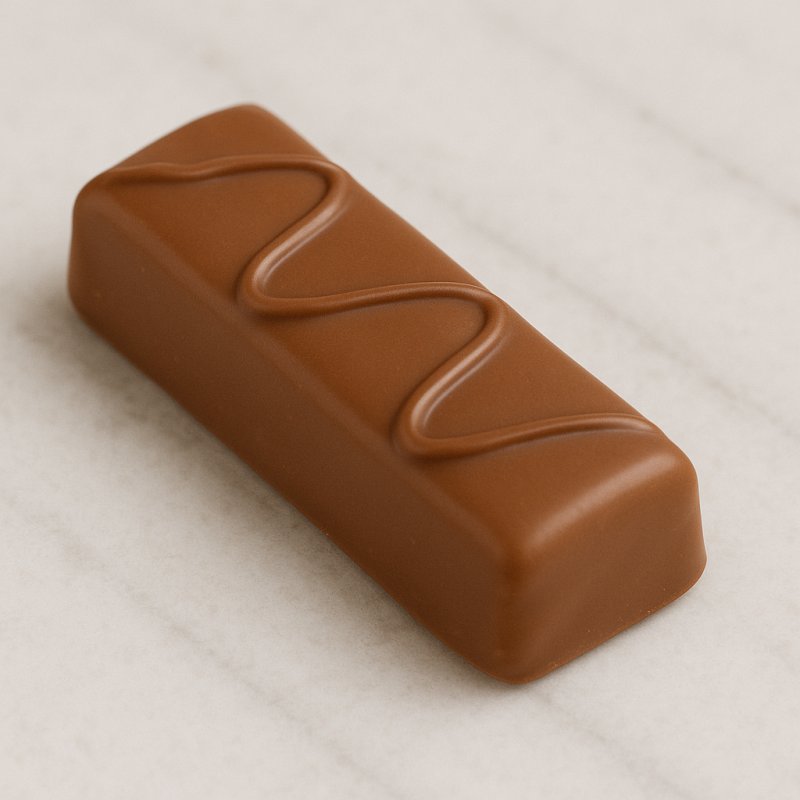
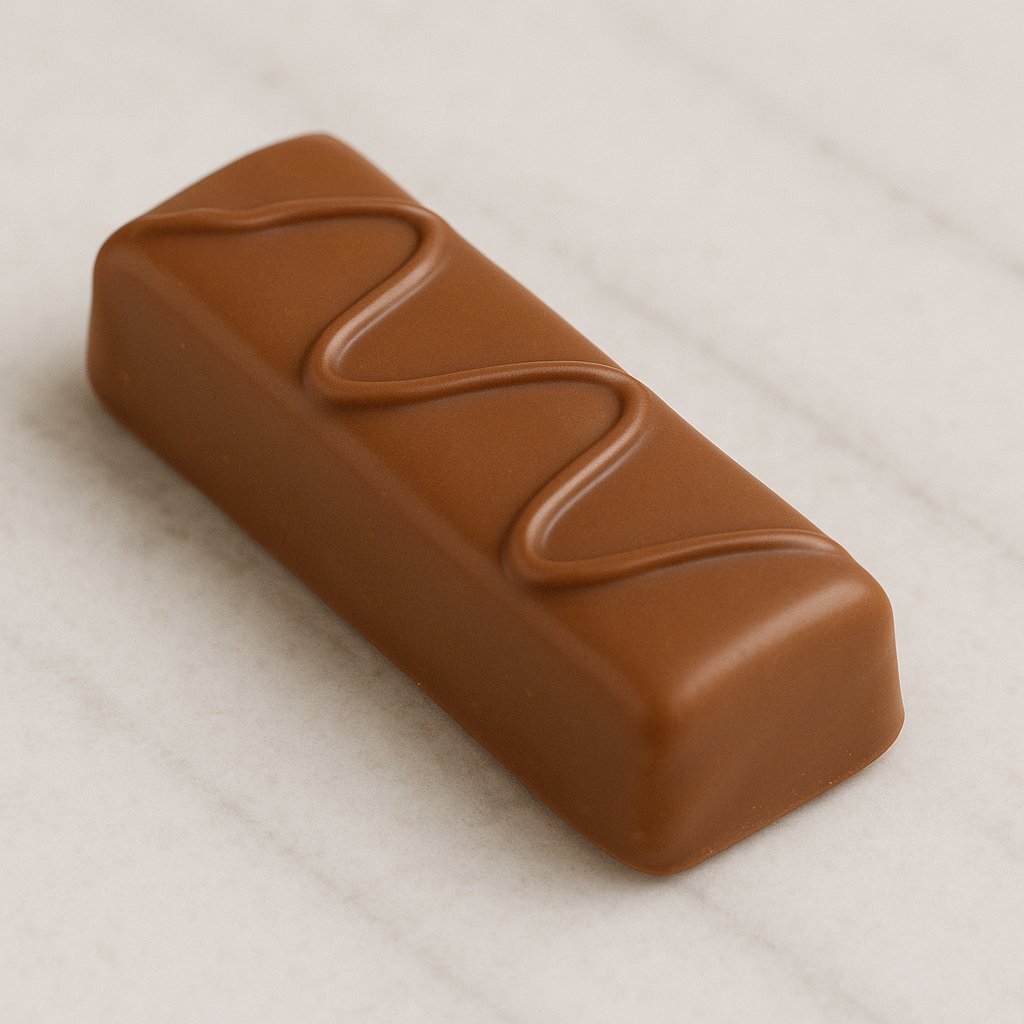
Kinder Schokolade

Milk chocolate bar with creamy milk filling

Wiki about Kinder Chocolate Nutri-Score E Vegan No Gluten-free Yes Lactose-free No Nut-free No
NUTRITION / 100 g
570 kcal 8.7 g Protein 53.5 g Kohlenhydrate 35.0 g Fett

Introduction

Kinder Schokolade bar with exposed creamy milk filling
I still remember exactly the smell that came from the schoolbag when a classmate secretly unwrapped a Kinder Schokolade: mild milk, a delicate cocoa aroma and a touch of nostalgia that immediately broke the quiet in the classroom. This small rectangular bar always seemed to hold the perfect balance between candy and indulgence. For me Kinder Schokolade is more than just chocolate; it is a little connecting piece of everyday life that evokes memories and enables small rituals.

The particular texture still fascinates me. Outside, the fine milk chocolate that melts on the tongue; inside, the light, creamy filling – a combination that feels surprisingly light despite being rich in flavor. Once I experimented with a friend and cut the bars into tiny cubes to sprinkle over warm pudding; the dessert instantly became grown-up without denying its playful origins. Such simple kitchen experiments show how versatile this chocolate can be.

A colleague of mine swears by eating a piece before a long meeting because for him it's a short, familiar moment of enjoyment that relieves stress. For many, portioning plays an important role: the individual, easily divisible pieces make it simple to enjoy consciously or share. In my family it was customary to snap the chocolate into two halves and pass one half along — a small ritual that says more than words.

Of course, a look at origin and production is also part of the story. The combination of milk and chocolate is aimed at those who seek a milder, creamier chocolate experience. For me personally it is the art of balance: not too dark, not too sweet, nostalgic enough to evoke memories, but modern enough to be incorporated into new recipe ideas.

In the end Kinder Schokolade remains a piece that creates small joys: as a break snack, as dessert upcycling, or as comfort on rainy afternoons. It is this ability to beautify the everyday that makes me smile again and again when I open the familiar wrapper and inhale the known scent.

Availability & types

Availability and types

Kinder Schokolade is a well-known sweet that can be bought in many countries. Although the name “Kinder” in German means “children,” the product is intended for all age groups. You can find it in supermarkets, small shops, petrol stations and often at tills in kiosks. It is usually placed in the confectionery aisle or with the chocolates. Some stores also display Kinder Schokolade in special shelves for brand products so it is easy to spot.

Origin
Kinder Schokolade originally comes from Europe. The brand belongs to a large chocolate manufacturer that produces its products in various countries. The main ingredients in the chocolate are cocoa, sugar, milk and sometimes hazelnuts. The cocoa — that which makes chocolate chocolatey — is not grown nearby. Cocoa grows in warm regions near the equator, for example in parts of Africa, South America and Asia. There the trees and the climate are just right.

Cocoa growing regions
Cocoa beans often come from countries such as:

  • West Africa (for example Côte d'Ivoire and Ghana) – these are large producers.
  • Latin America (for example Ecuador and Brazil) – cocoa has been grown there for a long time.
  • Asia (for example Indonesia) – a lot of cocoa is also cultivated here.
The farmers there harvest the cocoa beans, dry and process them before they are further processed in factories. You can imagine it like this: the farmers collect the beans like apples in a field, bring them to a factory, and from there they will eventually become the chocolate you buy.

Available varieties and variants
Kinder Schokolade comes in different shapes and flavors. Here are the most well-known variants so you can get an idea:

  • Klassische Kinder Schokolade – these are small bars with a soft milk filling in a thin chocolate shell. Many like them because they are not too sweet and are soft.
  • Kinder Bueno – this is a crunchy version with a creamy filling and often hazelnut flavor. It is somewhat crunchier than the classic variant.
  • Kinder Riegel – longer bars that can be shared in two or more pieces; practical for sharing with friends.
  • Kinder Überraschung – a chocolate egg variant that contains a small toy inside. This is not just about eating but also about the surprise.
  • Kinder Maxi – larger portions, for example as a piece for on the go.
Some variants are designed especially for certain age groups or come in different package sizes, for example small portions for the lunchbox or larger family packs. Manufacturers also sometimes try new varieties with different fillings or shapes, similar to ice cream flavors that can vary by season.

Where to find it and what to look for
If you want to buy Kinder Schokolade, check the sweets shelf in the supermarket or ask at the till. There are often promotional offers, for example when multiple packs are cheaper. If you want to know exactly where the ingredients come from or whether the chocolate was produced sustainably, you can look for labels or information on the packaging. These labels often explain whether production considered the environment or fair pay for farmers — it's like a small hint that says, “Certain things were taken into account here.”

In summary: Kinder Schokolade is easy to find in many shops, the main ingredients come from warm countries like West Africa or South America, and there are many variants — from classic bars to surprise eggs — so there is something for everyone.
Details & nutrition

Property Value
Unit g
Average weight per piece 12.5
Calories per 100 570
Protein per 100 8.7
Carbohydrates per 100 53.5
Sugar per 100 53.5
Fat per 100 35.0
Saturated fat per 100 23.0
Monounsaturated fat 9.0
Polyunsaturated fat 1.0
Fiber per 100 1.5
Vitamin C (mg) per 100 0
Vitamin D (IU) per 100 0
Calcium (mg) per 100 270
Iron (mg) per 100 1.5
Nutri-Score E
CO₂ footprint 4.5
Origin EU
Gluten-free Yes
Lactose-free No
Nut-free No
Vegan No
Note Nutritional values are based on typical figures for Kinder Schokolade; exact values may vary slightly depending on the recipe.

Technical & scientific information

Kinder Schokolade is a branded product of the confectionery manufacturer Ferrero and is regarded in this text as a specific ingredient. Chemically, the chocolate bar consists of several functional components: a fat phase (mainly cocoa butter and vegetable fats), a solid phase (cocoa solids, milk powder, sugar) as well as emulsifiers and flavoring or additive substances. The fat phase forms, at temperatures near and below the melting temperature, a continuous matrix that stabilizes the confectionery structure and provides the typical melting sensation in the mouth.

Composition and ingredients
The declaration-relevant components are usually: sugar (sucrose), skimmed milk powder or milk components, cocoa mass, cocoa butter, vegetable oils/fats (if used), emulsifiers such as soy lecithin and natural flavorings such as vanillin. Additionally, nutrients such as calcium from milk and protein (mainly whey and casein proteins) may be present. Microcomponents of the cocoa fractions provide polyphenolic compounds (e.g. flavanols) that have antioxidant properties, but these can be reduced in milk chocolate due to milk interactions and processing losses.

Nutrition (typical ranges)
The nutrient distribution of milk chocolate is generally similar: a high proportion of carbohydrates (predominantly sugars), followed by fat and a moderate protein content. Per 100 g, energy typically ranges between 500 and 550 kcal. Fat contents can be 30–35 g/100 g, with a significant portion of saturated fatty acids from cocoa butter. Carbohydrates are often 50–60 g/100 g, most of which are sugars. Protein contents from milk components are in the order of 6–8 g/100 g, and minerals like calcium are present in small but nutritionally relevant amounts.

Processing methods
Manufacturing involves several technical steps: roasting the cocoa beans (development of flavors through Maillard reactions and pyrolysis products), grinding to cocoa mass, pressing to obtain cocoa butter, mixing of dry components with fats, conching (extended stirring at controlled temperature) to homogenize and reduce volatile acids, and tempering to produce specific crystalline forms of cocoa butter (preferably form V). Tempering affects gloss, snap and melting behaviour. For milk chocolate, additional process controls are required to minimize moisture uptake of the milk components and to control the degree of fat dispersion.

Physicochemical properties
Essential physical parameters are the melting point range of the fat phase (cocoa butter melts at about 34–36 °C), water activity (low, to prevent microbial growth), fat crystal structure and particle size distribution of sugar and cocoa particles. Particle sizes affect texture and mouthfeel; typical target values lie in the range of 15–30 µm mean particle size. Emulsifiers reduce the interfacial tension between fat and solid phases and facilitate even distribution of the particles.

Health aspects
From a nutritional perspective, Kinder Schokolade mainly provides energy from sugars and fats. Consumption should be part of a balanced diet and consider daily caloric needs. The included milk provides proteins and calcium, while cocoa contains polyphenolic antioxidants whose positive effects are, however, diminished by processing level and the high sugar content. Allergens are primarily milk proteins and possibly soy (soy lecithin). People with lactose intolerance or milk protein allergy should heed the product labelling.

Storage and shelf life
Optimal storage conditions are cool (not below 12 °C, to avoid fat bloom from temperature shocks), dry and protected from light. Temperature fluctuations can cause fat or sugar bloom, which visually impairs quality but are not necessarily harmful to health. Microbiological stability is generally high due to low water activity and high sugar content.

Overall, Kinder Schokolade is a technologically optimized milk chocolate product with a composition that combines sweet taste, creamy texture and long shelf life. Chemically and physically, the fat matrix, particle sizes and crystal structure determine the sensory properties, while the nutritional effects are primarily shaped by the high proportion of sugars and fats. Consumers should check product labelling regarding ingredients and allergens to correctly assess individual dietary requirements and risks.

Wiki entry for: Kinder Chocolate
Active now: 12 visitors of which 2 logged-in members in the last 5 minutes