Origin and brief explanation
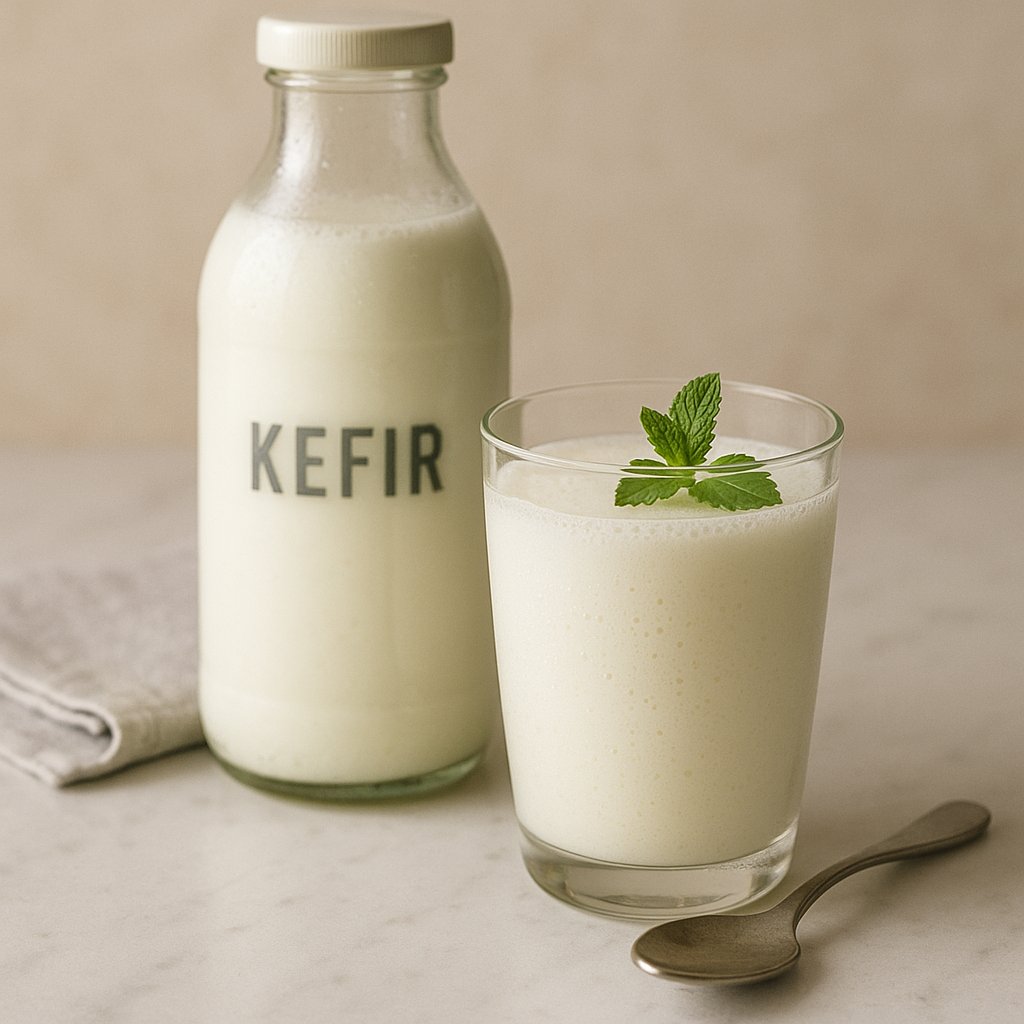
Kefir originally comes from the Caucasus, a mountainous region between Europe and Asia. There people discovered long ago that milk with small gel‑like beads, the so‑called kefir grains, would naturally become slightly sour and fizzy. This happens through a tiny “collaboration team” of yeasts and bacteria that convert the milk sugars into mild acids and carbon dioxide. You can think of it like sauerkraut: small helpers work there too, only using a different "raw material" than milk.
Kefir originally comes from the Caucasus, a mountainous region between Europe and Asia. There people discovered long ago that milk with small gel‑like beads, the so‑called kefir grains, would naturally become slightly sour and fizzy. This happens through a tiny “collaboration team” of yeasts and bacteria that convert the milk sugars into mild acids and carbon dioxide. You can think of it like sauerkraut: small helpers work there too, only using a different "raw material" than milk.
Where kefir comes from and is produced today
Today kefir is no longer found only in the mountains. It is produced worldwide because people in many countries enjoy its mild, slightly tart flavor. Major producing regions include countries in Europe, Russia, Turkey and many parts of Northern and Eastern Europe. But kefir can also be bought or made in North America, Australia and parts of Asia. The "production areas" are essentially dairies and small farms using cow, goat or sheep milk, as well as fermentation kitchens run by hobbyists.
Today kefir is no longer found only in the mountains. It is produced worldwide because people in many countries enjoy its mild, slightly tart flavor. Major producing regions include countries in Europe, Russia, Turkey and many parts of Northern and Eastern Europe. But kefir can also be bought or made in North America, Australia and parts of Asia. The "production areas" are essentially dairies and small farms using cow, goat or sheep milk, as well as fermentation kitchens run by hobbyists.
Common types and variants
Kefir exists in many forms. The most important and common are:
Kefir exists in many forms. The most important and common are:
- Milk kefir from cow's milk – this is the most widespread type. It tastes mild and is often slightly thick, like thin yogurt.
- Goat or sheep kefir – these varieties are a bit more flavorful or intense. Some people tolerate them better if they have issues with cow's milk.
- Water kefir – here the kefir grains are placed in sugar water, fruit juice or coconut water. The result is a fizzy, non‑dairy drink resembling lemonade.
- Flavoured or aromatized kefir – many producers add fruit, honey or vanilla to make it sweeter and more appealing to children.
- Fat levels – as with dairy products there are full‑fat, semi‑skimmed and low‑fat kefir options.
- Organic and artisanal kefir – organic kefir comes from animals raised in ecological systems; artisanal kefir often comes from small farms or producers and can taste different from industrial products.
- Kefir cheese or curd – if kefir is drained for longer, a thicker, spreadable mass forms, similar to fresh cheese.
Where to buy or obtain kefir
Kefir is available in supermarkets, organic shops, health food stores and sometimes at farmers' markets. Many small farms sell fresh kefir directly from the farm. You can also order kefir online — both ready drinks and starter cultures and kefir grains to make it at home. Water kefir is often found in specialty shops or health food stores.
Kefir is available in supermarkets, organic shops, health food stores and sometimes at farmers' markets. Many small farms sell fresh kefir directly from the farm. You can also order kefir online — both ready drinks and starter cultures and kefir grains to make it at home. Water kefir is often found in specialty shops or health food stores.
Practical tip
Fresh kefir is usually found in the refrigerated section and does not keep indefinitely. If you make it yourself, the grains can be reused repeatedly, almost like a "living recipe." That way you always get new kefir and the grains multiply over time.
Fresh kefir is usually found in the refrigerated section and does not keep indefinitely. If you make it yourself, the grains can be reused repeatedly, almost like a "living recipe." That way you always get new kefir and the grains multiply over time.
Overall there are many types of kefir — milk and water variants, different milk sources, flavored or plain products as well as artisanal and industrial versions. That makes kefir a flexible ingredient: you can drink it plain, mix it with fruit, use it as a yogurt substitute or in recipes for dressings and baked goods.