Availability and types of jelly
Jelly is a gel‑like ingredient many people use in cooking and baking. But where does jelly come from, and what kinds are there? Here I explain it as simply as possible.
Origin
Jelly is usually made from fruit juices or from specific gelling agents. Fruits such as apples, pears, grapes, strawberries or raspberries provide the juice. That juice is cooked and often combined with sugar to make a thick product – jelly. Some jellies are also made from seaweeds or animal gelling agents, for example:
Jelly is usually made from fruit juices or from specific gelling agents. Fruits such as apples, pears, grapes, strawberries or raspberries provide the juice. That juice is cooked and often combined with sugar to make a thick product – jelly. Some jellies are also made from seaweeds or animal gelling agents, for example:
- Pectin – a natural substance from apples or citrus fruits that helps thicken juice. You can think of pectin as an invisible 'glue' that holds the juice together.
- Gelatin – a gelling agent made from animal bones and skin. It causes liquids to set, similar to cold gelatin in a mould.
- Agar‑agar – a gelling agent from red seaweeds (marine plants). It works similarly to gelatin but is plant‑based.
Growing regions
The fruits used to make jelly grow wherever the climate is suitable. Some examples:
The fruits used to make jelly grow wherever the climate is suitable. Some examples:
- Apples and pears grow in Europe, North America and parts of Asia – in many countries where it is neither too hot nor too cold.
- Citrus fruits like oranges and lemons often come from warmer countries such as Spain, Italy or other Mediterranean areas, but also from regions like Florida or South Africa.
- Berries (strawberries, raspberries) are grown in cooler regions and in greenhouses – this can be in many European countries and in North America.
- Agar‑agar comes from seaweeds that are mainly harvested and processed in Asia, particularly Japan, China and Korea.
Available varieties and variants
Jelly comes in many different varieties. Here are the main ones so you know what to look for in the supermarket or make at home:
Jelly comes in many different varieties. Here are the main ones so you know what to look for in the supermarket or make at home:
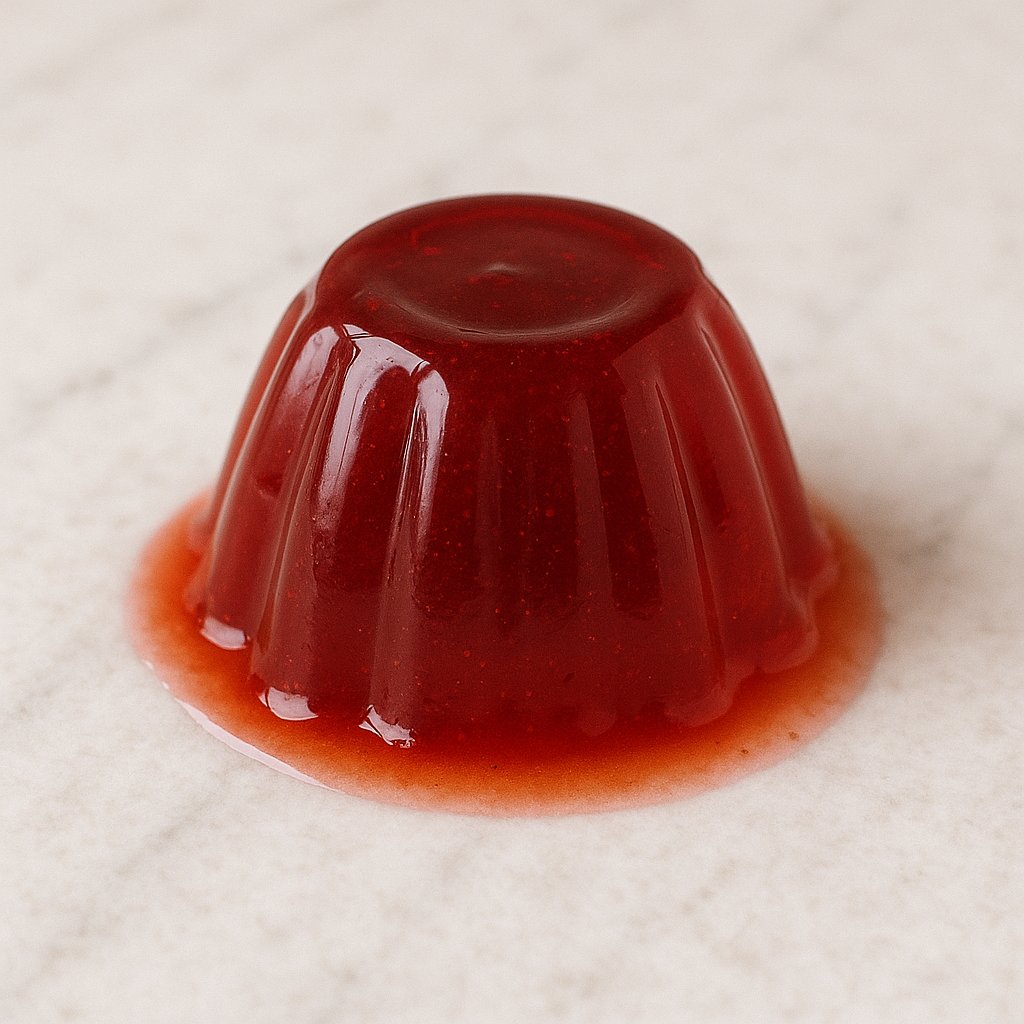
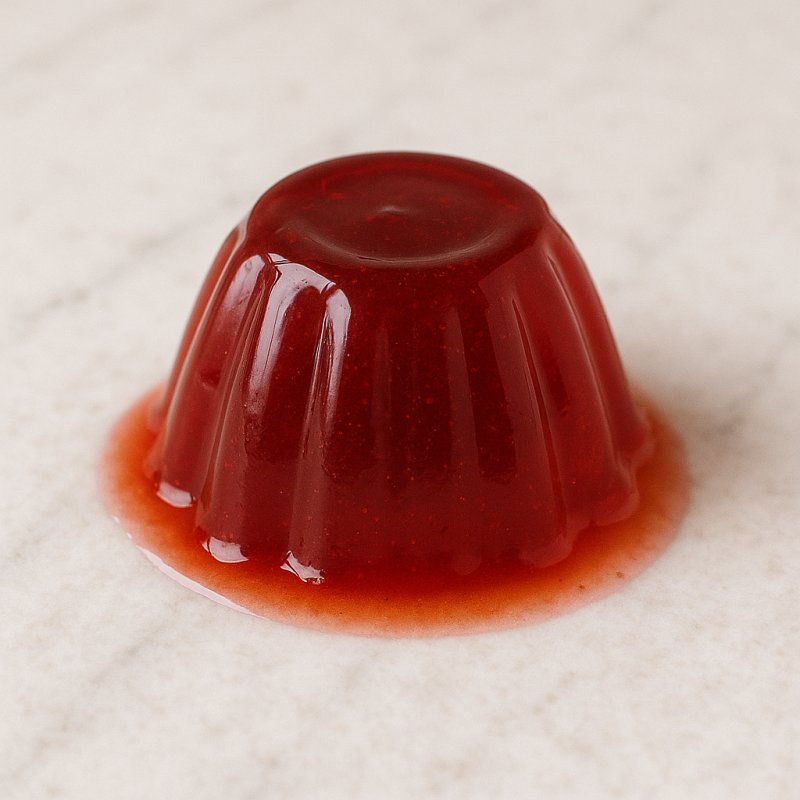
- Fruit jelly – made from pure fruit juice, e.g. apple jelly or currant jelly. It tastes of the respective fruit and is often clear.
- Jam vs. jelly – a short comparison: jam often contains small pieces of fruit or fruit pulp, whereas jelly is usually made only from clarified juice, so without pieces. Imagine: jam is like a pudding with small bits, jelly is like a clear, fruity wobble.
- Special jellies – there are also jellies with additives such as added vitamins, reduced sugar or special flavours. Some are intended for people who cannot eat sugar (sugar‑free variants).
- Plant‑based alternatives – jellies made with agar‑agar or other plant gelling agents are suitable for people who do not eat gelatin.
- Gelatin‑based jellies – often used for confectionery or desserts; they are softer and melt in the mouth.
Everyday availability
In supermarkets you can find jelly in jars or as ready products in various flavours almost everywhere. Homemade jelly is also popular: many people cook it at home from fresh fruit. If you're looking for something specific, such as an exotic fruit jelly or a vegan variant, you'll find it in well stocked stores or online.
In supermarkets you can find jelly in jars or as ready products in various flavours almost everywhere. Homemade jelly is also popular: many people cook it at home from fresh fruit. If you're looking for something specific, such as an exotic fruit jelly or a vegan variant, you'll find it in well stocked stores or online.
In summary: jelly can be made from many fruits and gelling agents, comes from various growing regions worldwide and is available in numerous varieties – from classic fruit jelly to special, sugar‑reduced or vegan variants. There is therefore something for every taste.