Menu & categories

Instant coffee powder

Quickly soluble coffee for easy preparation

Wiki about instant coffee Nutri-Score A Vegan Yes Gluten-free Yes Lactose-free Yes Nut-free Yes
NUTRITION / 100 g
360 kcal 12 g Protein 7 g Kohlenhydrate 0.5 g Fett

Introduction

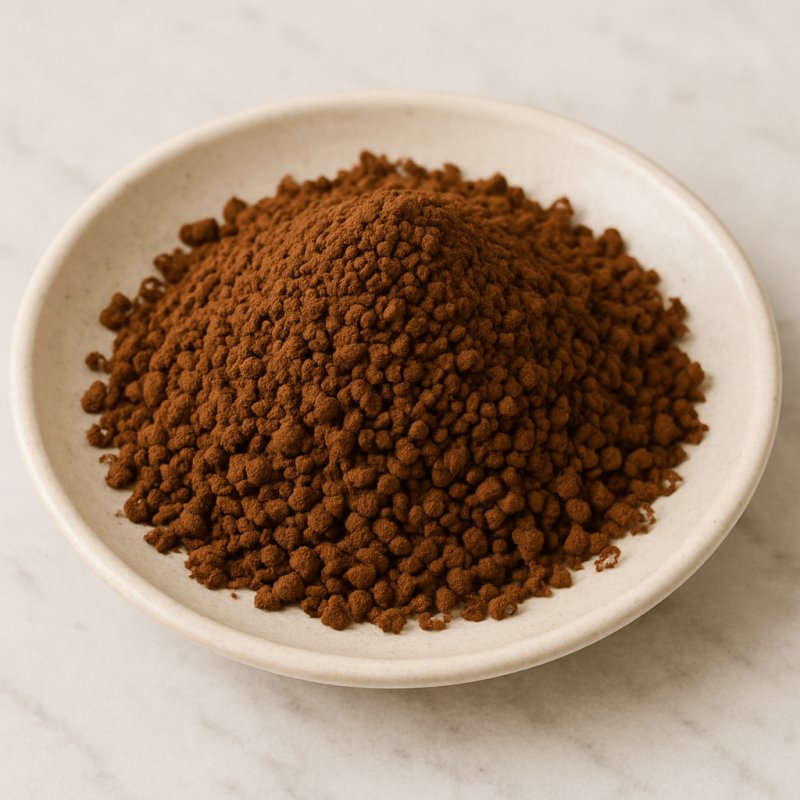
Brown instant coffee powder in a spoon
I have a secret relationship with instant coffee powder, which developed slowly over years and kitchens. I used to regard instant coffee as the practical, slightly embarrassing relative of freshly ground espresso, until a rainy trip and a small steaming cup of a simple blend from a street vendor taught me otherwise. Since then I no longer see instant powder only as a lifeline, but as a versatile ingredient with character and many uses.

What continually fascinates me about instant coffee is its sheer convenience. One spoon, hot water, done — it sounds trivial, but in moments when time or equipment are scarce, that simplicity is worth gold. I still remember a night when I sat late at the desk with friends, all exhausted from the day, and a tin of instant revolutionized the coffee drinker in me: we suddenly had energy for two more chapters and an improvised dessert.

In terms of taste, instant has a lot to offer if you know what to look for. Good brands balance roast aromas and bitterness finely; some products surprise with nutty, chocolatey or even fruity notes. I occasionally mix a little hot water with cream and a hint of vanilla — a small trick that makes the powder livelier and convinces even skeptical guests.

Instant coffee is practical not only for a quick cup but also as an ingredient:

  • For baking: a spoonful of instant enhances chocolate flavor in cakes.
  • In sauces: a touch of coffee gives stews depth.
  • For desserts: it fits wonderfully in creams, tiramisu or chocolate mousse.
Of course instant also has limits: it does not replace the complex freshness of a freshly brewed preparation, and quality varies widely. Still, I value its role in my pantry: reliable, flexible and often surprisingly aromatic. When I pack for a trip today, the small tin of instant coffee is always in my luggage — it's my unobtrusive but faithful companion.

Availability & types

Availability and types of coffee powder (instant)

Instant coffee, often simply called coffee powder, is a ready-made form of coffee that dissolves quickly. You only need to mix it with hot water, similar to soluble cocoa powder. This makes it very practical, for example when travelling, camping or in the morning when you're in a hurry.

Origin and growing regions
Coffee originally comes from countries with warm climates. Most of the beans for instant coffee come from regions like South America (for example Brazil), Africa (for example Ethiopia and Uganda) and parts of Asia (for example Vietnam and Indonesia). Imagine coffee like a fruit that grows on plants — these plants like rain, sun and nights that are not too cold. That's why they often grow in mountainous or tropical areas. Manufacturers buy the roasted beans from these countries and process them into instant coffee.

Available varieties and variants
Instant coffee comes in many different variants. Here are the main ones, explained simply:

  • Regular instant coffee: This is the standard version that simply dissolves. It usually tastes mild to strong and is what many people have at home.
  • Decaffeinated instant coffee: Here the caffeine has been removed. Caffeine is the substance that wakes you up. People choose decaffeinated coffee when they like the taste but don't want to be stimulated, for example in the evening.
  • Gourmet or specialty variants: Sometimes there are instant coffees with special aromas or made from certain beans (e.g. Arabica instead of Robusta). Arabica beans often taste milder and fruitier, Robusta is stronger and contains more caffeine. It's comparable to different apple varieties: some are sweet, others more tart.
  • Mixed with milk or flavors: There are mixes that already contain milk powder or flavors like vanilla or chocolate. This is convenient if you want a cappuccino-like instant drink quickly.
  • Organic and Fairtrade options: Some instant coffees are labeled Organic, meaning the plants were grown without chemical pesticides. Fairtrade means the coffee farmers receive a fair price. These labels help consumers choose more environmentally friendly or more equitable products.
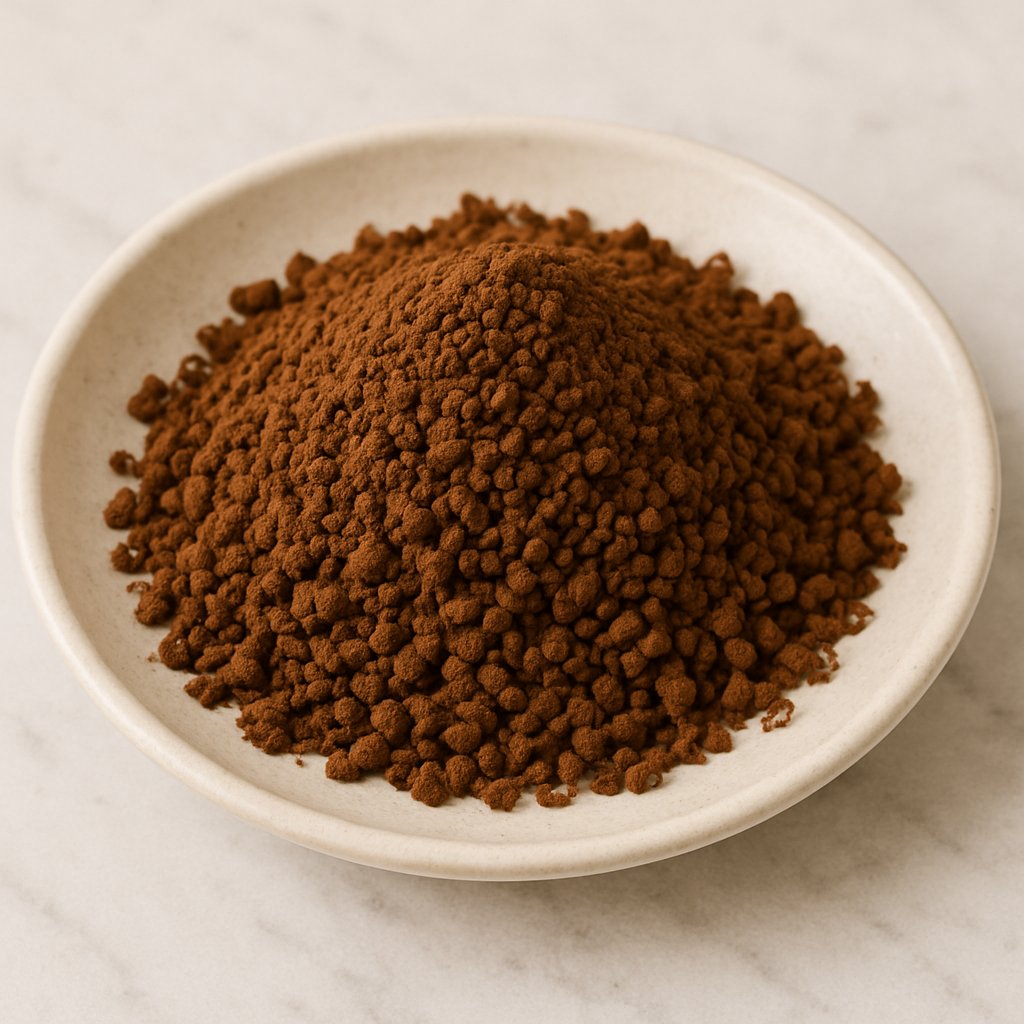
  • Granules vs. powder: Sometimes you'll see small granules and sometimes fine powder. Both dissolve in hot water, but granules are often more quickly soluble.
Availability in everyday life
Instant coffee is easy to find worldwide: in supermarkets, online or in small shops. It has a longer shelf life than freshly ground coffee because the water has already been removed. It's like dried fruit: it keeps longer because there is less water in it. Instant coffee is available in jars, tins or small portion sachets that are easy to store.

In summary: Instant coffee comes from coffee-growing regions around the globe, is offered in various types — from regular to decaffeinated, from organic to flavored — and is widespread because of its simple preparation and long shelf life. Whether you want a quick coffee in the morning or on a trip, instant coffee is a practical choice with many variants for different tastes.
Details & nutrition

Property Value
Unit g
Calories per 100 360
Protein per 100 12
Carbohydrates per 100 7
Sugar per 100 0.5
Fat per 100 0.5
Saturated fat per 100 0.2
Monounsaturated fat 0.1
Polyunsaturated fat 0.2
Fiber per 100 35
Vitamin C (mg) per 100 0
Vitamin D (IU) per 100 0
Calcium (mg) per 100 140
Iron (mg) per 100 5
Nutri-Score A
CO₂ footprint 12
Origin International, depending on bean origin and processing
Gluten-free Yes
Lactose-free Yes
Nut-free Yes
Vegan Yes
Note Nutritional values refer to pure, unsweetened instant coffee powder without additives; prepared beverage with water has significantly lower nutrient densities per 100 ml.

Technical & scientific information

Instant coffee powder denotes a dry, soluble coffee product produced by industrial processing of roasted coffee beans. It consists predominantly of organic compounds formed or released during roasting and extraction. The main constituents are carbohydrate-like polymers, proteins and amino acids, lipids in small amounts, and a variety of secondary plant compounds such as caffeine, chlorogenic acids, melanoidins and volatile aroma compounds.

Manufacturing processes

  • Roasting: green coffee is roasted at temperatures between 180 and 240 °C, during which Maillard reactions and pyrolysis generate new aroma compounds and brown color pigments (melanoidins).
  • Extraction: roasted, ground coffee is extracted with hot water to dissolve soluble components into an aqueous extract. Extraction parameters (temperature, pressure, water ratio) control the composition of the extract.
  • Concentration: the extract is concentrated by evaporation or prepared for freeze-drying (e.g. vacuum evaporation) into a syrupy mass.
  • Drying: there are two main methods: spray drying (atomizing the extract into hot air, resulting in fine powder or granules) and freeze-drying (lyophilization; the extract is frozen and dried under vacuum, better preserving aroma).
  • Agglomeration/packaging: powder can be agglomerated to improve solubility and then packaged, often with oxygen absorbers or in inert gas filling.
Chemical properties

Instant coffee is a complex mixture. The most studied alkaloid is caffeine (typically 1.0–3.5 %), a stimulant of the central nervous system. Chlorogenic acids and their derivatives (around 3–7 % in green beans, reduced by roasting) act as antioxidants, influence flavour and can have physiological effects. Melanoidins contribute color, body and antioxidant properties. Volatile compounds such as ketones, aldehydes and sulfides determine aroma and are better preserved by freeze-drying, which involves lower thermal load.

Nutritional values and composition

  • Calories: practically negligible per serving in common powdered products (without additions).
  • Macronutrients: very low content of proteins and lipids; soluble carbohydrates and polysaccharides make up the majority of the dry mass.
  • Minerals and trace elements: small amounts of potassium, magnesium and other minerals, depending on bean variety and processing.
Sensory quality and stability

Aroma and flavour are susceptible to significant losses from temperature, light, moisture and oxygen. The stability of volatile aroma compounds and the avoidance of off-flavours are central quality criteria. Freeze-drying typically yields a more intense aroma profile than spray drying, but is more costly.

Health aspects

Caffeine is the most studied active compound; moderate intake (about up to 400 mg/day for healthy adults) is considered safe and can increase alertness and performance. Sensitive individuals, pregnant people and children should limit consumption. Some studies point to possible health benefits such as reduced risk factors for type 2 diabetes or neurodegenerative diseases, partly attributed to chlorogenic acids and other bioactive components. On the other hand, high amounts of added acrylamides or burnt components in very dark-roasted products can be of concern; industrial controls, however, minimize such residues.

Application and quality assurance

Instant coffee is valued in gastronomy and households for its rapid preparation. Quality assurance includes sensory testing, determination of caffeine content, microbiological tests, moisture and particle size analysis, as well as legionella and mold controls in case of improper storage. Labelling obligations cover ingredients, allergens and, where applicable, additives.

In summary, instant coffee powder is a technologically produced, complex food whose composition and properties depend strongly on raw material choice, roast level and processing methods. Scientific analyses focus on chemical profiles, aroma compounds, caffeine content and possible health effects, while industrial practice optimizes stability and sensory quality.

Wiki entry for: instant coffee
Active now: 24 visitors of which 2 logged-in members in the last 5 minutes