Menu & categories

Sugar glaze

Sweet sugar glaze for pastries and cakes

Wiki about icing Nutri-Score E Vegan Yes Gluten-free Yes Lactose-free Yes Nut-free Yes
NUTRITION / 100 g
390 kcal 0.0 g Protein 98.0 g Kohlenhydrate 0.0 g Fett

Introduction

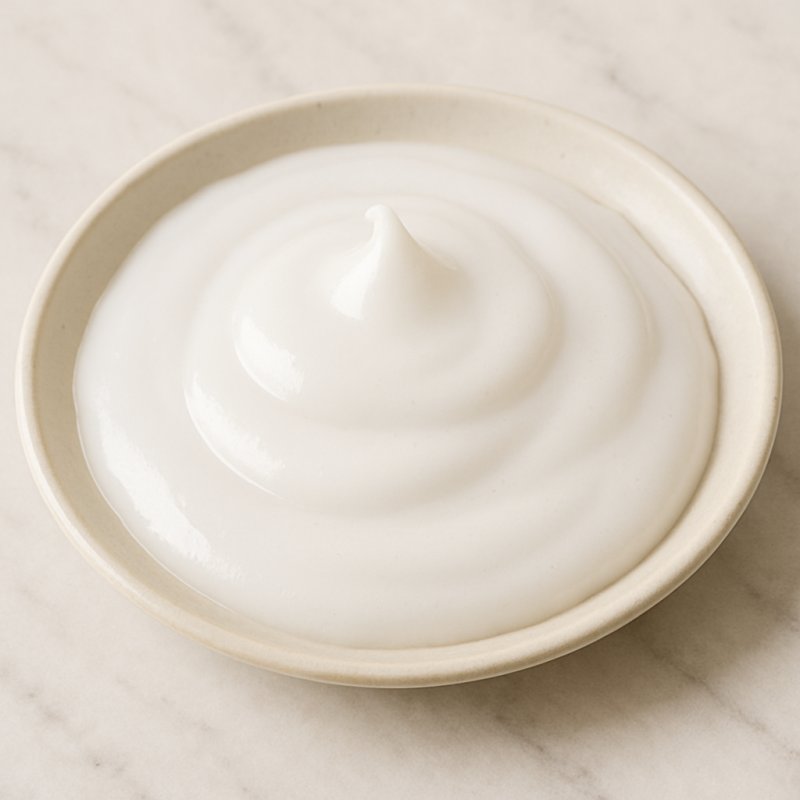
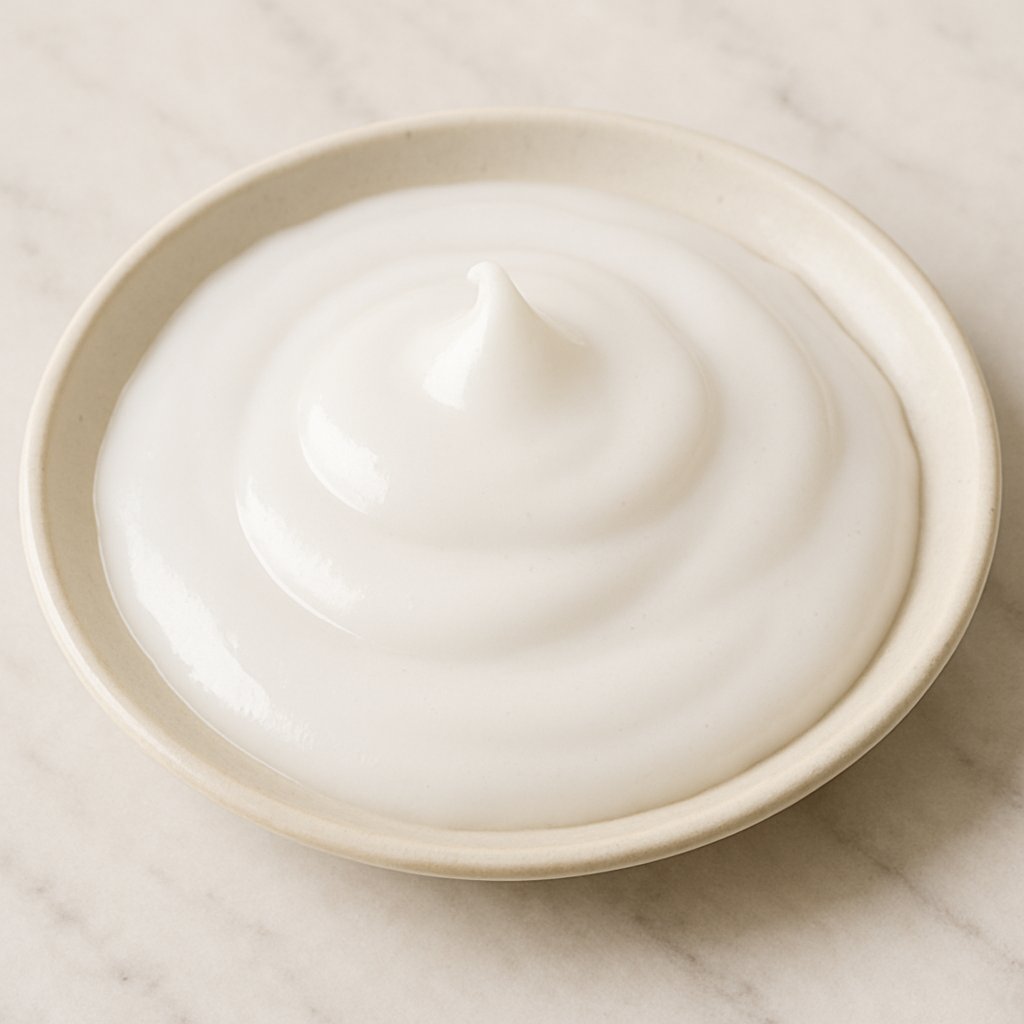
White sugar glaze on pastry
I still remember well my first encounter with icing: it was at a small Christmas market where an old peasant woman decorated tiny gingerbread cookies with shiny, delicate script and, smiling, said that icing was like handwriting for cookies. Since then this simple but magical ingredient has not left me. Icing combines the practical with the playful; it is the fine crust that completes a cake and at the same time the tiny canvas for creative ideas.

When I'm in my kitchen I think of three things that make good icing: the right consistency, the taste and the colour. Icing that is too runny runs off the cake, icing that is too stiff cracks when smoothed. That's why I like to mix powdered sugar with a little lemon juice or water until the mixture is silky and glossy and slowly spreads in the bowl. Sometimes I add a few drops of vanilla or a hint of rose water when I want something fragrant.

Practical variants I often use:

  • Royal Icing – ideal for fine decorations, made with egg white or egg white powder.
  • Powdered sugar glaze with lemon juice – quick, fresh and perfect for streusel cakes.
  • Chocolate glaze – for chocolate lovers, often refined with cream or butter.
A colleague once brought cupcakes whose icing shimmered in pastel tones; at the first bite everyone's eyes were on the shiny surface and the surprisingly intense flavour. Icing can therefore not only beautify but also carry and contrast flavour. It is suitable for holidays as well as for quick Sunday baking.

My last tip: patience is a virtue when glazing. Let layers dry in between, work with piping bags for precise lines and don't be afraid to try new flavours and colours. Icing is uncomplicated, forgiving and often the final, loving touch that makes a baked good truly special.

Availability & types

Availability and types

Icing is a sweet mixture used to decorate cakes, cookies or tarts. It is available almost everywhere: in the supermarket, at the baker's or online. You can buy it ready-made or prepare it yourself. Ready-made icing often comes in tubes, bags or small jars and is practical when you need to be quick. Homemade icing usually consists of powdered sugar and a little liquid such as water, lemon juice or milk.

Origin
The main ingredient of icing is sugar, more precisely powdered sugar. Powdered sugar is made from ordinary sugar that is ground very finely so that it looks like dust. Sugar itself usually comes from two plants: sugar beets and sugar cane. Sugar beets grow well in cooler regions such as Europe, North America and parts of Asia. Sugar cane grows in warm, tropical areas such as South America, Southeast Asia and parts of Africa. Where the sugar comes from can vary depending on the product, but for our icing the end result – fine, white powdered sugar – is usually the same.

Growing areas
- Sugar beets: mainly in countries such as Germany, France, the USA and Russia. They look like large, rounded roots that grow underground.
- Sugar cane: grows like tall grass in warm countries, for example Brazil, India, Thailand and many African countries.
Both plants are harvested and processed to produce raw sugar, which is later ground into powdered sugar. For someone who bakes, it is usually not important whether the sugar originally came from beets or cane.

Available types and variants
Icing comes in many different forms and colours. Here are the main ones:

  • Powdered sugar glaze (icing): The simplest glaze. You mix powdered sugar with a little water, lemon juice or milk until it is liquid but not too thin. It hardens and becomes glossy. Good for muffins or cookies.
  • Royal Icing: A very firm icing, often made from powdered sugar, egg white (or egg white substitute) and a little lemon juice. It dries hard and is ideal for delicate decorations such as gingerbread houses or detailed cookies.
  • Fondant: A pliable, rollable mass made from sugar, water and sometimes gelatin or fat. It is rolled out and laid over cakes to give a smooth surface. Ready-made fondant is available in many colours.
  • Buttercream-like icings: These also contain butter or margarine. They are creamy and remain soft, ideal for spreading on cakes. They are less hard than Royal Icing.
  • Chocolate glaze: Chocolate is melted with some cream or butter and used as a glaze. It is not overly sweet and pairs well with certain cakes.
  • Ready tubes and sprays: For quick decoration there are coloured tubes, spray cans or even liquid icing in bottles – practical for children or quick decorations.
Simple comparison
Imagine icing is like clothing for a cake: some icings are like a thin jacket (powdered sugar glaze), others like a hard armour (Royal Icing) and others like a soft coat (buttercream or fondant). Depending on how you want your cake to look or hold up, you choose the appropriate 'clothing'.

In summary: icing is easy to find and comes in many variants – from quick and simple to very fine and elaborate. Whether you buy it or make it yourself depends on how much time you have and how you want your cake to look in the end.
Details & nutrition

Property Value
Unit g
Calories per 100 390
Protein per 100 0.0
Carbohydrates per 100 98.0
Sugar per 100 98.0
Fat per 100 0.0
Saturated fat per 100 0.0
Monounsaturated fat 0.0
Polyunsaturated fat 0.0
Fiber per 100 0.0
Vitamin C (mg) per 100 0.0
Vitamin D (IU) per 100 0.0
Calcium (mg) per 100 1.0
Iron (mg) per 100 0.0
Nutri-Score E
CO₂ footprint 0.4
Origin Varies depending on the source of the sugar
Gluten-free Yes
Lactose-free Yes
Nut-free Yes
Vegan Yes
Note Icing is composed mainly of powdered sugar and a small amount of liquid (e.g., water or lemon juice). Nutritional values may vary slightly depending on the recipe.

Technical & scientific information

Icing is a sweet, spreadable or pipeable glaze composed mainly of crystalline sugar and a liquid component. Traditionally powdered sugar is mixed with water, lemon juice or milk to produce a pasty mass that forms a glossy, firm surface when dried. In food production and at home, icing is used for decoration, sealing baked goods and flavouring; its physical and chemical properties determine processing, shelf life and final structure.

Chemical composition and ingredients
The main component of icing is sucrose in a finely ground form (powdered sugar). Depending on the recipe, additional components used include:

  • Water or other liquids (milk, lemon juice, fruit juices), which act as solvents and control viscosity.
  • Fat-containing additives such as butter, margarine or vegetable oils for buttery icings (e.g. buttercream), which provide emulsifying properties and smoothness.
  • Egg white in the form of Royal Icing, which when dried crosslinks to a hard, porcelain-like surface.
  • Stabilisers and emulsifiers (e.g. lecithin) as well as thickeners (e.g. pectin, gelatin) in industrial variants.
  • Food colours, flavours and acids such as citric acid, which influence taste and appearance and can control crystallisation.
Physical properties and crystallisation
Icing is an oversaturated sugar system whose final structure depends on water content and drying conditions. At relatively high moisture the glaze remains soft and sticky, while lower water content leads to a brittle, firm crust. The crystallisation of sucrose is a critical process: slow drying promotes the formation of larger sugar crystals and thus a grainy texture, while rapid drying or the addition of inhibitors (e.g. glucose syrup, citric acid) favours fine-crystalline, smooth surfaces.

Manufacturing and processing methods
Simple home preparation consists of mixing powdered sugar with a liquid to the desired consistency. For piping and decoration work, viscosity is finely adjusted by adding or reducing liquid. Industrial processes use homogenisation, emulsification and temperature control to produce uniform products with stable texture. When egg white is used, the protein is denatured by mechanical action and after drying forms a crosslinked network that increases strength.

Nutrition and health aspects
Icing is calorie-dense and consists mainly of readily available carbohydrates; the energy content is typically about 380–400 kcal per 100 g, depending on fat and moisture content. Micronutrients are negligible, so consumption mainly contributes to energy intake. Health-relevant aspects include:

  • Increased consumption can contribute to tooth decay, as dissolved sugar is easily fermented by plaque bacteria.
  • In excess, sugar intake promotes weight gain and can increase the risk of metabolic diseases.
  • Allergens are mainly relevant in variants with egg white or dairy products; industrial additives may contain additional declarable substances.
Storage and shelf life
Icing is hygroscopic: it attracts moisture from the environment, which changes consistency and can promote microbial growth at high moisture levels. In dry packaging and cool conditions, dry icing remains more stable, while butter- or milk-containing variants should be stored refrigerated. Preservation is rarely done chemically in recipes; instead high sugar content and low water activity are used as protective mechanisms.

Applications and variants
Typical forms are simple sugar glaze (water + powdered sugar), Royal Icing (powdered sugar + egg white), fondant (cooked sugar with glucose syrup) and buttercream icings. Each variant offers specific functional properties: Royal Icing is suitable for fine decorations with a hard surface, fondant for smooth coverings and buttercream for creamy layers with flavour-bearing function.

Overall, icing is a technically simple but functionally versatile food whose properties can be controlled through composition, water content and processing. Knowledge of these influencing factors enables adaptation of texture, stability and appearance to specific requirements both in the kitchen and in industrial production.

Wiki entry for: icing
Active now: 6 visitors of which 2 logged-in members in the last 5 minutes