Menu & categories

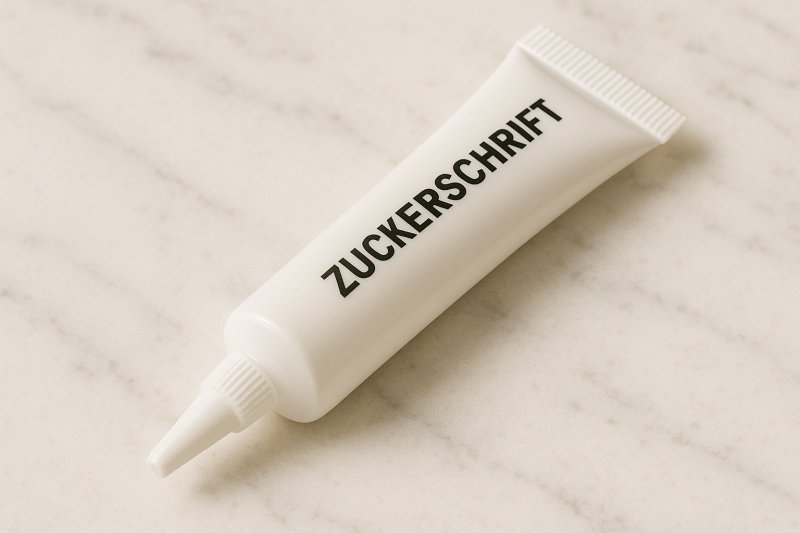
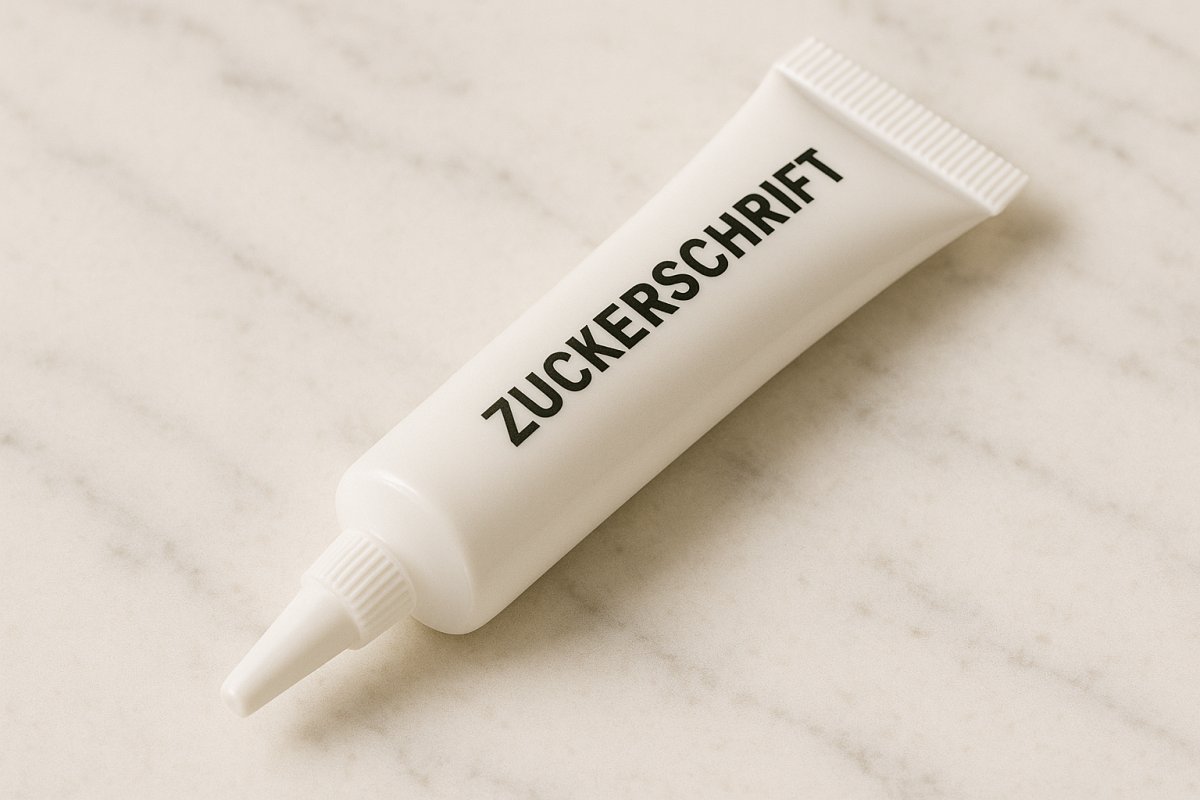
Sugar writing

Decorative confection for creative baking

Wiki about icing pen Nutri-Score E Vegan Yes Gluten-free Yes Lactose-free Yes Nut-free Yes
NUTRITION / 100 g
400 kcal 0.5 g Protein 99 g Kohlenhydrate 0 g Fett

Introduction

Sugar writing in various colors on a cake
I still remember the day I tried icing for the first time. It was one of those spontaneous ideas you get when you dream of a cake that not only tastes good but is also a real eye-catcher. My colleague at work, a passionate hobby baker, had told me about this magical ingredient that has the potential to turn even the simplest cake into a work of art. Icing, he said, is the key to beautiful decorations and adorned desserts.

The first challenge was finding the right consistency. I can still recall the chaotic attempts when I mixed the icing. At first it was far too runny and ran down my hands. Then came the moment when I had made it too stiff and it seemed like I was trying to decorate a baking brick. But I didn't give up! After a few more tries and a small amount of patience, I finally reached the perfect, velvety texture – a truly magical experience.

What I especially love about icing are the endless possibilities. This ingredient can be used in so many different shapes and colors. I remember a birthday party where I used icing in bright pink and blue to create small flowers and butterflies. The excitement in the children's eyes was priceless. It's amazing how something as simple as icing can spark joy and creativity in the kitchen.

Here are some of my favorite tips for using icing:

  • Make it colorful: Experiment with different food colorings to give your icing the perfect shade.
  • Shapes and patterns: Use piping bags with different nozzles to pipe the icing in various shapes. From fine lines to thick drops – the possibilities are endless.
  • Different textures: You can apply the icing smooth or textured, depending on the finish you want to achieve.
At the end of the day, icing is not just an ingredient but an expression of creativity and joy in baking. It turns any cake into a little masterpiece and brings people together. Whether for a festive occasion or just for fun – icing is my secret weapon to make life a little sweeter. And I can't wait to try my next creations!

Availability & types

Icing is a sweet and colorful ingredient often used to decorate cakes, cookies and other treats. But where does it actually come from and what types are there? Let's take a look together!

The origin of icing is quite simple: it is made from sugar. Sugar is obtained from sugar beets or sugarcane. These plants grow in warm, sunny regions of the world. Major cultivation areas include:

  • Brazil: a lot of sugarcane is grown here.
  • France: sugar beets are very common in this country.
  • USA: there are also large sugar plantations here, especially in the states of Louisiana and Florida.
After the plants are harvested, the sugar is extracted from them, processed and turned into various products, such as icing.

There are different kinds and variations of icing that differ in color, consistency and application. Here are some of the best-known types:

  • White icing: this is the simplest form of icing. It is made from powdered sugar and water or lemon juice. White icing is perfect for simple decorations and is often used for cookies.
  • Colored icing: this is white icing with food coloring added. With it you can decorate your treats in any color, from bright red to vivid blue!
  • Royal Icing: this icing is a bit firmer and is often used for decorating cakes and cookies. It consists of powdered sugar and egg white or an egg replacer. Royal Icing holds its shape well and is excellent for delicate decorations.
  • Chocolate icing: this type is made by incorporating cocoa powder or melted chocolate into the sugar mixture. This gives the icing a chocolatey taste and a brown color.
The availability of icing has increased in recent years. You can find it in most supermarkets, often in the baking aisle. There are also special sets with different colors and shapes. If you want to be creative, you can even make icing yourself! It's quite simple and fun to try your own colors and flavors.

In summary, icing is a versatile and tasty ingredient made from sugar and available in many different forms. Whether you want to decorate a festive cake or just spruce up some cookies, icing is always a great choice. Let your imagination run wild and create colorful works of art on your treats!
Details & nutrition

Property Value
Unit g
Calories per 100 400
Protein per 100 0.5
Carbohydrates per 100 99
Sugar per 100 90
Fat per 100 0
Saturated fat per 100 0
Monounsaturated fat 0
Polyunsaturated fat 0
Fiber per 100 0
Vitamin C (mg) per 100 0
Vitamin D (IU) per 100 0
Calcium (mg) per 100 0
Iron (mg) per 100 0
Nutri-Score E
CO₂ footprint 0.5
Origin EU
Gluten-free Yes
Lactose-free Yes
Nut-free Yes
Vegan Yes
Note Ideal for decorating cakes and cookies.

Technical & scientific information

Icing is a decorative element used in baking to adorn cakes, pastries and other sweets. It is made mainly from sugar, which is processed in various forms and colors to create aesthetic accents. Icing can be used for simple decorations as well as for complex designs that significantly enhance the appearance of baked goods.

Chemical composition

The main component of icing is sucrose, a disaccharide composed of glucose and fructose. Icing is typically made from powdered (confectioners') sugar, which is finer than granulated sugar. To achieve the desired consistency, liquids such as water, lemon juice or milk are also added during preparation. These ingredients help dissolve the sugar crystals and form a pasty substance that can be easily applied.

In some recipes food colorings are added to give icing different colors. These colorings are usually water-based or fat-soluble and can be natural or synthetic dyes.

Processing methods

Production of icing takes place in several steps:

  • Mixing: powdered sugar is mixed with a liquid to achieve the desired consistency. The amount of liquid can vary depending on whether a thicker or thinner icing is desired.
  • Coloring: if desired, food colorings are added and stirred in thoroughly until the color is evenly distributed.
  • Application: icing can be applied with a piping bag, a brush or a spatula to baked goods. The technique depends on the decoration desired.
Health aspects

Although icing is visually appealing, consumption should be moderate because it mainly consists of sugar. Excessive sugar intake can lead to health problems such as overweight, diabetes and dental problems. It is also important to pay attention to the food colorings used, as some artificial dyes can cause allergies or intolerances in sensitive individuals.

Overall, icing does not provide significant nutrients, but it can be enjoyed in small amounts as part of a balanced diet. The pleasure of decoration and the visual impact of food can increase satisfaction when eating.

Summary

Icing is a versatile ingredient in baking that allows sweets to be decorated attractively. Its chemical composition consists mainly of sugar and it can be adjusted by adding liquids and food colorings. Production involves simple steps that make it possible to create creative designs. Despite health concerns associated with excessive sugar consumption, icing remains a popular and valued element.

Wiki entry for: icing pen
Active now: 24 visitors of which 2 logged-in members in the last 5 minutes