Menu & categories

Horseradish

Pungent root with essential mustard oils – classic with meat, fish and vegetables.

Wiki about horseradish Nutri-Score A Vegan Yes Gluten-free Yes Lactose-free Yes Nut-free Yes
NUTRITION / 100 g
48 kcal 1.2 g Protein 11.3 g Kohlenhydrate 0.7 g Fett

Introduction

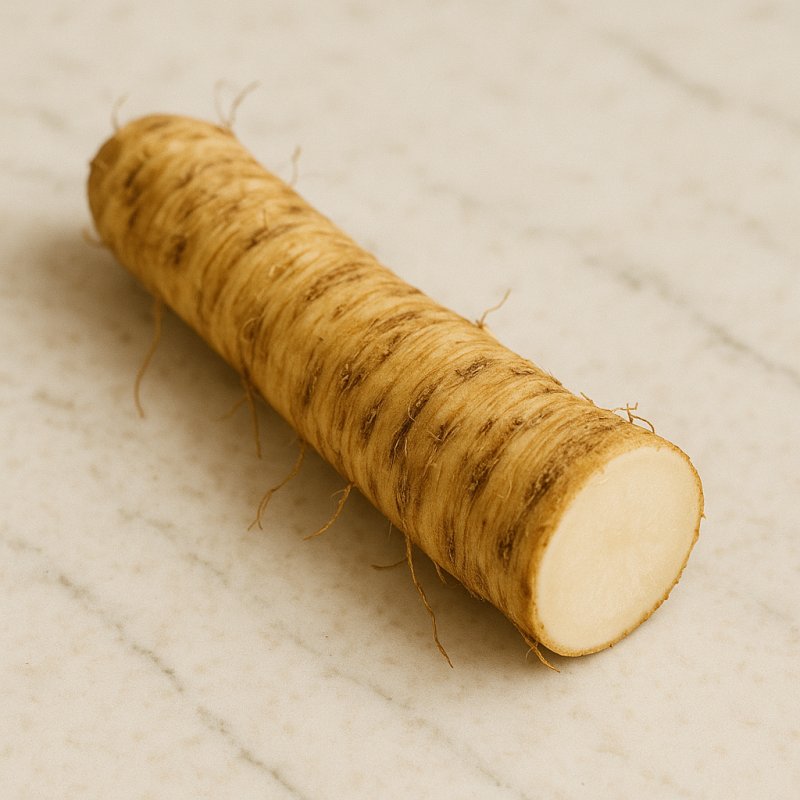
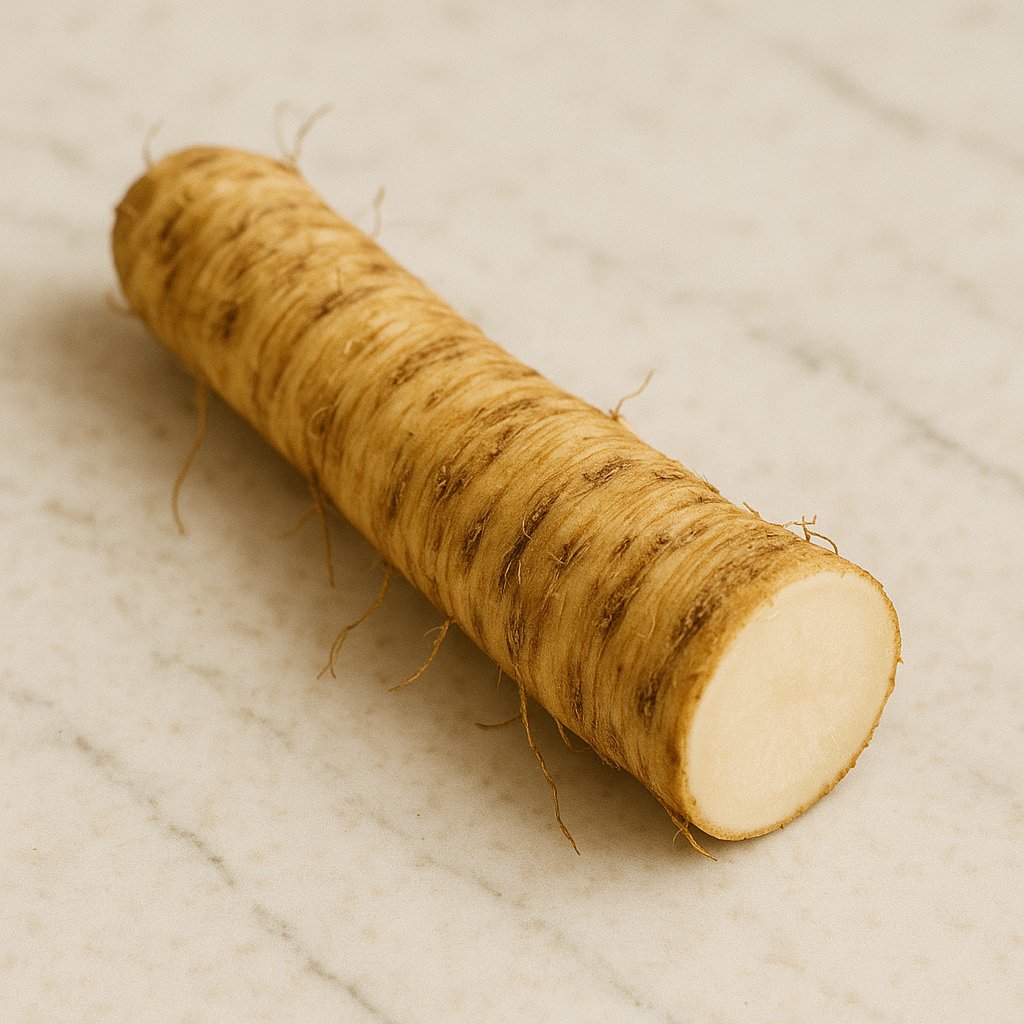
Image of fresh horseradish
I have a soft spot for ingredients that tell stories at first breath, and Kren is one of them. The first time I tried a freshly grated portion it was like a small fireworks display. I still remember how a familiar taste woke up my face, while laughter broke out around me because I suddenly burst into tears. That mix of heat, sharpness and a surprising freshness never let go of me.

Kren is the root that has a tradition in many Central European cuisines and is known as horseradish. Freshly grated, it unfolds its full power through enzymatic reactions that release the typical, pungent aroma. Cooked Kren, on the other hand, becomes milder and subtly rounds off dishes. At family gatherings I often see it served alongside roasted meat, with Tafelspitz or with smoked fish; it always brings clarity to the plate.

I'm a fan of simple kitchen tricks, and with Kren I've discovered a few favorites. A colleague swears by mixing freshly grated Kren with a splash of apple cider vinegar so the heat lasts longer. I personally freeze small portions in ice cube trays so I always have a supply for spontaneous dishes.

  • Verwendung: With beef, smoked salmon, remoulade or in sandwiches.
  • Haltbarkeit: Store the whole root cool and moist; preserve grated Kren with vinegar.
  • Zubereitung: Grate finely, deglaze with lemon or vinegar, use immediately.
Apart from the taste, I like that Kren has so much personality: it is not a loud trend, but a faithful companion on the plate. It should be treated with respect, because a small amount can achieve great things. When I have guests, I like to explain how it works and enjoy their surprised faces when a plain piece of fish or a roast suddenly gains a new, lively note.

Availability & types

Availability and types

Kren is the German-language name for what many know as horseradish: a sharp root that releases that pungent smell and taste when grated. The plant originally comes from Europe and parts of Western Asia. Today it is grown in many countries because people love the spicy flavour in sauces, with meat or as a side.

Growing regions
Kren prefers cooler climates and well-drained soil. Typical growing regions therefore include:

  • Central Europe: Countries such as Austria, Germany, Poland and Hungary. In some regions Kren is almost part of the food culture, especially in southern Germany and Austria.
  • Great Britain and Ireland: Horseradish has long been seen in gardens and fields there as well.
  • North America: In the USA and Canada Kren is grown commercially, particularly in areas with a temperate climate.
  • Home gardens: Many people plant Kren at home too. It is hardy and does well in a garden bed.
Available varieties and forms
When you buy Kren you will find it in different forms. These are important because they affect flavour and heat:

  • Fresh root: The whole raw root looks like a pale, thick carrot or turnip. Freshly grated Kren is the strongest and smells very pungent. It is often grated shortly before eating because it tastes most intense then.
  • Grated Kren in a jar: This is the variant pickled or preserved in vinegar. It is milder than freshly grated Kren and therefore very popular in supermarkets. Good with meat or in sauces.
  • Kren cream or sauce: Here the sharp Kren is usually mixed with sour cream, yogurt or mayonnaise. That makes it creamy and milder, like a dip for fish or roast beef.
  • Dried or powdered Kren: The powder is convenient for seasoning but generally tastes less fresh. A bit like dried herbs – longer lasting but weaker.
  • Pickled or preserved Kren: Sometimes Kren is pickled together with other vegetables. This alters the flavour and extends shelf life.
Special features and tips
The heat of Kren depends on the age of the root: young roots are often milder, older ones stronger. Fresh Kren burns in the nose similarly to onions or pungent horseradish oil – this is normal. A common mistake is confusing it with wasabi: many restaurants use coloured horseradish instead of real wasabi. Real wasabi grows in Japan and is more expensive and rarer.

Availability through the year
Fresh roots are particularly available in autumn and winter. In jars or as a sauce, Kren is available year-round in supermarkets. If you want the fresh flavour, you can also freeze grated Kren – this preserves the aroma for a long time.

In short: Kren is available fresh, grated, as a cream, dried or pickled. It is mainly grown in Central Europe, but also in many other countries. Which variant you choose depends on how hot or mild you want it and what you intend to use it for.
Details & nutrition

Property Value
Unit g
Calories per 100 48
Protein per 100 1.2
Carbohydrates per 100 11.3
Sugar per 100 8.0
Fat per 100 0.7
Saturated fat per 100 0.1
Monounsaturated fat 0.1
Polyunsaturated fat 0.4
Fiber per 100 3.3
Vitamin C (mg) per 100 114
Vitamin D (IU) per 100 0
Calcium (mg) per 100 56
Iron (mg) per 100 0.4
Nutri-Score A
CO₂ footprint 0.3 kg CO2e/kg
Origin Europe (commonly Germany/Austria)
Gluten-free Yes
Lactose-free Yes
Nut-free Yes
Vegan Yes
Note Freshly grated is especially pungent; the heat decreases quickly after grating. Can irritate mucous membranes in sensitive individuals.

Technical & scientific information


Kren (botanical: Armoracia rusticana) is a perennial species of the Brassicaceae family whose root is used as a pungent spice and traditional medicinal plant. The characteristic pungency is not caused by capsaicin but by volatile sulfur compounds that are produced only after cell damage. Kren is offered both freshly grated and as a preserved preparation (e.g. with vinegar) and has a long history of use in European cuisine and folk medicine.

Chemical composition and active compounds

  • The main precursors are glucosinolates, particularly the glucosinolate Sinigrin. Upon tissue damage, the enzyme myrosinase hydrolyses glucosinolates.
  • The product of this hydrolysis is primarily allyl isothiocyanate (AITC), a volatile compound responsible for the intense, shimmering heat and the irritating aroma.
  • In addition, Kren contains other secondary plant compounds such as phenols, relatively small amounts of essential oils, and typical root constituents like carbohydrates, fiber and organic acids.
Nutritional profile

Kren is low in calories and consists mostly of water and carbohydrates; it also contains fiber, small amounts of protein and fat, vitamins (notably vitamin C) and minerals such as potassium, calcium and magnesium. Exact nutrient values vary with variety, cultivation and processing; freshly grated Kren typically provides only a few dozen kilocalories per 100 g.

Sensory and physical properties

The pungency of Kren primarily affects the mucous membranes of the nose and throat and is mediated by the trigeminal nerve. Unlike capsaicin, allyl isothiocyanate is highly volatile and evaporates relatively quickly, which is why freshly grated Kren has a more intense, short-lived pungent effect.

Processing and storage

  • Fresh grating activates myrosinase; to mellow the heat Kren can be briefly heated, which inactivates the enzyme and prevents the formation of AITC.
  • Industrial products are often acidified with vinegar, which acts both as a preservative and modulates the formation of volatile isothiocyanates. Freeze-drying and deep-freezing affect aroma and activity differently, as cell structures are disrupted and volatile compounds are released.
  • For analytical investigations, isothiocyanates and glucosinolates are usually quantified by GC-MS or HPLC.
Health aspects

Isothiocyanates from cruciferous plants are studied in laboratory research for antimicrobial, inflammation-modulating and potentially cancer-preventive properties. However, human evidence is limited and claims about therapeutic effects are preliminary. In sensitive individuals, the irritating vapors can cause tearing, coughing or gastrointestinal irritation. In very large amounts, glucosinolates can affect iodine uptake; therefore caution is advised in existing thyroid conditions.

In summary, Kren is a chemically interesting ingredient whose characteristic pungency is due to enzymatically formed isothiocyanates. The nutritional contributions are moderate, while the sensory and potentially bioactive properties remain relevant for both culinary and scientific considerations.

Wiki entry for: horseradish
Active now: 17 visitors of which 2 logged-in members in the last 5 minutes