Availability and types
Kren is the German-language name for what many know as horseradish: a sharp root that releases that pungent smell and taste when grated. The plant originally comes from Europe and parts of Western Asia. Today it is grown in many countries because people love the spicy flavour in sauces, with meat or as a side.
Growing regions
Kren prefers cooler climates and well-drained soil. Typical growing regions therefore include:
Kren prefers cooler climates and well-drained soil. Typical growing regions therefore include:
- Central Europe: Countries such as Austria, Germany, Poland and Hungary. In some regions Kren is almost part of the food culture, especially in southern Germany and Austria.
- Great Britain and Ireland: Horseradish has long been seen in gardens and fields there as well.
- North America: In the USA and Canada Kren is grown commercially, particularly in areas with a temperate climate.
- Home gardens: Many people plant Kren at home too. It is hardy and does well in a garden bed.
Available varieties and forms
When you buy Kren you will find it in different forms. These are important because they affect flavour and heat:
When you buy Kren you will find it in different forms. These are important because they affect flavour and heat:
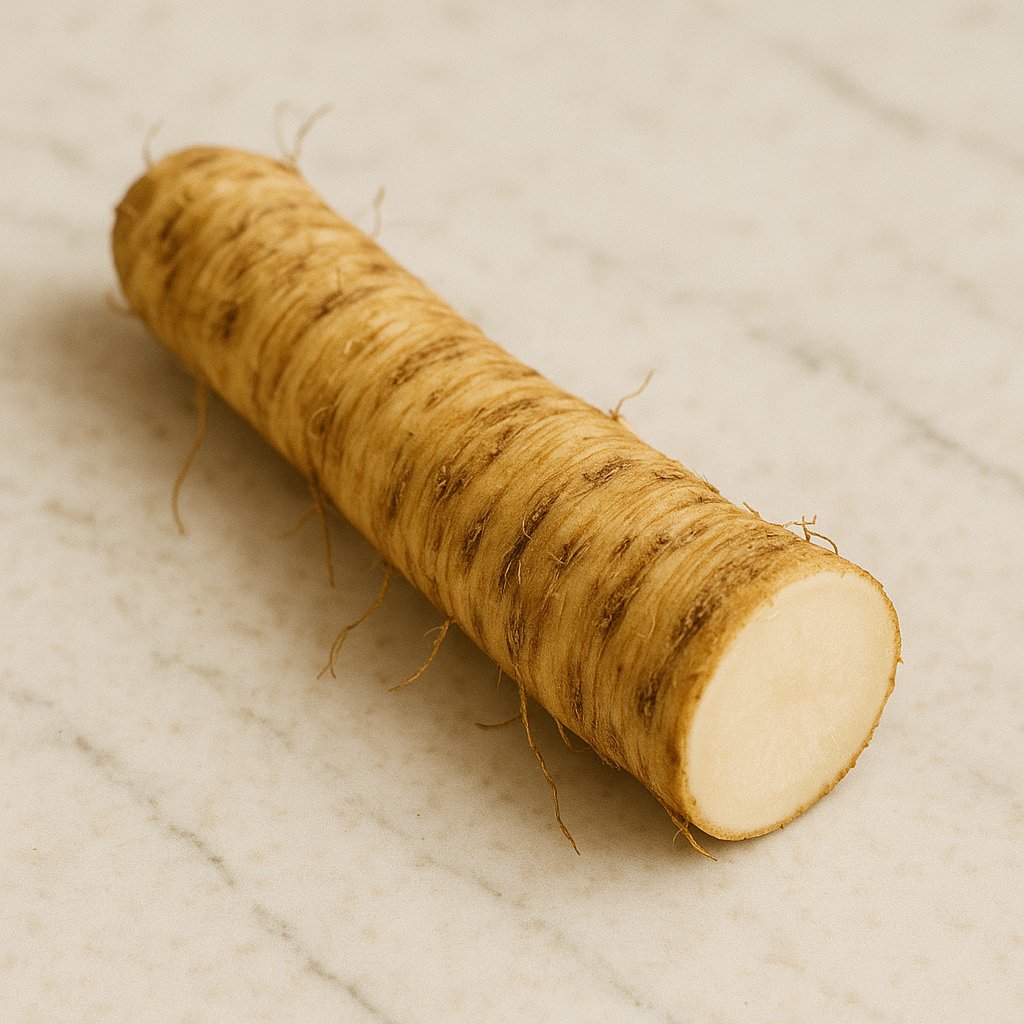
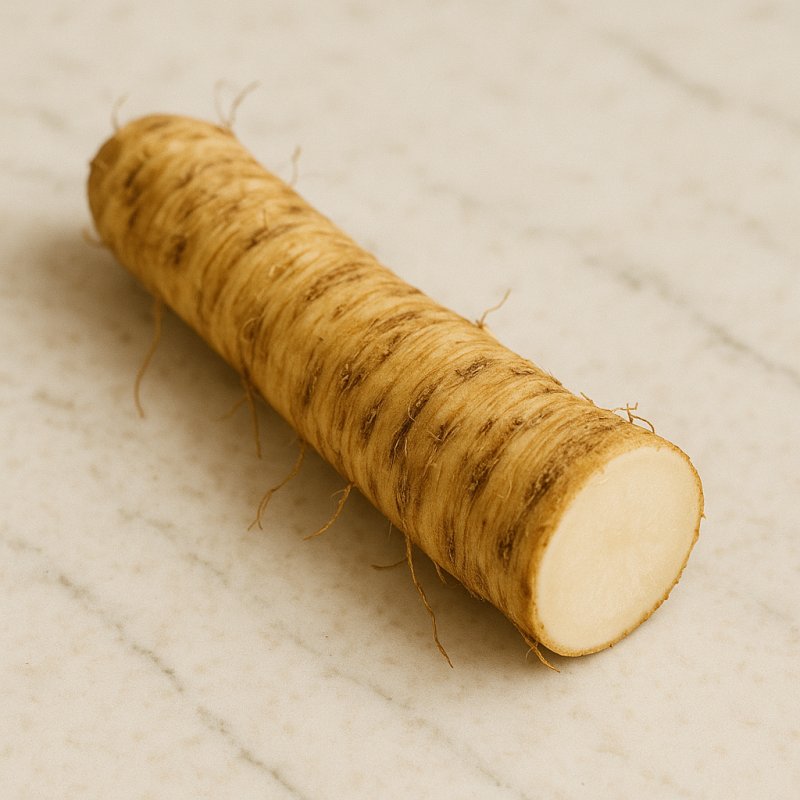
- Fresh root: The whole raw root looks like a pale, thick carrot or turnip. Freshly grated Kren is the strongest and smells very pungent. It is often grated shortly before eating because it tastes most intense then.
- Grated Kren in a jar: This is the variant pickled or preserved in vinegar. It is milder than freshly grated Kren and therefore very popular in supermarkets. Good with meat or in sauces.
- Kren cream or sauce: Here the sharp Kren is usually mixed with sour cream, yogurt or mayonnaise. That makes it creamy and milder, like a dip for fish or roast beef.
- Dried or powdered Kren: The powder is convenient for seasoning but generally tastes less fresh. A bit like dried herbs – longer lasting but weaker.
- Pickled or preserved Kren: Sometimes Kren is pickled together with other vegetables. This alters the flavour and extends shelf life.
Special features and tips
The heat of Kren depends on the age of the root: young roots are often milder, older ones stronger. Fresh Kren burns in the nose similarly to onions or pungent horseradish oil – this is normal. A common mistake is confusing it with wasabi: many restaurants use coloured horseradish instead of real wasabi. Real wasabi grows in Japan and is more expensive and rarer.
The heat of Kren depends on the age of the root: young roots are often milder, older ones stronger. Fresh Kren burns in the nose similarly to onions or pungent horseradish oil – this is normal. A common mistake is confusing it with wasabi: many restaurants use coloured horseradish instead of real wasabi. Real wasabi grows in Japan and is more expensive and rarer.
Availability through the year
Fresh roots are particularly available in autumn and winter. In jars or as a sauce, Kren is available year-round in supermarkets. If you want the fresh flavour, you can also freeze grated Kren – this preserves the aroma for a long time.
Fresh roots are particularly available in autumn and winter. In jars or as a sauce, Kren is available year-round in supermarkets. If you want the fresh flavour, you can also freeze grated Kren – this preserves the aroma for a long time.
In short: Kren is available fresh, grated, as a cream, dried or pickled. It is mainly grown in Central Europe, but also in many other countries. Which variant you choose depends on how hot or mild you want it and what you intend to use it for.