Menu & categories

Horseradish

Pungent root kick for sauces, meat and vegetables

Wiki about horseradish Nutri-Score A Vegan Yes Gluten-free Yes Lactose-free Yes Nut-free Yes
NUTRITION / 100 g
48 kcal 1.2 g Protein 11.0 g Kohlenhydrate 0.7 g Fett

Introduction

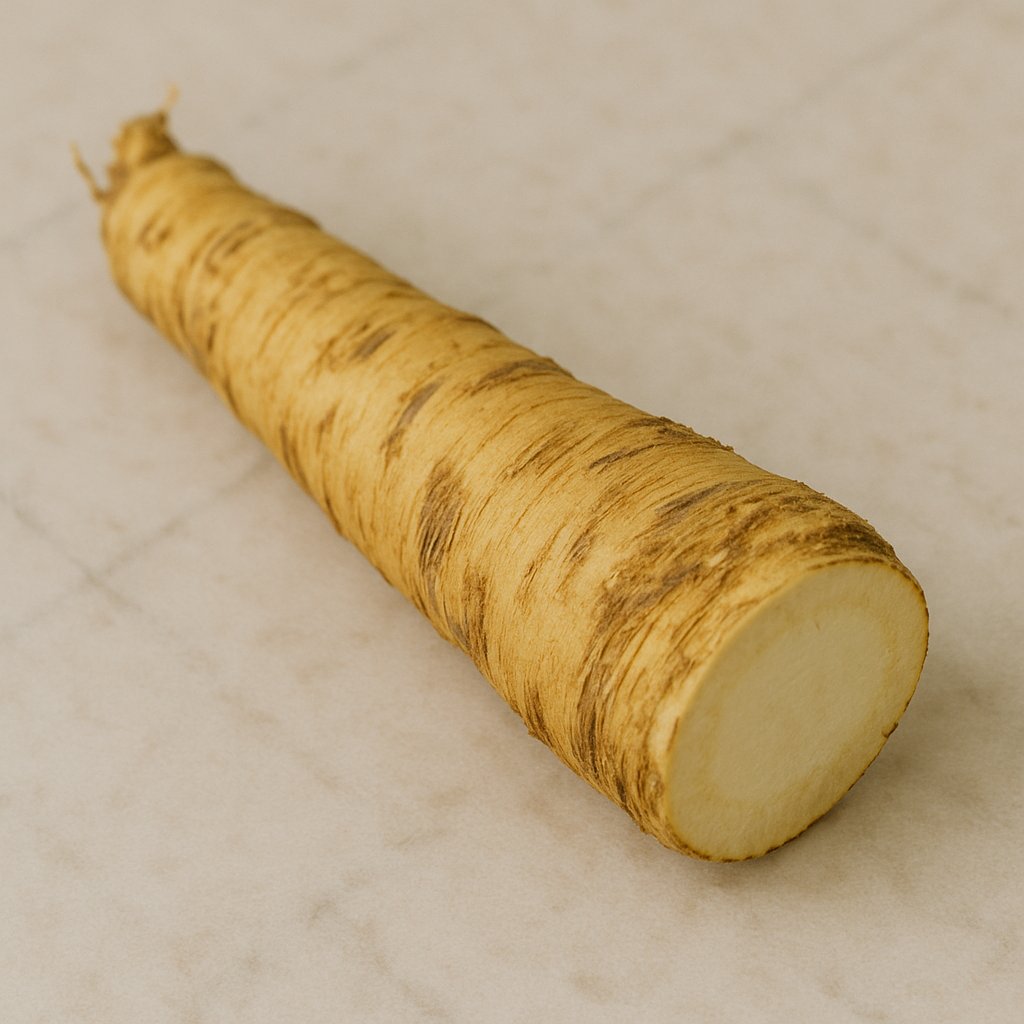
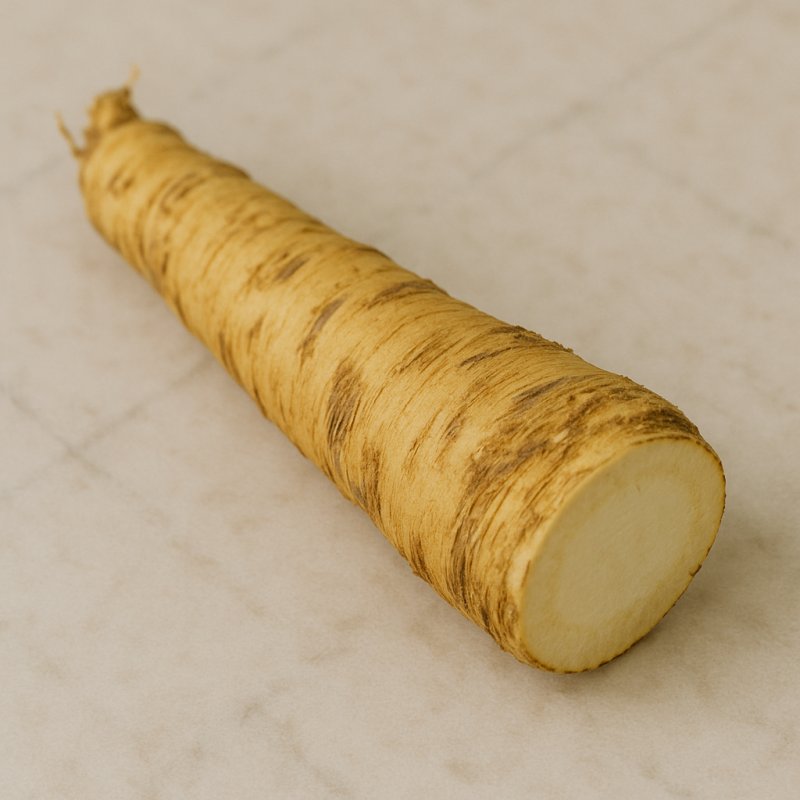
Fresh horseradish root
Horseradish is an ingredient that has a permanent place in my European kitchen. I am 35 years old, work as an editor with a passion for food, and repeatedly rediscover how versatile this pungent root vegetable is. The sharp taste of horseradish, which rises to the nose and can briefly bring tears to the eyes, is for me an unmistakable trademark. As a child I knew the classic table horseradish served with Sunday roast and fish, but only later did I understand how multifaceted the preparation and use of this aromatic root really are.

Botanically, horseradish (Armoracia rusticana) belongs to the mustard family (Brassicaceae). Its aroma is produced by glucosinolates that are released when the root is grated and processed. These volatile compounds are precisely what cause the typical intense heat, which behaves very differently from pepper or chili. While chili burns on the tongue, horseradish clears the nasal passages — an effect many in my editorial team find pleasantly invigorating. A colleague of mine swears by stirring freshly grated horseradish into a light yogurt sauce when he wants to elevate a plain sandwich at lunch. He says it's his “wake-up call” when the deadline is pressing.

In Europe horseradish has a long tradition. In Central Europe it appears in classic dishes such as roast beef with cream-horseradish, kren with boiled beef, or horseradish sauce for smoked fish. In Eastern Europe it is considered an indispensable component of festive dishes and savory preserves. I once watched an older neighbor preserving beetroot: she explained that a small strip of horseradish in each jar keeps the color brilliant and gives the marinade a lively, spicy note. At the time I was surprised how traditional knowledge connects flavor and preservation.

Fresh horseradish seems puristic at first. The cream-colored root hides its potential until the knife touches it. When I grate it I often wear glasses and open the window, because the vapors released can be intense. In return I am rewarded by the fresh, clear flavor that turns a simple dish into a special meal. Quality I recognize by a firm, smooth ro

Availability & types

Availability and types of horseradish

Horseradish is a pungent root used as a spice in many cuisines. It is related to mustard and radish and belongs to the mustard family. If you've ever had tears in your eyes while cutting it, that was caused by the pungent oils released when grating. But where does horseradish come from, when is it best obtained and what varieties exist? Let's look at that calmly — easy to understand and with many examples.

Origin and cultivation

Originally horseradish probably comes from Southeastern Europe and Western Asia. From there it spread throughout Europe. Particularly well-known growing regions include Germany (for example in Franconia around Baiersdorf), Austria (Marchfeld), the Czech Republic, Poland and Hungary. It is also grown in the USA, mainly in the state of Illinois. The plant is winter-hardy, meaning it tolerates cold well. It prefers loose, nutrient-rich soil and needs plenty of water. In spring root pieces ("cuttings") are planted, in autumn it is harvested.

Availability – when and where can you get horseradish?

Fresh horseradish roots have their main season in autumn and winter, roughly from October to March. During this time you will often find them in well-stocked supermarkets, on weekly markets or in greengrocers. Because the roots keep relatively well if stored correctly (cool, dark, dry), they are often available outside the season, but not everywhere.

Besides the fresh root, horseradish is available year-round in processed forms:

  • In jars: grated horseradish, often preserved with vinegar and salt. Very practical and long-lasting.
  • As a cream: mixed with cream, yogurt or quark — milder and spreadable.
  • As a paste or tube: finely pureed, easy to dose, similar to mustard.
  • Frozen: freshly grated and frozen

Details & nutrition

Property Value
Unit g
Average weight per piece 300
Calories per 100 48
Protein per 100 1.2
Carbohydrates per 100 11.0
Sugar per 100 7.0
Fat per 100 0.7
Saturated fat per 100 0.1
Monounsaturated fat 0.1
Polyunsaturated fat 0.3
Fiber per 100 3.3
Vitamin C (mg) per 100 25
Vitamin D (IU) per 100 0
Calcium (mg) per 100 56
Iron (mg) per 100 0.4
Nutri-Score A
CO₂ footprint 0.4 kg CO2e/kg
Origin Europe
Gluten-free Yes
Lactose-free Yes
Nut-free Yes
Vegan Yes
Note Fresh peeled root very spicy; grated it loses aroma quickly. Store in a cool place.

Technical & scientific information

Horseradish (Armoracia rusticana) is a perennial herbaceous plant of the family Brassicaceae (mustard family), appreciated mainly for its strongly aromatic root. The species probably originates from Southeastern Europe and Western Asia and is now widespread in temperate climates. Characteristic are the pungent, piercing taste and the sharp vapors that arise when the root is grated. These sensory properties are due to enzymatically released mustard oils, reflecting a complex interplay between precursors and enzymes.

Botany and morphology: The plant reaches heights of 60 to 150 cm. It forms large, elongated to ovoid basal leaves with a toothed margin and a strong taproot used as a spice. The stem is erect and branched; the white, four-part flowers appear from late spring to early summer in loose racemes. From a botanical perspective the storage root is particularly relevant: it grows conically to cylindrically, shows a light, cream to beige skin and a firm, white interior with a high dry matter content.

Chemical composition and aroma formation: The characteristic pungent and aroma compounds can be traced to glucosinolates, mainly sinigrin and gluconasturtiin. When the tissue is disrupted (e.g., by grating), the glucosinolates come into contact with the enzyme myrosinase. The enzymatic hydrolysis releases reactive isothiocyanates, particularly allyl isothiocyanate (AITC), which is responsible for the nasal pungency. Additionally, by-products such as nitrates, thiocyanates and small amounts of sulfides are formed, which modulate the aroma profile. Concentrations depend on cultivar and site, influenced by soil properties, fertilization, water supply and harvest time.

Nutritional physiology and health aspects: Horseradish contains vitamin C, potassium, calcium and secondary plant compounds from the group of glucosinolates and phenol
Wiki entry for: horseradish
Active now: 18 visitors of which 2 logged-in members in the last 5 minutes