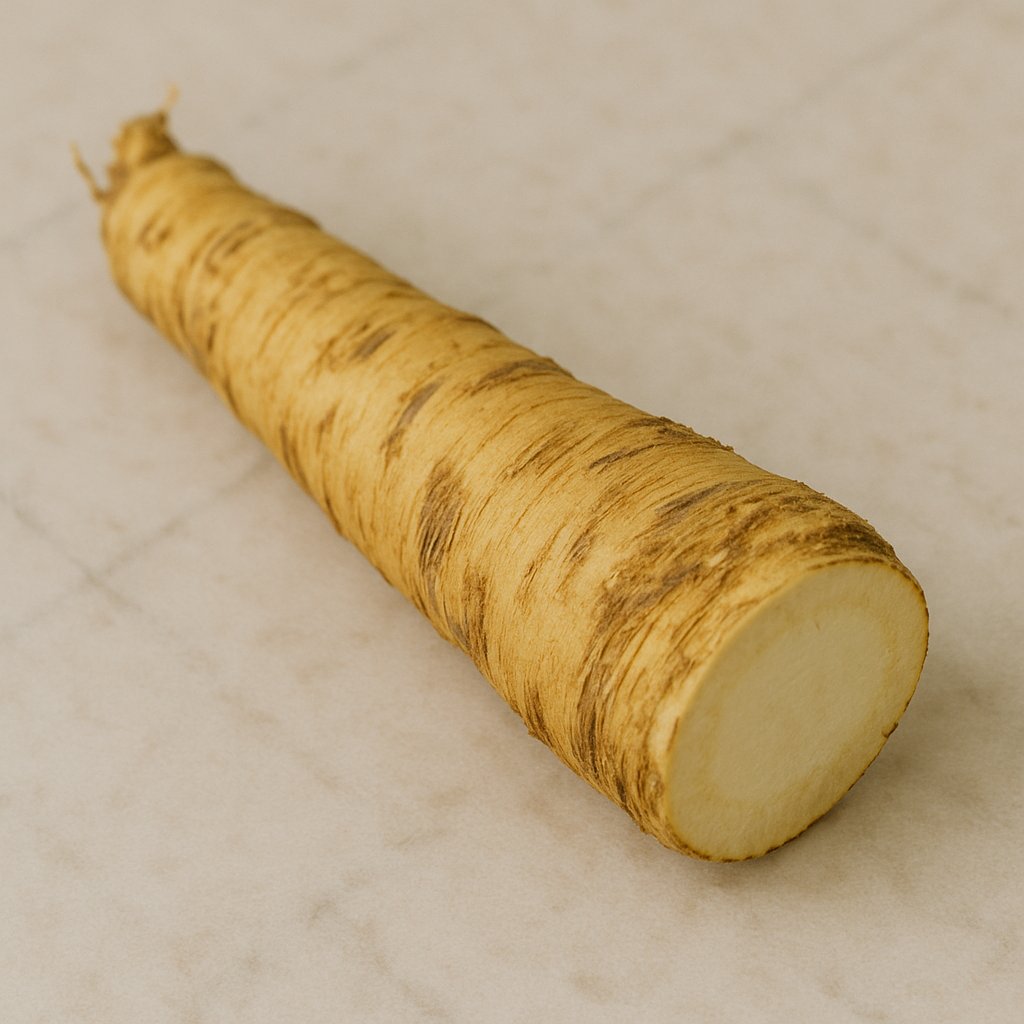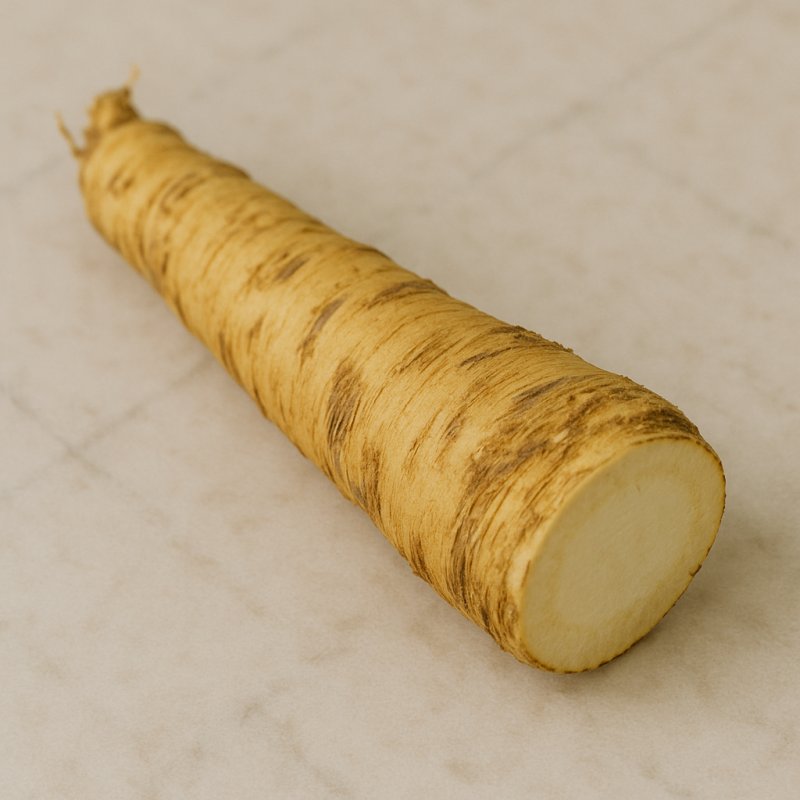
Availability and types of horseradish
Horseradish is a pungent root used as a spice in many cuisines. It is related to mustard and radish and belongs to the mustard family. If you've ever had tears in your eyes while cutting it, that was caused by the pungent oils released when grating. But where does horseradish come from, when is it best obtained and what varieties exist? Let's look at that calmly — easy to understand and with many examples.
Origin and cultivation
Originally horseradish probably comes from Southeastern Europe and Western Asia. From there it spread throughout Europe. Particularly well-known growing regions include Germany (for example in Franconia around Baiersdorf), Austria (Marchfeld), the Czech Republic, Poland and Hungary. It is also grown in the USA, mainly in the state of Illinois. The plant is winter-hardy, meaning it tolerates cold well. It prefers loose, nutrient-rich soil and needs plenty of water. In spring root pieces ("cuttings") are planted, in autumn it is harvested.
Availability – when and where can you get horseradish?
Fresh horseradish roots have their main season in autumn and winter, roughly from October to March. During this time you will often find them in well-stocked supermarkets, on weekly markets or in greengrocers. Because the roots keep relatively well if stored correctly (cool, dark, dry), they are often available outside the season, but not everywhere.
Besides the fresh root, horseradish is available year-round in processed forms:
- In jars: grated horseradish, often preserved with vinegar and salt. Very practical and long-lasting.
- As a cream: mixed with cream, yogurt or quark — milder and spreadable.
- As a paste or tube: finely pureed, easy to dose, similar to mustard.
- Frozen: freshly grated and frozen