Menu & categories

Honeydew melon

Sweet, juicy summer fruit with a mild aroma.

Wiki about honeydew melon Nutri-Score A Vegan Yes Gluten-free Yes Lactose-free Yes Nut-free Yes
NUTRITION / 100 g
36 kcal 0.5 g Protein 9.1 g Kohlenhydrate 0.1 g Fett

Introduction

Fresh honeydew melon
I still remember the first bite into a honeydew on a muggy summer afternoon, when the juice made my fingers sticky and I decided that some things in life simply must be enjoyed without cutlery. Honeydew is what we call it, sometimes also “Honeydew” in recipes, and for me it is the perfect mix of delicate sweetness and innocently creamy texture.

What I love about this fruit is its versatility. It’s not just an uncomplicated snacking delight, but also happily plays a surprising supporting role in savory dishes. Once I served a melon gazpacho, and a skeptical friend after the first spoon admitted he no longer wanted to miss the combination of heat and melon sweetness. Those small culinary experiences stay with me.

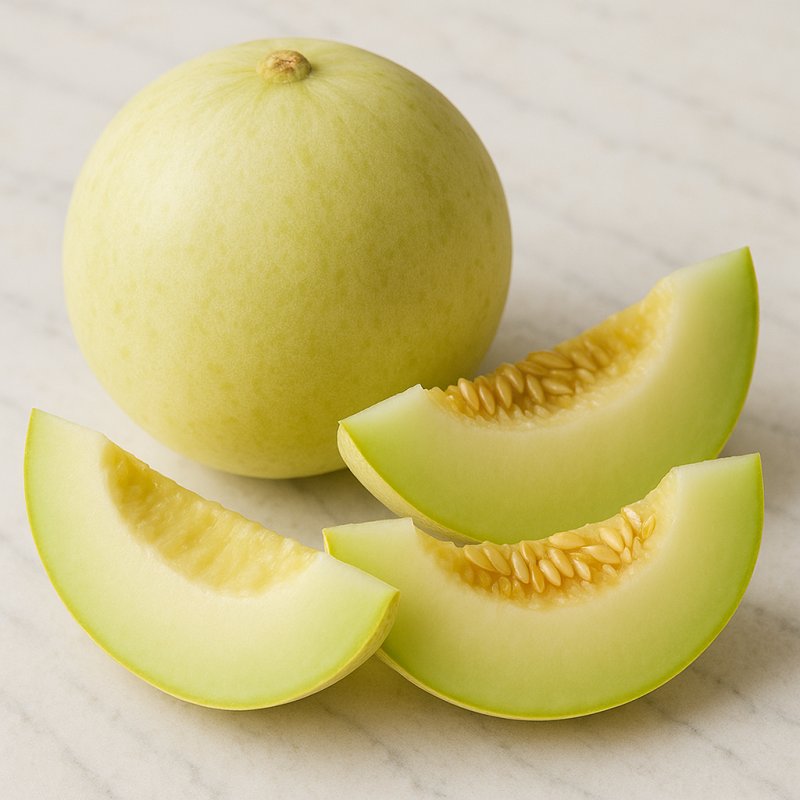
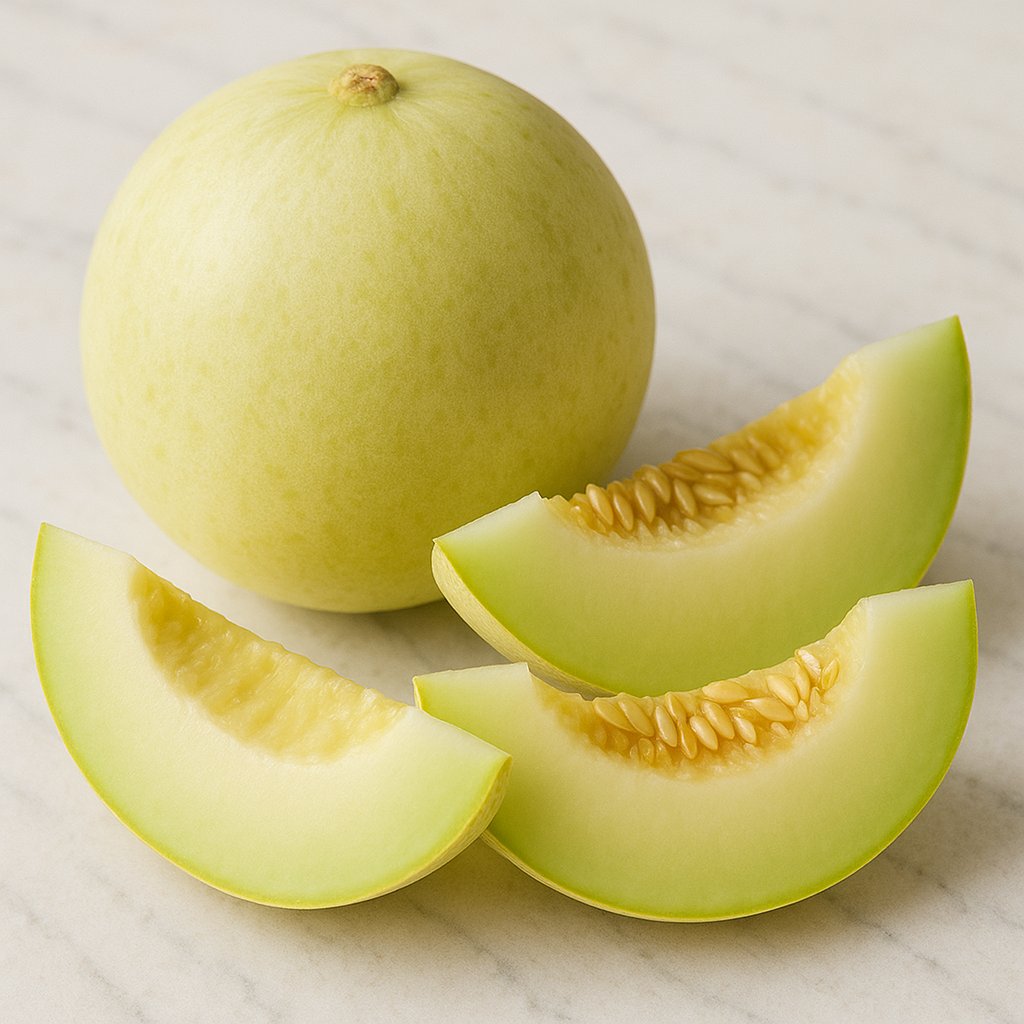
The outer rind is inconspicuous, the inner world inviting and aromatic. When shopping I look for an even color and a slight waxy bloom, which indicates ripeness. When cut open the honeydew reveals a velvety flesh that is great both plain and paired with cheese, ham or fresh herbs.

  • Taste: mild, honey-like sweetness
  • Texture: juicy and velvety
  • Use: raw, as dessert, in salads, soups or smoothies
  • Storage: keeps fresh for a few days in the refrigerator

I’ve encountered honeydew in many contexts: as an easy picnic favorite, as a surprising cocktail ingredient and as a soothing dessert after a long day at work. Often a simple dressing of lime and mint is enough to lift the flavor, and sometimes it’s the combination with delicate ham that gives me a little moment of joy.

In the end honeydew remains for me one of those ingredients that give uncomplicated pleasure and that can do great things in the kitchen with small tricks.

Availability & types

Availability and types of honeydew

The honeydew is a sweet, usually pale green melon that many people like to eat fresh. It belongs to the large melon family that has been grown for thousands of years in warm regions of the world. The early ancestors of today’s melons come from Africa and Asia, but were later cultivated and bred in many countries. You can imagine it like this: in the past people planted melons wherever it was warm and there was enough sun and water – over time many different varieties emerged.

Growing regions
Honeydews grow best in warm climates, so they often come from

  • Spain, Italy and France (Mediterranean) – many melons are grown in southern Europe for the European market;
  • North Africa (e.g. Morocco and Egypt) – many fruits are also exported from there;
  • USA (California, Arizona) – there are large melon fields in warm US states;
  • China and South America – China is one of the world’s largest producers, and in South America melons are grown for local and international markets.
Thanks to imports and greenhouses you can find honeydews in supermarkets almost year-round today. In many countries the natural main season is summer, when the fruits are most aromatic. A melon that grows in summer often tastes sweeter because it received more sun. If you want particularly flavorful fruits, July and August in our latitudes are often the best time.

Types and varieties
Under the word “honeydew” some people include different types of melons. Here are the main ones, explained simply:

  • Honeydew – has a smooth, yellowish-white or pale green rind and pale green to white flesh. It is juicy and mildly sweet, almost like a sweet cucumber juice.
  • Netted melon / Cantaloupe – has a “net”-like rind (small, interconnected fissures) and often orange flesh. It smells very aromatic and is stronger in flavor than honeydew. The netted structure looks a bit like a patterned basketball.
  • Galia – a cross between honeydew and other types; it has a netted rind and green to yellowish flesh. Usually very aromatic and sweet.
  • Charentais – a small, very aromatic French variety with orange interior. It is often more intense in flavor and considered a “delicacy”.
  • Piel de Sapo (literally “toad skin”) – a Spanish variety with a greenish, speckled rind and sweet flesh. The name comes from the rough skin that resembles a toad.
How to find them in stores
Honeydews are available whole, halved, pre-sliced in plastic containers or already diced in the refrigerated section. Sometimes you will also find frozen melon pieces for smoothies. When buying at home, sniff the place where the fruit sat – does it smell sweet? That is a sign of ripeness.

So here’s a simple overview: honeydews come from sunny regions worldwide, are best in summer, and there are different varieties like honeydew, netted melon, Galia or Charentais. Each variety looks and tastes a little different — that makes melons exciting and versatile.
Details & nutrition

Property Value
Unit g
Average weight per piece 1500
Calories per 100 36
Protein per 100 0.5
Carbohydrates per 100 9.1
Sugar per 100 8.1
Fat per 100 0.1
Saturated fat per 100 0.0
Monounsaturated fat 0.0
Polyunsaturated fat 0.0
Fiber per 100 0.8
Vitamin C (mg) per 100 18
Vitamin D (IU) per 100 0
Calcium (mg) per 100 6
Iron (mg) per 100 0.2
Nutri-Score A
CO₂ footprint 1.0 kg CO2e/kg
Origin Spain (seasonally also Brazil/Central America)
Gluten-free Yes
Lactose-free Yes
Nut-free Yes
Vegan Yes
Note Ripe honeydew melons have a slight fragrance and give slightly at the stem end. Store cut melon in the refrigerator and consume within 2–3 days.

Technical & scientific information

Honeydew — botanical classification and appearance
The honeydew (often called “honeydew”) belongs to the species Cucumis melo, group inodorus. It is characterized by a smooth, yellowish-green to pale green outer skin and a juicy, pale green flesh. Botanically it is a berry (a pepo), cultivated in warm, dry climates and bred for flavor, firmness and storability.

Composition and nutritional values (approx. per 100 g)
Honeydew consists mostly of water and therefore has a low energy density. Typical nutritional values are:

  • Water: about 90 g
  • Energy: about 36 kcal (150 kJ)
  • Carbohydrates: around 9 g, of which simple sugars (glucose, fructose, sucrose) about 8 g
  • Fiber: approx. 0.8 g
  • Protein: approx. 0.5 g
  • Fat: very low, about 0.1–0.2 g
  • Key micronutrients: vitamin C about 15–20 mg, potassium about 200–250 mg, small amounts of magnesium, calcium and folate
Phytochemistry
Honeydews contain, in addition to the macro- and micronutrients listed, secondary plant compounds such as various polyphenols and, to a lesser extent, carotenoids. Compared with orange-fleshed cantaloupe varieties, the beta-carotene content is lower; instead other xanthophylls like lutein are present in trace amounts. These compounds contribute antioxidant effects to fresh melons.

Physical and chemical properties
The flesh has a neutral to slightly acidic reaction (pH about 6.0–6.7) and a high water activity (aw ≈ 0.98), making it susceptible to microbial spoilage. The texture results from cell wall components (mainly pectins and hemicelluloses), which determine firmness and juice content. Sweetness depends on the concentration of soluble sugars, which rise during ripening through enzymatic conversion of starches and other precursors.

Processing and storage
For commercialization honeydews are harvested, cleaned and transported in cold chains. Important processing steps include:

  • Washing the rind to reduce surface microorganisms
  • Sorting and cooling to extend shelf life
  • Partial cutting or dicing under hygienic conditions for convenience products
  • Processing forms: freezing, pureeing, pasteurizing or drying, with freezing and pasteurization affecting texture and microbial safety
Safety and health aspects
Melons can be microbially contaminated as a raw product (e.g. Salmonella, Listeria), which has led to sporadic outbreaks. Therefore clean cutting surfaces, immediate cooling and short consumption times after opening are important. Allergic reactions to melons are rare but can occur as part of oral allergy syndrome with cross-reactions to certain pollens.

Nutrition relevance
Due to the high water content and moderate potassium level, honeydews are suitable for hydration and as a low-calorie component in a balanced diet. The antioxidants and vitamin C support general metabolic functions, while the low fat and protein content characterize the melon primarily as a refreshing and side fruit.

Sensory and culinary use
Honeydews are eaten fresh, in fruit salads, smoothies or as an ingredient in cold starters and desserts. For storage they ripen at room temperature and, after cutting, should be stored at about 4 °C and consumed within a few days to avoid quality and safety losses.

Wiki entry for: honeydew melon
Active now: 12 visitors of which 2 logged-in members in the last 5 minutes