Availability and types of honeydew
The honeydew is a sweet, usually pale green melon that many people like to eat fresh. It belongs to the large melon family that has been grown for thousands of years in warm regions of the world. The early ancestors of today’s melons come from Africa and Asia, but were later cultivated and bred in many countries. You can imagine it like this: in the past people planted melons wherever it was warm and there was enough sun and water – over time many different varieties emerged.
Growing regions
Honeydews grow best in warm climates, so they often come from
Honeydews grow best in warm climates, so they often come from
- Spain, Italy and France (Mediterranean) – many melons are grown in southern Europe for the European market;
- North Africa (e.g. Morocco and Egypt) – many fruits are also exported from there;
- USA (California, Arizona) – there are large melon fields in warm US states;
- China and South America – China is one of the world’s largest producers, and in South America melons are grown for local and international markets.
Thanks to imports and greenhouses you can find honeydews in supermarkets almost year-round today. In many countries the natural main season is summer, when the fruits are most aromatic. A melon that grows in summer often tastes sweeter because it received more sun. If you want particularly flavorful fruits, July and August in our latitudes are often the best time.
Types and varieties
Under the word “honeydew” some people include different types of melons. Here are the main ones, explained simply:
Under the word “honeydew” some people include different types of melons. Here are the main ones, explained simply:
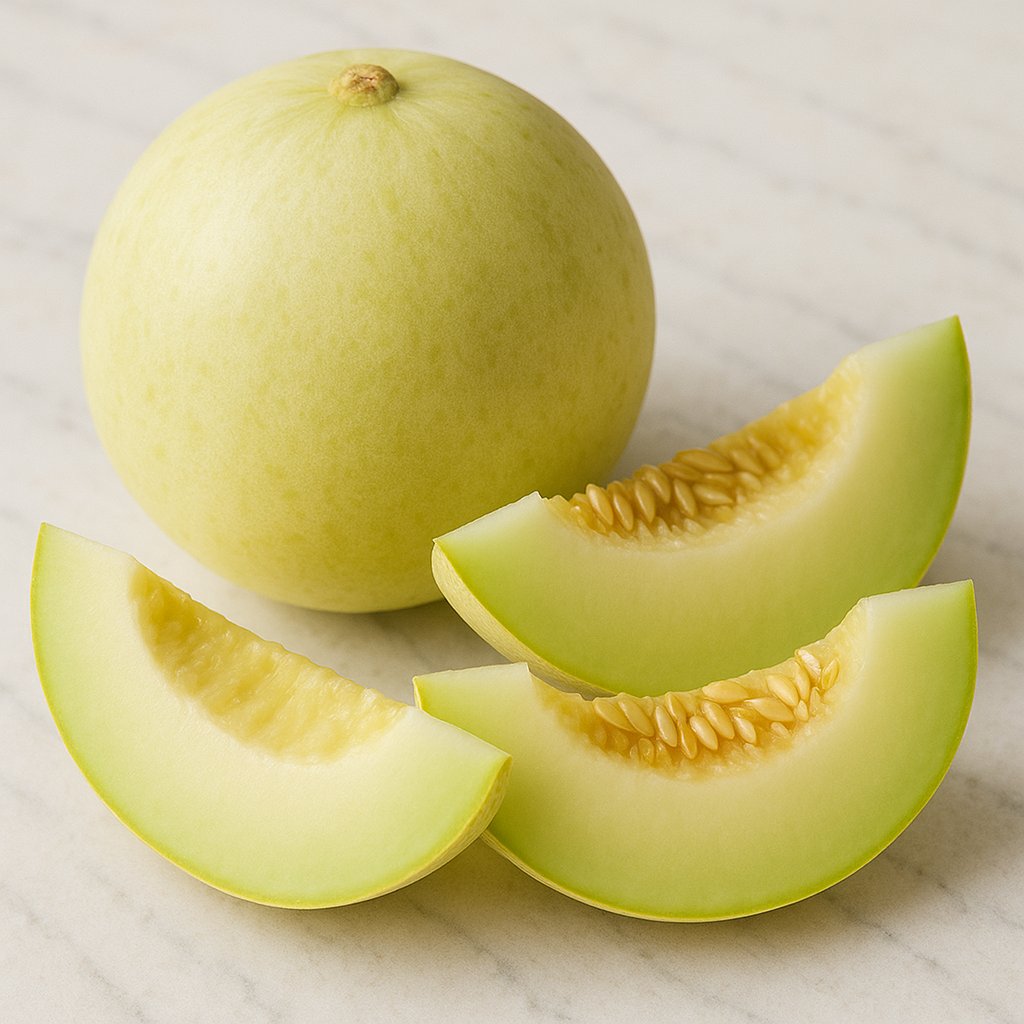
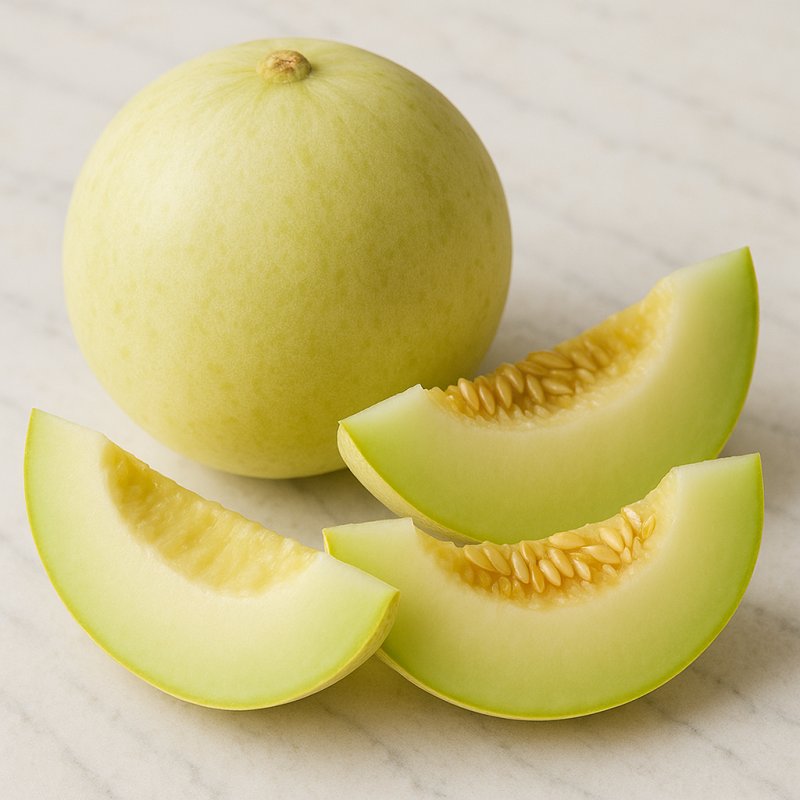
- Honeydew – has a smooth, yellowish-white or pale green rind and pale green to white flesh. It is juicy and mildly sweet, almost like a sweet cucumber juice.
- Netted melon / Cantaloupe – has a “net”-like rind (small, interconnected fissures) and often orange flesh. It smells very aromatic and is stronger in flavor than honeydew. The netted structure looks a bit like a patterned basketball.
- Galia – a cross between honeydew and other types; it has a netted rind and green to yellowish flesh. Usually very aromatic and sweet.
- Charentais – a small, very aromatic French variety with orange interior. It is often more intense in flavor and considered a “delicacy”.
- Piel de Sapo (literally “toad skin”) – a Spanish variety with a greenish, speckled rind and sweet flesh. The name comes from the rough skin that resembles a toad.
How to find them in stores
Honeydews are available whole, halved, pre-sliced in plastic containers or already diced in the refrigerated section. Sometimes you will also find frozen melon pieces for smoothies. When buying at home, sniff the place where the fruit sat – does it smell sweet? That is a sign of ripeness.
Honeydews are available whole, halved, pre-sliced in plastic containers or already diced in the refrigerated section. Sometimes you will also find frozen melon pieces for smoothies. When buying at home, sniff the place where the fruit sat – does it smell sweet? That is a sign of ripeness.
So here’s a simple overview: honeydews come from sunny regions worldwide, are best in summer, and there are different varieties like honeydew, netted melon, Galia or Charentais. Each variety looks and tastes a little different — that makes melons exciting and versatile.