Menu & categories

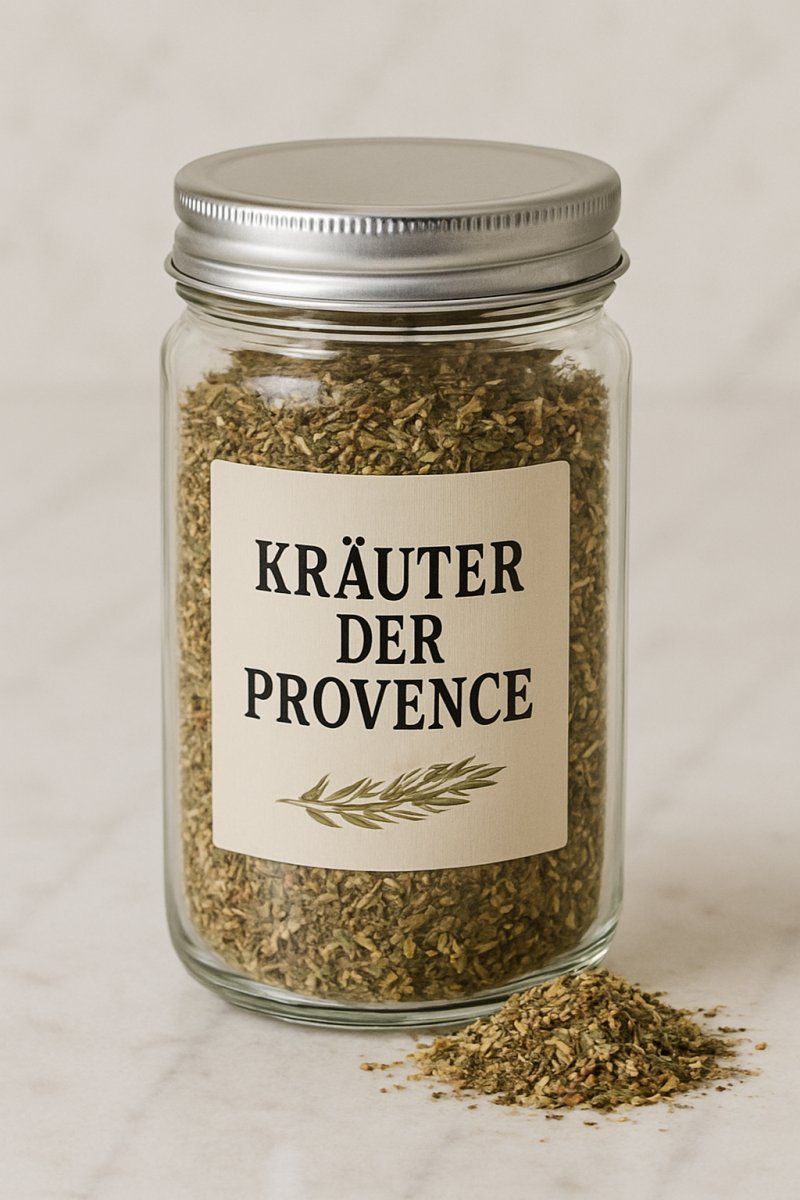
Herbs de Provence

Aromatic Mediterranean blend of dried culinary herbs

Wiki about Herbes de Provence Nutri-Score A Vegan Yes Gluten-free Yes Lactose-free Yes Nut-free Yes
NUTRITION / 100 g
280 kcal 10 g Protein 40 g Kohlenhydrate 6 g Fett

Introduction

Dried Herbs de Provence in a bowl
I love the smell of herbes de Provence; it reminds me of open windows, warm stones and a market stall where an older woman exchanged a bunch of thyme for a piece of homemade bread. This herb blend is to me more than just a seasoning: it is a little piece of southern France in the pantry, a quick way to give a dish sunshine and lightness. I often reach for it when I don't want to simmer for hours but still need depth and aroma.

In my kitchen I have used the blend in the most unexpected situations. Once, when I wanted to make spaghetti aglio e olio more interesting, I sprinkled a pinch over them and immediately received compliments I discreetly credited to my spice rack. A colleague swears by it when he wants to season breadcrumb coating for schnitzel; I sprinkled it on tomatoes and zucchini on the grill and was surprised how much the herbs enhanced the natural flavor without dominating.

Herbes de Provence classically consist of a combination of thyme, rosemary, marjoram, oregano, savory and sometimes lavender. These herbs harmonize because they contain similar essential oils that provide warmth, bitterness and a pleasant resinous note. They are particularly suitable for:

  • Stews and braised dishes
  • Grilled vegetables and meats
  • Tomato-based sauces
  • Bread and focaccia
When I use the blend I pay attention to timing: for short dishes I add the herbs only towards the end so that the fresh aromas are preserved. For braised dishes they may be added early to allow the flavors to fully develop. A small tip I got from a friend in southern France: dried herbs develop their full aroma better if you lightly crush them before use — a ritual I now perform with affection.

The uses are diverse, from simple salads to more complex recipes like ratatouille. For me herbes de Provence symbolize effortless enjoyment and the freedom to create something homely and aromatic with a few simple steps. It is this combination of earthiness and refinement that makes me reach for this blend whenever I want to give a dish an immediate Provençal note.

Availability & types

Availability and types

Herbes de Provence are a spice blend found in many supermarkets, natural food shops and farmers' markets. Sometimes it is also labeled on packages as "Herbes de Provence." This blend is popular because it pairs well with many dishes — for example grilled vegetables, bread, stews or fish. You can buy it ready-mixed or purchase the individual herbs separately and mix them yourself.

Where do they come from?
Originally these herbs come from the south of France, from a region called Provence. Many of these plants grow there in the wild because the climate is warm and dry — similar to a sunny summer that many of us enjoy. That is ideal for herbs because they need a lot of sun and not too much water.

Growing regions
Herbes de Provence are not only grown in France. Today they also come from:

  • France: Especially in Provence itself, where the tradition originates.
  • Spain: Many herbs also grow well there due to the warm climate.
  • Italy and Greece: These countries have similar conditions and also supply herbs.
  • Germany and other countries: Here herbs are often grown in fields or greenhouses, particularly in organic farms or hobby gardens.
Which varieties and variants exist?
The blend can vary depending on who produces it or where you buy it. The most common herbs often included in herbes de Provence are:

  • Thyme: A small leaf with a strong aroma, often used in cooking.
  • Rosemary: Has needle-like leaves and smells fresh, almost like a walk in the woods.
  • Basil: Mild and slightly sweet, reminiscent of tomatoes and pizza.
  • Oregano: Piquant and somewhat sharp — very popular with tomato dishes.
  • Savory (summer savory): A savory herb that is often included in the blend.
  • Lavender (sometimes): Not always included, but sometimes a small proportion of lavender flowers is added. This gives a floral scent — some like it, others do not.
There are also different types of blends:

  • Standard blend: Most manufacturers add only the typical herbs such as thyme, rosemary and oregano.
  • With lavender: This variant additionally contains lavender flowers and smells more floral.
  • Organic blend: From organic farming without synthetic chemicals.
  • Fresh vs. dried: Fresh herbs have a strong aroma and flavor but remain fresh only briefly. Dried herbs are more shelf-stable and are often available as a spice mix in jars or bags.
How to choose?
When you buy herbes de Provence, check the ingredient list if you wish. For a milder taste choose a blend without lavender. For a more intense aroma pick a blend with fresh herbs or an organic variant. And if you want to mix yourself, you can simply take a little of each herb until it tastes right to you — like painting with several colors.

In short, herbes de Provence are widely available and come in many variants — from classic to floral, from fresh to dried. That way everyone can find the blend they like best.
Details & nutrition

Property Value
Unit g
Calories per 100 280
Protein per 100 10
Carbohydrates per 100 40
Sugar per 100 5
Fat per 100 6
Saturated fat per 100 1
Monounsaturated fat 1
Polyunsaturated fat 3
Fiber per 100 30
Vitamin C (mg) per 100 30
Vitamin D (IU) per 100 0
Calcium (mg) per 100 800
Iron (mg) per 100 50
Nutri-Score A
CO₂ footprint 1.2
Origin Mediterranean region, typical blend from France
Gluten-free Yes
Lactose-free Yes
Nut-free Yes
Vegan Yes
Note Typical blend of dried Mediterranean herbs such as thyme, rosemary, oregano, marjoram and savory; exact composition may vary by manufacturer.

Technical & scientific information

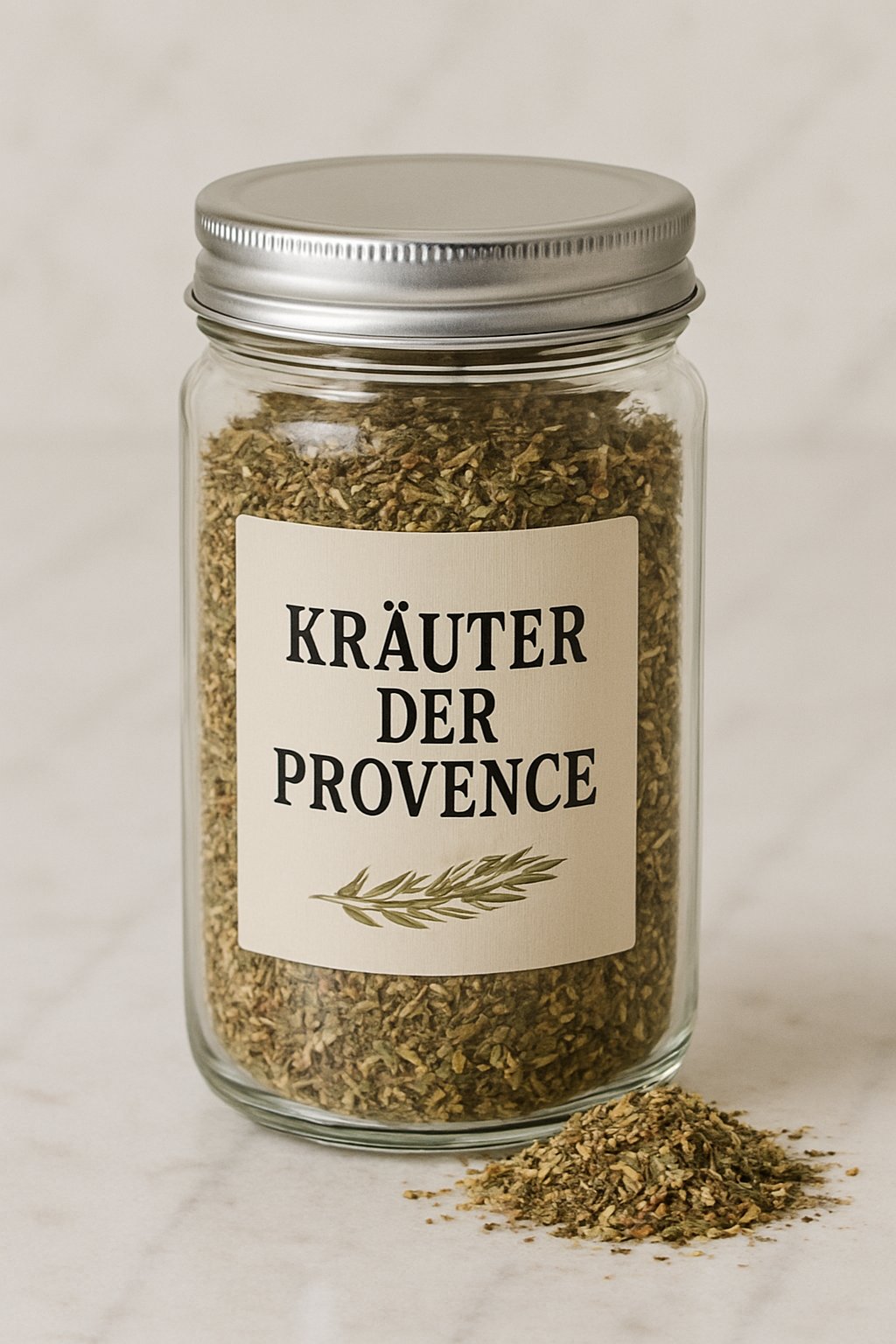
Herbes de Provence (also: Kräuter der Provence) denote a standardized spice blend of dried Mediterranean herbs traditionally used in the French Provence region. Typical components are thyme, rosemary, oregano, basil, marjoram and lavender flowers, although exact composition varies regionally and by producer. The blend is typically used dry and serves to complement the flavor of meats, vegetables, fish and stews.

Botanical and chemical properties
The herbs involved mostly belong to the family Lamiaceae (the mint family) and contain characteristic secondary plant metabolites such as essential oils, phenols (e.g. thymol, carvacrol), flavonoids (e.g. luteolin), tannins and small amounts of bitter compounds. The essential oils make up the bulk of the sensory profile; thymol and carvacrol with p-cymene dominate in thyme and oregano, while cineole, camphor and α-pinene are significant in rosemary. Lavender provides linalool and linalyl acetate, which contribute more floral notes.

Nutritional and micronutrient-related aspects
As a dried spice blend, herbes de Provence supply virtually no energy or macronutrients in typical commercial serving sizes (usually a few grams per serving). They are, however, sources of vitamin-like substances and minerals in trace amounts, including potassium, calcium, iron and some B vitamins. More relevant are the antioxidant properties of the contained phenolic compounds, which have shown radical-scavenging activity in vitro. The antioxidant effect can help stabilize foods by inhibiting lipid oxidation, but in the context of a typical dietary portion for humans it is of limited nutritional significance.

Processing and product manufacture
Herbes de Provence are usually produced by harvesting the individual herbs followed by drying, grinding and blending. Drying is done gently (air drying or low-temperature hot-air drying) at temperatures that largely preserve volatile constituents, since high temperatures lead to losses of essential oils and aroma compounds. After drying the herbs are mechanically reduced in size; particle size influences aroma release and storage stability. Some manufacturers add anti-caking agents such as silicon dioxide for consistency control, while in other products lavender flowers are mixed in as a visual and aromatic element.

Sensory profile and application
Sensorily the blend yields a complex profile of herbal, spicy and partly resinous notes with a slightly bitter base component. The aroma compounds are predominantly lipophilic and dissolve well in fats, which is why seasoning in oil, during browning or in marinades is particularly effective. Herbes de Provence suit Mediterranean dishes, grilled meats, roasted vegetables and sauces.

Health aspects
When used in moderate amounts, herbes de Provence are generally considered safe. The contained essential oils show antimicrobial, inflammation-modulating and antioxidant effects in vitro and in animal models; clinically relevant effects in humans are limited and not specifically established for the blend. Persons with allergies to Lamiaceae plants or with sensitivity to certain essential oil components should exercise caution. Due to low consumption, toxicological risks are minimal provided concentrated extracts or high-dose supplements are not used.

Shelf life and storage
Dried herbs retain their best aroma when stored in the dark, cool and airtight. Essential oils can oxidize due to light, heat and oxygen, which reduces aroma and active compound content. Under optimal conditions a shelf stability of 1–3 years is common, although the sensory profile may lose intensity earlier.

Summary
Herbes de Provence are a culture-based spice blend of Mediterranean herbs whose culinary profile is determined by essential oils and phenolic compounds. Nutritional contribution is negligible, yet the constituents provide aromatic variety as well as antioxidant and antimicrobial properties in vitro. Quality and effectiveness depend on botanical composition, harvest timing, drying and storage, while health risks are low when used normally.

Wiki entry for: Herbes de Provence
Active now: 15 visitors of which 2 logged-in members in the last 5 minutes