Menu & categories

Hazelnut

Nutrient-rich nut high in healthy fats

Wiki about hazelnut Nutri-Score D Vegan Yes Gluten-free Yes Lactose-free Yes Nut-free No
NUTRITION / 100 g
628 kcal 15 g Protein 17 g Kohlenhydrate 61 g Fett

Introduction

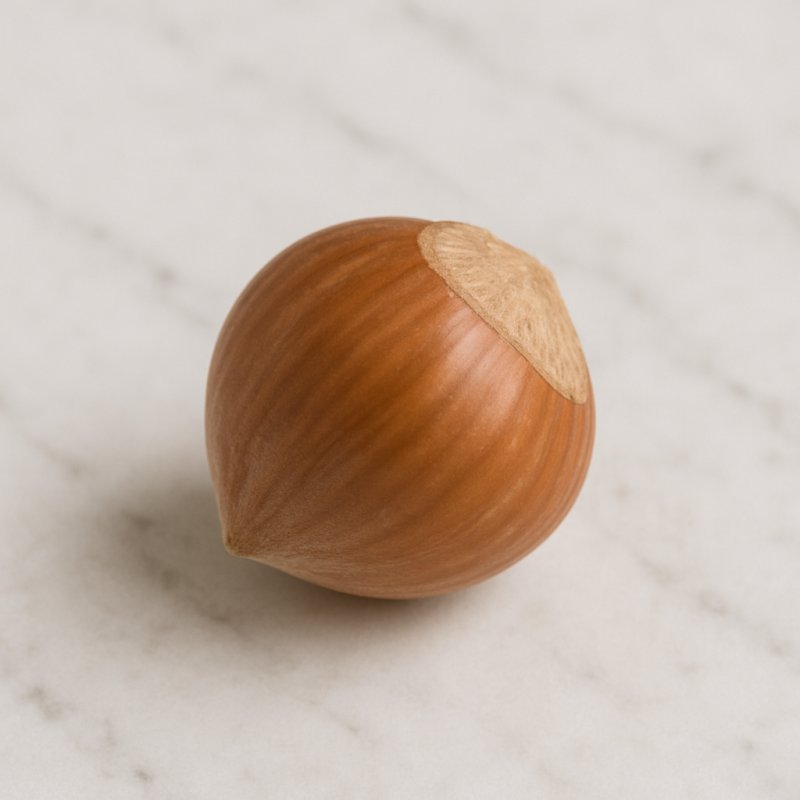
Fresh hazelnuts in shell and shelled
I still remember exactly the first bite of a freshly roasted hazelnut: a short crack, a warm, buttery aroma that filled the kitchen, and a taste that somehow seemed both nutty and sweet. Since then the hazelnut has never really left me. It appears in my favorite recipes, accompanies me at autumn markets and is often the secret element in desserts that bring out delighted faces.

What fascinates me about the hazelnut is its versatility. You can snack on it plain, roughly chop it and sprinkle it over salads, process it into nut butter or refine it into a velvety paste. Once I brought a friend a dried-fruit-and-nut muesli with homemade hazelnut butter; he was convinced there was a splash of caramel in it because the nut tasted so rich and round.

Some qualities I particularly appreciate about hazelnuts:

  • Rich, aromatic flavor that becomes even more intense with roasting.
  • Good pairing with chocolate, coffee, pear, goat cheese and herbs like thyme.
  • Texture play: from crunchy and coarsely chopped to finely ground or as a creamy paste.
The hazelnut also has a cultural dimension for me. In some families cracking nuts at Christmas is a ritual in which stories are told and old recipes are passed down. I recall once a neighbor sitting next to me who secretly revealed her trick: roast hazelnuts briefly in the oven at medium heat, then put them in a linen cloth and shake vigorously, so the skin comes off almost by itself.

When I cook or bake, I consciously think about textures and flavors. A few chopped hazelnuts give a plain yogurt creaminess and bite, while a fine hazelnut flour in cakes provides moisture and depth without weighing them down. I also like the idea of using hazelnuts in savory dishes: as a coating for fish fillets or ground into a spicy pasta sauce.

In conclusion: the hazelnut is for me a small all-rounder that can be both rustic and elegant. It speaks of traditions, surprises with new pairing possibilities and brings warmth to any kitchen.

Availability & types

Availability and types

The hazelnut is a widely available nut that can be found in many supermarkets, health food stores and at weekly markets. You can buy it fresh in the shell, already shelled, roasted or ground as flour or paste. Its popularity comes from hazelnuts' slightly sweet, nutty flavor and their use in many sweets, cakes and spreads. Depending on the season there is fresher produce: the main harvest time is from late summer to autumn, so fresh hazelnuts in the shell are especially easy to find in autumn.

Origin and growing regions

Hazelnuts grow on shrubs or small trees called hazel. These plants like a temperate climate, neither too hot nor too cold. Major growing areas include:

  • Europe: Particularly Turkey is one of the world's largest producers. Countries such as Italy (especially the regions around Piedmont), Spain and France also grow many hazelnuts.
  • North America: In the USA, for example in the state of Oregon, there are extensive hazelnut plantations.
  • Other regions: Smaller harvests also occur in countries with suitable climates, for example parts of Asia or South America.
You can think of it like apple growing: some regions have the perfect weather and soils, so especially many and good hazelnuts grow there.

Available varieties and forms

There is not just a single hazelnut, but many varieties. These varieties differ in size, flavor, frequency of harvest and how well the nuts suit particular recipes. Important differences include:

  • Shell color: Some hazelnuts have a darker brown shell, others are lighter. The color, however, says little about the taste.
  • Size: Large hazelnuts are easier to crack and are good as a snack or decoration. Smaller varieties are often used for processing in food products.
  • Variety & origin name: There are well-known varieties like the hazelnuts from Piedmont (Italy), often regarded as particularly aromatic. Nuts produced in Turkey are widespread on the world market.
  • Processing state: Hazelnuts are available as whole nuts in the shell, shelled kernels, chopped, ground (hazelnut flour), ground into paste (hazelnut butter) or as roasted nuts. Roasting intensifies the flavor – similar to when you toast bread in the oven and its aroma becomes more intense.
  • Storage form: Fresh hazelnuts in the shell keep longer because the shell protects against moisture and light. After the nuts have been shelled or ground, they should be stored cool and dark to prevent them from going rancid.
Shopping tip

If you want to buy hazelnuts, look for a fresh smell (not musty) and firm shells on whole nuts. For recipes where an intense flavor is important, roasted hazelnuts or hazelnut paste are a good choice. For allergy sufferers: hazelnuts are among the common tree-nut allergens, so always read the ingredient list or ask if in doubt.

In summary: hazelnuts come from regions with mild climates, there are many varieties and processing methods, and they are available year-round in various forms – from fresh in the shell to ground flour or paste for cakes and spreads.
Details & nutrition

Property Value
Unit g
Average weight per piece 1.2
Calories per 100 628
Protein per 100 15
Carbohydrates per 100 17
Sugar per 100 4.3
Fat per 100 61
Saturated fat per 100 4.5
Monounsaturated fat 46
Polyunsaturated fat 7.9
Fiber per 100 9.7
Vitamin C (mg) per 100 6.3
Vitamin D (IU) per 100 0
Calcium (mg) per 100 114
Iron (mg) per 100 4.7
Nutri-Score D
CO₂ footprint 1.4
Origin Mainly Europe (e.g., Turkey, Italy, Spain) and North America
Gluten-free Yes
Lactose-free Yes
Nut-free No
Vegan Yes
Note Nutritional values refer to raw hazelnuts without shell. Hazelnuts are rich in monounsaturated fatty acids, vitamin E and minerals, but are considered a strong allergen.

Technical & scientific information

Hazelnut (Corylus avellana) is the edible seed fruit of the hazel shrub and is botanically classified as a nut. It is an oil-rich shell fruit with a characteristic round to slightly flattened shape and an average size of 1–2 cm in diameter. Hazelnuts are cultivated mainly in temperate regions; important producing countries are Turkey, Italy, Spain and the USA. Varieties differ in fruit size, shell hardness and oil content, which influences uses in the food industry.

Botanical and physical properties: The hazelnut develops from the ovary wall and has a woody shell (pericarp) that encloses the oil- and fat-rich kernel. The seed coat (testa) is thin and inside usually light brown to reddish. Hazelnuts are borne in catkins and are released at maturity by softening of the fruit stalk. Physically they are relatively sensitive to pressure; mechanical processing requires suitable calibration methods, cracking and sorting machines as well as gentle drying to avoid quality losses due to shell cracks and oxidation.

Chemical composition and nutritional values: Hazelnuts consist mainly of fat (approx. 60–66%), protein (approx. 12–15%) and carbohydrates (approx. 6–10%), supplemented by fiber and small amounts of free sugars. The main components of the lipids are unsaturated fatty acids, primarily oleic acid (C18:1, monounsaturated) and linoleic acid (C18:2, polyunsaturated). In addition, hazelnuts contain vitamins such as vitamin E (tocopherols), B vitamins (especially folate), and minerals such as magnesium, copper, manganese and phosphorus. Typical average values per 100 g of roasted hazelnuts are about 628 kcal, 62 g fat, 15 g protein and 9 g fiber, although concrete values vary by variety and processing.

Bioactive components and secondary plant compounds: In addition to macronutrients, hazelnuts contain phenolic compounds, flavonoids and proanthocyanidins, which have antioxidant properties. Tocopherols act as fat-soluble antioxidants and contribute to the stability of the oils. Sterols and triterpenes are also present in small amounts. These bioactive substances are associated with health-promoting effects such as reduction of oxidative stress and potential cardiovascular benefits.

Processing and extraction: Industrial processing steps include harvesting, drying, shelling, roasting, grinding and oil pressing. Drying, ideally to 6–8% residual moisture, prevents mold formation and lipid oxidation. During roasting hazelnuts develop their typical aroma through Maillard reactions and thermal degradation processes of amino acids and sugars; roasting time and temperature influence flavor and color. Oil is obtained by cold pressing or extraction; cold-pressed oils retain more flavor and nutrient components but are less productive in yield.

Health aspects: The high proportion of monounsaturated and polyunsaturated fatty acids makes hazelnuts a beneficial component of a heart-healthy diet, provided they are consumed in moderation. Numerous epidemiological studies show associations between regular nut consumption and reduced risk of coronary heart disease, improved lipid profiles and reduced inflammatory activity. Hazelnuts also provide vitamin E, which protects against lipid peroxidation, as well as magnesium and fiber that can support metabolic health. At the same time hazelnuts are a known trigger for food allergies; hazelnut allergens (e.g. Cor a 1, Cor a 8) can cause severe IgE-mediated reactions. Furthermore, improper storage carries the risk of mold contamination and mycotoxin formation, which is why drying and storage are important.

Safety, storage and sustainability: Fresh hazelnuts should be stored cool, dry and protected from light to avoid oxidation and rancidity of the oils. Vacuum packaging and refrigeration extend shelf life. Sustainability aspects concern plant protection, water management and variety selection; integrated cultivation systems and resistance breeding can reduce the use of plant protection products. The valorization of by-products, such as shells as biomass, contributes to resource efficiency.

In summary, the hazelnut is a nutrient-rich, chemically complex shell fruit that is nutritionally valuable because of its oily profile, antioxidant constituents and contribution to plant protein supply. Processing and storage influence aroma, nutrient content and safety; allergic risks and quality controls are therefore central in production and trade. Scientific engagement with hazelnuts covers aspects from plant breeding to food technology and nutritional medicine research.

Wiki entry for: hazelnut
Active now: 24 visitors of which 2 logged-in members in the last 5 minutes