Menu & categories

Hazelnut yogurt

Creamy yogurt with aromatic hazelnuts

Wiki about hazelnut yogurt Nutri-Score C Vegan No Gluten-free Yes Lactose-free No Nut-free No
NUTRITION / 100 g
110 kcal 4.5 g Protein 12 g Kohlenhydrate 4.5 g Fett

Introduction

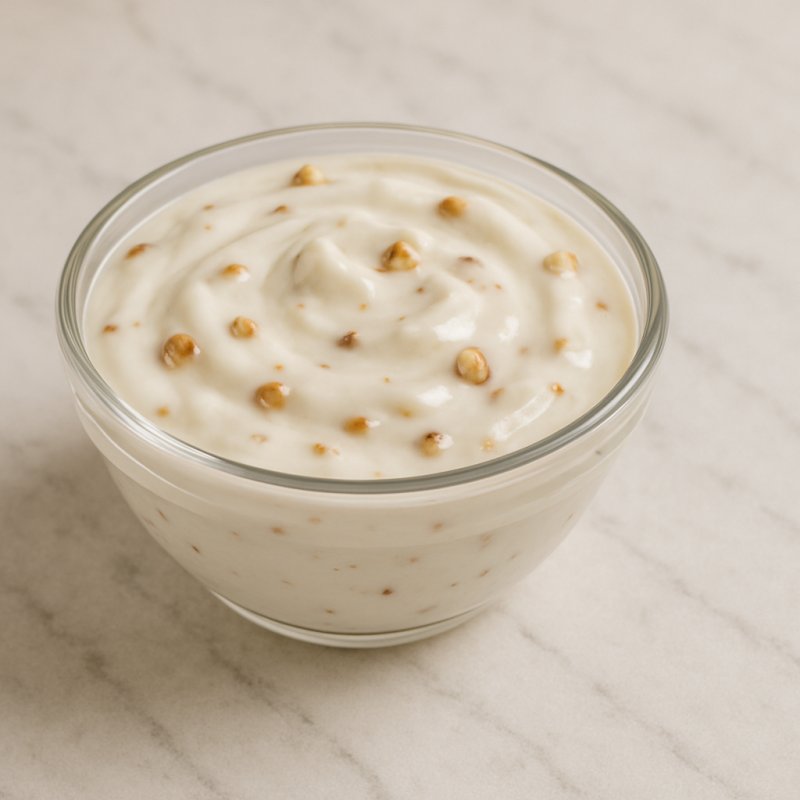
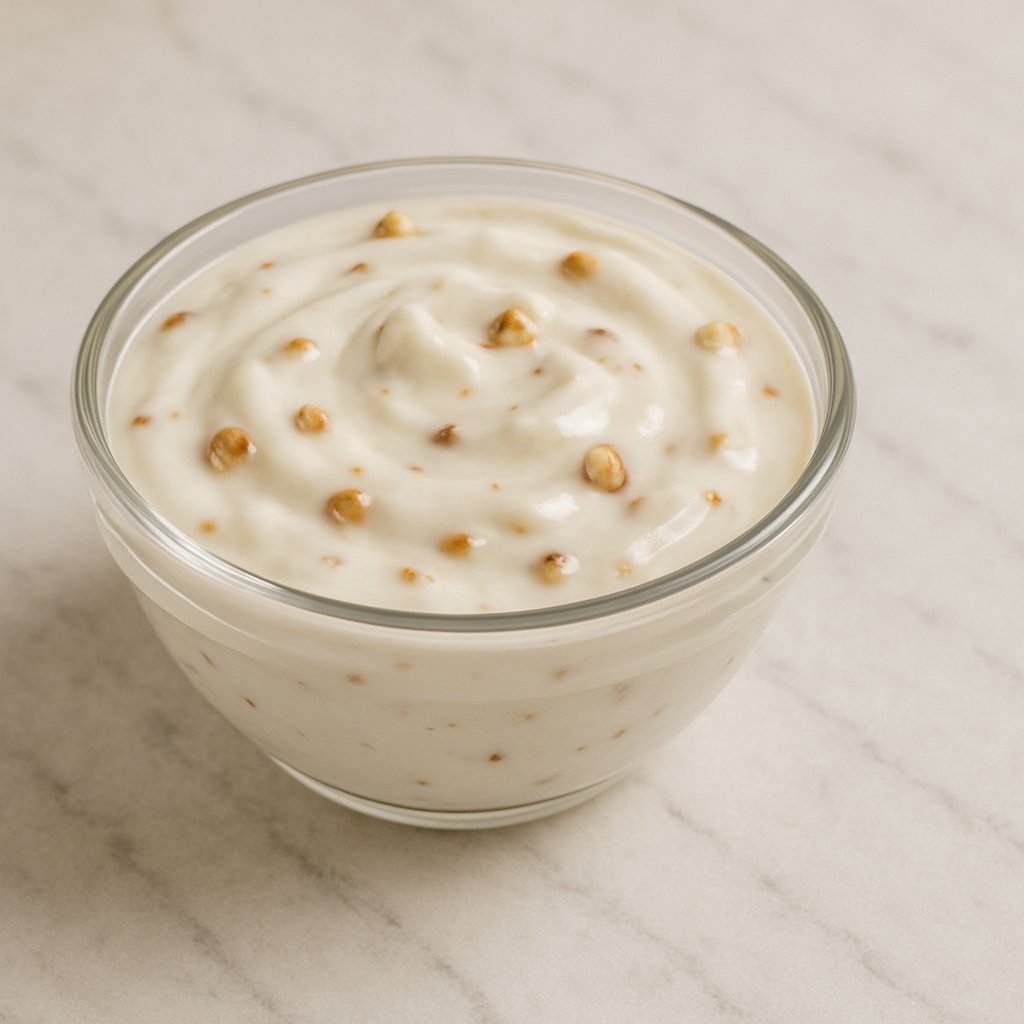
Cup of creamy hazelnut yogurt with hazelnuts
I still remember the first spoonful of hazelnut yogurt I tried: creamy, lightly nutty and surprisingly homely, as if someone had poured the scent of a freshly opened hazelnut shell into a jar. Since then this ingredient has not left me. For me, hazelnut yogurt is a little flavor bomb that can elevate breakfast, desserts and savory dishes alike.

I especially like its versatility. In everyday life I like to use hazelnut yogurt like this:

  • As a breakfast star – with oats, fresh berries and a drizzle of maple syrup it becomes an incomparably nutty porridge.
  • As a baking ingredient – in cakes and muffins it provides moisture and a fine hazelnut flavor without weighing the baked goods down.
  • As a dip – mixed with herbs and lemon zest it is a surprisingly good companion to roasted vegetables.
A colleague of mine swears by stirring a small pot of hazelnut yogurt into his curry when the sauce is too spicy; that sometimes works better than cream and adds a pleasant depth. I once got so many compliments for a simple nut cake that a friend wrote down the yogurt's name before she received the recipe.

What I appreciate about hazelnut yogurt is also its range of textures and intensities. Some varieties are rather mild and creamy, others intensely nutty or even slightly sweet. For vegan alternatives, plant-based hazelnut yogurts are a nice option, because they preserve the characteristic taste, often with an even more pronounced nutty note.

When shopping I pay attention to ingredient lists: a good product doesn't need much more than hazelnuts, yogurt cultures and maybe a pinch of salt. No unnecessary sugar should cover the natural flavor. If I have time, I lightly toast the nuts before processing — that noticeably enhances the aroma.

Conclusion: Hazelnut yogurt is for me a small culinary discovery that elevates simple dishes and continually opens up new ways to use it. A jar of it in the fridge feels to me like a small promise of good taste.

Availability & types

Availability and types

Hazelnut yogurt is a plant-based alternative to conventional milk yogurt that is made from hazelnuts. The hazelnuts themselves grow on hazel bushes and are cultivated primarily in certain regions of the world. Large growing areas include, for example, the Turkey, Italy (especially the Piedmont region), Spain and parts of the USA. If you think of it as a comparison: Turkey is to hazelnuts what Italy is to good cheese — many nuts ripen and are harvested there.

The availability of hazelnut yogurt depends on how popular it is and how easy hazelnuts are to obtain. Many supermarkets and health-food stores carry hazelnut yogurt, especially in cities and regions where many people buy plant-based foods. Online shops and larger supermarket chains often offer a wider selection, so you can compare different brands and varieties. In small villages or shops with limited selection, hazelnut yogurt can sometimes be harder to find.

There are various types and variants of hazelnut yogurt that differ in taste, consistency and ingredients. Here are the main types, simply explained:

  • Plain hazelnut yogurt: This tastes mildly of hazelnut and is usually plain, i.e. without added sugar or fruit pieces. It is good if you like the true hazelnut flavor or want to add your own touches, such as honey, fruit or muesli.
  • Sweetened hazelnut yogurt: This contains added sugar or other sweeteners. It tastes a bit sweeter and is often popular with children, but can contain more calories than the unsweetened variant.
  • Flavored hazelnut yogurt: Flavors or pieces have been added here, for example chocolate, vanilla or caramel. This makes the yogurt especially tasty like a dessert.
  • With fruit addition: Some varieties have fruit puree or pieces, such as raspberry or apple. This gives the yogurt a fruity note and makes it a bit more colorful.
  • Protein-enriched hazelnut yogurt: For people who want more protein, there are variants with added plant protein (for example from peas). This is particularly interesting for sporty people or adults, but often less important for children.
  • Low-fat or reduced-fat variants: Some brands offer slightly lower-fat versions. They sometimes taste a bit thinner than the regular variant, but have fewer calories.
  • Organic hazelnut yogurt: Organic products come from ecological farming. This means the hazelnuts were grown without certain chemicals. Many people like organic because it is often perceived as more natural.
  • Homemade or artisanal hazelnut yogurt: In some health-food stores or farmers' markets there is yogurt produced in smaller quantities. It can have a more intense nutty flavor and fewer additives.
If you buy or want to try hazelnut yogurt, check the label: it will state whether sugar has been added, whether it is vegan or organic and which ingredients are included. This is particularly important if you have allergies or need to watch your sugar intake. Overall, hazelnut yogurt is a tasty and versatile alternative available in many forms — from very simple to quite sweet or with extra protein — which you can choose according to taste and availability.
Details & nutrition

Property Value
Unit g
Calories per 100 110
Protein per 100 4.5
Carbohydrates per 100 12
Sugar per 100 11
Fat per 100 4.5
Saturated fat per 100 2.5
Monounsaturated fat 1.3
Polyunsaturated fat 0.3
Fiber per 100 0.6
Vitamin C (mg) per 100 0
Vitamin D (IU) per 100 0
Calcium (mg) per 100 140
Iron (mg) per 100 0.3
Nutri-Score C
CO₂ footprint 1.8
Origin Europe
Gluten-free Yes
Lactose-free No
Nut-free No
Vegan No
Note Nutritional values for a typical milk yogurt with hazelnut preparation, lightly sweetened. May vary by manufacturer.

Technical & scientific information

Hazelnut yogurt is a plant-based or milk-based yogurt product to which hazelnut components such as hazelnut flour, hazelnut paste or hazelnut oil have been added to modify flavor, texture and nutritional profile. In industrial and artisanal variants, hazelnut yogurt can be based on cow's milk yogurt or entirely on plant-based bases such as soy, oat or coconut yogurt. The term covers both fermented products where lactic acid bacteria are active and flavored, stabilized blends without live cultures.

Composition and ingredients
The chemical composition of hazelnut yogurt depends on the base product and the hazelnut component used. Typical constituents are:

  • Water: Main component, influences viscosity and storage stability.
  • Proteins: In milk-based products mainly whey and casein proteins; in plant-based bases, plant proteins from soy or oats. Hazelnuts additionally contribute plant protein (approx. 14–16 g/100 g hazelnuts).
  • Fats: Hazelnuts increase the proportion of unsaturated fatty acids, particularly oleic acid (monounsaturated) and linoleic acid (polyunsaturated). Total fat content varies depending on the formulation.
  • Carbohydrates: Lactose in milk yogurt; in plant-based products starch and soluble fibers. Hazelnuts supply small amounts of carbohydrates, including soluble fiber.
  • Minerals and vitamins: Hazelnuts provide vitamin E, B vitamins, magnesium, copper and manganese; milk or plant bases supplement calcium and riboflavin.
  • Bioactive plant compounds: Phenolic compounds and antioxidant substances from hazelnuts can increase the antioxidant potential of the yogurt.
Nutritional values
The nutritional value of a typical hazelnut yogurt varies widely. A formulation with 5–15% hazelnut content provides more calories and fat than plain natural yogurt. Comparatively, the content of monounsaturated fatty acids and vitamin E increases. Protein and carbohydrate values depend on the base; plant-based alternatives can provide less protein than cow's milk yogurt unless they are fortified.

Manufacturing process
Production processes can be divided into several steps:

  • Preparation of hazelnut components: Roasting, grinding and, if necessary, partial defatting to develop flavor and control fat content.
  • Homogenization: Emulsification of hazelnut particles into the yogurt base to improve texture and prevent phase separation.
  • Pasteurization: Heating the mixture to inactivate microorganisms; in fermented products pasteurization is carried out before inoculation with lactic acid bacteria.
  • Fermentation: In active yogurts, cultivation is performed with typical strains (e.g. Lactobacillus delbrueckii subsp. bulgaricus, Streptococcus thermophilus) to produce acidity, flavor and texture.
  • Stabilization and filling: Use of stabilizers (pectin, gelatin, carrageenan) and filling under hygienic conditions.
Health aspects
Hazelnut yogurt combines nutritional properties of yogurt and hazelnuts. Benefits can include increased levels of monounsaturated fatty acids, vitamin E and secondary plant compounds, as well as potential positive effects on lipid profiles and antioxidant capacity. In fermented variants, probiotics or live cultures may contribute to gut health. At the same time, possible drawbacks should be considered: higher energy content compared with low-fat yogurts, allergy potential for people with nut allergies, and in some products a high level of added sugar or stabilizers.

Sensory characteristics and storage
Sensory-wise, hazelnut yogurt is characterized by a nutty aroma, a slightly oily mouthfeel and, depending on the degree of processing, by particles or a homogeneous texture. Oxidation of hazelnut oils can cause rancidity during storage; protective measures include frozen raw materials, antioxidant additives and light- and oxygen-reduced packaging.

Overall, hazelnut yogurt is a versatile product that, through variation of the base, hazelnut content and processing, can be tailored both taste-wise and nutritionally to different needs. Its production requires controlled emulsification, hygiene during fermentation and measures against fat oxidation, while health assessment involves weighing positive micronutrient contributions against calorie density and allergy risks.

Wiki entry for: hazelnut yogurt
Active now: 11 visitors of which 2 logged-in members in the last 5 minutes