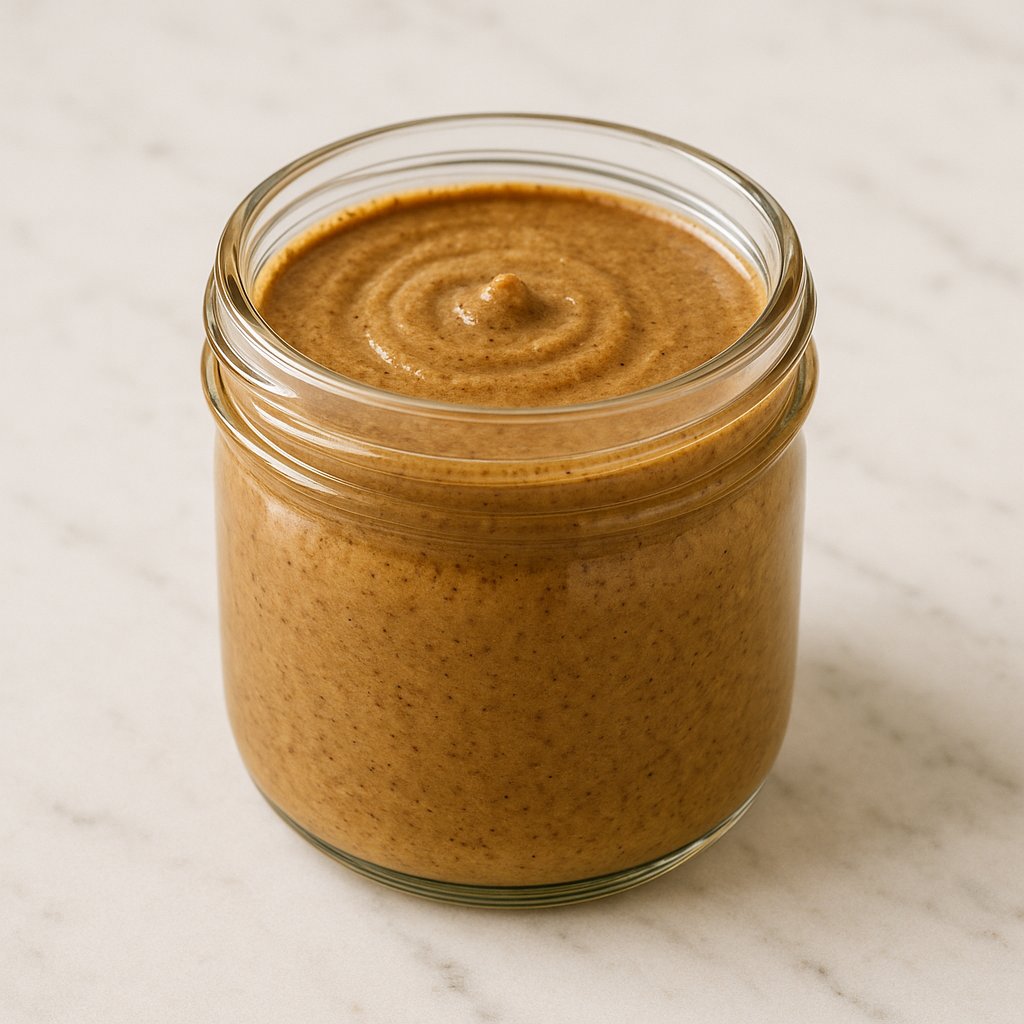
Availability and types
Hazelnut paste is a spreadable paste made from ground hazelnuts. You can buy it in many supermarkets, health-food stores and also online. It is available year-round because hazelnuts are harvested and then dried, so stocks keep for a long time. If you look for hazelnut paste in a store, you will often find different jars or tins labeled "roasted", "natural" or "with salt". These words tell you how the nuts were treated beforehand.
Origin and growing areas
Hazelnuts grow on shrubs called hazel bushes. The main countries where many hazelnuts are grown are:
- Turkey: Turkey is one of the largest producers. Hazelnuts grow there in warm hilly areas.
- Italy: Especially in regions like Piedmont there are many hazelnut orchards. Piedmont hazelnuts are famous for their good flavor.
- Spain and USA: Hazelnuts are also grown in parts of Spain and in some areas of the USA.
- Germany: In some regions of Europe, including Germany, there are smaller cultivation areas, usually in orchards or specialized plantations.
Imagine hazel shrubs as small trees growing in rows. Farmers tend them, harvest the nuts and dry them in the sun or in drying facilities. After that the nuts are shelled and further processed — for example into hazelnut paste.
Available types and variants
Hazelnut paste comes in different types. Here are the main ones, explained simply:
- Natural hazelnut paste: This paste consists only of ground hazelnuts. It has a pure, nutty flavor. It can be somewhat thick and sometimes oil separates on top — this is normal. Simply stir and it becomes smooth again.
- Roasted hazelnut paste: For this paste the hazelnuts are roasted first, i.e. briefly heated to make them more flavorful and aromatic. The paste often tastes stronger, similar to the aroma you get from toasting bread.
- Hazelnut paste with added oil: Some manufacturers add a little vegetable oil so the paste becomes softer and easier to spread. This is practical if you want to spread it on bread.
- Salted or sweetened variants: Sometimes a little salt or sugar is added to make the paste tastier or sweeter. The sweet version is more like a spread, while the salted one has a savory note.
- Mixed nut pastes: There are also mixes such as hazelnut-and-almond paste or nut pastes that combine several types of nuts. These often have more varied flavors.
- Organic hazelnut paste: This means the hazelnuts were grown without chemicals such as certain pesticides. Many people prefer organic because they consider it more natural.
- Peeled vs. unpeeled paste: In peeled paste the brown skins of the nuts have been removed. The paste is then lighter and often milder in taste. Unpeeled paste is a bit darker and has a more intense aroma.
If you want to choose a hazelnut paste, consider: do you want a pure nut flavor, a soft paste for spreading, or a sweet variant? In many stores you can also try small jars or read the ingredient list so you know exactly what's inside. Overall hazelnut paste is versatile and available in many variants, so there's something for every taste.