Menu & categories

Hazelnut brittle

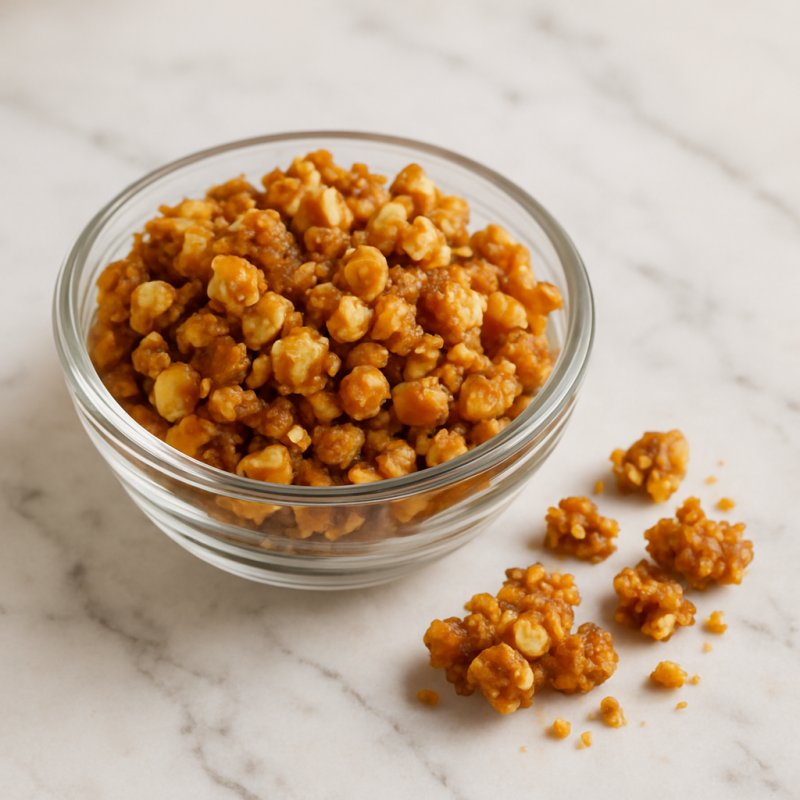
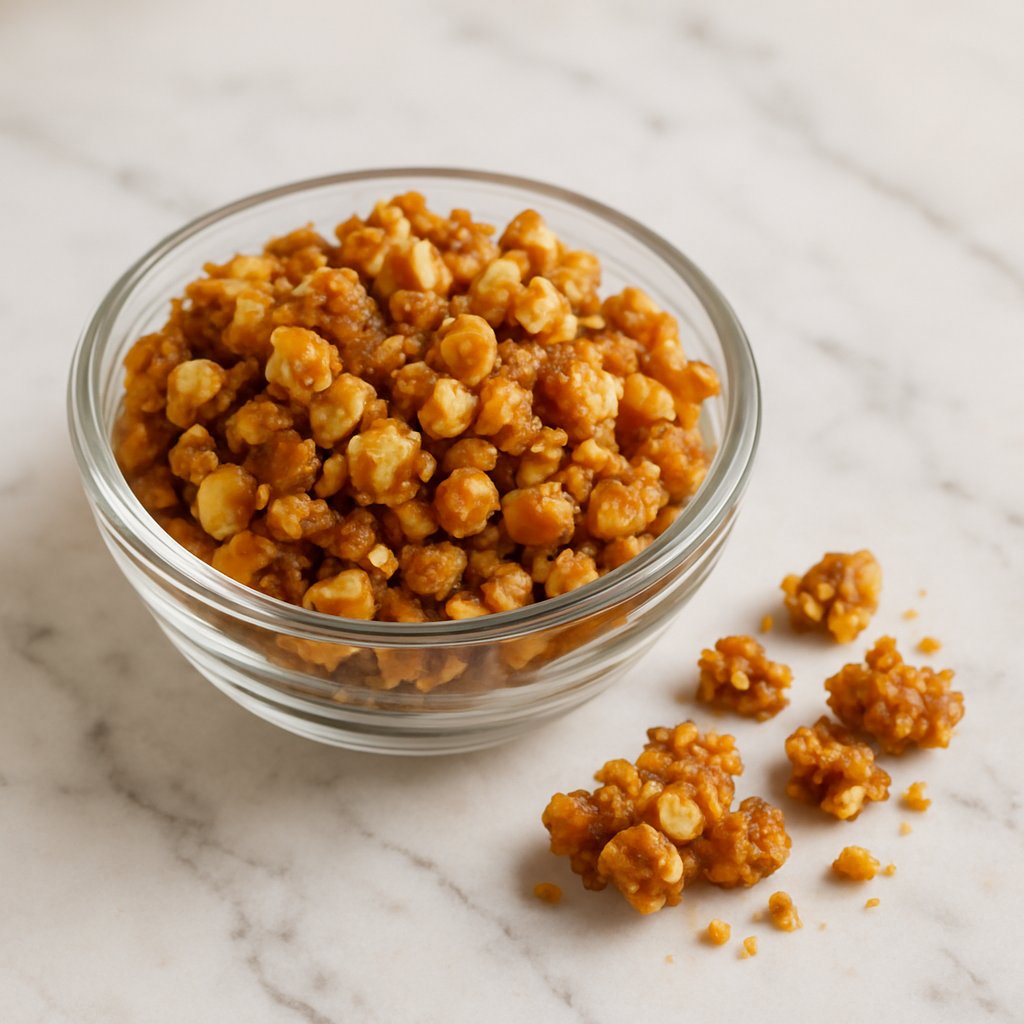
Crunchy hazelnut-sugar mixture as a topping or baking ingredient

Wiki about hazelnut brittle Nutri-Score D Vegan Yes Gluten-free Yes Lactose-free Yes Nut-free No
NUTRITION / 100 g
520 kcal 8 g Protein 50 g Kohlenhydrate 34 g Fett

Introduction

Hazelnut brittle in small crunchy pieces
I remember exactly the first time I tried hazelnut brittle: it was at a small Christmas market that smelled of cinnamon and oranges, and a vendor handed me a piece that shone so golden-brown that for a moment I thought I was holding caramel in its most elegant form. Since then this ingredient has stuck with me. Hazelnut brittle combines for me the best of two worlds — the nutty, slightly smoky depth of the hazelnut and the crunchy, glossy sweetness of caramelized sugar threads.

Making hazelnut brittle is actually simple, but it requires attention. I have often made it at home, in a pan where the sugar bubbles until it reaches the perfect amber hue. A bit of butter, a pinch of salt, chopped hazelnuts — and then that moment when you slide the mixture onto parchment paper and listen to the brittle crackle as it cools. There are few sounds that signal success as clearly.

Hazelnut brittle is versatile. I sprinkle it over desserts, mix it into ice cream, or turn it into a crunchy layer between creams. Once, at a small dinner, I broke a thin sheet of brittle as a surprise layer between two chocolate tartlets — the crackle when cutting it was almost as satisfying as their smiles.

  • Taste: nutty, buttery, caramelized
  • Texture: crunchy, glassy-breaking
  • Uses: desserts, pralines, toppings, baked goods
For me hazelnut brittle is also a piece of nostalgic cooking. A colleague once brought a tin to the office; the little shards were enough to spend an entire afternoon talking about childhood memories. It is an ingredient that tells stories — of markets, winter evenings, improvised kitchen experiments. When I entertain, I make sure to have a little brittle nearby; it's the small element that enlivens dishes and provides the final glossy accent.

Anyone making hazelnut brittle for the first time should bring patience and watch the heat carefully. The result rewards every bit of attention: a simple but powerful carrier of flavor that achieves great effect with few ingredients — and always brings a bit of joy to the table.

Availability & types

Availability and types of hazelnut brittle

Hazelnut brittle is a crunchy sweet made from roasted hazelnuts and caramelized sugar. You can find it in many supermarkets, bakeries and confectioneries because it is popular and stores well. Sometimes it is located in the baking aisle, sometimes with the nuts or in the candy section. If a shop offers fresh or handmade variants, these are often placed near cakes or the ice cream counter.

Origin and growing regions
Hazelnuts grow on shrubs or small trees that thrive best in mild, not too hot areas. The best-known growing regions are:

  • Turkey: The largest growing region in the world. Many hazelnuts used for brittle come from there.
  • Italy (especially Piedmont): Famous for particularly aromatic hazelnuts. Products from this region are often a bit more expensive because they are highly prized.
  • Spain and France: These countries also grow many nuts, often in regions with climates similar to Italy.
  • Germany, USA and Chile: These countries also cultivate hazelnuts, usually in smaller quantities, but increasingly so as demand rises.
Imagine hazelnut shrubs as little orchards — they need the right amount of sun, rain and good soil. In some countries the conditions are just right, which is why many nuts grow there.

Available varieties and variants
Hazelnut brittle comes in different forms and flavors. Here are the most common types, explained like in a simple recipe book:

  • Chunky brittle: Small or larger crumbs of nuts and caramel. Very practical for sprinkling over ice cream or cakes.
  • Leafy/fine brittle: Very thin, crispy layers, almost like broken sugar flakes with nuts. They provide a delicate texture and look attractive.
  • Whole nut in brittle: A single hazelnut is completely coated in sugar. It's like a sweet hard shell around the nut — tasty for snacking.
  • Chocolate-coated: Brittle can be additionally coated in chocolate. It's a double pleasure: crunchy and chocolaty.
  • Sweetened or less sweet: Some brittles are very sweet, others have less sugar so the nut flavor comes through more. It's like choosing between a very sweet candy and a lightly sugared pastry.
There are also variants where hazelnuts are mixed with other ingredients, such as almonds or sesame, or where spices like vanilla or a hint of salt are added to the brittle. These small differences change the taste and crunchiness.

When you buy hazelnut brittle, you can check the packaging to see where the hazelnuts come from and whether there are special notes like “handmade” or “no additives.” Fresh, handmade brittle is often crispier; at the supermarket you will find conveniently packaged portions with longer shelf life. This way you can find the right type of brittle for your ice cream, cake or simply for snacking.
Details & nutrition

Property Value
Unit g
Calories per 100 520
Protein per 100 8
Carbohydrates per 100 50
Sugar per 100 48
Fat per 100 34
Saturated fat per 100 3
Monounsaturated fat 22
Polyunsaturated fat 4
Fiber per 100 5
Vitamin C (mg) per 100 0
Vitamin D (IU) per 100 0
Calcium (mg) per 100 80
Iron (mg) per 100 2.5
Nutri-Score D
CO₂ footprint 3.5
Origin Depending on the manufacturer, often EU
Gluten-free Yes
Lactose-free Yes
Nut-free No
Vegan Yes
Note Hazelnut brittle typically consists of roasted hazelnuts and caramelized sugar; nutritional values may vary depending on the sugar and nut content.

Technical & scientific information

Hazelnut brittle is a crunchy sugar-and-nut mixture produced by caramelizing sugar and subsequently mixing or coating it with coarsely chopped hazelnuts. It is used as an ingredient in pastry, ice cream production and confectionery to provide texture, flavor and visual accents. Particle size typically ranges from finely ground powder to chunky pieces; composition ranges from pure brittle (sugar + nut) to variants with added fat, emulsifiers or flavorings.

Production and processing
The classic production involves caramelizing sucrose at temperatures between approximately 150 and 170 °C, during which, through water removal and isomerization processes, colored caramel compounds form. The molten brown sugar mass is mixed with roasted hazelnuts and poured onto a cool surface or into molds. After solidification the product is chopped or milled. Industrial variants use controlled drum drying or spray cooling to produce more uniform particles and improve shelf life. Additives such as lecithin or small amounts of vegetable fat can improve flowability and prevent caking.

Chemical composition and ingredients
Hazelnut brittle consists mainly of carbohydrates (predominantly sucrose), lipids and proteins. The hazelnut portion supplies unsaturated fatty acids, especially monounsaturated oleic acid, as well as plant protein, fiber and secondary plant compounds like polyphenols. The caramelized sugar component contains, besides sucrose, reaction products such as maltose, glucose, fructose and complex Maillard and caramel polymers responsible for color and aroma. Minerals such as magnesium, phosphorus and iron come mainly from the nuts.

Nutritional values
Nutritional values vary by recipe; on average hazelnut brittle provides about 450–550 kcal per 100 g. The typical distribution is: 40–60 g carbohydrates (mainly sugars), 20–35 g fat (predominantly monounsaturated fatty acids) and 5–10 g protein. Fiber is in the range of 3–8 g, while vitamins are present only in small amounts. Due to the high sugar and fat content, energy density is high, so portioned use is recommended.

Sensory and physical properties
Brittle is characterized by a hard, brittle texture that typically fractures during chewing and releases a strong caramel aroma. The glassy phase of the crystallized sugar component determines fracture strength; it depends on moisture content, crystallization kinetics and particle size. Moisture and storage conditions affect crispness: uptake of water vapor leads to softening through partial recrystallization or dissolution of the sugar surface.

Hygiene, shelf life and storage
Shelf life is mainly influenced by moisture, temperature and light. Stored dry, cool (approx. 15–20 °C) and airtight, brittle can remain stable for several months. Water activity and sugar supersaturation inhibit microbial growth; however, oxidative rancidity of nut oils can occur. Antioxidants or vacuum/protective atmosphere packaging are commercially used to improve quality retention.

Health aspects
Hazelnut brittle provides valuable unsaturated fatty acids, vitamins and minerals from the hazelnut, while also containing high amounts of added sugars and energy. People with nut allergies must avoid brittle, as even minimal protein residues can trigger allergic reactions. For diabetics or people on calorie-restricted diets, the high sugar and calorie content should be considered. The roasting process can produce small amounts of Maillard or caramelization reaction products; improper heating can also form undesirable by-products, so controlled temperatures and times are recommended.

Applications
Hazelnut brittle is used in many ways: as decoration on pastries and ice cream, as an enrobing component in pralines, as part of crunchy layers in cakes or as a flavor provider in chocolate fillings. Finely ground variants serve as aroma and texture contributors in doughs or mousses, while coarser fragments intentionally create crunchy contrasts.

In summary, hazelnut brittle is a technologically simple, sensorily effective ingredient combining energy-rich sugar components and nutrient-rich nut parts; its quality depends largely on roast degree, caramelization conditions and storage conditions, while health considerations focus particularly on the high sugar content and the allergenic potential of the hazelnut.

Wiki entry for: hazelnut brittle
Active now: 11 visitors of which 2 logged-in members in the last 5 minutes