Availability and types
Gummy bears are sweets that can be found almost everywhere. In supermarkets, kiosks, petrol stations and confectionery shops they sit on shelves or in large bags. Many people know the classic brands, but there are also many smaller manufacturers and even homemade variants. Because gummy bears are popular, they are available almost all year round — they do not spoil quickly if stored dry and sealed.
Origin
Gummy bears were invented in Germany at the end of the 19th century. A confectioner named Hans Riegel from Bonn popularized the small colorful creatures. Since then they have spread around the world. The basic idea has remained the same: a sticky, gummy mass is poured into molds which then become fruit gummies. Although the region of origin is Germany, gummy bears are now produced in many countries, for example in the USA, in other European countries and in Asia.
Gummy bears were invented in Germany at the end of the 19th century. A confectioner named Hans Riegel from Bonn popularized the small colorful creatures. Since then they have spread around the world. The basic idea has remained the same: a sticky, gummy mass is poured into molds which then become fruit gummies. Although the region of origin is Germany, gummy bears are now produced in many countries, for example in the USA, in other European countries and in Asia.
Growing regions (for the raw materials)
Gummy bears consist of several ingredients. Some important raw materials come from agriculture. For example:
Gummy bears consist of several ingredients. Some important raw materials come from agriculture. For example:
- Sugar: Sugar often comes from sugar cane or sugar beet. Sugar cane grows in warm countries like Brazil or India; sugar beets grow in cooler regions such as Europe or North America.
- Fruit juices or fruit concentrates: These come from fruits such as apples, oranges or berries. The fruits are grown in many regions — apples, for example, in Europe and North America, oranges often in warmer areas.
- Gelling agents: Gelatin usually comes from animal bones and skins and is processed worldwide; plant-based alternatives like agar-agar are derived from seaweeds harvested in countries with seaweed fisheries.
Available varieties and variants
There are many different types of gummy bears to suit every taste. Here are some of the most common variants, explained like for a child:
There are many different types of gummy bears to suit every taste. Here are some of the most common variants, explained like for a child:
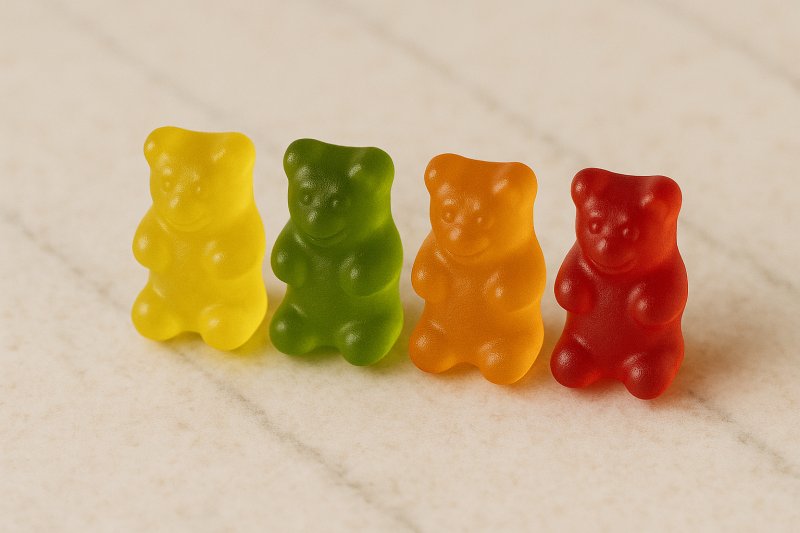
- Classic fruit gummies: These are the well-known colorful bears or fruit shapes with flavors like strawberry, lemon or apple. They are soft and sticky — a bit like chewing gum, but they do not stick to the teeth.
- Sour varieties: These have an extra tart coating or are dusted with sour powder. At the first bite the tongue tingles a little because they taste sour.
- Vegan or vegetarian variants: Regular gummy bears often contain gelatin (from animals). For people who do not want to eat gelatin, there are variants with plant-based gelling agents such as agar-agar or pectin (which comes from fruits).
- Organic gummy bears: These are made from ingredients grown without synthetic pesticides or artificial fertilizers. They are often a bit more expensive, but many people like them because they seem more natural.
- Special shapes and sizes: Besides bears there are worms, hearts, halves of fruit or giant gummy pieces. Sometimes they are also filled, for example with a creamy center.
- Flavor and color variants: There are typical fruit colors, but also unusual flavors like cola, licorice or exotic fruits. Some manufacturers use natural colorants from plants, others use artificial colorants.
If you want to buy gummy bears you will often find them in different package sizes: small bags for on the go, large pouches for parties or mixes with different varieties. There is something for everyone — whether you like them sweet, sour, vegan or classic. Gummy bears are therefore very versatile and widely available.
