Menu & categories

Ground poppy seeds

Aromatic, finely ground poppy seeds for sweet and savory baked goods

Wiki about ground poppy seed Nutri-Score D Vegan Yes Gluten-free Yes Lactose-free Yes Nut-free No
NUTRITION / 100 g
525 kcal 18 g Protein 28 g Kohlenhydrate 42 g Fett

Introduction

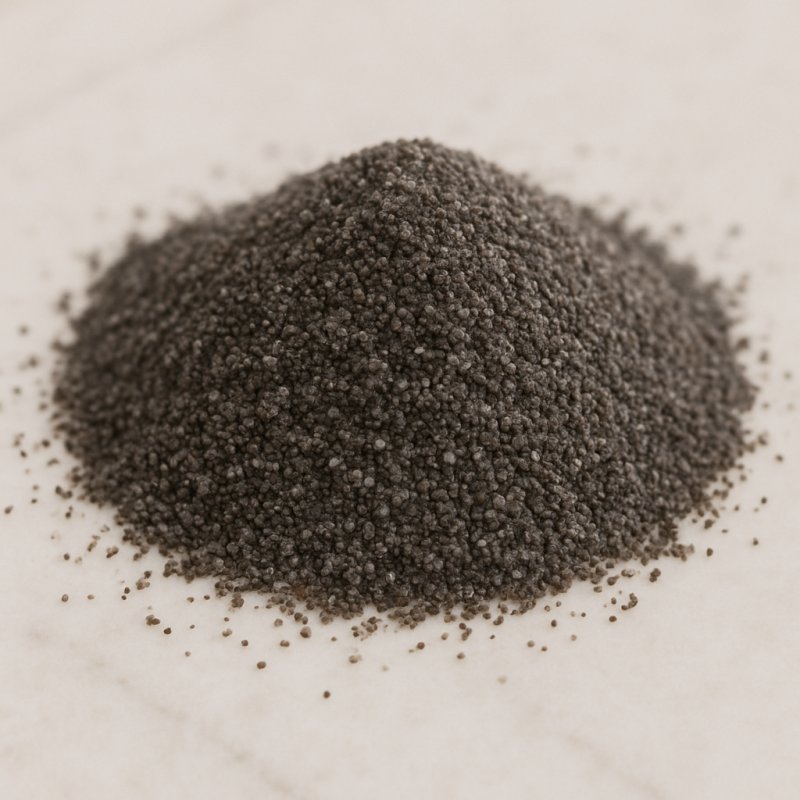
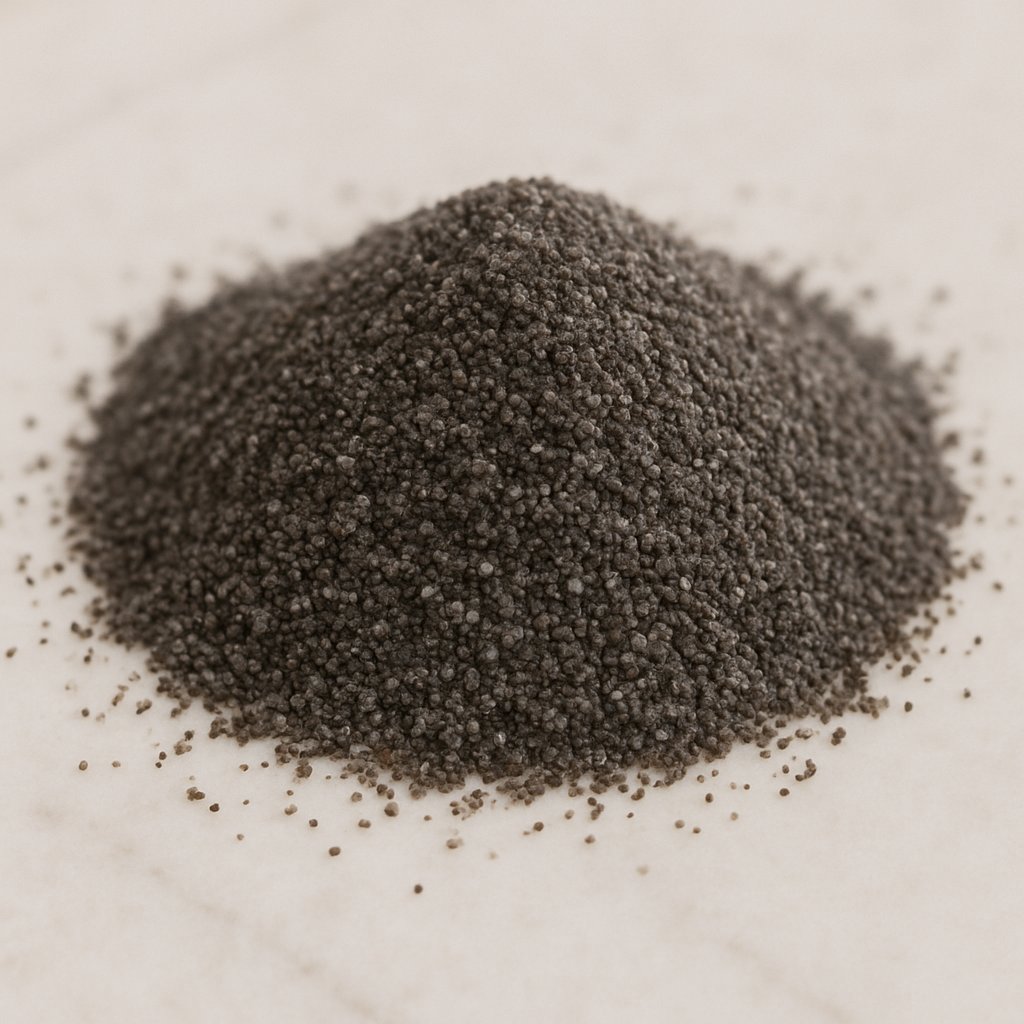
Ground blue poppy seeds in a bowl
I have a special relationship with ground poppy seeds, born from many kitchen experiments and baking escapades. The first time I had to grind poppy seeds I was in a small attic flat with an old coffee grinder that made more noise than an orchestra. The result was rough, nutty and immediately surprised me: this slightly oily, dark dust could give a simple yeast braid a depth that no powdered sugar ever could.

Ground poppy seeds are versatile and so unassuming that their impact is easily underestimated. They bring a pleasant bitterness, nutty notes and a wonderful texture to both sweet and savory dishes. I like to use them for:

  • Pastries: streusels, poppy wreaths and marble cakes benefit from their fine texture.
  • Fillings: for poppy strudels or pockets, ground poppy seeds are almost indispensable.
  • Sauces and dressings: in small amounts they give salads or yogurts an interesting depth.
  • Savory experiments: I once turned poppy seeds into a breading for fish — crispy, aromatic and surprisingly good.
Freshness matters: ground poppy seeds lose their aroma over time because their essential oils oxidize. That's why I often grind only as much as I need for the next few days. A colleague of mine was once amazed when I showed him how quickly the flavor changes; he had used poppy seeds that were a month old and wondered why his cake tasted flat.

For grinding, a good machine or a strong blender is worth it. Some prefer the traditional poppy‑mill feeling: slow, ritual and a touch of nostalgia. I like both, depending on time and mood. Ground poppy seeds also pair well with other flavors — citrus zest, vanilla, honey or toasted nuts make the profile shine.

For me ground poppy seeds are not just an ingredient but a small secret that transforms dishes. They don't need much, just respect and a place in the pantry where they stay dry and dark. The next time you bake or experiment, try a pinch of ground poppy seeds — you might later remember the first time that dark dust turned your dish into something special.

Availability & types

Availability and types of ground poppy seeds

Poppy seeds are small grains ranging from dark blue to black, harvested from the poppy plant. When these seeds are ground, they become ground poppy seeds, often used in baking or cooking. The good news: poppy seeds are available in many countries and sold in various forms. That makes them easy to find and versatile to use.

Origin and growing regions
Poppy grows in many parts of the world. Well‑known growing regions include parts of Europe such as Austria, Germany, Poland and the Czech Republic. Turkey and parts of Asia also produce a lot of poppy. In these regions climate and soil are often suitable for the plant because it likes sunny days and not too much rain. You can imagine it like a sunflower: it also prefers sun and open fields.

The plants that produce the seeds are robust field crops. Farmers sow poppy on large fields and let it grow until seed capsules form around summer. The small seeds come from these capsules and are then harvested and processed.

Available varieties and variants
Ground poppy seeds do not come in just one type. Here are the main variants, explained simply:

  • Blue poppy – This is the most commonly used poppy in Europe. The seeds are dark blue or blue‑black. It has a slightly nutty taste. You often find it in baked goods such as poppy rolls or poppy streusels.
  • White poppy – This variety has lighter seeds, almost cream‑colored. The taste is milder than blue poppy. White poppy is useful when you do not want the poppy flavor to be too pronounced, for example in light doughs or desserts.
  • Red/small poppy – In some regions there are varieties that are smaller and more reddish. They are less commonly ground but are sometimes used for special recipes.
  • Whole vs. ground – Poppy is often sold whole (as whole seeds) or already ground. Whole seeds keep fresher longer because the oils are not exposed to air as quickly. Ground poppy seeds are more convenient because they are ready to use and release their flavor more readily.
  • Coarse vs. fine grind – The texture changes depending on how finely the seeds are ground. Coarsely ground poppy has small pieces that are noticeable in baked goods. Finely ground poppy is almost like a paste and distributes more evenly in dough.
  • Toasted poppy – Sometimes poppy is briefly toasted before grinding. This intensifies the flavor, similar to toasted nuts. It's useful when you want a stronger poppy taste.
Where to find it and how to store it
Ground poppy seeds can be bought in supermarkets, well‑stocked bakeries or online. When shopping it helps to check the expiration date because the oils they contain can become rancid over time. At home you should store ground poppy seeds airtight and in the dark, for example in a well‑sealed jar in the refrigerator. This keeps them fresher longer and tasting like the first day.

In summary: ground poppy seeds are available in many variants – from blue to white poppy, coarse or finely ground and sometimes already toasted. They come from various countries in Europe and Asia and are easy to find. With proper storage they retain their good flavor and make baking and cooking wonderfully aromatic.
Details & nutrition

Property Value
Unit g
Calories per 100 525
Protein per 100 18
Carbohydrates per 100 28
Sugar per 100 3
Fat per 100 42
Saturated fat per 100 4.5
Monounsaturated fat 6
Polyunsaturated fat 30
Fiber per 100 20
Vitamin C (mg) per 100 1
Vitamin D (IU) per 100 0
Calcium (mg) per 100 1400
Iron (mg) per 100 9
Nutri-Score D
CO₂ footprint 2.7
Origin Typically from Central or Eastern Europe
Gluten-free Yes
Lactose-free Yes
Nut-free No
Vegan Yes
Note Nutritional values for 100 g of ground blue poppy seeds, average values from common nutritional tables. Poppy seeds are naturally gluten- and lactose-free, but are often processed in facilities that also handle gluten-containing cereals and nuts.

Technical & scientific information

Ground poppy seeds refers to finely broken seeds of the poppy plant Papaver somniferum, used as an ingredient in baked goods, desserts and traditional dishes. Ground poppy seeds largely consist of the natural constituents of the whole seeds; grinding increases surface area and the availability of aroma compounds and nutrients. The grains typically show a dark blue to black‑grey color and contain, in addition to a high fat fraction, proteins, fiber, minerals and secondary plant compounds.

Chemical composition and nutritional values

  • Fat content: Ground poppy seeds contain about 40–50% fat, mainly as oleic acid, linoleic acid (omega‑6) and to a lesser extent α‑linolenic acid (omega‑3). The fat is rich in polyunsaturated fatty acids, which are nutritionally relevant.
  • Proteins: Protein content typically ranges from 20–25%. The seeds provide an amino acid profile with a relatively high proportion of arginine and other semi‑essential amino acids.
  • Fiber: With around 15–20% fiber, ground poppy seeds contribute to gut health; both soluble and insoluble fractions are present.
  • Minerals and vitamins: Poppy is a significant source of calcium, iron, magnesium, phosphorus and potassium. B vitamins, particularly thiamine and niacin, are also present in small amounts.
  • Secondary plant compounds: Phenolic compounds and melanins (responsible for the dark color) have antioxidant activity and influence flavor and shelf life.
Processing methods

  • Cleaning: Seeds are cleaned before grinding to remove foreign matter and impurities.
  • Roasting (optional): Gentle roasting can intensify flavor and aroma; volatile aroma profiles and lipid structure change slightly.
  • Grinding: Grind sizes range from coarse to fine. Industrial and artisanal mills (roller, impact or cone mills) are used. Finely ground poppy releases more oil and aroma compounds, which affects processing in doughs.
  • Hydrogenation and stabilization: To extend shelf life, ground poppy seeds can be vacuum packed or protected with antioxidants, since the high fat content is prone to oxidation.
Sensory properties and uses

Ground poppy seeds have a nutty, slightly bitter aroma with pronounced roasted notes in toasted products. In baked goods such as poppy strudel, bun fillings or cakes, they provide texture and flavor. Due to their oiliness they influence dough consistency and moisture retention. They are suitable for both sweet and savory preparations as well as for making poppy spreads or pastes.

Health aspects

  • Nutritional contribution: Because of their fatty acid profile, protein content and minerals, ground poppy seeds can contribute to nutrient intake when consumed in moderate amounts.
  • Oxidation sensitivity: The polyunsaturated fatty acids make ground poppy seeds susceptible to oxidation. Cool, light‑protected and airtight storage is important to prevent rancidity.
  • Alkaloids: Raw seeds of Papaver somniferum can contain trace amounts of natural alkaloids such as morphine and codeine. Food‑grade poppy products are generally processed and monitored so that these levels are well below health‑relevant thresholds. Still, very high consumption or medically sensitive situations (e.g. drug tests) can show traces of these alkaloids.
  • Allergies: Plant proteins can cause allergic reactions in sensitive individuals; isolated cases have been documented, though they are rare.
Shelf life and storage

Due to the high fat content, ground poppy seeds are prone to quality losses. Stored cool, dry and protected from light and in airtight packaging, flavor and nutritional value are preserved longer. For larger needs it is advisable to keep them in the refrigerator and process them soon after opening.

In summary, ground poppy seeds are a nutritionally dense ingredient with a high proportion of valuable fatty acids, proteins, fiber and minerals. Their use requires attention to storage conditions and quality assurance, particularly regarding oxidation and possible alkaloid traces, to ensure product quality, flavor and safety.

Wiki entry for: ground poppy seed
Active now: 15 visitors of which 2 logged-in members in the last 5 minutes