Menu & categories

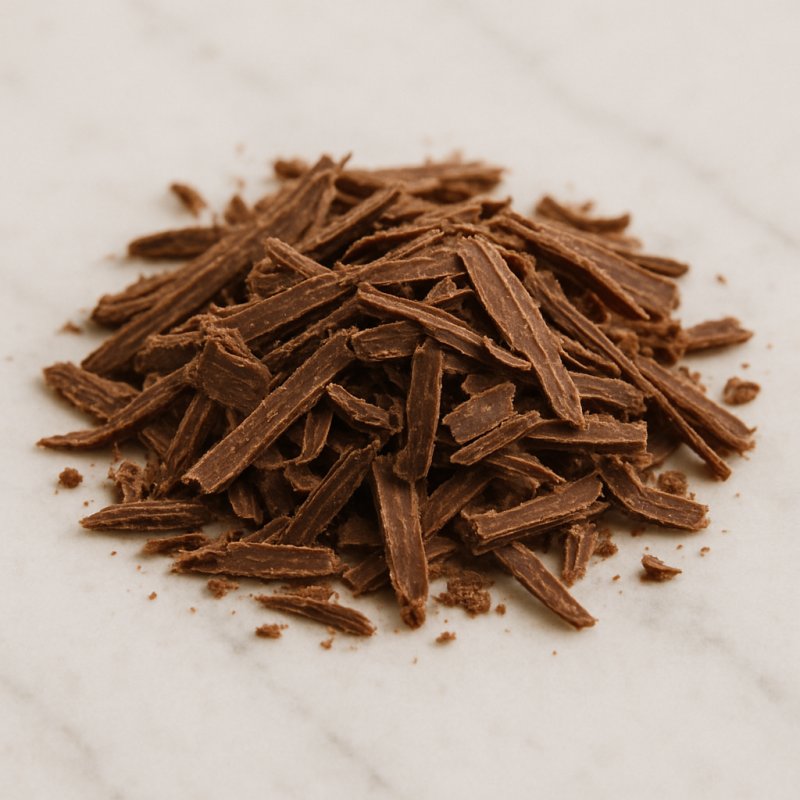
Grated chocolate

Finely grated chocolate for baking, decorating and enhancing

Wiki about grated chocolate Nutri-Score E Vegan No Gluten-free Yes Lactose-free No Nut-free No
NUTRITION / 100 g
535 kcal 6.0 g Protein 59.0 g Kohlenhydrate 31.0 g Fett

Introduction

Grated chocolate on a wooden board
I love grated chocolate. When I think of this small, unobtrusive element, I don't see mere flakes of cocoa and sugar, but a multifunctional kitchen tool that gives desserts a pinch of magic. Grated, chocolate acts like confetti for adults: it sprinkles over cream, nestles against ice cream and whispers a subtle, bittersweet promise on cakes.

My first conscious memories of grated chocolate are tied to a Sunday afternoon with a friend. We had decided to decorate a cake and, instead of arguing for hours about one and three-quarter millimeter decoration details, we reached for the bag with a block of chocolate and a simple kitchen grater. A few minutes later fine shavings like snowflakes lay on the glaze and the cake looked as if it had come out of a pastry class.

Grated chocolate is so versatile that I always keep it in my pantry. It works particularly well in many situations:

  • Quick decoration: A final, elegant touch on cupcakes, cakes or mousse.
  • Texture play: Fine shavings give layers of creams and mousses a pleasant break without dominating.
  • Aroma booster: Grated dark chocolate intensifies flavors, while milk chocolate contributes sweetness and nostalgia.
I remember a colleague who completely underestimated grated chocolate. He sprinkled it generously over his coffee and was surprised how much a bit of chocolate can brighten the morning. Since then I often suggest trying small experiments: try grated white chocolate on beetroot salad or dark shavings on grilled pears. Sometimes it is precisely these small, unexpected combinations that bring excitement to a simple course.

In practical use I pay attention to temperature and tool. A cooled but not too hard chocolate can be grated evenly; a coarse grater produces rustic chips, a fine Microplane produces gossamer flakes. And yes, it's worth experimenting with different qualities: couverture chocolate behaves differently from bar chocolate, and the result affects both mouthfeel and appearance.

For me grated chocolate is more than an ingredient: it is a small ritual that refines dishes and evokes memories. Sometimes a few grams are enough to make something ordinary special. That makes it a faithful companion in my kitchen – always ready, with a soft crackle, to provide moments of enjoyment.

Availability & types

Availability and types

If you think of grated chocolate, imagine fine flakes of chocolate falling over a cake or pudding. These small pieces are rarely their own plant — they come from chocolate, which is made from the seeds of the cacao tree. Cacao trees grow mainly in warmer regions near the equator. Well-known growing areas are countries in West Africa such as Ghana and the Ivory Coast, but also in South America (for example Ecuador and Brazil) and in parts of Southeast Asia. You can imagine that it is often warm and humid there, similar to a greenhouse for tropical plants.

Grated chocolate comes in many varieties, just like bar chocolate. Here are the main types you find in the store:

  • Dark chocolate – This chocolate tastes strong and less sweet. It contains a lot of cocoa. When grated, dark chocolate flakes become somewhat more bitter in taste; they are well suited for adults who prefer things not too sweet.
  • Milk chocolate – This is milder and sweeter because it contains milk. Grated, it is often used over ice cream or cake for a creamy-sweet flavor that many children enjoy.
  • White chocolate – Technically it does not contain cocoa solids, but mainly cocoa butter, sugar and milk. It is very sweet and has a light color. Grated white chocolate looks pretty as a contrast to dark desserts.
  • Couverture – This is an especially smooth chocolate often used by bakers. Grated couverture melts nicely and is often used when the chocolate will be melted again or needs to look smooth.
  • Mixed varieties – Some manufacturers offer special variants with nuts, caramel pieces or flavors like orange. These are sometimes also available grated as sprinkles or mixes.
You can get grated chocolate in different ways:

  • Ready bought – Supermarkets often stock bags of chocolate shavings (sprinkles) or decoration. These are convenient: ready to use and already in small pieces.
  • Grate yourself – You can also grate a bar of chocolate at home with a grater or a knife. This has the advantage that you control the size and get fresh shavings.
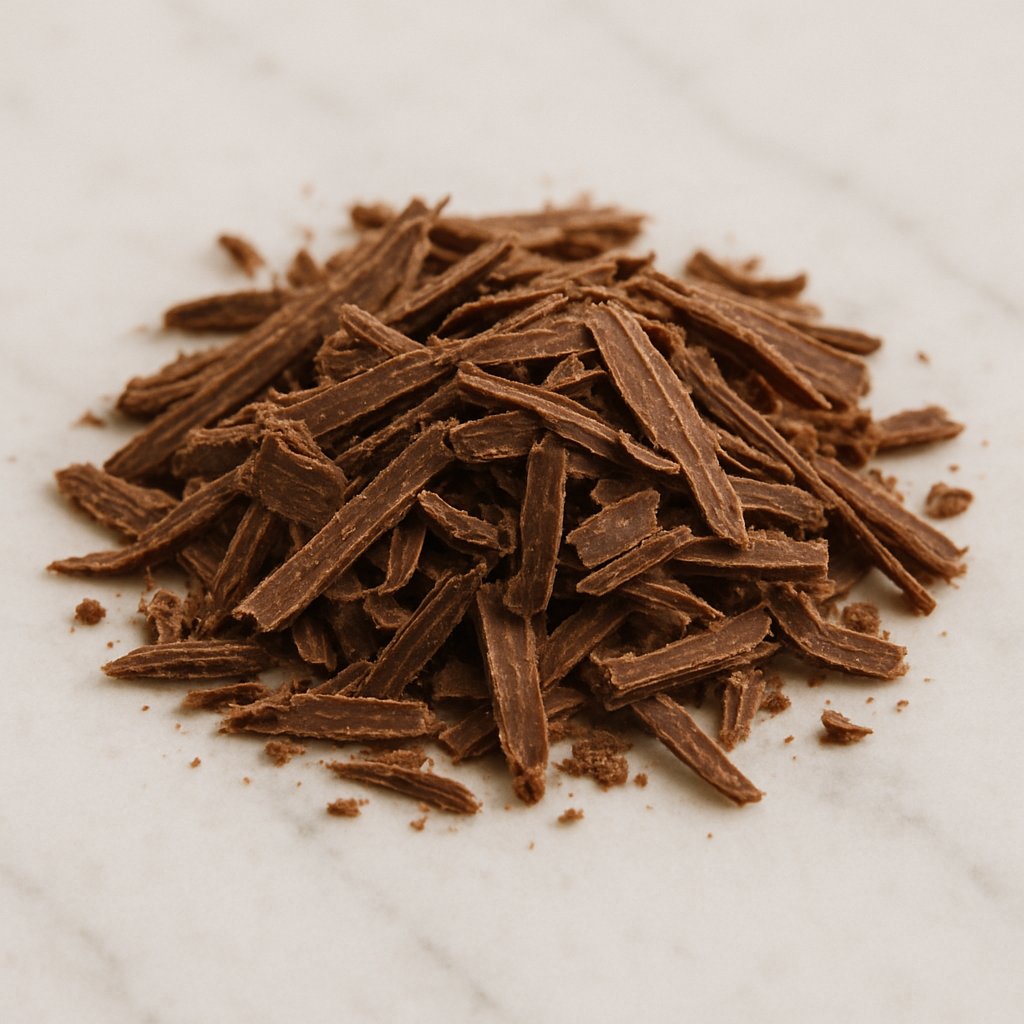
  • Sliced or shaved variants – Some ingredient shops sell thin “shavings” or shaved chocolate, which are usually a bit larger and more decorative than sprinkles.
What to watch out for:

  • Shelf life: Chocolate keeps quite well if stored dry and cool. Open packages should be kept well sealed so they do not smell virtuous or melt.
  • Temperature: In heat grated chocolate can melt. If you need the flakes as decoration, keep them cool and sprinkle them shortly before serving the dessert.
  • Quality: Good chocolate has an intense taste. If you use chocolate for baking, it can be worth choosing a slightly better quality because the flavor will hold up better.
In summary: Grated chocolate comes from cocoa beans grown in tropical countries and is available in types such as dark, milk, white and special variants. You can buy it ready-made or grate it from bars yourself. Pay attention to storing it cool and dry so it looks and tastes good when decorating.
Details & nutrition

Property Value
Unit g
Calories per 100 535
Protein per 100 6.0
Carbohydrates per 100 59.0
Sugar per 100 52.0
Fat per 100 31.0
Saturated fat per 100 19.0
Monounsaturated fat 9.0
Polyunsaturated fat 1.0
Fiber per 100 7.0
Vitamin C (mg) per 100 0
Vitamin D (IU) per 100 0
Calcium (mg) per 100 70
Iron (mg) per 100 2.5
Nutri-Score E
CO₂ footprint 5.0
Origin Raw materials mainly from cocoa-growing countries in West Africa or South America, processed in Europe
Gluten-free Yes
Lactose-free No
Nut-free No
Vegan No
Note Nutritional values refer to grated milk chocolate with approx. 30–35% cocoa content; values may vary depending on the manufacturer.

Technical & scientific information

Grated chocolate refers to finely fragmented chocolate that has been transformed by grating or shaving into fine flakes, shavings or powder equivalents. The starting form can be dark, milk or white chocolate; grating primarily changes the physical form, not the chemical composition of the chocolate used. Grated chocolate is frequently used as decoration, for stirring into hot drinks, as an ingredient in baked goods or for quick melting because the increased surface area accelerates melting and aroma release.

Composition and ingredients
The chemical composition of grated chocolate basically corresponds to that of the original chocolate. Key components are:

  • Cocoa components: Cocoa mass and cocoa butter provide cocoa-specific aroma compounds, polyphenols (flavonoids) and fat. The cocoa solids content influences taste, color and the level of secondary plant compounds.
  • Fats: Mainly cocoa butter, supplemented in some varieties by milk fat or vegetable fats; the fat matrix contributes significantly to melting temperature and mouthfeel.
  • Milk components: Present in milk chocolate: milk powder, whey powder or condensed milk, which add proteins, lactose and milk fat.
  • Sugar: Sucrose is the primary sweetener; with sugar substitutes or sweeteners the proportion varies accordingly.
  • Emulsifiers and flavoring: Lecithin (usually soy) to improve rheology and sometimes vanillin or natural flavors to stabilize taste.
Nutritional values
The nutritional value of grated chocolate largely matches that of the ungrated source chocolate, but differs depending on the variety (dark vs. milk vs. white chocolate). Typical nutritional characteristics per 100 g are approximately:

  • Calories: 500–600 kcal
  • Fat: 30–40 g, with saturated fatty acids significant due to cocoa butter
  • Carbohydrates: 45–60 g, with a high proportion of sugars
  • Protein: 5–8 g (higher in milk chocolate)
  • Fiber and minerals such as magnesium, iron and potassium in small amounts
Processing methods
Grated chocolate is produced mechanically. Common methods are:

  • Shaving or grating: Thin shavings are removed with a kitchen slicer or grater; temperature and hardness of the chocolate influence the shape of the shavings.
  • Tempering before grating: Controlled heating and cooling stabilizes the crystalline structure of the cocoa butter; tempered chocolate grates into rather brittle, defined flakes.
  • Freezing and subsequent milling: For very fine particles, chocolate can be briefly chilled to facilitate grinding in a mill.
Physical properties
The increased surface area of grated chocolate raises heat uptake during melting and accelerates the release of volatile aroma compounds. Shape, thickness and temperature of the shavings affect melting kinetics and mouthfeel. Because cocoa butter melts at body temperature, fine grating generally leads to a more intense melting sensation in the mouth.

Health aspects
The health assessment depends on variety and consumption amount. Dark chocolate with a high cocoa content provides more flavonoids, which have antioxidant properties and, when consumed in moderation, have been associated with beneficial effects on blood pressure and vascular function. At the same time chocolate, and therefore grated chocolate, is energy-dense and high in sugar, which can contribute to weight gain and an increased risk of metabolic disorders if consumed in excess. Allergens such as milk proteins, soy lecithin and possible traces of nuts should be considered.

Usage and storage
Grated chocolate should be stored cool, dry and protected from light to avoid fat bloom and aroma loss. In the kitchen it is suitable for decorations, as an inclusion in fillings, for quick melting into sauces or as an aroma contributor in hot drinks. In professional applications the finer form allows a more even distribution of cocoa flavor in masses and creams.

In summary, grated chocolate is a processed form of chocolate with an unchanged chemical profile compared to the source product, but its fine physical structure produces functional effects on melting behavior, flavor release and culinary applications. Its nutrient and ingredient profile varies with the type of chocolate, so selection and consumption should be situation-dependent.

Wiki entry for: grated chocolate
Active now: 17 visitors of which 2 logged-in members in the last 5 minutes