Menu & categories

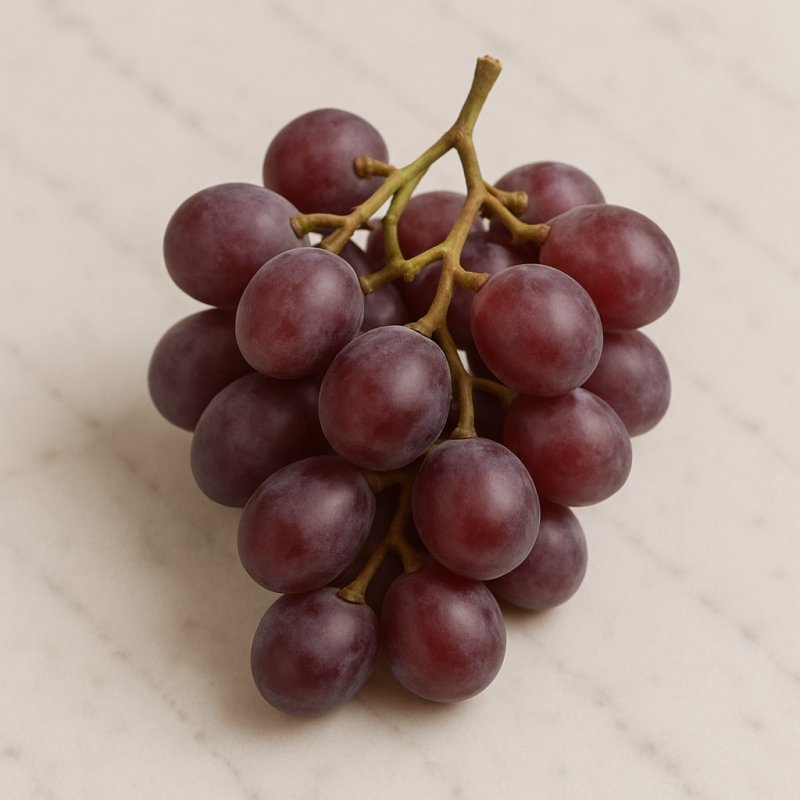
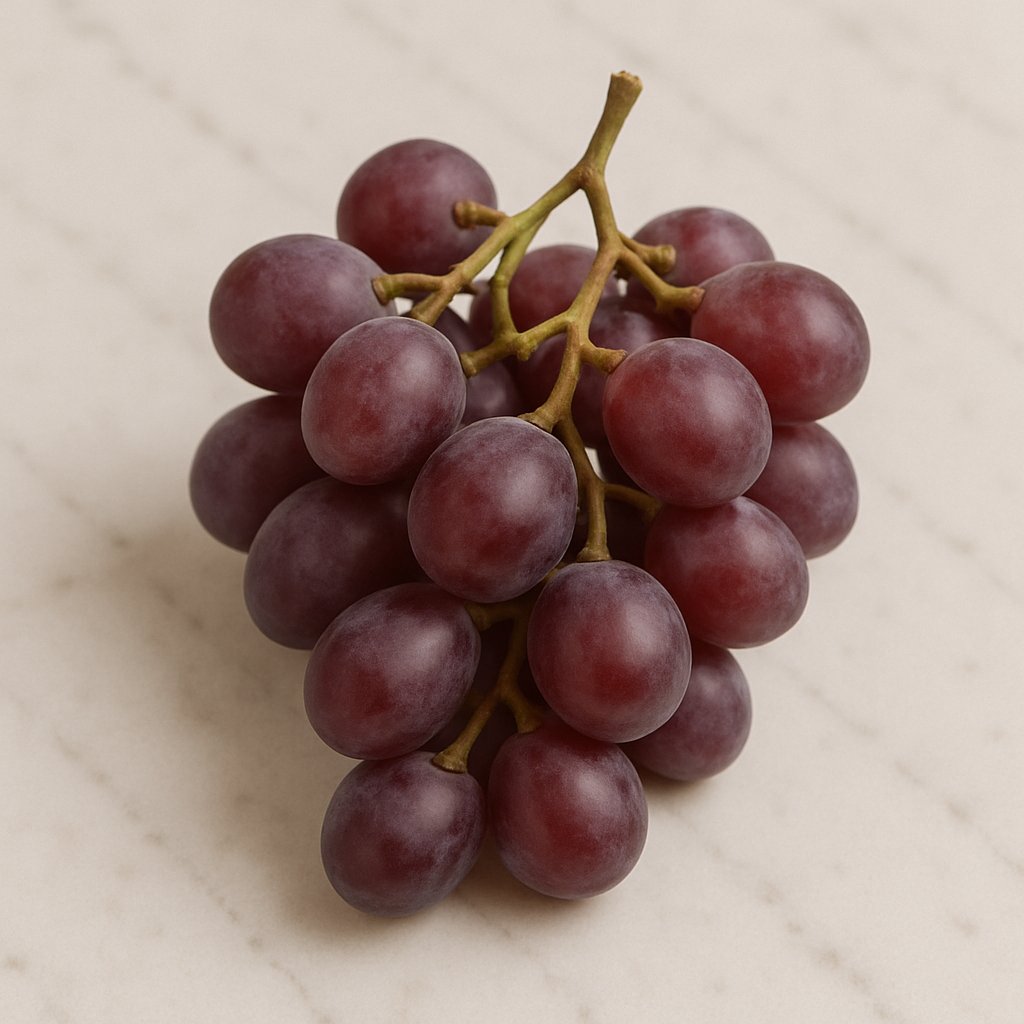
Grapes

Juicy, sweet berries rich in valuable vitamins and antioxidants

Wiki about grape Nutri-Score B Vegan Yes Gluten-free Yes Lactose-free Yes Nut-free Yes
NUTRITION / 100 g
69 kcal 0.7 g Protein 18 g Kohlenhydrate 0.2 g Fett

Introduction

Fresh green and red grapes in a bowl
I still remember the first summer I truly came to appreciate grapes: it was at a small market on the outskirts of town, where an old vendor pressed a handful of dark berries into my hand and said: »Try first, then ask.« I did, and was immediately surprised by the balance of sweetness, acidity and that subtle, almost balsamic aroma. Since then grapes have been for me more than just a snack; they are a small, versatile wonder with countless faces in the kitchen.

Grapes feature in many of my memories: as a quick energy boost between appointments, as a glamorous finish to a menu in the form of caramelized oven grapes, or as an unassuming hero in a salad with goat cheese and walnuts. A colleague once brought a bowl to the office because he believed grapes would improve concentration; we laughed, but in the end we were all more productive – and happier.

What I particularly love about grapes is their variety. From crisp, fresh white table grapes to dark, almost wine-like varieties that slowly caramelize into syrup in the oven, they change texture and flavor depending on how they are treated. Grapes can be used raw, grilled, cooked or fermented. They are also the basis for wine, grape-seed oils and uncomplicated desserts.

Practical advantages at a glance:

  • Grapes are versatile and suitable for both sweet and savory dishes.
  • They are easy to store and ideal as a quick snack.
  • Different ripeness levels and varieties offer a wide range of flavors.
A small tip from my kitchen: when I have guests I briefly sauté grapes in butter, add a little thyme and serve them with roasted chicken or goat cheese. It feels extravagant, but is very easy. Grapes are more than just fruit; they are short, lively flavor stories waiting to be told in your next meal.

Availability & types

Availability and types of grapes

Grapes are small, juicy fruits grown in many parts of the world. You can find them fresh in supermarkets, dried as raisins, in juices, jellies or as wine. Availability here means when and where grapes can be purchased: in many countries grapes are available year-round. This is because they are grown in different regions and climate zones, and modern storage and transport methods keep them fresh for a long time. If you see fresh grapes in winter, they often come from countries with warm climates, for example South Africa, Chile or Australia. In summer they more often come from Europe, for example Spain, Italy or Greece.

Origin and growing regions

  • Europe: Many grapes are grown in Mediterranean countries. Spain, Italy and Greece are major producers. The climate there is warm and sunny – ideal for sweet grapes.
  • North America: In the USA (for example California) and Canada there are also large wine and table grape growing areas. Both table grapes and wine grapes are produced there.
  • South America and Africa: Countries such as Chile, Argentina and South Africa supply many grapes especially during the European winter, because their summer falls in our winter.
  • Australia and New Zealand: These countries also export grapes to other parts of the world. This helps ensure grapes are available year-round.
Varieties and types

There are hundreds of grape varieties, but they can be broadly divided into a few main groups to make them easier to understand:

  • Table grapes: These grapes are eaten fresh. They are often larger, crisp and have thinner skins. Common table grape colors are green (sometimes called “light”), red to dark red and purple to black. An example: “Thompson Seedless” is a green, seedless variety that many children like because it is sweet and easy to eat.
  • Wine grapes: These grapes are mainly grown for winemaking. They can be smaller and tarter than table grapes and often have seeds. Wine grapes come in many varieties that provide different aromas for different wines.
  • Raisin grapes: Some grapes are specifically dried to make raisins. Very sweet, seedless varieties are usually used for this. When dried the fruits shrink and become the sweet raisins found in muesli.
  • Seedless vs seeded grapes: Seedless grapes are convenient to eat – no bothersome seeds. Seeded grapes have small seeds inside that some people dislike. Both types can be red, green or dark.
  • Special varieties: There are also special grapes with unusual characteristics – for example extra sweet, very large or intensely aromatic ones. Some have been bred to be particularly resistant to pests or weather conditions.
How do grapes differ in taste and appearance?

Green grapes are often somewhat crisper and less sweet than red or dark varieties, which are frequently more aromatic and sweeter. Wine grapes can taste very different – from tart to highly aromatic. Raisins, on the other hand, are concentrated and sweet because drying removes water and leaves the sugar behind. A simple comparison: fresh grapes are like a cool drink on a hot day, while raisins are like a sweet cookie – both are grapes, but with a very different experience.

In summary: grapes come in many varieties and from many countries, so they are available almost year-round. Whether you want to eat them fresh, turn them into juice, dry them or make wine – there is a grape variety to suit every taste and use.
Details & nutrition

Property Value
Unit g
Average weight per piece 5
Calories per 100 69
Protein per 100 0.7
Carbohydrates per 100 18
Sugar per 100 16
Fat per 100 0.2
Saturated fat per 100 0.07
Monounsaturated fat 0.05
Polyunsaturated fat 0.05
Fiber per 100 0.9
Vitamin C (mg) per 100 10
Vitamin D (IU) per 100 0
Calcium (mg) per 100 10
Iron (mg) per 100 0.4
Nutri-Score B
CO₂ footprint 0.5
Origin Mediterranean region, Europe, sometimes overseas depending on the season
Gluten-free Yes
Lactose-free Yes
Nut-free Yes
Vegan Yes
Note Nutritional values for fresh table grapes, raw; values may vary slightly depending on variety and ripeness.

Technical & scientific information

Grapes (genus Vitis) are the berry fruits of several grapevine varieties, botanically belonging to the vines. They consist of a thin epidermal skin, a multilayered flesh (mesocarp) and optional seeds, whose size and number vary by variety. Grapes grow in compact clusters; the composition of the fruit is strongly influenced by genetics, climate, soil conditions and the degree of ripeness at harvest.

Chemical composition and constituents
Grapes contain mainly water (about 70–85 %) and carbohydrates, predominantly as the monosaccharides glucose and fructose and to a lesser extent sucrose. Sugar content increases with ripeness and is an important quality parameter for wine and table grapes. Organic acids, particularly tartaric acid, malic acid and to a lesser extent citric acid, determine acidity and flavor. Grapes also contain fiber (mainly in the skin), small amounts of protein and lipids that are primarily located in the seeds.

Polyphenols and secondary plant compounds
A characteristic feature of grapes is their content of polyphenols. These include flavonoids (e.g. anthocyanins in red varieties, flavanols such as catechins), stilbenes like resveratrol and non-flavonoid phenolic compounds. These compounds are responsible for color, astringency and antioxidant properties. Concentrations are markedly higher in the skin and seeds than in the flesh.

Nutritional values (approximate averages per 100 g fruit)

  • Calories: ca. 60–70 kcal
  • Carbohydrates: 15–18 g (of which sugars 12–16 g)
  • Fiber: 0.9–1.5 g
  • Protein: 0.6–0.8 g
  • Fat: 0.2–0.6 g
  • Vitamins: mainly vitamin C in moderate amounts; small amounts of B vitamins
  • Minerals: potassium is most prominent, alongside traces of calcium, magnesium and iron
Processing methods
Grapes are consumed fresh as table grapes or processed into products such as wine, juice, raisins, jelly and vinegar. Winemaking involves steps such as destemming, crushing, fermentation by yeasts (Saccharomyces cerevisiae and others) and aging. During alcoholic fermentation yeasts convert sugars into ethanol and carbon dioxide; simultaneously microbiological and chemical processes alter aromas, acid profiles and pigments. Juice extraction can be carried out by mechanical pressing, with gentle methods affecting the extraction of phenols and color compounds. For raisins grapes are preserved by drying, which concentrates sugars and aroma compounds.

Health aspects
Grapes provide quickly available energy through simple sugars and contribute vitamins, minerals and secondary plant compounds to the diet. Polyphenols in grapes are associated with antioxidant effects; resveratrol and certain flavonoids have shown in vitro and animal studies cellular protection, anti-inflammatory modulation and cardioprotective properties. Clinical evidence in humans is heterogeneous: moderate positive effects on blood pressure, lipid metabolism and endothelial function have been observed, but these depend in part on dose, source (wine, grape juice, extracts) and study design. People with disorders of carbohydrate metabolism should account for the sugar content. Allergies to grapes are rare but can occur in sensitized individuals. Grape seeds and skins contain polyunsaturated fatty acids and phenols that are used in extracts for nutraceutical applications.

Storage and spoilage
Fresh grapes are sensitive to moisture loss, fungal infection (e.g. Botrytis cinerea) and mechanical damage. Cooling slows metabolic processes and microbial growth. In the wine industry controlled microbiological processes are desirable, whereas in table grape production remediation strategies are applied to prevent mold and storage losses.

In summary, grapes are versatile fruits of high importance in nutrition and viticulture. Their physical structure, content of simple sugars, organic acids and the diverse spectrum of polyphenols shape sensory properties, processing suitability and potential health effects. Research in areas such as phytochemistry, postharvest technology and clinical studies on polyphenol-rich grape extracts remains active to further clarify mechanisms of action and application fields.

Wiki entry for: grape
Active now: 12 visitors of which 2 logged-in members in the last 5 minutes