Menu & categories

Grapes

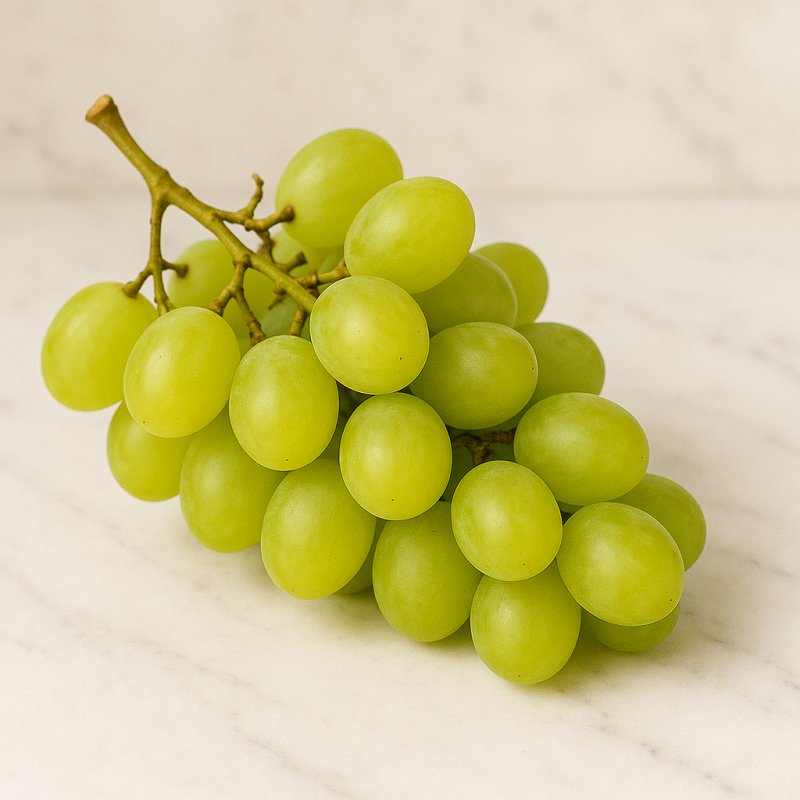
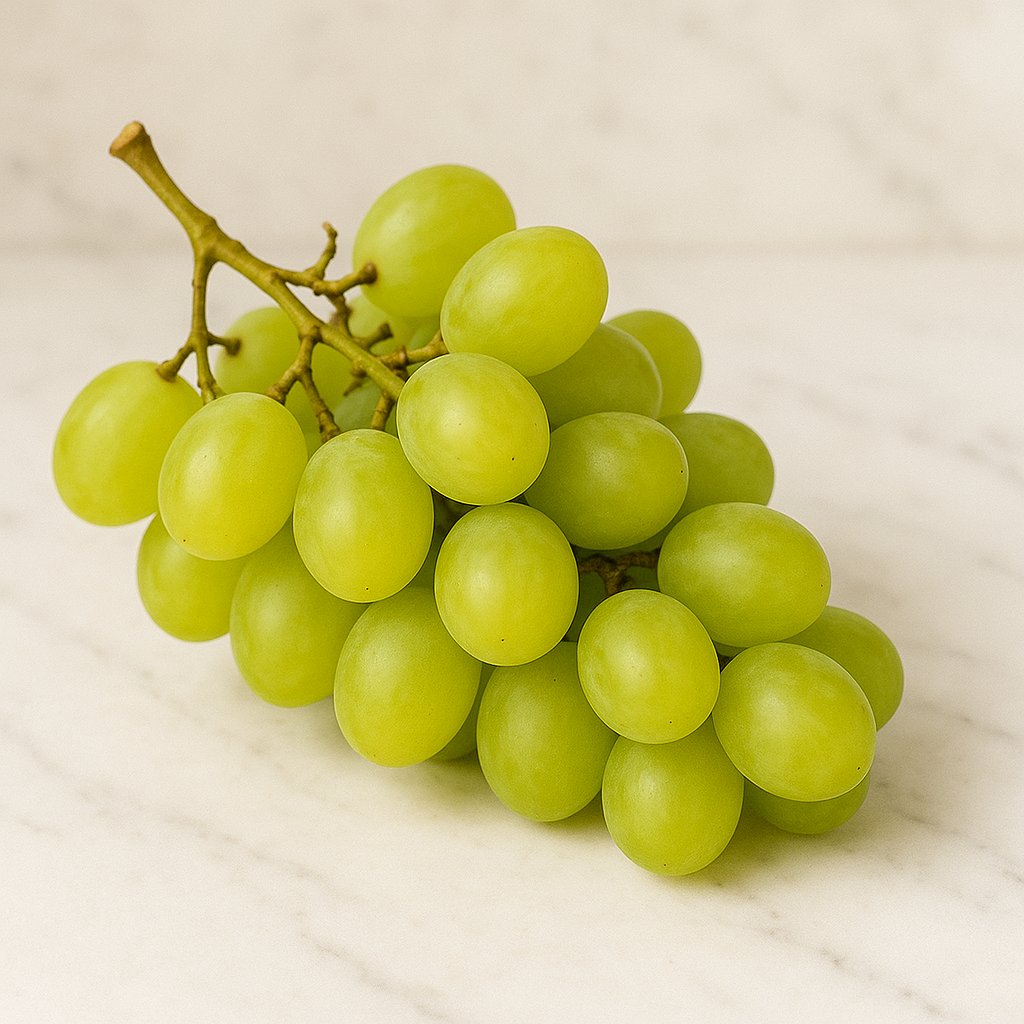
Juicy, sweet grapes – ideal as a snack or in fruit salad.

Wiki about grape Nutri-Score A Vegan Yes Gluten-free Yes Lactose-free Yes Nut-free Yes
NUTRITION / 100 g
69 kcal 0.7 g Protein 18.1 g Kohlenhydrate 0.2 g Fett

Introduction

Juicy green grapes

I have a weakness for grapes, which shows up in the smallest moments: a spontaneous reach for a bunch while leafing through a newspaper, a piece during the lunch break, or a handful as a sweet end to a long day. Grapes are for me more than just fruit; they are texture, scent and memory at once. I still remember a late summer when the smell of vines was in the air and a friend urged us to nibble straight from the vine, as if there were no tomorrow.

The variety fascinates me again and again. There are seeded and seedless types, light and dark-blue grapes, each with its own sweetness and acidity. Some varieties are better for fresh eating, others unmistakably become wine, raisins or jam. A colleague of mine swears by briefly freezing red wine grapes and using them as mini ice cubes in the glass; I found the idea as quirky as charming and tried it immediately.

Practical and tasty, grapes are incredibly versatile in the kitchen. I like to use them:

  • as a fresh topping on salads for a sweet-tart contrast;
  • in sauces for poultry or cheese as a surprising component;
  • as a frozen snack on hot days;
  • or processed into compote and jam.
Besides the taste, I also like the ease of handling. Grapes store well if kept dry and washed only shortly before eating. When shopping I look for taut skin and a matte, not shriveled surface. A small trick I learned: a splash of lemon juice preserves the color of light grapes in fruit bowls.

Grapes combine culinary pleasure with nostalgia, with summer afternoons and spontaneous table conversations. They are uncomplicated, surprising and always ready to give small moments of happiness.

Availability & types


Availability and types of grapes

Grapes are fruits that people have eaten and used for thousands of years. Their original homeland probably lies around the Caucasus and Central Asia – where Europe and Asia are close together. From there people took grapes as they traveled and moved to other countries. Over the centuries grapes have been cultivated in many warm regions of the world.

Today grapes grow in many places. Important growing regions include:

  • Europe: Countries like Italy, Spain, France and Germany are known for grapes. Some regions are especially famous for wine.
  • America: California in the USA is a large growing area; Chile and Argentina also supply many grapes.
  • Africa and Australia: South Africa and Australia also produce many grapes, often for export to other countries.
  • New Zealand: Known for special varieties and high quality, especially in the south of the country.
Grapes come in many different varieties and forms. They can be roughly divided into three groups:

  • Table grapes: These grapes are eaten fresh. They are usually larger, have thinner skins and taste juicy. A well-known example is the Thompson Seedless variety (also called Sultana).
  • Wine grapes: These varieties are used for wine production. They are often smaller, have thicker skins and more sugar – this helps fermentation into wine. Examples are Cabernet Sauvignon and Chardonnay.
  • Raisin or dried grapes: These grapes are dried to make raisins. Some table grapes or special varieties are particularly suitable for drying.
Further differences are color and whether the grapes have seeds:

  • Colors: Green (often called "white"), yellowish, red, pink and dark purple to black. Color says something about taste and use.
  • Seed content: There are seeded and seedless varieties. Seedless grapes are convenient to eat, especially for children.
Regarding availability: fresh grapes in the northern hemisphere are typically available from late summer to autumn. But because many countries export grapes, you often find them in supermarkets year-round. It works like a long chain: grapes are harvested, cooled and shipped by ship or plane so they stay fresh. If you look for organic grapes, they are sometimes available only in certain stores or at certain times.

A simple tip: if grapes look plump and shiny and are firmly attached to the bunch, they are fresh. Better to leave those with soft spots or a musty smell. That way you will find the tastiest option for your preference – whether for snacking, baking or for grape juice or wine.
Details & nutrition

Property Value
Unit g
Average weight per piece 5
Calories per 100 69
Protein per 100 0.7
Carbohydrates per 100 18.1
Sugar per 100 15.5
Fat per 100 0.2
Saturated fat per 100 0.1
Monounsaturated fat 0.0
Polyunsaturated fat 0.1
Fiber per 100 0.9
Vitamin C (mg) per 100 10.8
Vitamin D (IU) per 100 0
Calcium (mg) per 100 10
Iron (mg) per 100 0.4
Nutri-Score A
CO₂ footprint 0.7
Origin EU (e.g. Italy/Spain), seasonally variable
Gluten-free Yes
Lactose-free Yes
Nut-free Yes
Vegan Yes
Note Nutritional values may vary slightly depending on variety (light/dark, seedless) and ripeness.

Technical & scientific information


Grapes (genus Vitis) are the spherical berries of the grapevine and form the basis for table fruit, grape juice, wine and dried products such as raisins. Botanically, grapes consist of three main compartments: the outer skin (epidermis and cuticle), the juicy pulp (parenchyma) and the seeds (pips), which may be present or reduced depending on the variety. The skin contains most of the polyphenolic compounds, especially in red varieties.

Chemical composition and nutritional values: Fresh grapes are about 70–82% water. Energy density is around 60–80 kcal per 100 g, depending on sugar content. Main carbohydrates are the monosaccharides glucose and fructose, typically together 15–18 g/100 g. Other constituents include organic acids (mainly tartaric acid and malic acid), which influence acidity and taste. Fiber content is about 0.5–1.5 g/100 g; protein and fat are negligible. Mineral-wise, potassium, calcium and magnesium are relevant; vitamin C is present in moderate amounts (approx. 3–10 mg/100 g).

Phytochemistry: Grapes are rich in secondary plant compounds. In red grapes there are anthocyanins, flavonols and tannins with antioxidant properties. The landmark polyphenol resveratrol is often associated with health-promoting effects but is present in small amounts and concentrated mainly in the skin and seeds. Seeds also contain oil rich in unsaturated fatty acids and proanthocyanidins.

Processing methods: Industrial processing of grapes includes several standard procedures:
  • Pressing: pneumatic or hydraulic presses separate must from solids; for wine pre-clarification is often performed.
  • Fermentation: yeast converts sugars to ethanol and CO2; temperature and yeast management control aroma formation.
  • Maceration: for red wine, longer maceration time promotes extraction of phenolic compounds from skins and seeds.
  • Drying: for raisins, sun drying and mechanical drying are distinguished; sulfite treatment prevents enzymatic browning.
  • Concentration and pasteurization: grape juice is often vacuum-concentrated or pasteurized to increase shelf life and microbiological safety.
Microbiological and chemical processes: After harvest, enzymatic processes such as the action of polyphenol oxidase occur, causing browning when tissue is damaged. In cellar technology sulfur dioxide (SO2) is used to inhibit oxidation and control microbial spoilage. During alcoholic fermentation the activity of Saccharomyces yeasts is central; subsequent malolactic fermentation by lactic acid bacteria converts malic acid into the milder lactic acid.

Health aspects: Research shows that intake of grapes and grape polyphenols can have positive effects on cardiovascular risk factors, for example by improving endothelial function and reducing oxidative stress. Clinical data are heterogeneous, so claims about preventive effects remain limited. Critical points are the high sugar content, which can affect blood glucose when consumed excessively, and possible pesticide residues. People with sulfite sensitivity should avoid sulfite-containing products.

Overall, grapes are a versatile food with a complex chemical composition. Their technological properties and bioactive constituents make them relevant both for food production and for nutrition science research.

Wiki entry for: grape
Active now: 15 visitors of which 2 logged-in members in the last 5 minutes