Menu & categories

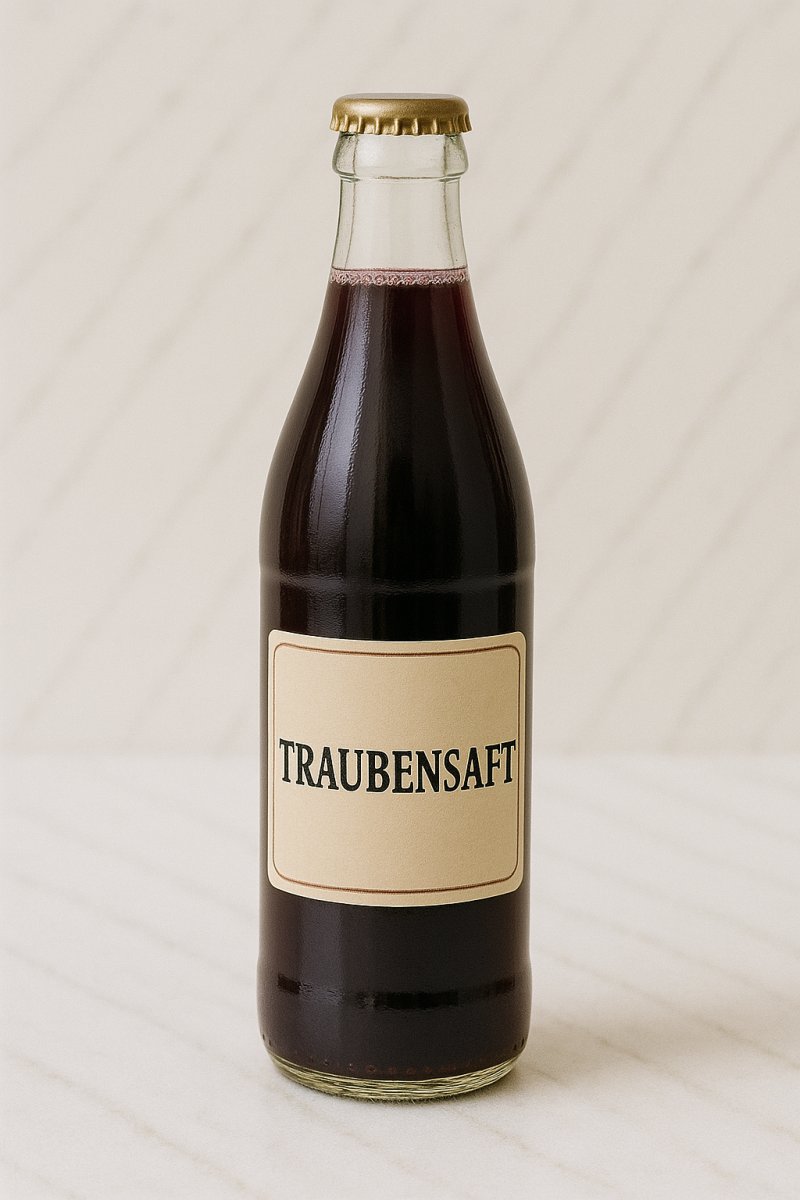
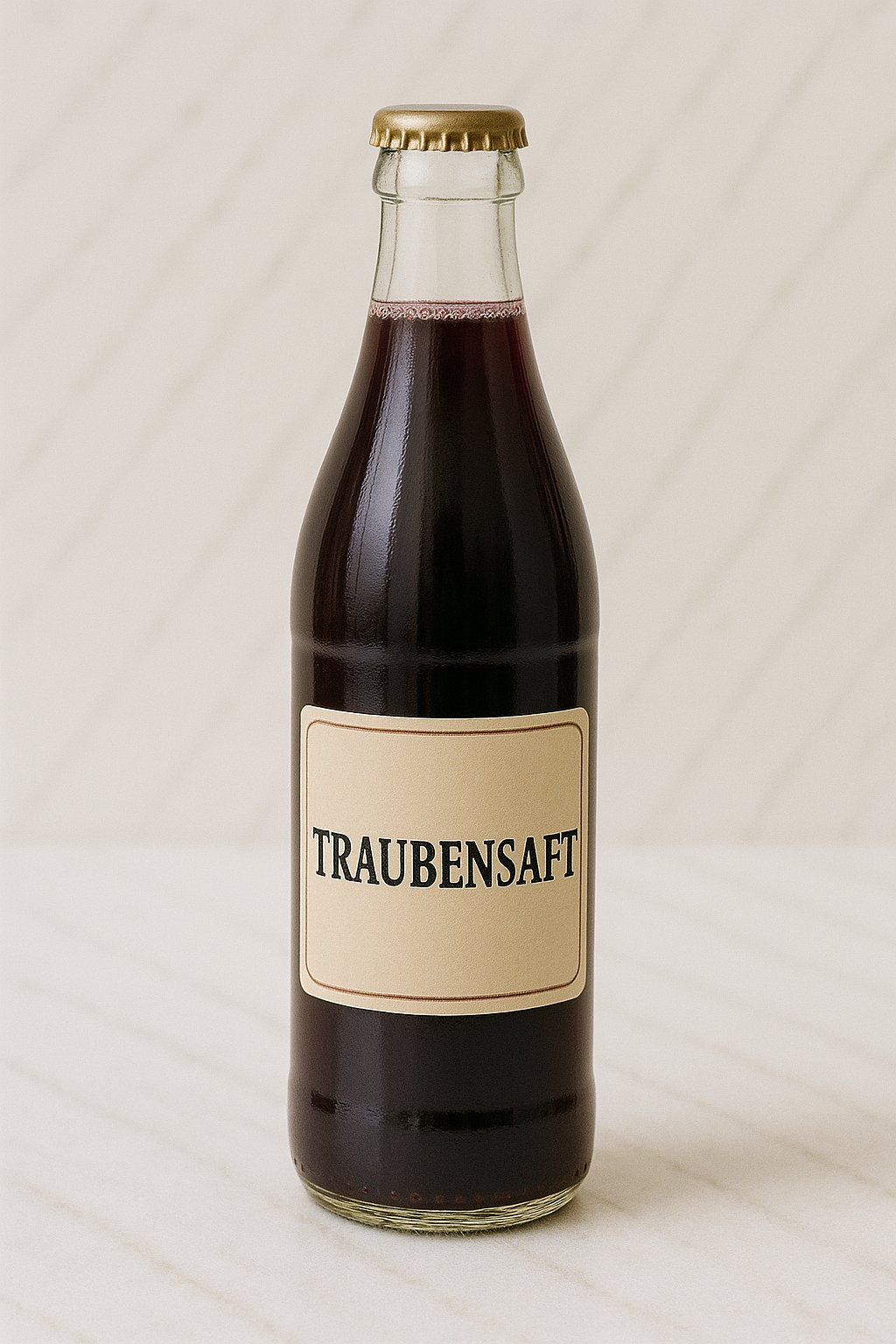
Grape juice

Fruity-sweet juice made from pressed wine grapes.

Wiki about grape juice Nutri-Score D Vegan Yes Gluten-free Yes Lactose-free Yes Nut-free Yes
NUTRITION / 100 ml
67 kcal 0.3 g Protein 16.5 g Kohlenhydrate 0.1 g Fett

Introduction

Glass of grape juice with grapes
I still remember the first sip of grape juice that I noticed consciously: a glass so velvety and sweet that for a moment it made the world seem slower. Grape juice has this wonderful ability to evoke memories – of holiday days in warm valleys, of Sundays with family or of an improvised aperitif with friends that came from leftovers in the fridge. For me grape juice is more than a drink; it is a versatile companion in the kitchen and everyday life.

There are so many facets: white and red, clear or cloudy, freshly pressed or from concentrate. Some varieties are delicately floral, others recall dark berries and chocolate. I once had a colleague who secretly used it as a dressing – a few tablespoons of grape juice, mustard and olive oil and suddenly a simple salad was a hit. Such small kitchen experiments show: grape juice can be used both sweet and savory.

The differences in production are also interesting. Direct juice is usually gently pressed and only heated, while juices from concentrate are reduced and later reconstituted. Those who value the most natural aromas reach for cloudy variants or cold‑pressed types. At the same time pasteurized juices offer shelf life and safety – very practical for travel or longer storage.

Where it shines, I have often tried it in small recipes:

  • As a base for fruit sauces for game or poultry.
  • In a smoothie, blended with yogurt and frozen berries.
  • As a sweet note in a homemade vinaigrette.
  • As a reduction for desserts – a few minutes on the heat and the juice caramelizes wonderfully.
When I recommend grape juice, I like to tell about a small party where I set up an alcohol‑free bar with various juices instead of cocktails. The guests were delighted; the combinations were surprisingly elegant. For me grape juice remains an uncomplicated yet surprisingly changeable food that provides warmth and flavor in many moments.

Availability & types


Availability and types of grape juice

Grape juice comes from grapes that grow on vines. These vines prefer sunny and warm places, so they often grow where there is a lot of sun and little frost. Well‑known regions include, for example, Spain, Italy, France, Germany (e.g. Mosel or Rheinhessen), California in the USA, Chile, South Africa and Australia. One can therefore say: grapes grow in many parts of the world where the climate is favorable.

Today you can find grape juice in stores all year round. This is because grapes are harvested in late summer or autumn, then pressed and the juice preserved. Sometimes the juice is briefly heated (this is called pasteurization) so that no microbes remain. Other times water is removed to create a concentrate, which is easier to store; later water is added back to the concentrate to recreate the juice. This makes grape juice available at any time, even when no fresh grapes are on the vines.

There are many different varieties and versions of grape juice. Here is a simple overview so you don't lose track:

  • White grape juice – comes from light grapes and is often clear or slightly yellowish. It usually tastes somewhat milder.
  • Red grape juice – comes from dark grapes and has a deep red or purple color. It can be fruitier and more intense in taste.
  • Rosé grape juice – lies between white and red, pink in color and usually pleasantly sweet.
  • Direct juice – juice that is bottled immediately after pressing and only briefly heated. It often tastes fresh, like directly from the grape.
  • Juice from concentrate – water has been removed to facilitate transport and storage; water is added back before sale.
  • Organic grape juice – comes from grapes grown without chemical pesticides. Many people like organic because it is more environmentally friendly.
  • Sparkling / fizzy – some grape juices are carbonated, similar to a soft drink; it makes them fizzy and children often enjoy it.
  • Blend juices – grape juice is often mixed with apple, currant or other juices to create new flavors.
You can buy grape juice in supermarkets, health food stores, farmers' markets or online. It comes in large bottles, small juice cartons and even small tetrapaks for lunch boxes. If you are looking for something specific, for example very sweet juice, unsweetened juice or organic quality, it is usually stated on the packaging. That way you can easily find what you like best.

In summary: grape juice is versatile and widely available. Whether clear or dark, sparkling or still, from concentrate or freshly pressed – there is a suitable variant for every preference, and the grapes come from many regions of the world where sun and warmth favor them.
Details & nutrition

Property Value
Unit ml
Calories per 100 67
Protein per 100 0.3
Carbohydrates per 100 16.5
Sugar per 100 15.5
Fat per 100 0.1
Saturated fat per 100 0
Monounsaturated fat 0
Polyunsaturated fat 0
Fiber per 100 0.2
Vitamin C (mg) per 100 3
Vitamin D (IU) per 100 0
Calcium (mg) per 100 10
Iron (mg) per 100 0.2
Nutri-Score D
CO₂ footprint 0.06 kg CO2e/100 ml
Origin Depending on the product: EU/non-EU (commonly Italy, Spain, France)
Gluten-free Yes
Lactose-free Yes
Nut-free Yes
Vegan Yes
Note Nutritional values may vary slightly depending on the variety (light/dark), direct juice or concentrate, and sugar content.

Technical & scientific information

Grape juice is the liquid concentrate obtained from crushed or pressed wine grapes, used as a beverage or as a raw material for further processing such as must or wine. It can be produced from white, red or blue‑violet varieties; color, aromas and bioactive compounds vary according to variety, ripeness and processing. In food practice, a distinction is made between directly pressed juice, juice reconstituted from concentrate and heated or gently treated variants.

Chemical composition and nutritional values

  • The main components are water and soluble carbohydrates. The sweetness level typically lies around 15–18 °Brix, corresponding to about 15–18 g sugar per 100 ml, mainly glucose and fructose with small amounts of sucrose.
  • The main organic acids are tartaric acid, malic acid and to a lesser extent citric acid, which together determine the pH (usually 3–4) and the perceived acidity.
  • Grape juice contains polyphenolic compounds such as anthocyanins (in red juices), flavonols, tannins and stilbenes (e.g. resveratrol). Their content varies widely with variety and processing and affects antioxidant capacity.
  • Mineral contents include predominantly potassium, as well as traces of calcium, magnesium, iron and phosphorus. Vitamin C is present in small amounts; B vitamins are also present in trace amounts.
  • Energetically, grape juice provides, because of the high sugar content, about 60–80 kcal per 100 ml, depending on sugar content and dilution.
Processing methods

  • Standard processing begins with destemming and pressing of the grapes. For red grapes, maceration may be used to release pigments and polyphenols.
  • For clarification, enzymes (pectinases) are used, followed by sedimentation, centrifugation or filtration. Fining agents like bentonite or plant proteins can contribute to clarity.
  • Concentration by vacuum evaporation reduces volume and facilitates storage and transport; reconstitution is performed by adding water to return to the original Brix level.
  • For microbiological stabilization, thermal treatment (pasteurization, hot filling) or modern processes such as High Pressure Processing (HPP) and aseptic processing are used to preserve heat‑sensitive aromas.
  • Common additives include sorbates or sulfur dioxide in small amounts for preservation; additives requiring declaration must be labeled accordingly.
Analytics and quality assurance

Typical measured parameters are Brix (refractometry), pH and titratable acidity, total phenolic content (Folin‑Ciocalteu), anthocyanins (HPLC) and sensory tests. For aroma compound analysis GC‑MS methods are used; for microbiological safety classical culture methods and rapid tests are applied.

Health aspects

Grape juice provides quickly available energy and contains antioxidant polyphenols whose beneficial effects are investigated in epidemiological and experimental studies. However, the concentration of resveratrol and other active compounds in juices is markedly lower than in fermented products such as red wine. Because of the high sugar content, regular consumption in large quantities is nutritionally questionable, especially for people with impaired glucose tolerance or obesity. Unpasteurized juice can pose microbiological risks; therefore pasteurized or otherwise stabilized products are recommended for vulnerable groups.

Overall, grape juice is a versatile, sensorially distinctive food with defined quality parameters, whose nutritional benefits must be weighed against the content of simple sugars. Modern production methods aim to preserve flavor, nutrients and food safety as well as possible.

Wiki entry for: grape juice
Active now: 15 visitors of which 2 logged-in members in the last 5 minutes